As helicopter fleets around the world age, defense forces face a universal challenge: how to keep legacy platforms relevant amid rapidly advancing avionics, sensors, and weapon technologies. Türkiye’s ASELSAN, marking its 50th anniversary this year, has positioned itself as one of the most capable partners in this field, offering full-scope modernization programs for attack and utility helicopters across multiple continents.
With over 500 successful aircraft modernizations, ASELSAN provides complete, mission-ready solutions—from cockpit upgrades to communication, mission, and self-protection systems—tailored to both domestic and international requirements. Its experience spans U.S.-made, European, and former Soviet-era platforms, including S-70 variants, UH-1s, Cobras and Super Cobras, Cougars, and Mi-series helicopters, giving the company unmatched flexibility across global fleets.
Next-Generation Cockpits and Mission Systems
At the heart of ASELSAN’s modernization strategy lies its avionics suite design capability. The company provides tailor-made cockpit configurations and ready-to-integrate architectures for multiple helicopter types. Its digital cockpit suite, derived from Türkiye’s GÖKBEY utility helicopter, features large-format, touch-panel multifunction displays and open-architecture mission computers. These systems enhance situational awareness, reduce pilot workload, and enable seamless integration of sensors and weapons.
Central to this ecosystem is ACORE Avionic Central Control Computer, which connects avionics, navigation, communication, and identification functions under a unified command hub. Its modular hardware and scalable software allow smooth integration of both legacy and next-generation systems, minimizing obsolescence while maximizing flexibility.
For attack helicopter configurations, ASELSAN develops modern weapon management interfaces and hand controllers to replace outdated hardware. The company’s AVCI Helmet-Mounted Display further transforms pilot awareness by projecting flight, targeting, and navigation data directly onto the visor. The system merges night vision, infrared imagery, and symbology in one view, ensuring faster target acquisition and precise line-of-sight cueing.
Navigation, Sensors, and Communication Systems
Precision and connectivity remain central to ASELSAN’s modernization approach. KILAVUZ Tactical Inertial Measurement Unit and ANS-600 Inertial Navigation System provide reliable position and attitude data, even in GPS-denied conditions. For operational safety, ATRAS Traffic and Terrain Collision Avoidance System continuously monitors flight paths and offers both traffic and resolution advisories to prevent mid-air incidents.
Communication capability is delivered through ARTcom family of software-defined airborne radios, supporting secure, jam-resistant voice and data links. Compliant with NATO waveforms and Electronic Protection Measures, ARTcom enables interoperable communication across multiple mission networks and allied platforms.
In the electro-optical domain, ASELSAN’s ASELFLIR product family plays a crucial role in ensuring all-weather, day-night operational effectiveness. ASELFLIR-400/410 systems provide long-range detection and tracking of heat signatures from personnel, vehicles, or infrastructure—essential for reconnaissance, targeting, and search-and-rescue missions in complex environments.
Self-Protection and Electronic Warfare
Survivability is a key component of any modernization program. ASELSAN integrates layered electronic warfare and countermeasure solutions to protect aircraft from radar, laser, and infrared threats. YILDIRIM-100 DIRCM (Directed Infrared Countermeasure) system represents a pinnacle of this capability, using synchronized, multi-band laser countermeasures to defeat heat-seeking missiles. Combined with radar and laser warning receivers, these systems ensure 360-degree protection against both conventional and asymmetric threats.
Integration, Sustainment, and Global Reach
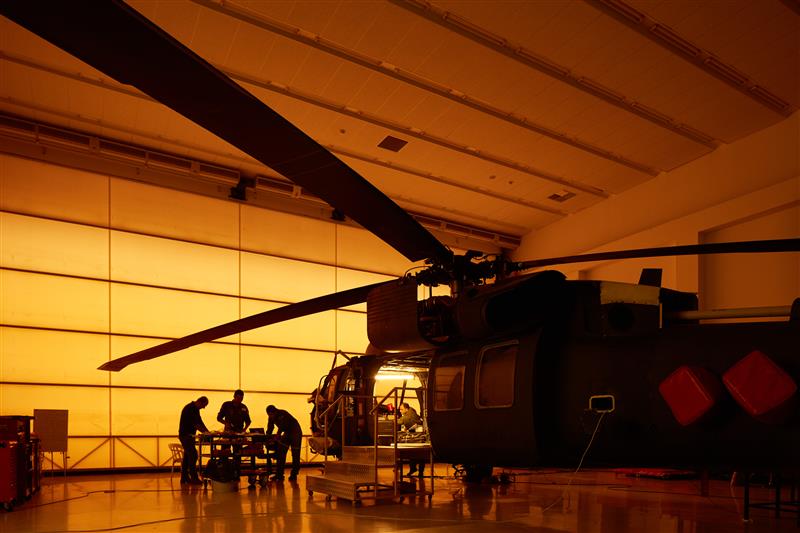
Modernization efforts are conducted at ASELSAN’s internationally certified hangars and helipads in Türkiye. However, the company also deploys dedicated teams to customer facilities worldwide. To minimize downtime, ASELSAN establishes System Integration Laboratories that allow software development and testing without grounding the aircraft. These labs later serve as training simulators, offering enduring operational and educational benefits.
A distinctive aspect of ASELSAN’s approach is its commitment to sovereign sustainment. Each program is designed to ensure that customers can perform their own maintenance, calibration, and repair of upgraded systems. This transfer of know-how builds long-term autonomy, reduces dependency, and lowers life-cycle costs.
A Strategic Partner for the Decade Ahead
As the global defense market shifts toward modernization over full platform replacement, ASELSAN’s modular and scalable approach resonates with air forces seeking cost-effective capability growth. By combining advanced avionics, sensor fusion, and self-protection systems with robust integration expertise, the company enables operators to extend the life and effectiveness of their fleets well into the next decade.
From cockpit to countermeasure, ASELSAN’s modernization philosophy reflects a single goal: to turn today’s legacy helicopters into tomorrow’s mission-ready assets: reliable, connected, and protected for the challenges ahead.
PHOTOS: Dubai Airshow 2025

 Gallery