WASHINGTON — As part of a newly signed Strategic Defense Agreement between the US and Saudi Arabia, Washington has greenlit the sale of F-35 fighters and 300 Abrams tanks to the Middle East ally, the White House announced this evening.
“The SDA is a win for the America First agenda, making it easier for U.S. defense firms to operate in Saudi Arabia, securing new burden-sharing funds from the Saudi Arabia to defray U.S. costs, and affirming that the Kingdom views the United States as its primary strategic partner,” the White House wrote in a statement.
As part of the deal, Riyadh will purchase an unspecified number of F-35 fighters — a long-sought commitment from the Kingdom and a major boost to the Lockheed Martin-produced jet. The kingdom will also purchase “nearly” 300 Abrams tanks “enabling Saudi Arabia to build up its own defense capabilities and safeguarding hundreds of American jobs,” the White House added.
While not announced, other weapon sales may be part of the agreement as well. A top executive from General Atomics told Breaking Defense today that his company is in talks to sell up to 130 MQ-9Bs in addition to 200 Gambit loyal wingman drones to the Saudis.
Details on the F-35 will be closely scrutinized, as the US has pledged to maintain Israel’s Qualitative Military Edge — effectively, making sure Israel has better kit than its neighbors — in the region. The F-35I, which Israel has used operationally in recent years, is believed to have special sensors on board.
Asked about the QME, US President Donald Trump said in the Oval Office today that “When you look at the F-35, and you’re asking me is it the same, I think it’s going to be pretty similar, yeah.
“This is a great ally, and Israel’s a great ally, and I know they’d like you to get planes of reduced caliber. I don’t think that makes you too happy,” Trump said, directing his comments to Saudi Arabia’s Crown Prince Mohammed bin Salman. “We‘re looking at that exactly right now, but as far as I’m concerned, I think they are both at the level where they should get top of the line.”
The announcement of the deal followed that high-profile meeting today between Trump and the crown prince, on what is MBS’s first official visit to the US since the CIA found that Saudi agents killed Washington Post columnist Jamal Khashoggi in Istanbul. While MBS is the kingdom’s de facto ruler, this week’s red-carpet visit is not an official head of state event since King Salman holds that post.
While details from the ongoing visit and ensuing deals are still emerging, MBS announced he is pushing a May pledge to invest $600 billion in various US industries towards the $1 trillion mark.
“Today and tomorrow, we will announce that we are going to increase that $600 billion to almost $1 trillion for investment, real investment and real opportunity, by details in many areas, and the agreement that we are signing today in many areas, in technology, AI, in materials, magnet, etc, that will create a lot of investment opportunities,” MBS said in the Oval Office.
In addition to signing the SDA, the White House said the two leaders also inked a Joint Declaration on the Completion of Negotiations on Civil Nuclear Energy Cooperation, a Critical Minerals Framework and an AI Memorandum of Understanding.
The two countries have been hammering out a defense pact to deepen military and intelligence ties for some time. In April 2024, for example, then-US Secretary of State Anthony Blinken announced that a new defense pact between the two countries was “potentially very close to completion.” However, the question of Saudi normalization with Israel has proven to be a sticky wicket in any such agreement.
That issue seems to remain one to be worked out: MBS today seemed to hold off on Trump’s bid for Saudi Arabia to normalize diplomatic relations with Israel by signing onto the Abraham Accords, initially signed in 2020 by Israel, the United Arab Emirates, Bahrain and Morocco.
In the Oval Office this afternoon, MBS said that while he is still interested in signing on — a move opening up avenues for cross coordination of military capabilities like air defense weapons — doing so is contingent on a two-state solution for the Israeli–Palestinian conflict.
“We want, also, to be sure that we secure a clear path of two-state solution,” he added.
For his part, Trump has been pushing for Riyadh to sign on, reupping his comments during a late October interview on 60 Minutes. “I think we will have a solution. I don’t know if it’s gonna be two-state. That’s gonna be up to Israel and other people, and me,” Trump said. “But look, the main thing is you could’ve never had any kind of a deal if you had a nuclear Iran. And you essentially had a nuclear Iran. And I blasted the hell out of ’em.”
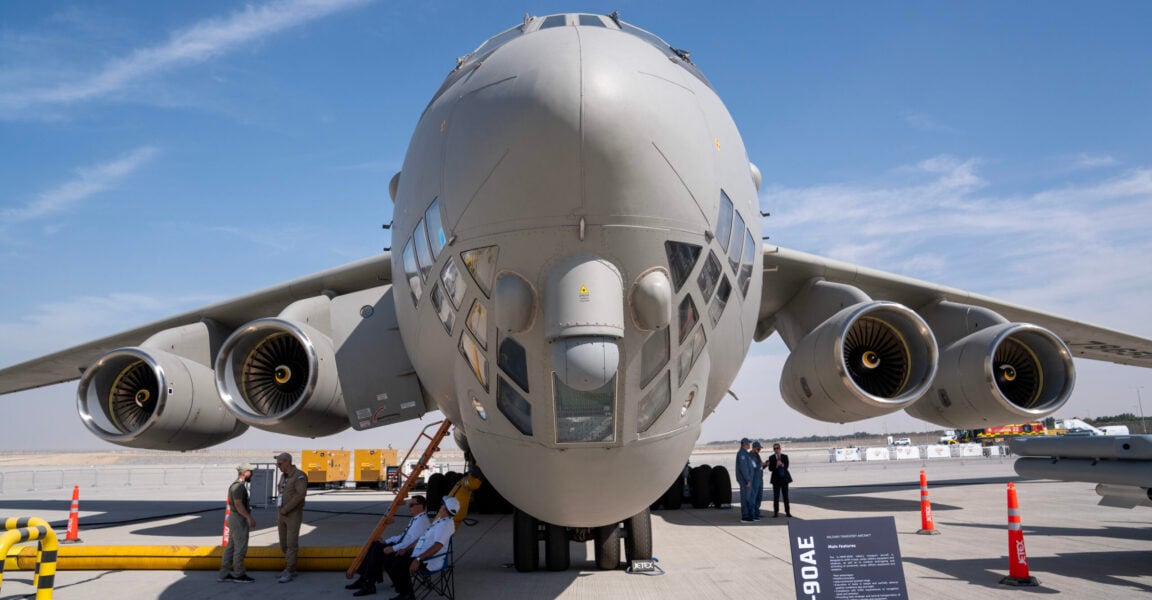
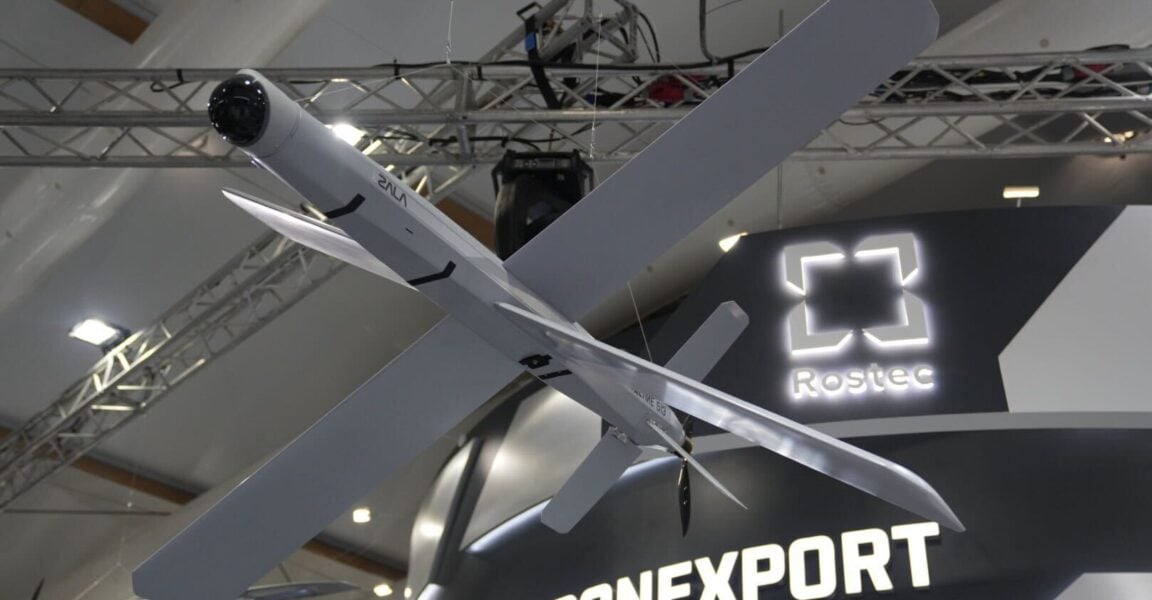
PHOTOS: Dubai Airshow 2025

 Gallery