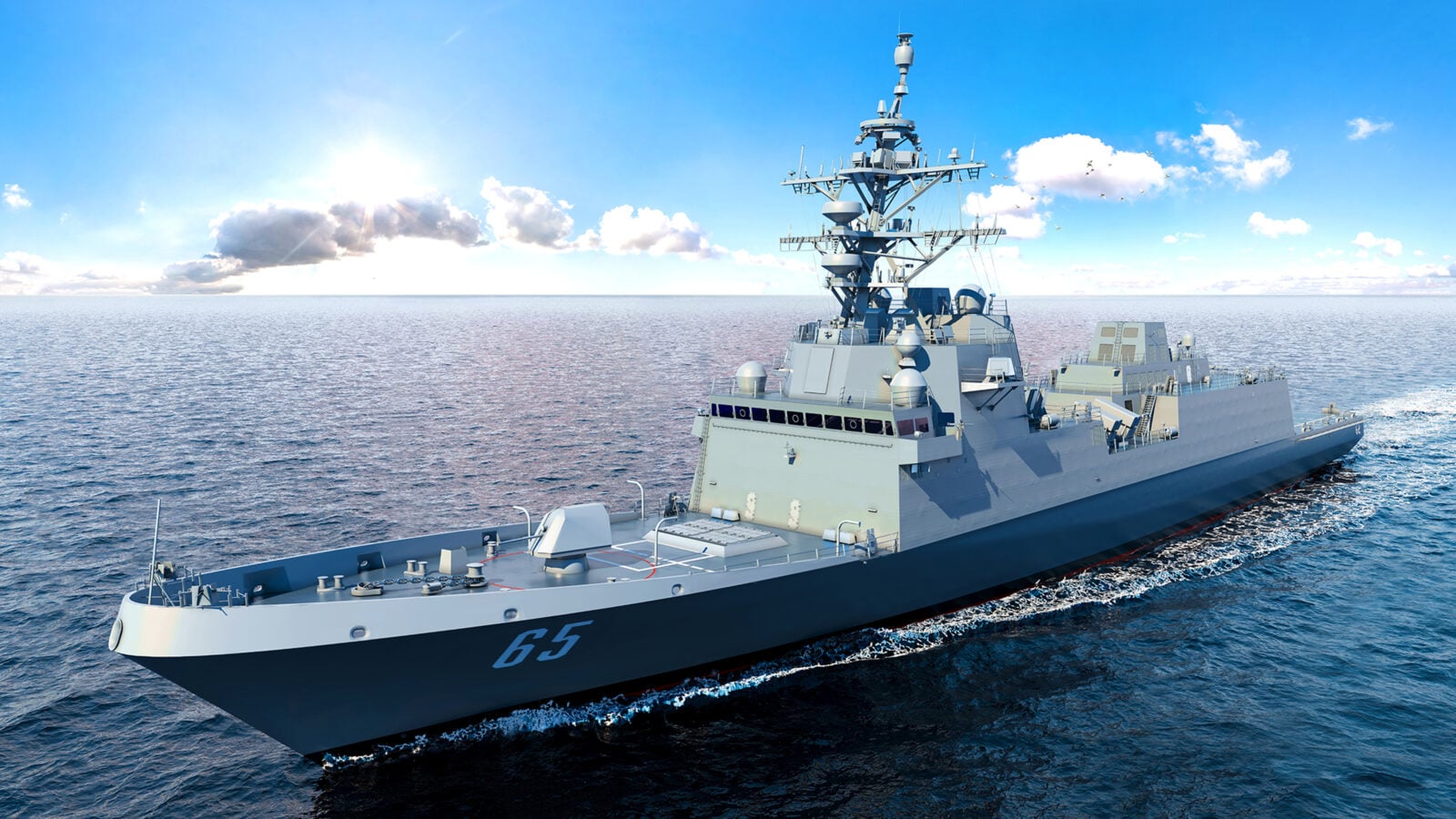
WASHINGTON — Navy Secretary John Phelan today said the service will terminate the last four ships in the Constellation-class frigate program, keeping only the two vessels already under construction.
“From day one I made it clear: I won’t spend a dollar if it doesn’t strengthen readiness or our ability to win,” Phelan said in a post on X (formerly Twitter). “To keep that promise, we’re reshaping how we build and field the fleet—working with industry to deliver warfighting advantage, beginning with a strategic shift away from the Constellation-class frigate program.”
A new “framework,” the Navy secretary said, “puts the Navy on a path to more rapidly construct new classes of ships and deliver the capability our war fighters need in greater numbers and on a more urgent timeline. This is an imperative, and I hope to have more to share very soon.”
RELATED: Navy At ‘Tipping Point’ With Constellation-Class Frigate Lawmakers
Wisconsin-based Fincantieri Marinette Marine won the initial design and construction contract for the frigate in 2020, beating out a crowded field of competitors. Since then, the $22 billion program has received increasing scrutiny from lawmakers and top Pentagon brass — at one even President Donald Trump weighed in — due to a series of schedule delays and cost overruns stemming from, among other things, a litany of design changes the Navy has implemented. A 2024 Navy report found the program was 36 months behind the schedule.
Fincantieri is currently building the first two ships in the class, Constellation (FFG-62) and Congress (FFG-63), and the secretary said those ships would continue to be built. The first ship is expected to be delivered to the Navy in 2029, according to a 2024 Government Accountability Office report [PDF].
Phelan’s move drew praise from at least one key lawmaker, Senate Armed Services Committee Chairman Sen. Roger Wicker.


Answering the demand signal to move faster, field sooner, iterate continuously
As threats rapidly evolve, digital engineering, manufacturing capacity and robust supply chains are critical to meeting challenges.
“I commend [the Navy secretary] for canceling the troubled Constellation-class frigate program—a tough but vital call,” he wrote on X. “Biden-era design changes derailed the contractor, but Fincantieri Marinette Marine will remain key to our shipbuilding future. This is a clear signal that Navy program management is being fixed and accountability restored.”
George Moutafis, CEO of Fincantieri Marine Group, said in a statement to Breaking Defense that the company “has been a committed partner, and the Navy values this partnership, our investment and together we want to rapidly deliver capabilities to warfighters, so we believe that the Navy will honor the agreed framework and channel work in sectors such as amphibious, icebreaking, and special missions into our system of shipyards, while they determine how we can support with new types of small surface combatants, both manned and unmanned, that they want to rapidly field. The key is to maximize the commitment and capabilities our system of shipyards represents.”
The company later said it expected “to receive new orders to deliver classes of vessels in segments that best serve the immediate interests of the nation and the renaissance of U.S. shipbuilding.”
The decision is one in a series of major acquisition shake ups the Pentagon has undertaken in recent months. It also comes at a time that the White House and Navy are seriously considering a new class of “battleships” that would be much larger than the frigate and heavily armored for a fight in the Indo-Pacific.