
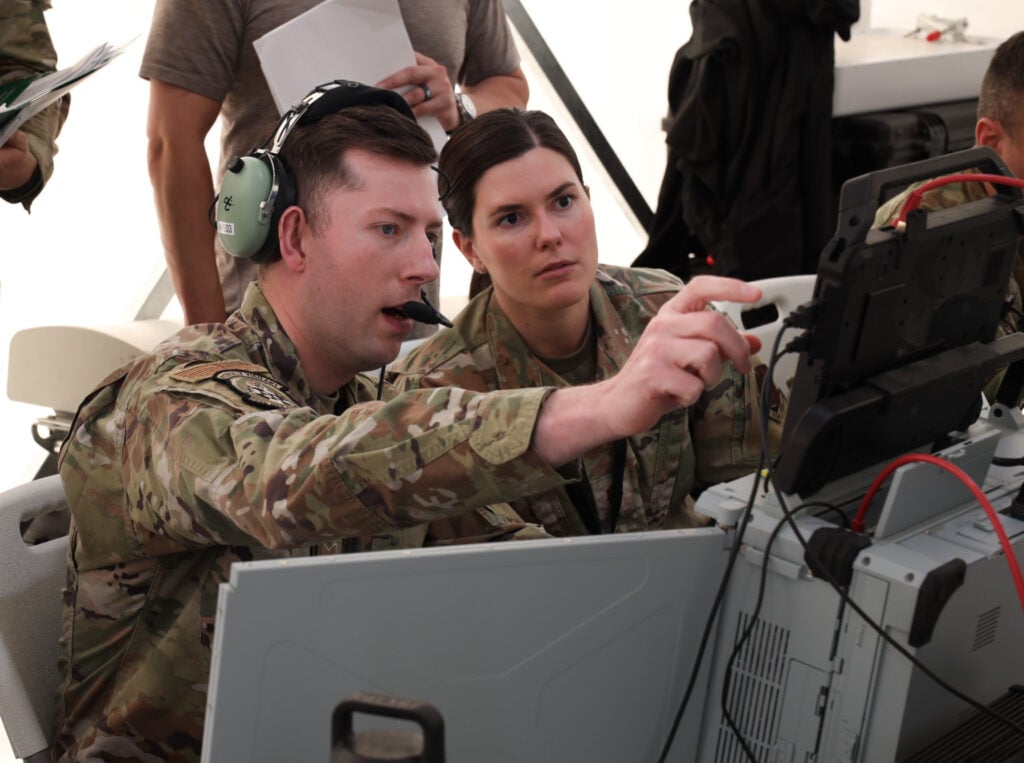
The demand signal is getting louder: move faster, field sooner, iterate continuously. Across the defense enterprise — from hypersonics and counter-UAS to space assets and tactical command posts — the common constraint is time. Programs can no longer afford to wait for traditional handoffs between requirements, prototyping, engineering, production, and sustainment. Today’s emphasis for warfighters is not just to invent something new, but to get something reliable into the hands of operators and iterate quickly without building from scratch.
Booz Allen frames the solution to this challenge in terms of “build, partner, invest.” This strategic approach connects people, advanced R&D and manufacturing facilities, rapid engineering, and best-of-breed commercial technology to reindustrialize the supply chain so it can scale what works. As a trusted advisor to the Pentagon, Booz Allen has long been a major developer of advanced technology and engineering tailored for defense and intelligence needs that are critical to national security.

“Booz Allen has a long history of strengthening government processes, systems, and the workforce across our 110+ year history, and in 2012 we began shifting our focus toward the development of rapid engineering capabilities with the acquisition of our Panama City Beach (PCB) engineering and manufacturing facility,” said Booz Allen Senior Vice President Joel Dillon. “Our acquisition of ARINC’s Defense Systems Engineering and Support division in 2012 acted as the catalyst for this shift and became the foundation of our current engineering ecosystem. Starting about six years ago, we shifted even more heavily towards building and delivering advanced technology and products.”
Today, Booz Allen has thousands of engineers and technologists, who are actively working on a diverse set of technical projects. Their efforts span from retrofitting military vehicles, developing and delivering counter-unmanned aircraft systems and body-worn graphical processing units to uniforms and personal equipment that incorporate modern technology to enhance warfighter survivability and mission success.
Booz Allen has strategically built a workforce to rapidly meet warfighter needs and does so by fusing technical expertise with real-world mission experience. For instance, engineers and scientists are paired with mission experts from diverse military and government backgrounds, including former Delta Force operators, FBI agents, pilots, logisticians, human performance experts, military drone pilots, and more. It’s that blend of talent and expertise that better enables Booz Allen to effectively scale and deliver mission-centric products and solutions.
Supporting the workforce with manufacturing investments
To enable that workforce, Booz Allen operates three strategically located engineering, manufacturing, and production facilities across the US, with approximately 150,000 square feet of cutting-edge workspace. These facilities aid in delivering complex, mission-critical projects.
Booz Allen continues to invest heavily in building and upgrading its development and manufacturing facilities. For example, the company recently added a new waterjet cutter to its Panama City Beach facility that can cut through 6 inches of steel.
In addition to these facilities, Booz Allen operates 20 research and development labs, serving as a hub for prototyping, innovation, and both small and large-scale testing. This infrastructure enables the company to deliver mission-ready technology, such as man-portable systems, tactical C2, and advanced autonomy solutions, at wartime speed. Booz Allen is also advancing hypersonic test-bed technologies to ensure the US is positioned ahead of near-peer adversaries.
The company is partnering with L3Harris to deliver the Tactical Operations Center-Light (TOC-L) prototype to empower joint forces at the tactical edge and support the Air Force’s Advanced Battle Management System (ABMS). The delivery of TOC-L leverages experience from the Booz Allen Modular Detachment Kit solution and L3Harris’ resilient communications capabilities to connects sensors, decision makers, and weapons at the edge.
“Booz Allen is, and has long been, a key player in the defense products and solutions industry,” said Dillon. “Many of the products we have built in the past have been directly on behalf of our customers in the military and the government, so they don’t have a Booz Allen label printed on them, but we designed and built them just the same. For example, my team manages a program where we have been designing, building, and delivering critical electronic warfare hardware and software to the military for the past 16 years.
“We have been engaged in rapid engineering and creating solutions for a long time, and we remain committed to continuing the delivery of advanced tech for our military and other government agencies.”
Rapid engineering and reindustrialization
Modern warfighting environments require speed. And rapid engineering is Booz Allen’s answer to compressing timelines while maintaining reliability. This strategy is key to mission sets where adversaries iterate tech quickly, such as hypersonics, drone warfare, autonomous robotic systems, counter-unmanned systems, space-based systems, and seabed warfare.
By utilizing advanced tools, like virtual environments, simulation, and digital twins, Booz Allen is accelerating innovation and testing cycles. This approach allows them to leverage commercial and dual-use technologies, ensuring mission-ready solutions can be fielded at scale and speed. It also allows them to address obsolescence in currently deployed military systems. For example, they recently designed a digital replacement for an aging, unsupportable analog device used on aircraft by the military. This solution improved readiness, increased capabilities, and reduced operational and maintenance costs by using commercially available components.
While there is a push to get the right technology into warfighters’ hands faster, starting from scratch is not always necessary, or smart. In those cases, Booz Allen partners with and invests in companies that offer best-of-breed technologies.
“For example, we have created a $300 million venture capital fund that allows us to accelerate small businesses and bring manufacturing back to the US,” said Dillon. “We are constantly evaluating investment opportunities and partnering with companies that have complementary advanced technologies and capabilities that, together with ours, enable the rapid advancement of the government’s initiatives.”
Booz Allen’s venture capital fund is not solely about dollars but also about bringing mission expertise to the table. They have partnered with Shield AI to collaborate on the development of the Hivemind Enterprise autonomy software development kit and have invested in Firestorm’s drone manufacturing capabilities. They also announced a partnership with Andreessen Horowitz (a16z) as a16z’s first-ever Technology Acceleration Partner for Governments. This collaboration is designed to deliver next-gen technologies across AI, cyber, autonomy, and electronic warfare.
“We are growing these companies’ capabilities and co-creating solutions that enhance our ability to accelerate the deployment of advanced technologies to the warfighter,” said Dillon. “These collaborations significantly boost supply chain productivity and operational readiness, enabling us to meet the needs of our warfighters on a larger scale.”
Rapid engineering is just one component of Booz Allen’s comprehensive mission-centric solutions process. To deliver capabilities that are operationally relevant and ready for contested environments, the company combines rapid engineering with robust software development, advanced hardware design, mission-tailored algorithms, and cyber protections.
This combined approach ensures Booz Allen delivers advanced technology that is rapidly engineered and operationally secure, scalable, and aligned to warfighter needs.