Networks & Digital Warfare

Future of military AI in Saudi Arabia: AI-enhanced, or AI-native?

A Saudi official raised the key question during a panel at the World Defense Show outside Riyadh.

Flag of Saudi-Arabia on a processor chip. (Getty graphic)

WORLD DEFENSE SHOW 2026 — As the world’s militaries race to take advantage of the breakneck development of artificial intelligence, a Saudi official said today that very soon “there is a decision to be taken” about whether to innovate with “AI-enhanced” defense systems or pursue “AI-native” ones.

Speaking at the World Defense Show outside Riyadh, Majid Algarni, a senior official at the General Authority for Defense Development, explained that AI-enhanced systems are available today: current tech that can integrate AI in a relatively limited capacity.

“We can see that in the whole show now,” he said.

But he said a day is coming shortly when Saudi Arabia would have to consider the benefits and drawbacks of “AI-native” platforms that are built from the ground up with AI baked in. Or, as he put it, “the full value chain, from chips to data to models and then to agentic stuff.”

“This is a big leap, requires a lot of readiness and a big investment. But this is going to be a key changer, a force multiplyer that we need to be taking into consideration,” he said.

It must be carefully considered, however, because he and fellow panelists acknowledged the risks and fears that naturally come with the idea of ceding too much military decision-making to AI. Lawrence Schuette, director of research and technology programs at American defense giant Lockheed Martin, said it comes down to a question of trust.

“Go back and ask ChatGPT how many ‘r’s there are in the word strawberry. It’ll tell you two. But your kindergartner will tell you three, and your kindergartener is correct,” he said during the panel discussion. “So what other hallucinations are occuring in your AI system that’s making a decision for you?

“So the first rule is, it can’t make the decisions. It has to be a piece of that decision-making process, and then as you learn to trust it, and it trust you, you’re going to be able to make faster decisions at machine speed but with human accuracy,” he said. (In a quick Breaking Defense test, a ChatGPT model answered the strawberry question correctly, but other hallucinations have been well documented.)

Saudi Arabia is hardly the first country to weigh the benefits and risks of more AI integration. An exercise in September by the US Air Force showed that AI agents wrote up battle plans some 400 times faster than humans could, though some were infeasible. The Pentagon has also deployed versions of AI chatbots military-wide.

“Becoming an ‘AI-First’ warfighting force requires more than integrating Al into existing workflows,” US Secretary of Defense Pete Hegseth wrote in an “Artificial Intelligence Strategy” memo [PDF] last month. “It requires re-imagining how existing workflows, processes, TTPs [techniques, tactics and procedures], and operational concepts would be designed if current AI technology existed when they were created — and then re-inventing them accordingly.”

US military planners have long said that a human will always be “in the loop” to guard against mistakes when it comes to potentially lethal operations, and Algarni echoed the point today.

“Humans need to be in the loop to make sure that [for] every single critical killing chain action, a human is there to ensure full control,” he said.

While AI is the “first priority” for tech under Riyadh’s broader Vision 2030 development initiative, Algarni said, “We do care about responsible AI in the military.” He noted that Saudi Arabia has signed onto international AI safeguard agreements.

Still, by the end of the panel, panelists seemed resigned to the idea that in the not-too-far future there won’t be much of a choice between enhanced AI and native AI — native AI will be the norm.

“For the long term, the human-machine interface will be taken to another league,” Algarni said.

PHOTOS: World Defense Show 2026
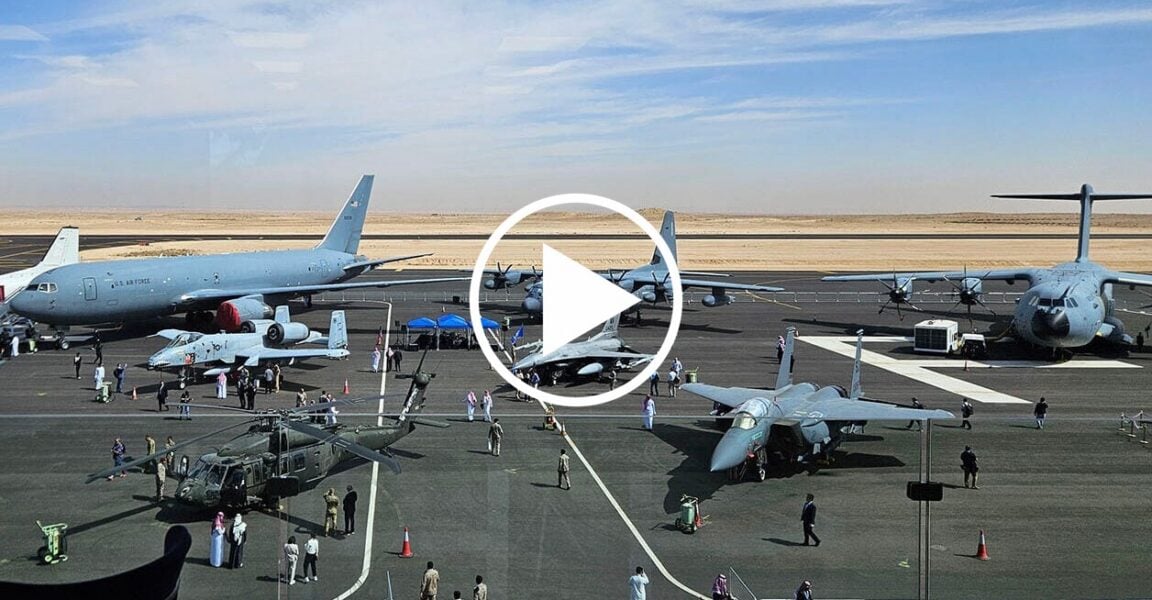
PHOTOS: World Defense Show 2026

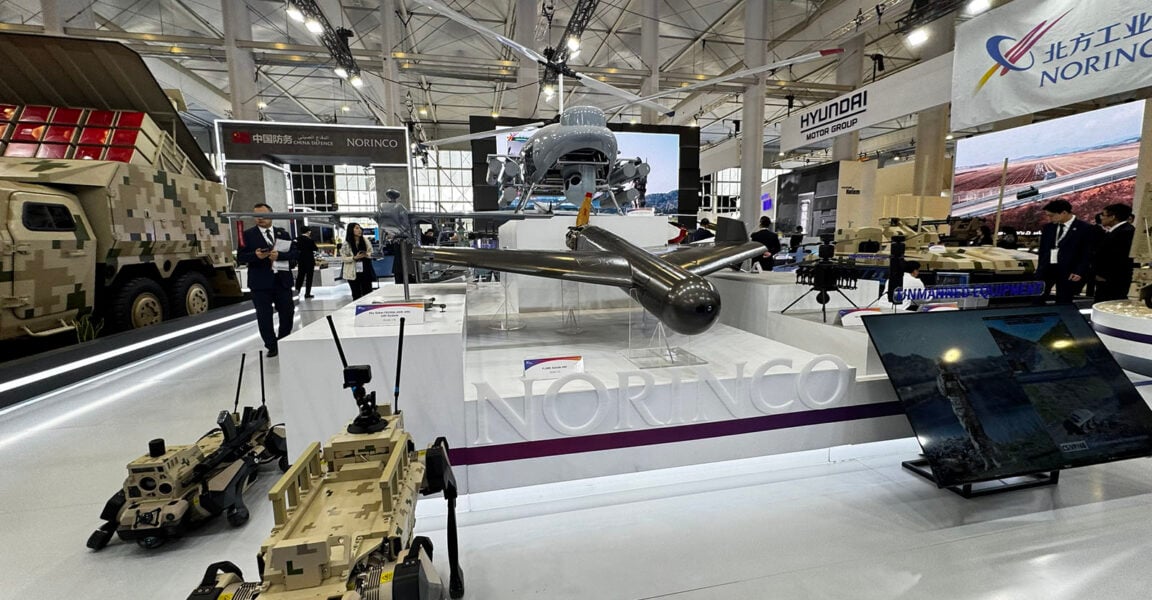
Chinese defense firm Norinco displays an unmanned system at World Defense Show 2026 on Feb. 8, 2026. (Agnes Helou/Breaking Defense)
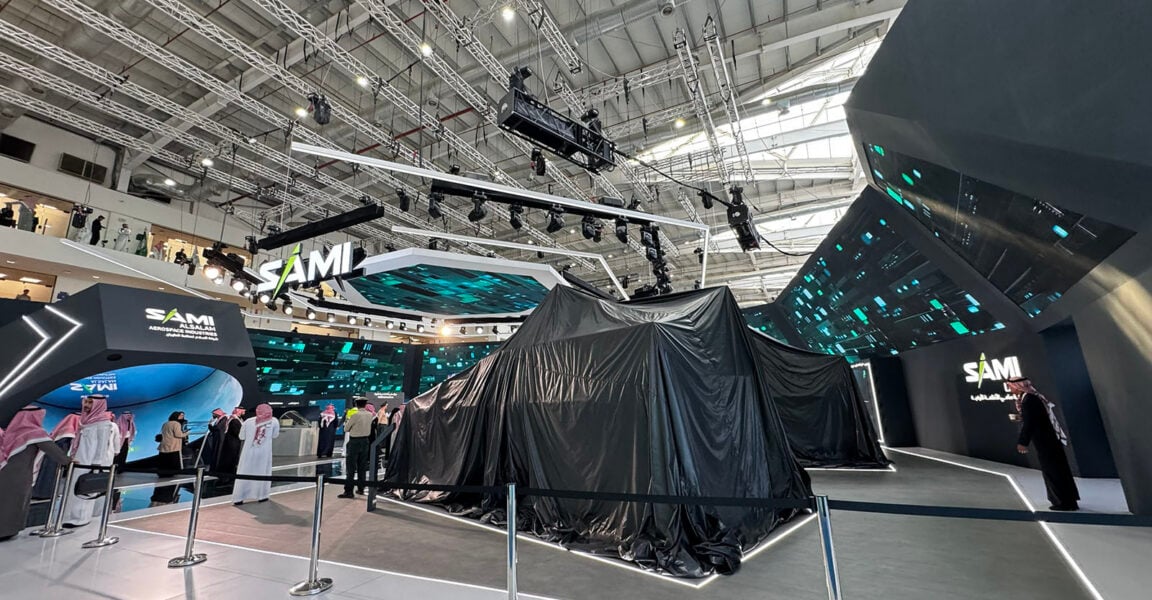
A mystery defense platform awaits its unveiling at the Saudi Arabian Military Industries stand on Feb. 8, 2026 at the World Defense Show outside Riyadh. (Agnes Helou/Breaking Defense)
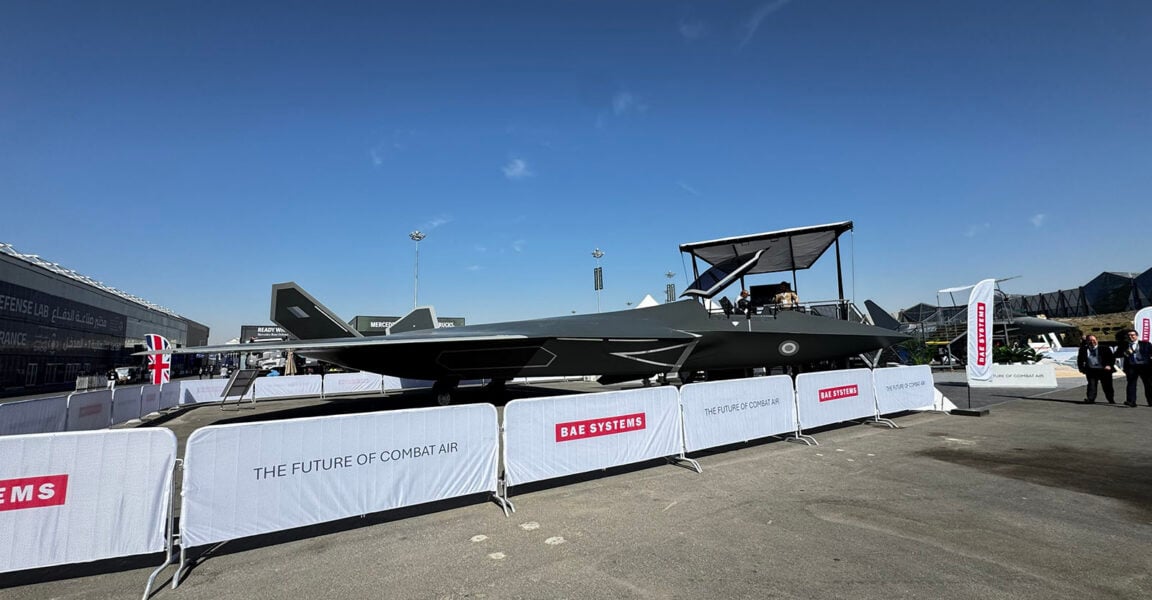
A look at a concept design for the much-hyped Future Combat Air System sixth-gen fighter jet under development by France, Germany and Spain. (Agnes Helou/Breaking Defense)
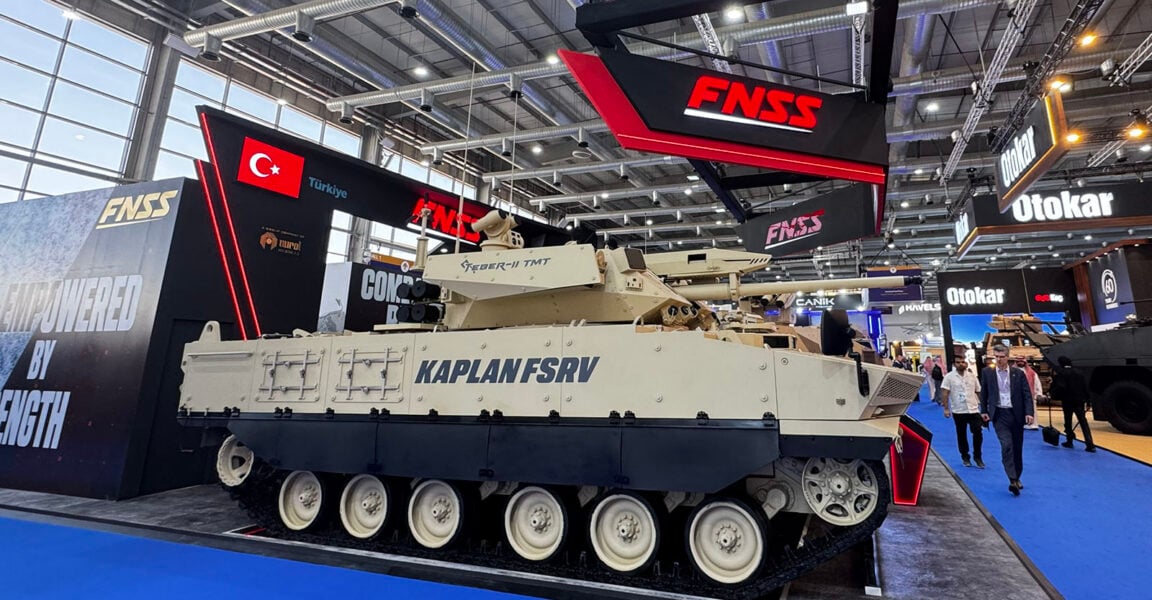
Turkish defense firm FNSS rolled its Kaplan FSRV tracked vehicle into the World Defense Show outside Riyadh on Feb. 8, 2026. (Agnes Helou/Breaking Defense)
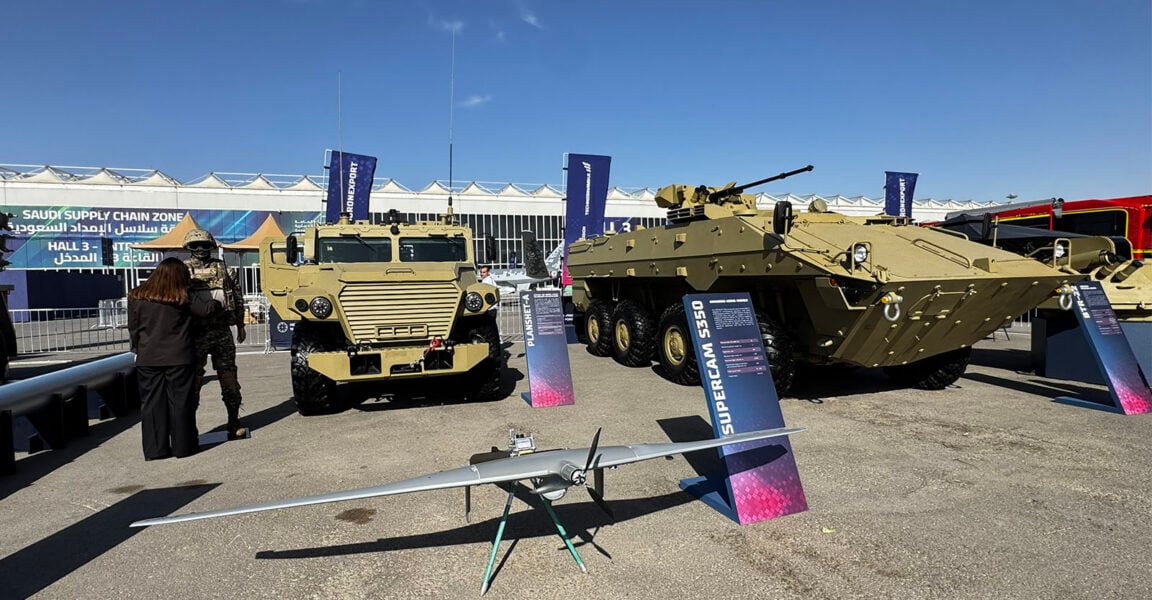
Russia’s Rosoboronexport put several defense systems on display at World Defense Show 2026, including this unmanned aerial vehicle dubbed Supercam S350, seen on Feb. 8, 2026. (Agnes Helou/Breaking Defense)
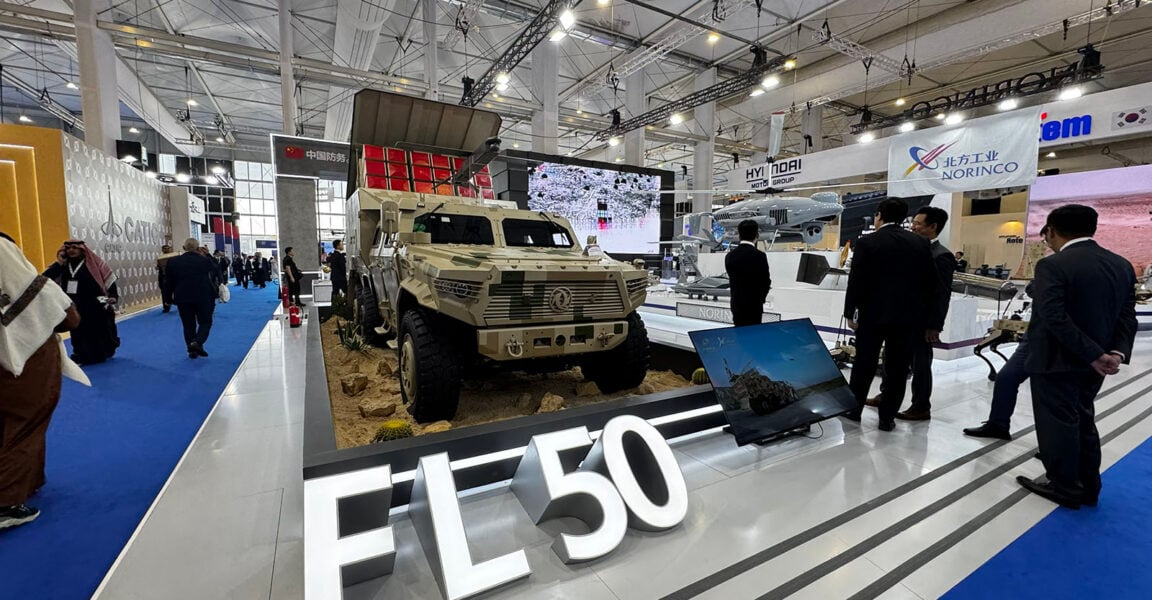
Chinese defense firm Norinco displays its FL 50 armored vehicle at World Defense Show 2026 outside Riyadh on Feb. 8, 2026. (Agnes Helou/Breaking Defense)
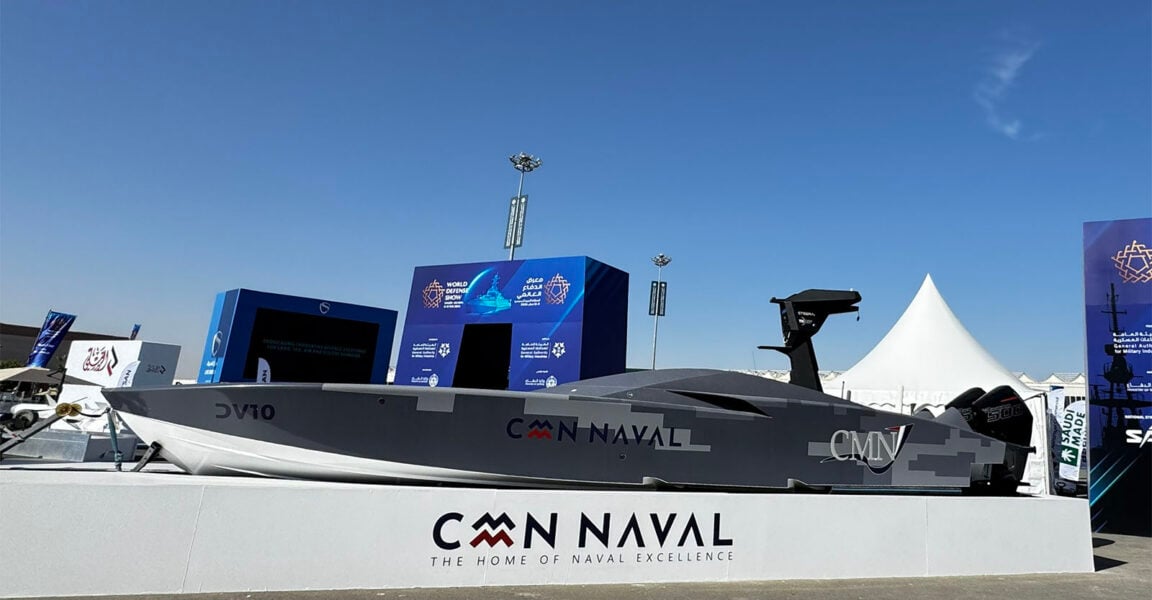
French multi-national shipbuilder CMN Naval says the DV 10, seen here at the World Defense Show in Saudi Arabia on Feb. 8, 2026, can hit 90 knots, or more than 100 miles per hour. (Agnes Helou/Breaking Defense)
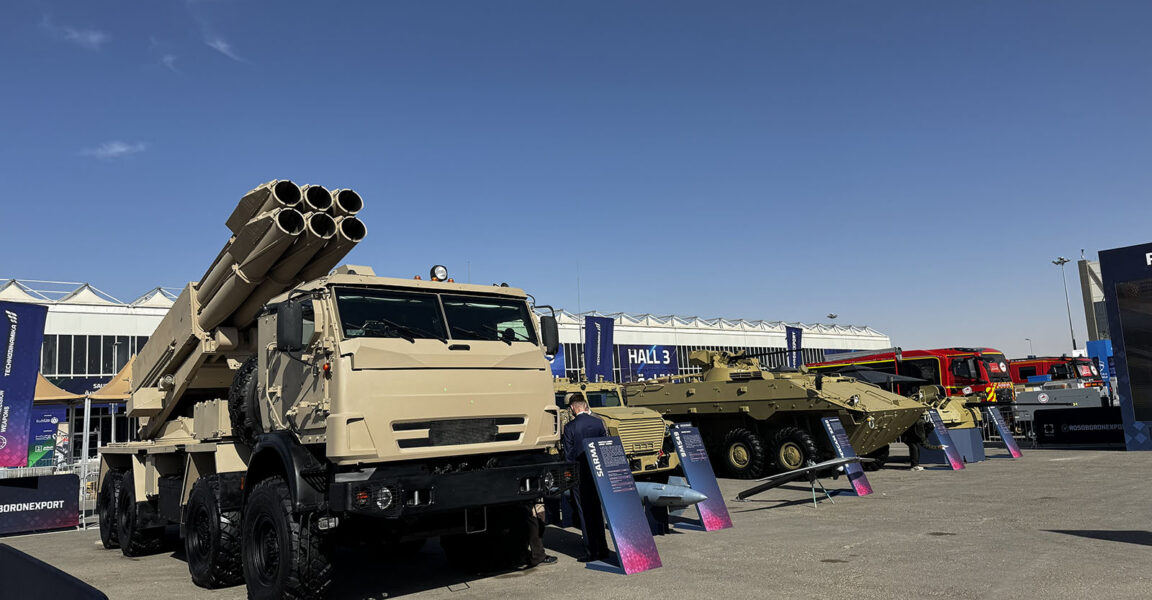
Among the Russian systems on display at World Defense Show 2026 is the Samra, a mobile launcher made by Rosoboronexport. (Agnes Helou/Breaking Defense)
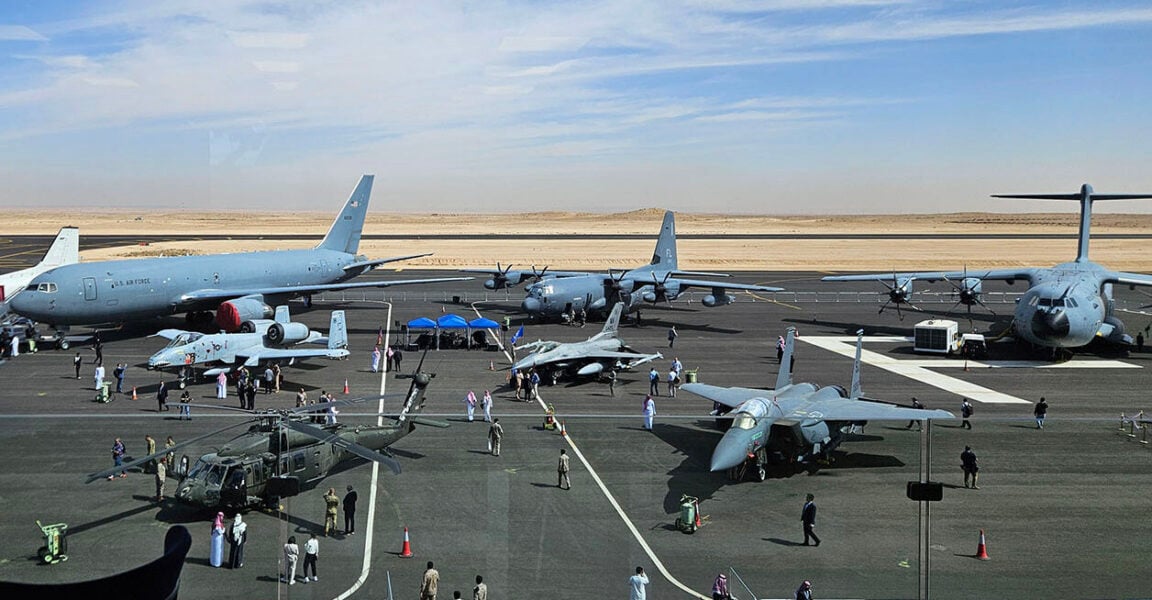
The flightline as seen on Feb. 9, 2026 at the World Defense Show in Saudi Arabia. (Breaking Defense)
A World Defense Show attendee tries his hand at KBR's helicopter flight simulator on Feb. 9, 2026. (Breaking Defense)
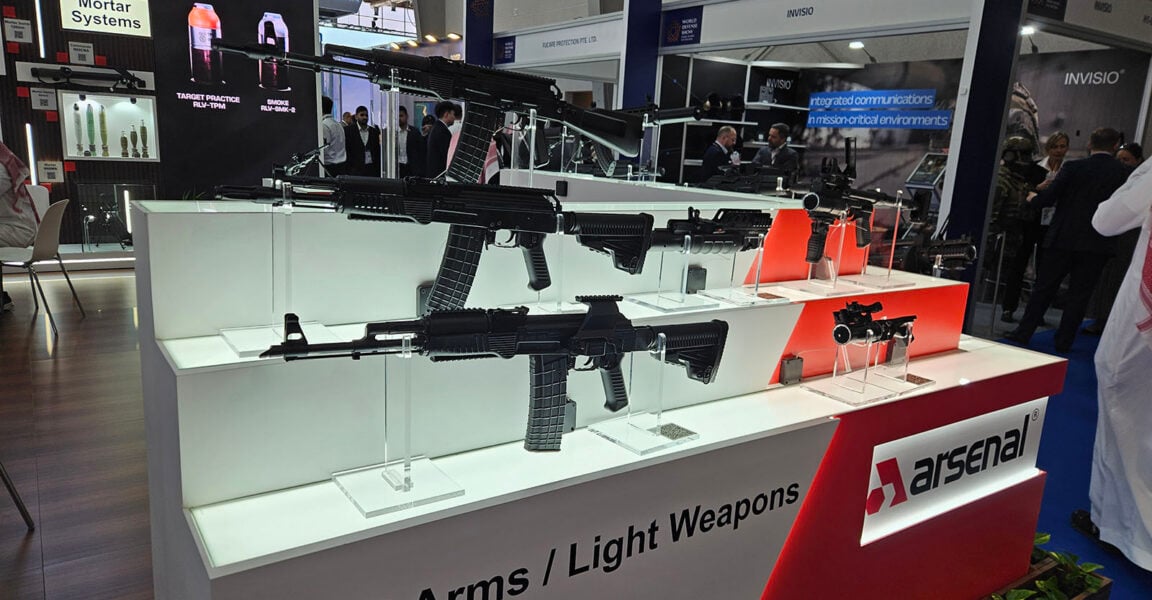
US small arms manufacturer Arsenal shows off its wares at World Defense Show 2026 in Saudi Arabia on Feb. 9, 2026. (Breaking Defense)
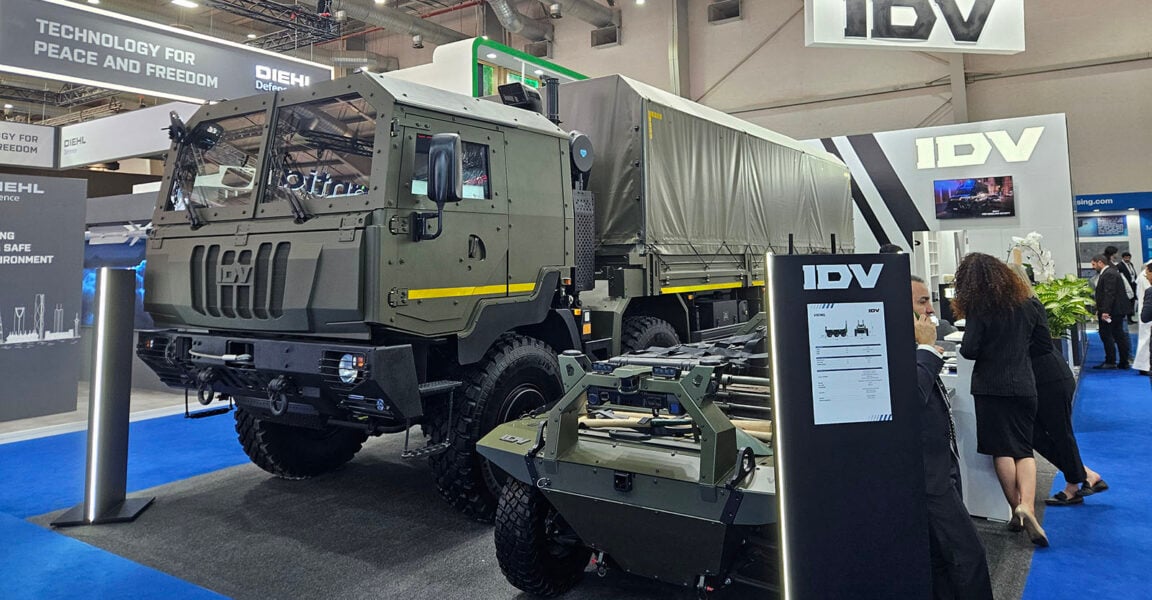
Italian firm IDV rolled its Viking armored vehicle, seen on Feb. 9, 2026, into World Defense Show 2026. (Breaking Defense)
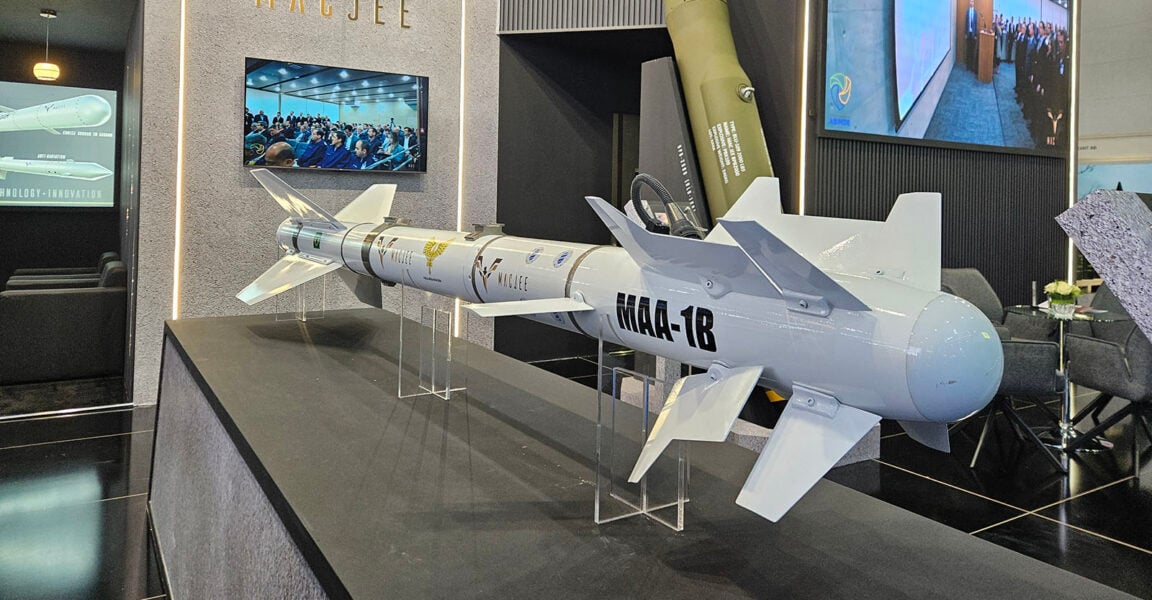
The MAA-1B munition on display at the booth of Brazilian defense firm Mac Jee on Feb. 9, 2026 at the World Defense Show. (Breaking Defense)
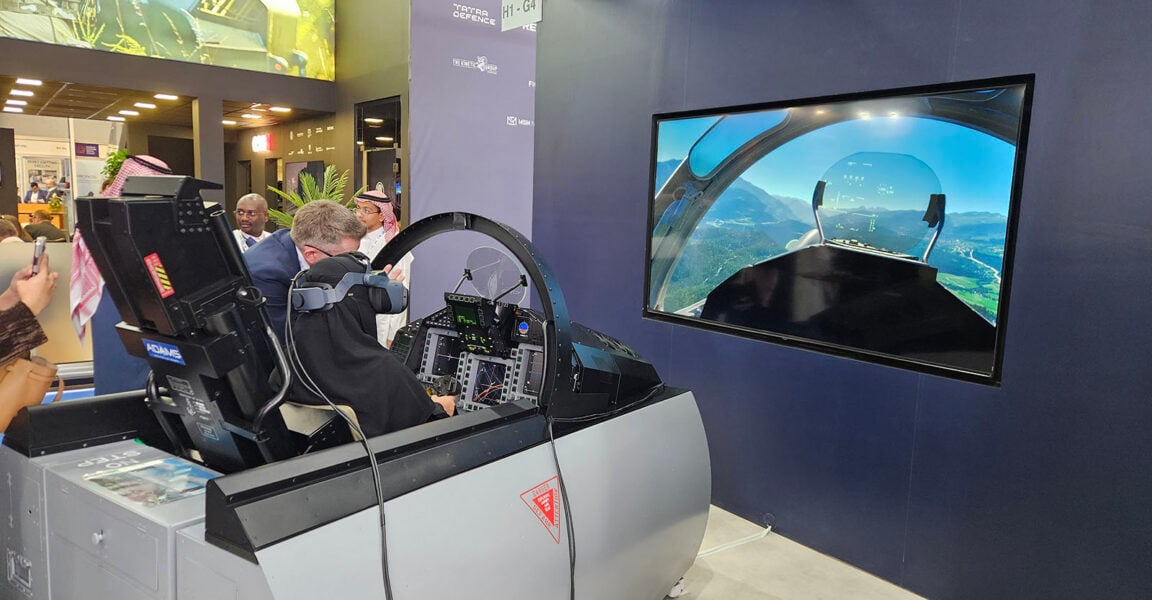
An attendee takes the controls of a fighter jet simulator at World Defense Show 2026 in Saudi Arabia. (Breaking Defense)
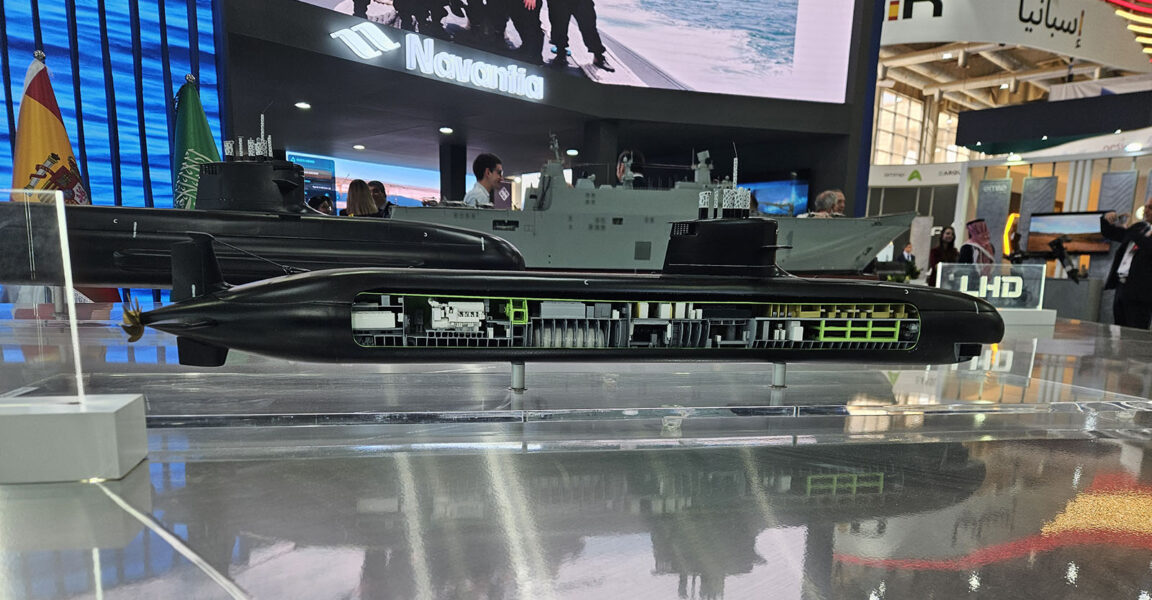
Spanish shipbuilder Navantia offers a cross-section model of one of its submarines at the World Defense Show in Saudi Arabia. (Breaking Defense)
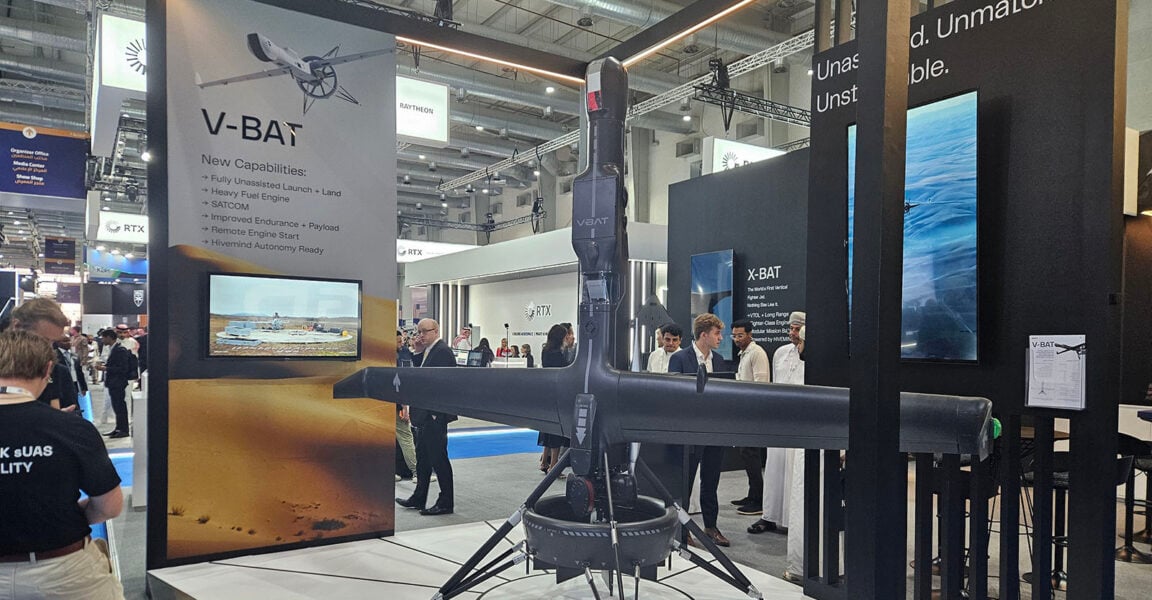
Shield AI's V-BAT UAV sits on display at the World Defense Show in Saudi Arabia on Feb. 9, 2026. (Breaking Defense)
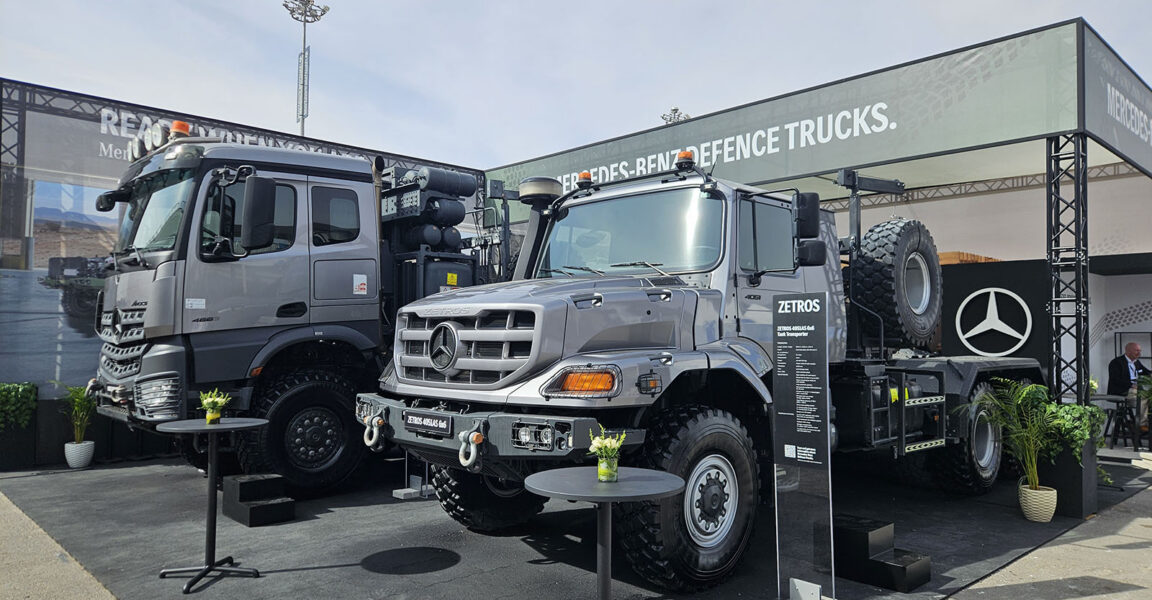
Mercedes-Benz heavy-duty trucks were on display on Feb. 10, 2026 at the World Defense Show in Saudi Arabia, including the company's Zetros tank transporter. (Breaking Defense)
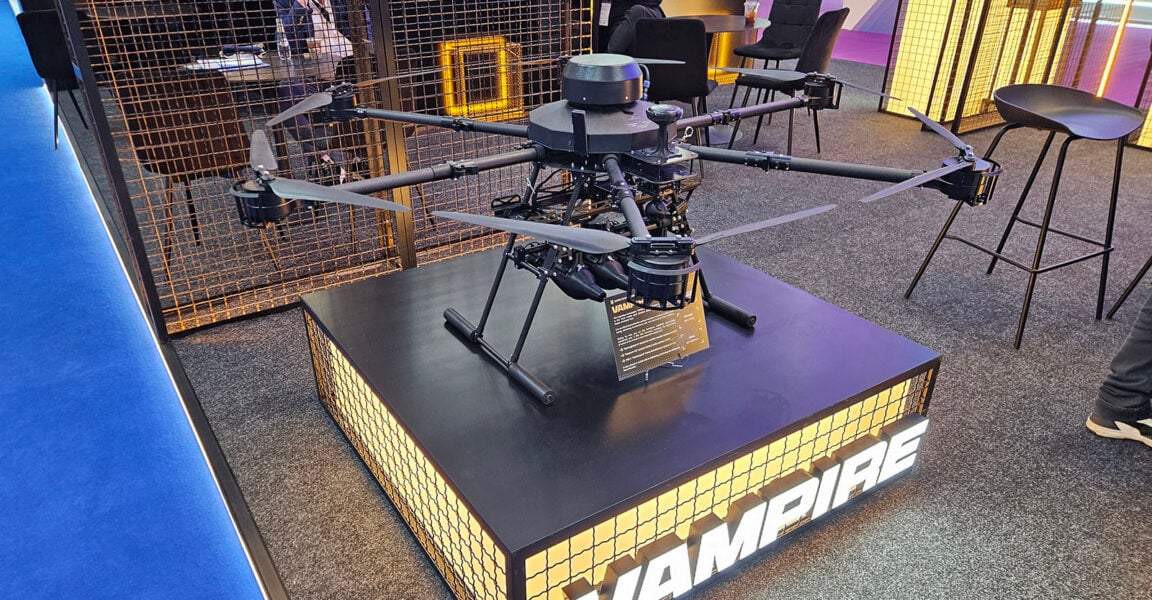
The Ukrainian defense manufacturer Skyfall displays its hex-copter Vampire drone at WDS 2026. (Breaking Defense)
A World Defense Show attendee tries his hand at handgun combat simulation. (Breaking Defense)
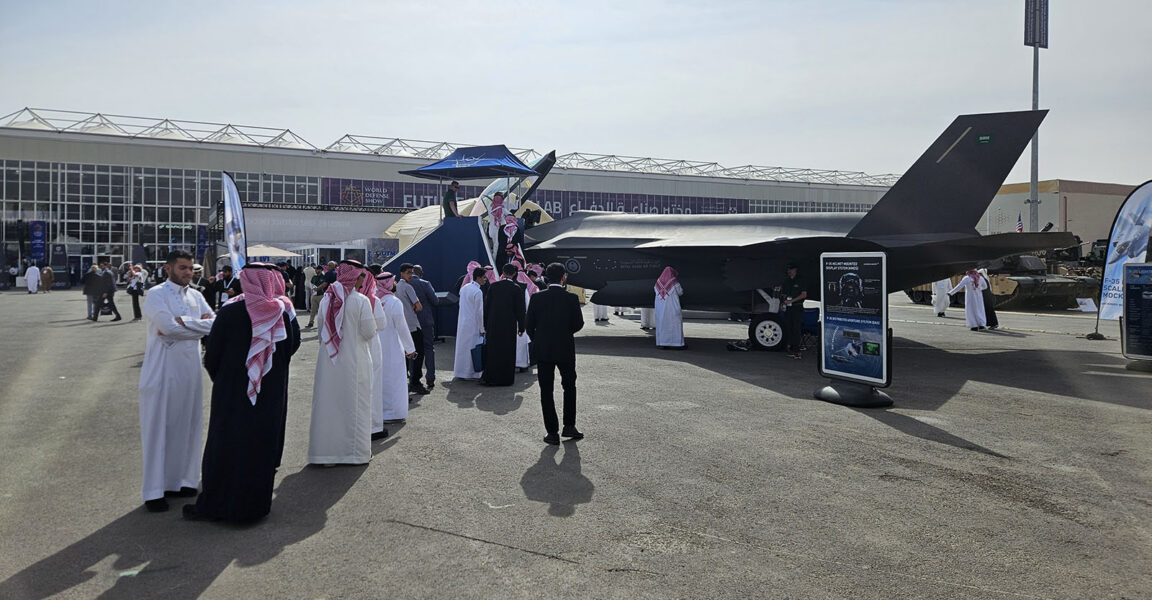
World Defense Show visitors line up to hop in the cockpit of an F-35 fighter jet on Feb. 10, 2025 in outside Riyadh, Saudi Arabia. (Breaking Defense)
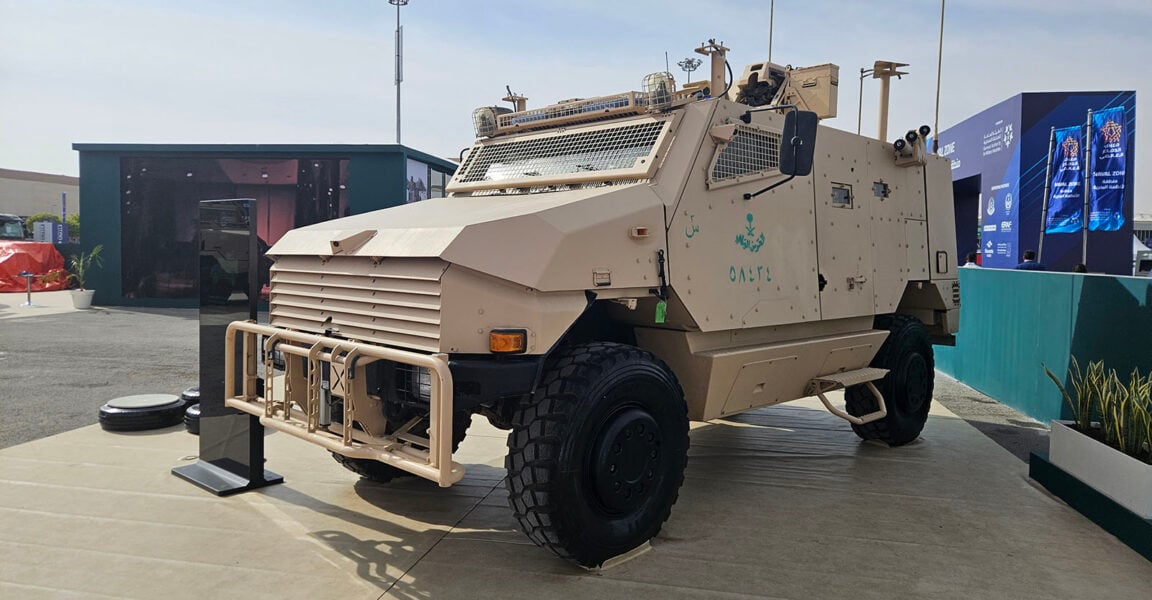
Local defense vehicle specialist ERAF showed off a host of vehicles at the World Defense Show outside Riyadh, Saudi Arabia, including the Arvis, seen here on Feb. 10, 2026. (Breaking Defense)
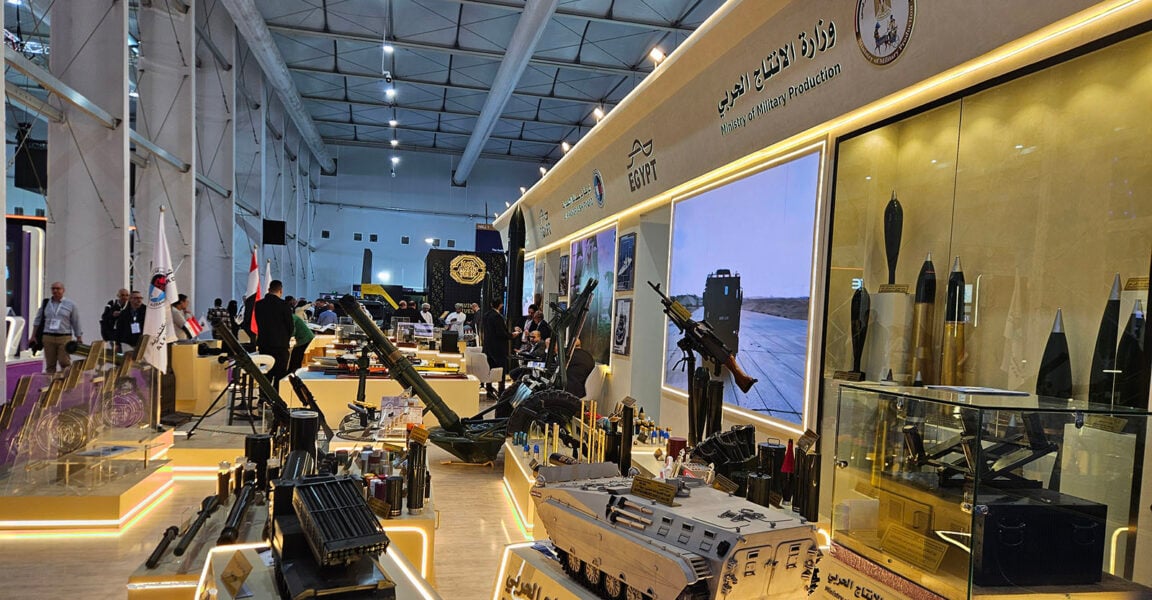
The Egyptian Ministry of Military Production laid out myriad defense hardware at WDS 2026 in Saudi Arabia. (Breaking Defense)
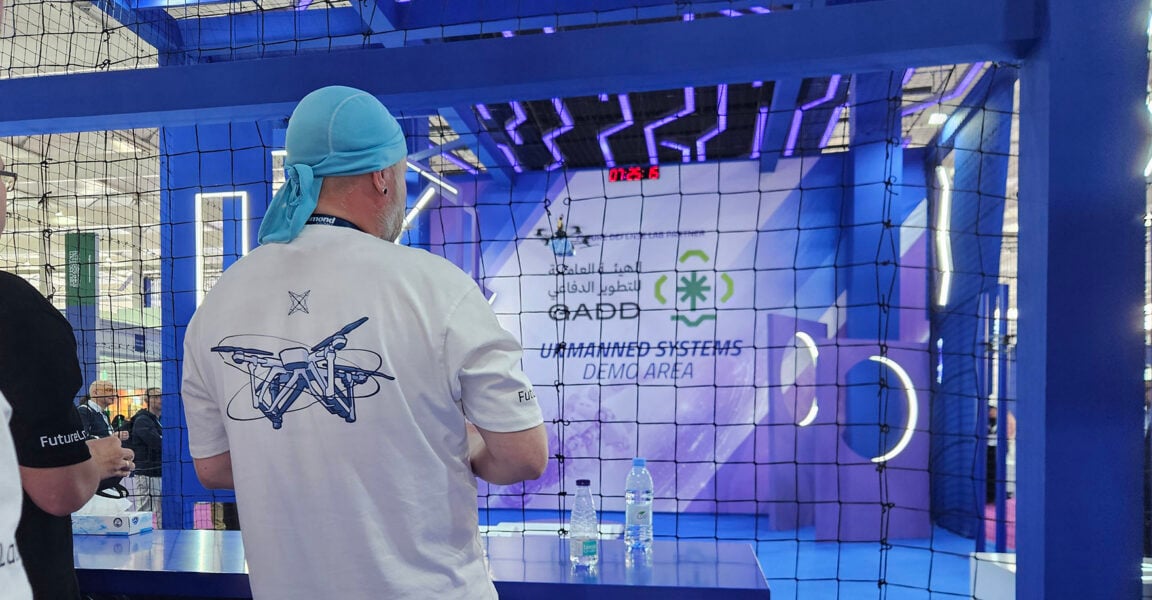
A low buzz pervaded in part of the World Defense Show halls on Feb. 10, 2026, as drone operators took quadcopters to the skies in a dedicated demonstration area. (Breaking Defense)
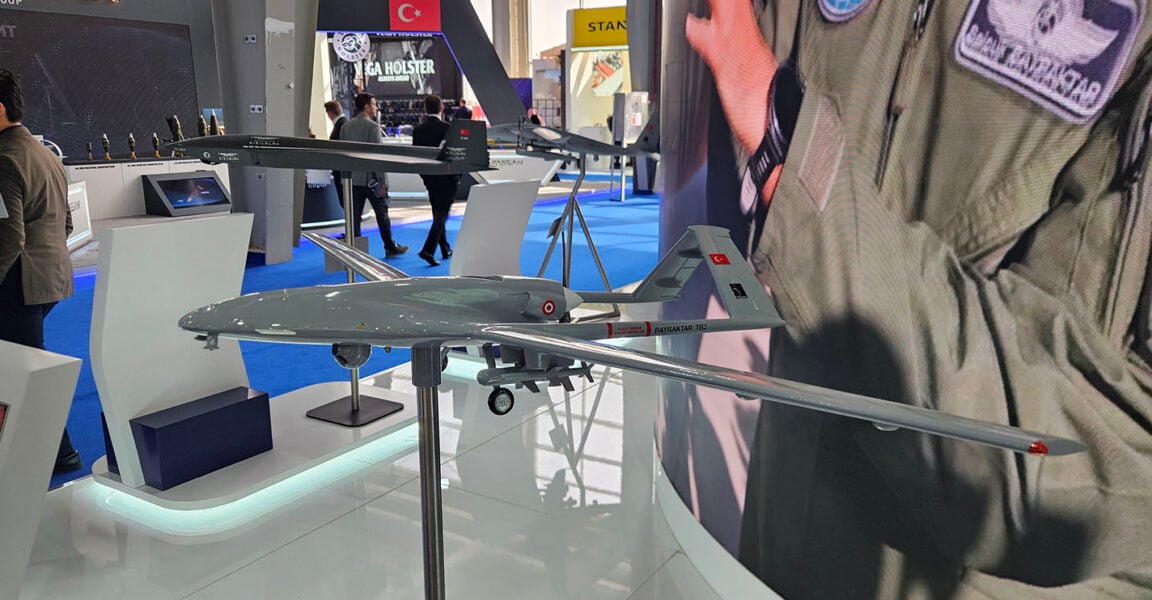
At the booth for Turkish firm Baykar at the World Defense Show: a model of the Bayraktar 2, the drone made famous in the opening days of the Ukraine conflict. (Breaking Defense)
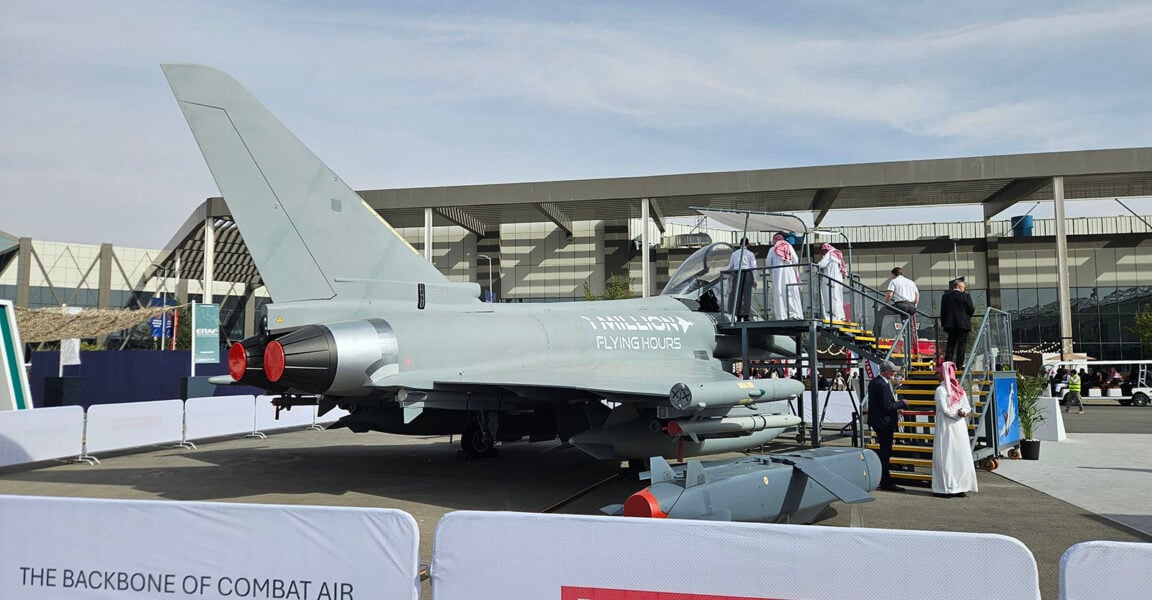
On Feb. 10, 2026, attendees of the World Defense Show in Saudi Arabia hop in the cockpit of a model Eurofighter Typhoon. (Breaking Defense)
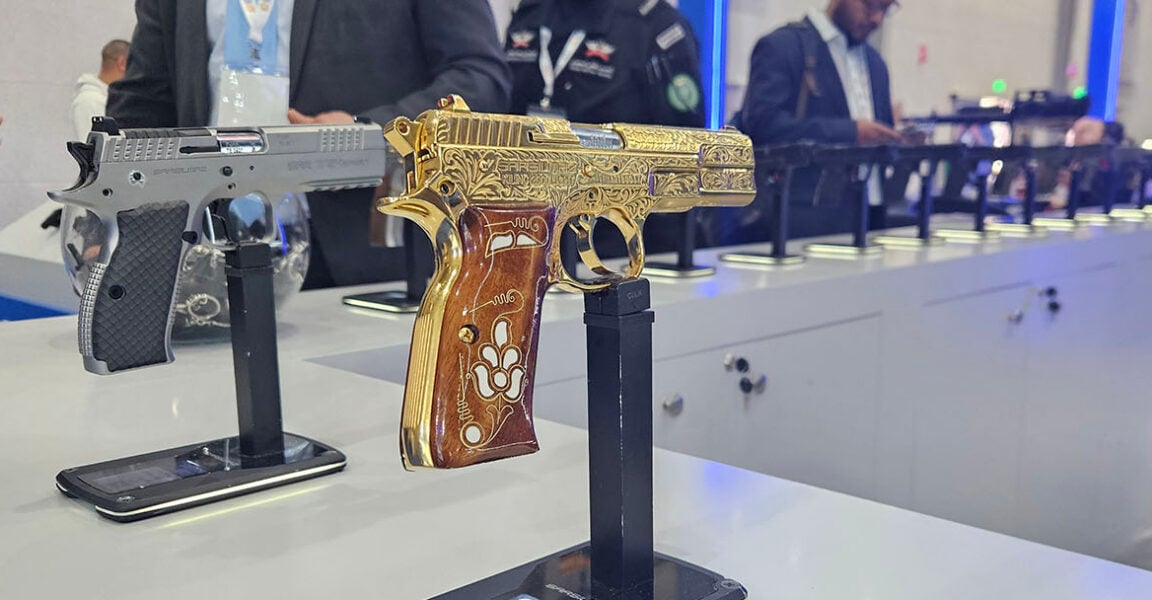
A decked-out version of the Kılınç 2000 Light pistol sits on display at the stand for Turkish defense firm Sarsılmaz at the World Defense Show in Saudi Arabia on Feb. 10, 2026. (Breaking Defense)