
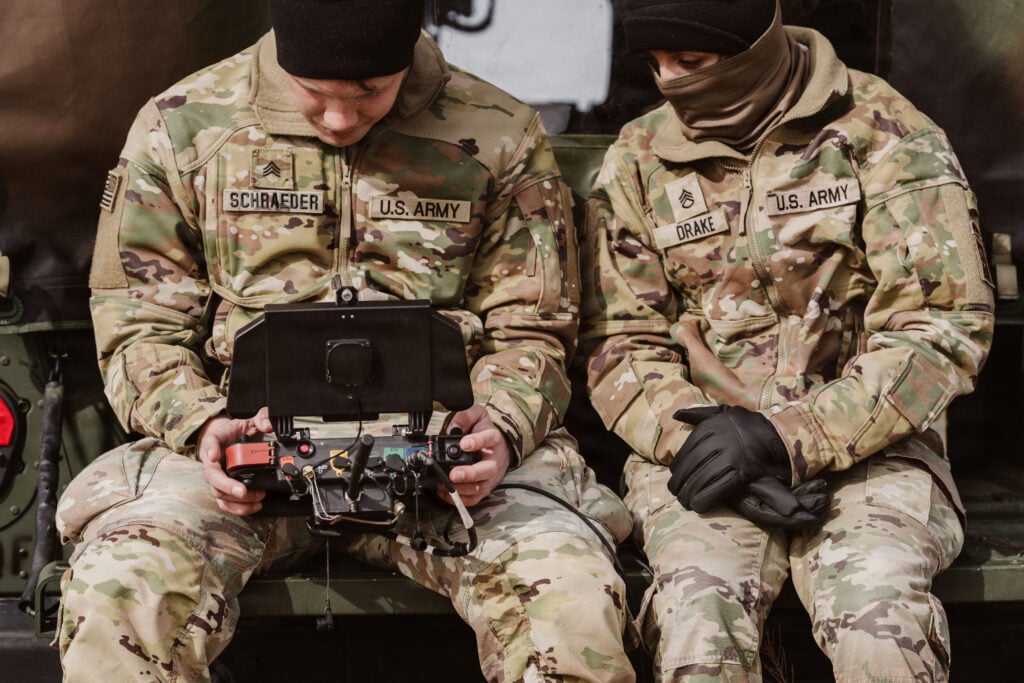
We know the rapid evolution of technology is reshaping the modern battlefield. Drones, AI-powered autonomous solutions, and offensive and defensive cyber capabilities are becoming standard elements of warfare.
Adopting these tools is critical to maintaining an edge, which means they must be designed, tested, and produced to operate immediately in austere environments. To meet that challenge, the defense technology ecosystem is leveraging commercial technology, adopting capabilities like rapid prototyping and open architectures, and incorporating feedback from experts with field experience. Breaking Defense discussed these challenges and opportunities with Cameron Mayer, Executive Vice President at Booz Allen.
Breaking Defense: What are the main challenges facing the defense technology ecosystem, and how are they being tackled?

Mayer: The challenges often mirror the opportunities. The defense tech ecosystem must continue to expand and must continue leveraging commercial technologies — the challenge is how to do that optimally to maintain American superiority on the battlefield. With increased demand to support national priorities, it’s critical to understand how commercial tech delivers innovation at mission speed while achieving the desired effect.
This isn’t about legacy versus new technology. It’s about fusing innovation across the ecosystem — leveraging nationwide investments and a shared desire to contribute to something bigger within defense tech.
That challenge is complex because of the pace of innovation. Secretary Hegseth released a memo earlier this month emphasizing best-in-class technology and the importance of delivering it faster than adversaries can adapt. We’ve seen this play out in Ukraine, where adversaries adapt quickly. Ukraine continuously innovates at the edge, combining dual-use technology with mission expertise to increase effectiveness.
The memo also highlighted operational innovation to create asymmetric battlefield advantage. That innovation at the edge requires interoperability across all technology partners and systems to generate network effects.
What sort of technologies are we talking about — cyber? Automation? Autonomous systems?
If you look at Ukraine, it’s autonomous systems, AI, cyber, and electronic warfare effects. It’s the fusion of these technologies in an asymmetric environment — using the right capability at the right time to achieve the intended effect.
Sometimes that effect is best delivered through electronic warfare. Sometimes it’s a tethered drone. Understanding where the effect is needed and the threat level involved is increasingly being enabled by AI.
There’s been a move toward commercial technology for a while. Has Ukraine accelerated that push?
Efforts to accelerate commercial tech adoption across the Department of War have been underway for some time, but the past year has significantly intensified them. This administration has supercharged that effort and it’s great to be on the front lines delivering innovation through our engineering facilities and with our commercial tech partners.
We’ve actively brought dual-use technology companies to our customers by engaging directly with the commercial ecosystem. We were in Silicon Valley with the Booz Allen Ventures team before the Defense Innovation Unit (DIU) was there, and in Austin before Army Futures Command arrived, all with the same mission: identifying companies that didn’t realize their technology could support the Department of War and to fuse their tech with Booz Allen tech to deliver game changing capabilities for the warfighter.
That effort evolved alongside DIU, Futures Command, and innovation units across the department. As a result, we feel exceptionally well prepared. Our venture and tech scouting teams have been exploring commercial partnerships and investments for years. We’re not just meeting the moment — we’re helping accelerate adoption across the defense tech ecosystem.
Over the past year, adoption rates have increased significantly, and we’re seeing real impact on capabilities being deployed across the department.
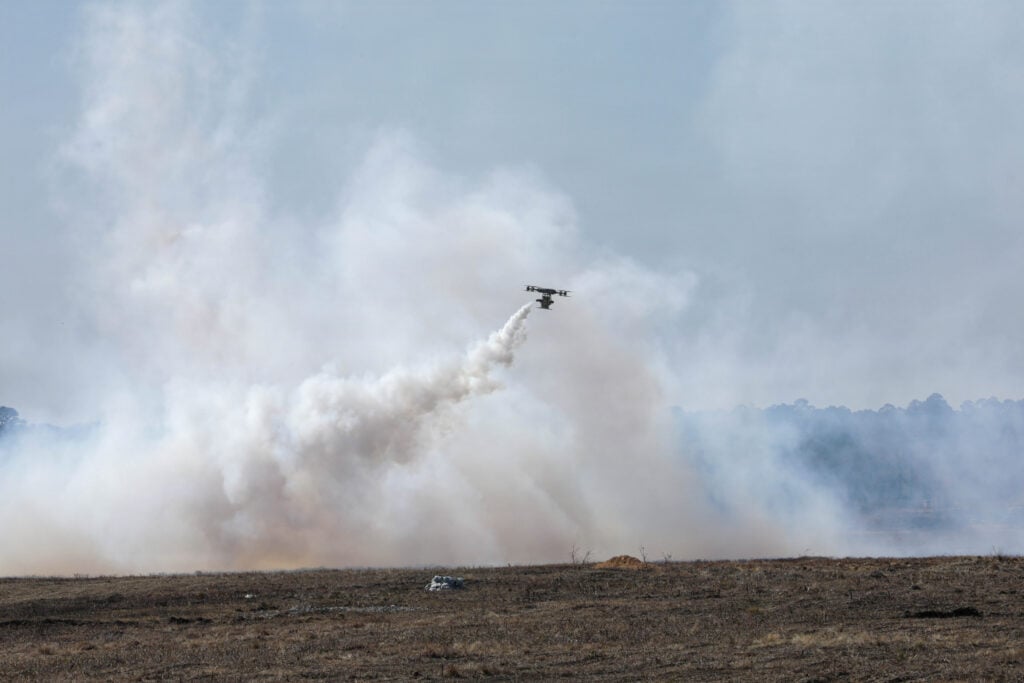
How is the emphasis on open architecture shaping engineering, manufacturing, production, and R&D?
At Booz Allen, we’ve made significant investments in engineering, manufacturing, and production over the past two decades. We operate flagship engineering facilities in Panama City, FL; Pax River, MD; and Lorton, VA, along with more than 20 R&D facilities nationwide. We also partner with organizations like Carnegie Robotics to scale production and accelerate prototyping.
When engineering teams across multiple locations are working together — from design through manufacturing and shipping — a common architecture is essential. That applies internally and across external partners.
Those investments — including architecture, supply-chain tools, and digital and simulation capabilities — help lower costs, reduce timelines, and enable rapid response. When another C2 or Counter-UAS system is needed in Europe, in the Pacific, or down at the Southern Border, we can turn it around and shift production quickly.
How do you ensure technology works in real-world, austere environments?
Some companies prioritize marketing over engineering. In operational or tactical environments, that approach fails. What matters most to us is that the technology works in the most critical mission scenarios and in the most challenging environments. Before putting systems in the hands of warfighters, we run simulations, conduct warfighter touchpoints, and test in exercises. We’re building practical, reliable technology for the field — such as advanced C2, fire control, and counter-UAS solutions.
The fusion of engineers with mission experts ensures systems perform as intended. Those mission experts are our toughest critics, driving rigorous field testing, exercises, and performance validation. The same high standard applies to our partners.
That process accelerates our ability to deliver high impact, reliable tech to the front lines. Our processes and cutting-edge facilities enable rapid delivery of systems that work the first time in the field.