
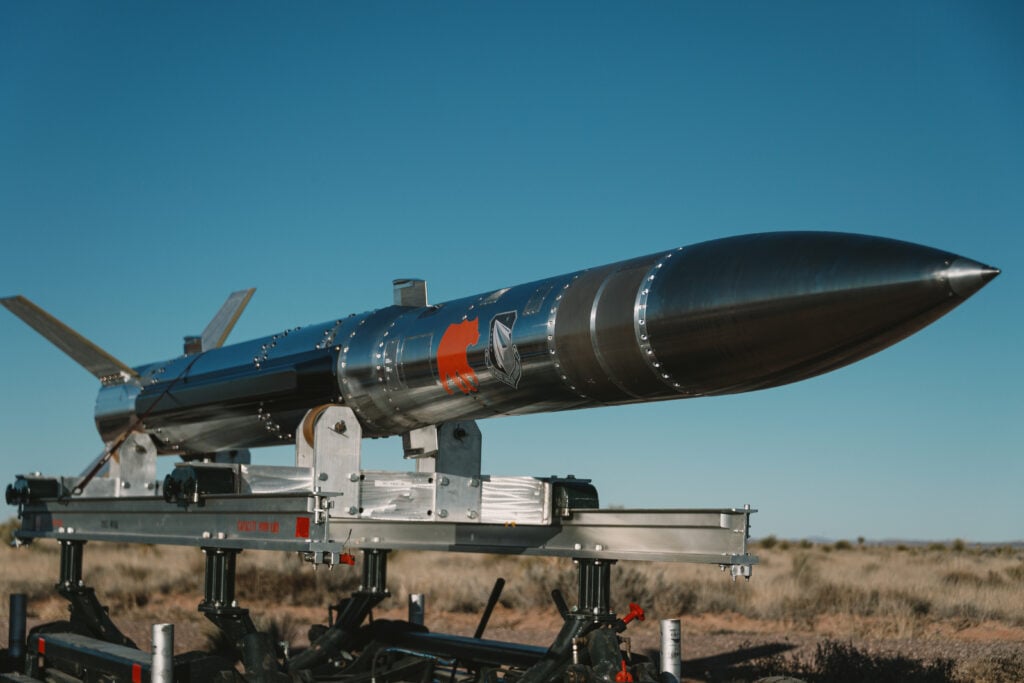
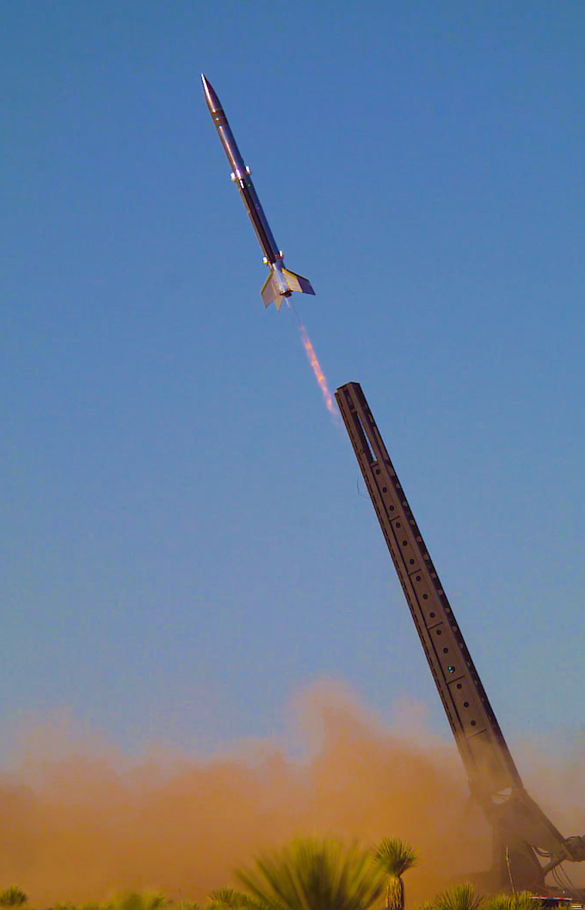
Hypersonics are often defined by long timelines, high costs, and exquisite one-offs. The Air Force’s Affordable Rapid Missile Demonstrator (ARMD) is designed to disrupt such challenges and convention as it was structured to achieve first flight in under a year, which it successfully accomplished just a few weeks ago.
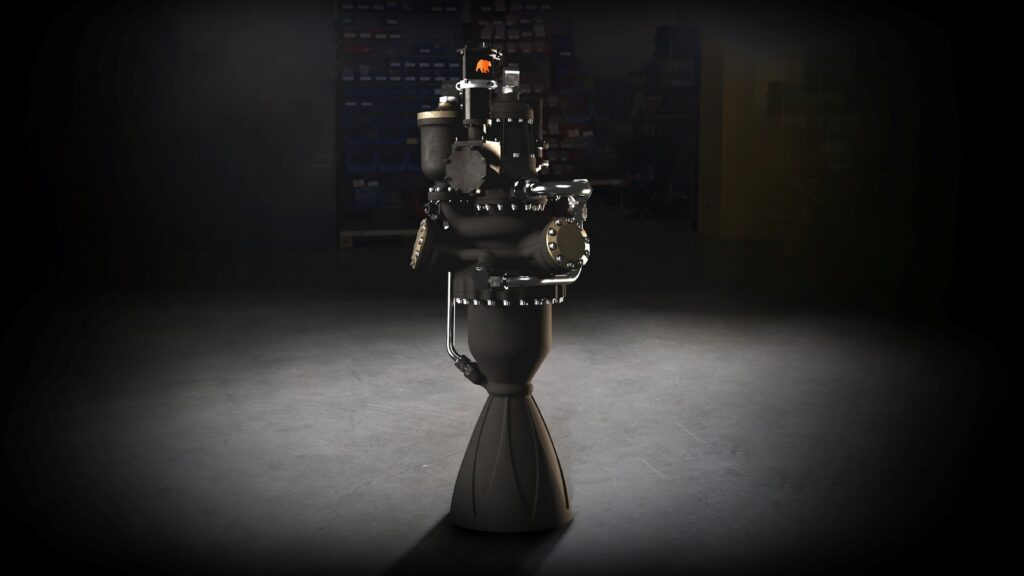
Ursa Major’s Draper storable liquid engine is central to that approach, enabling non-cryogenic storage and powered, throttleable flight profiles for both endo- and exo-atmospheric flight applications. Katrina Hornstein, a Stanford and New Jersey Institute of Technology (NJIT) educated engineer and program manager for Ursa Major, breaks down the program and Ursa Major’s prime role.
Breaking Defense: Describe the Air Force mission for the ARMD, as well as the importance of the program.

Hornstein: The ARMD program was designed to rapidly demonstrate affordable hypersonic capability, and the first-flight demonstration was designed to mature the advanced, durable liquid-rocket engines that Ursa Major is designing for hypersonics. ARMD was designed to move extremely rapidly. The program was required to achieve flight within a year and Ursa Major served as the prime contractor to lead the effort.
The initiative also demonstrates the novel capability of storable liquid propulsion as part of something new for hypersonics. The entire program is meant to move extremely quickly, rapidly achieve first flight, then progress at pace into hypersonic demonstration.
The program is also designed with affordability at the forefront. Every decision in the design, even at this demonstrator phase, has been with affordability, ease of production, and scale in mind.
ARMD uses Ursa Major’s Draper storable liquid rocket engine. Tell us about the significance of liquid engines in hypersonic flight.
Storable liquid rocket engines, particularly the one that Ursa Major is developing, utilize non-toxic propellants that can be stored in a wide range of temperatures – unlike cryogenic systems typically used for launch. We’ve gone the storable route; it is a closed-cycle engine, meaning it is highly efficient and it’s easy to carry a lot of propellant with you.
What differentiates it for the hypersonics application is that we’re carrying our own fuel and oxidizer, so we’re not sensitive to air speed and altitude in the way that air-breathing hypersonic solutions are.
We uniquely have the ability to propulsively maneuver through the entire span of certain flight profiles, which is something different than what typical boost-glide systems can do because they’re unpowered in their glide phase.
What made Ursa Major’s approach to this project different from typical government defense programs? How were you able to go from contract to full-vehicle flight test in under a year?
There are choices we are making that enable us to move more quickly. Ursa is unique in that we have engineering, manufacturing and tests co-located here and are able to run all three in parallel. We’ve also made decisions to prioritize flight learning over lots of ground-based testing, which allows us to gradually iterate on the flight maturity to achieve the end goals and move much more quickly than other programs.
Going from contract to flight in less than a year definitely depends on the people. We have an extremely driven, talented, and collaborative team here. They were all bought in. They all have the mindset that we are going to get after this and deliver this capability. They see the end mission and this important and critical step as what’s needed to get there.
We leveraged a lot of our expertise from our work on the Hadley engine and the flight heritage there to kickstart our Draper engine program, the storable liquid rocket engine, that gave us confidence for this flight effort.
Ursa Major is significantly vertically integrated. We do a lot of our additive work in-house, and all of the design, build, test was insourced as much as possible. We were able to get through test and integration quickly as opposed to some efforts that were relying on multiple partners and subs.
Discuss the technical challenges associated not only with the liquid engine but the flight vehicle Ursa Major also built.
There are a lot of challenges going from being a propulsion manufacturer to an all-up vehicle integrator. ARMD is the first time Ursa Major has integrated our own vehicle. We did all the manufacturing but two major subcomponents.
That’s the crux of this; we’re not just making the engine, we are doing the entire system and vehicle from the ground up. We’ve had to effectively manage a much wider pool of subcontractors, as well. Transitioning from that propulsion role to that vehicle integration role has expanded the subject matter expertise that’s needed.
Moving at the pace of the ARMD program required us working through the government test and range processes for the first time as the flight lead with a novel propulsion system. That was a great learning experience with our government partners and we’ll be ready to move even more quickly through it in subsequent iterations. There’s a lot of education about what we were flying and then how the process works at the respective range.
How did Ursa Major focus on affordability in the development of this hypersonic demonstrator? Were strategies or technologies such as 3D printing used to keep costs down?
For the engine itself, we heavily leverage additive manufacturing. It allows us to keep the part count low overall and introduce unique geometry to achieve high performance. Definitely additive on the engine side, and then credit to our designers on the vehicle side for choosing well-known materials, production processes, etc. We’re not limited to the aerospace and defense supply chain. We could explore automotive and other larger industrial bases to move quickly and keep things affordable, which is a strength of our company.
We discussed how Ursa Major went it alone on this program rather than partnering with a larger prime. What were the benefits of that approach?
We didn’t originally start down that path. We’ve been looking for partners to integrate our storable liquid system for quite some time and had moderate success in initial engagement. But when you look at the classic vehicle integrators and the industry today, they’re not willing to take the risk on a novel propulsion system. So we went and just did it ourselves.
We presented to our Air Force partners that we were going to go fly ourselves just to gain the flight heritage. That initiative and how quickly we wanted to move was convincing enough for this initial demonstration to let us go alone. We’ve proven ourselves through this effort that we can now move to integrating the more exquisite systems for subsequent flight demonstrations and programs of record.
That said, how does Ursa Major view its role within the broader ecosystem of hypersonic technology development? How do you see your company complementing the work of larger primes?
While we are entering the business of all-up-round hypersonic systems, I want to emphasize that we’re complementary. We believe in a healthy defense ecosystem, where large prime contractors can deliver the more exquisite and maybe higher-performing systems, and we can rapidly bring in some lower-cost options to complement the entire defense arsenal and ultimately bring increasing capability for the warfighter.
Ursa Major’s ability to move quickly helps us stand out, and we do have a lot of robust capability and acumen to field hypersonic weapons quickly. But we absolutely credit the large prime contractors for the heritage, reliability, and their performance to date. Ursa Major is about moving quickly, lowering costs, and providing capability when and where it’s needed most.
Final thoughts?
Ursa Major is focused on hypersonics and we want to provide affordable and reliable capability. We’ve done that over the past few years with Hadley and now with the Draper engine, and created a storable liquid engine based on that heritage and rapidly made it fly. Next up is our Ursa Major HAVOC Missile System, powered by the Draper engine. It takes everything we learned from this program and presents a tactical, liquid-fueled hypersonic for the warfighter.
We’re looking to ultimately provide high speed, affordable mass to the warfighter. Ursa Major is the company that can do that, and we’ve demonstrated it through this program and are going to continue to demonstrate that through subsequent flight events.