Naval Warfare

Anduril announces partnership with Kraken for small USVs

The companies will use Kraken’s small USVs with Anduril handling US manufacturing and payload integration.

Kraken USVs
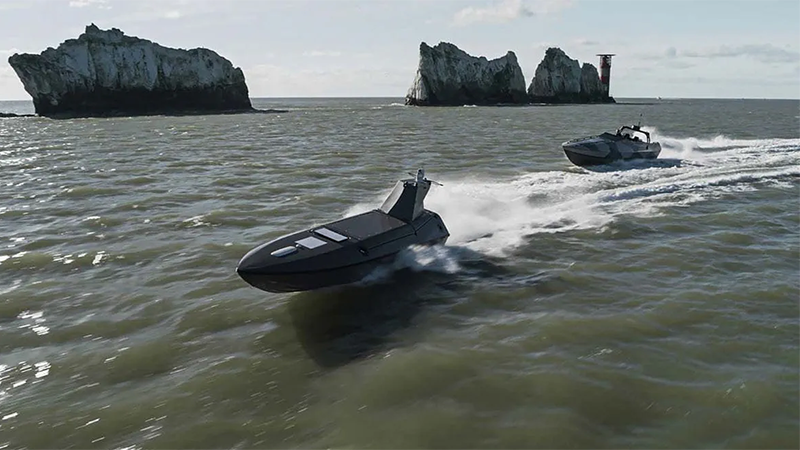
The Scout Medium (left) and Max (right) unmanned surface vessels made by UK firm Kraken. (Image via UK Royal Navy)

NATIONAL HARBOR, Md. — Anduril is teaming up with UK-based Kraken Technology Group to make small unmanned surface vessels (USVs) for the US Navy at a time when the service is increasingly focused on unmanned tech, the companies announced today.

“This partnership reflects Kraken’s commitment to supporting global maritime challenges with hardened operational capabilities at a critical point in history,” Kraken CEO Mal Crease said in a company press release. “Under this agreement Kraken will deliver low-cost, scalable and modular systems that are both reliable and effective.”

Anduril “will integrate payloads and Lattice autonomy software” onto Kraken’s “mass-producible USVs,” Anduril’s announcement states. The US company will make the K5 KRAKEN and K7 SABRE platforms while also sustaining and supporting the fleet domestically, while Kraken continues its own parallel production lines and create a new hull design variant for operator requirements, the announcement continues.

“Kraken is known for their proven, battle-tested platforms,” Cory Emmons, general manager of surface dominance at Anduril, said in Kraken’s press release. “This partnership expands Anduril’s family of autonomous surface offerings with small boats carrying mission payloads, adding a complementary capability to larger ASVs and the legacy fleet.”

According to the statement, the K5 and K7s will be able to carry 1,000 pound-plus payloads and be quick to manufacture.

The move comes at a time when the US Navy is increasingly focused on beefing up its unmanned capabilities. In March, the service announced it would be cancelling development of Modular Attack Surface Craft program and instead would be opening a new medium USV marketplace.

Further, Rear Adm. Christopher Alexander said at the Surface Naval Assocaition symposium in January that he expects nearly half of the surface force to be unmanned within the next two decades.

“Looking at some projections moving out over the future, by 2045 we expect about 45 percent of the surface force to be unmanned systems,” he said.

PHOTOS: Sea Air Space 2026

PHOTOS: Sea Air Space 2026

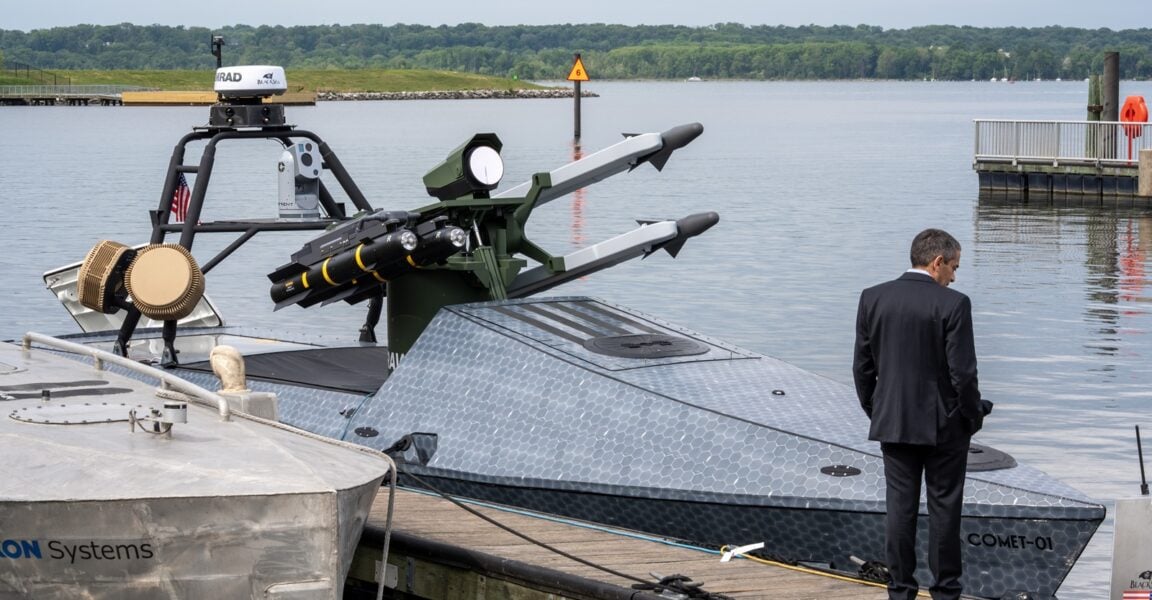
The Black Sea Comet -01 43’ High Speed Interceptor is pictured on the docks outside the 2026 Sea Air Space conference at Maryland’s National Harbor. (Daniel Woolfolk / Breaking Defense)
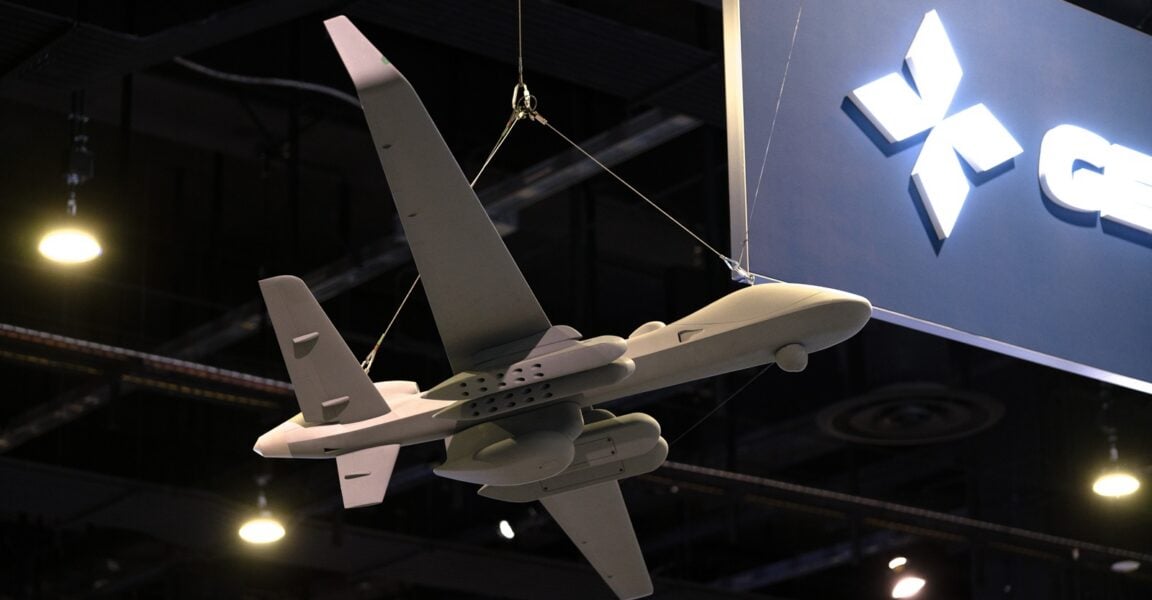
The MQ-9B SeaGuardian is seen here during the Sea Air Space conference at Maryland’s National Harbor. (Daniel Woolfolk / Breaking Defense)
A view of the dock where several naval systems are positioned for display outside the 2026 Sea-Air-Space conference at the National Harbor, Md. (Daniel Woolfolk / Breaking Defense)
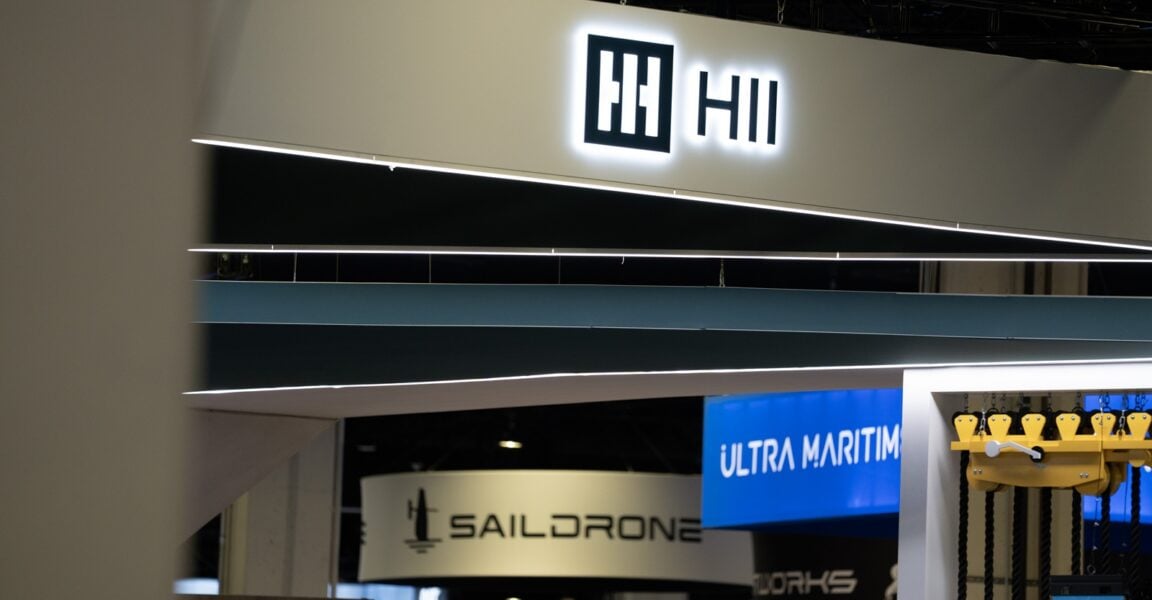
Maritime companies UltraMarine, Saildrone and HII set up their displays on the show floor of the Sea Air Space conference at Maryland’s National Harbor. (Daniel Woolfolk / Breaking Defense)
The General Atomics Electromagnetic Unmanned Underwater Vehicle as seen at the Sea Air Space conference from Maryland’s National Harbor. (Daniel Woolfolk / Breaking Defense)
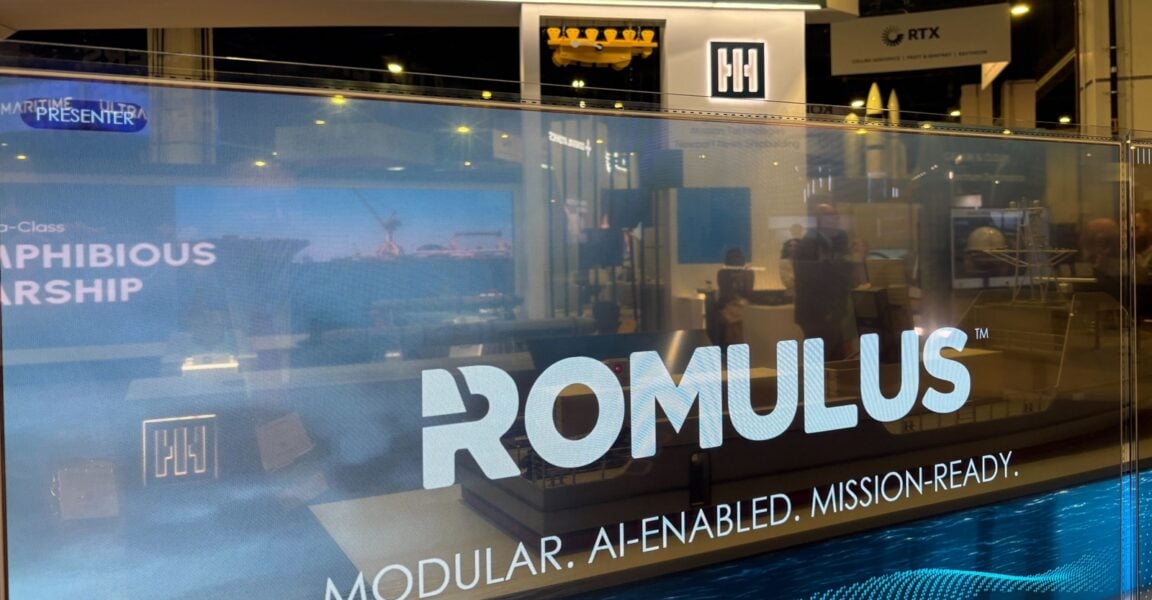
A display for Romulus, an autonomous ship from HII, is pictured on the show floor at the Sea Air Space conference from Maryland’s National Harbor. (Daniel Woolfolk / Breaking Defense)
A Triton autonomous underwater and surface vehicle from Ocean Aero is displayed at the Sea Air Space conference at National Harbor, Md. (Daniel Woolfolk / Breaking Defense)
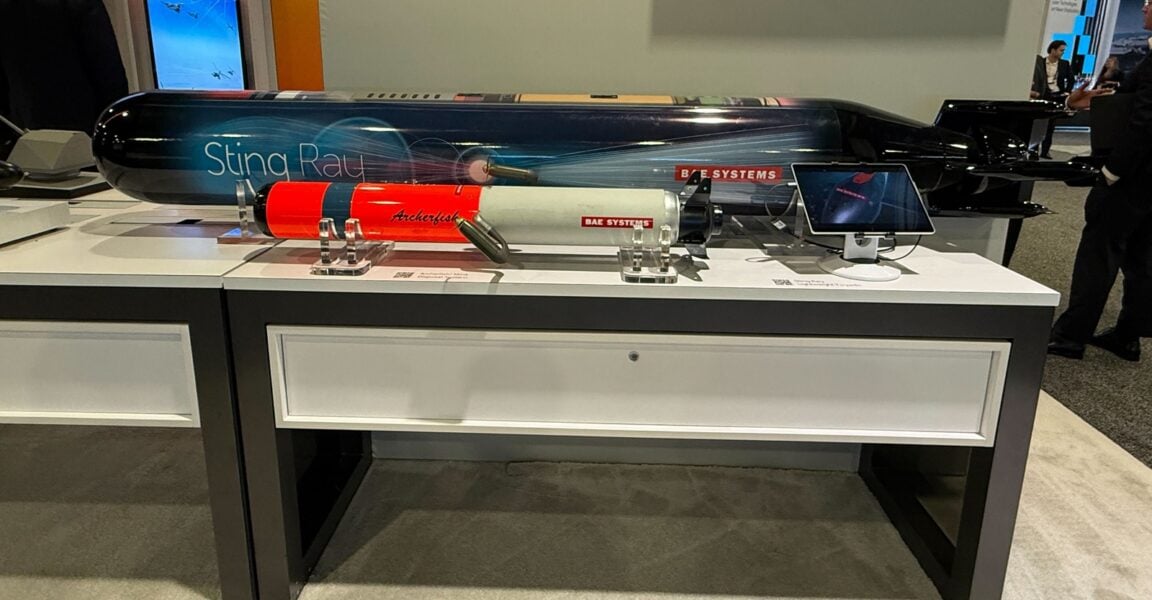
The Archerfish mine disposal weapon is displayed alongside a Sting Ray torpedo from BAE Systems at the Sea Air Space conference at National Harbor, Md. (Brendon Smith / Breaking Defense)
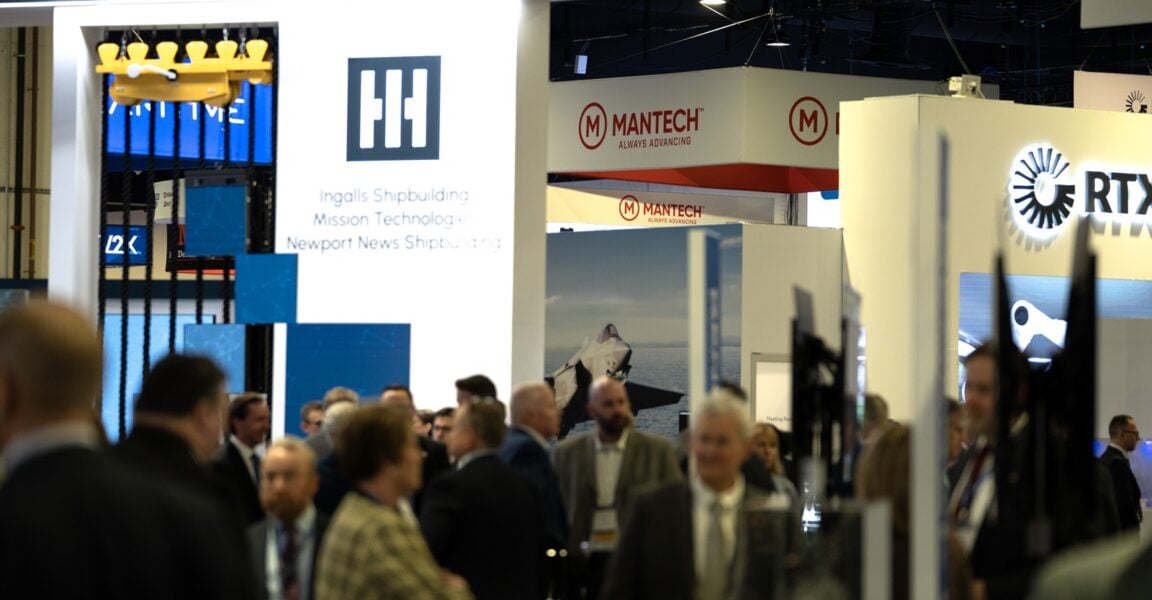
A view of attendees and booths on the last day of this year’s Sea-Air-Space conference at the National Harbor, Md. (Daniel Woolfolk / Breaking Defense)
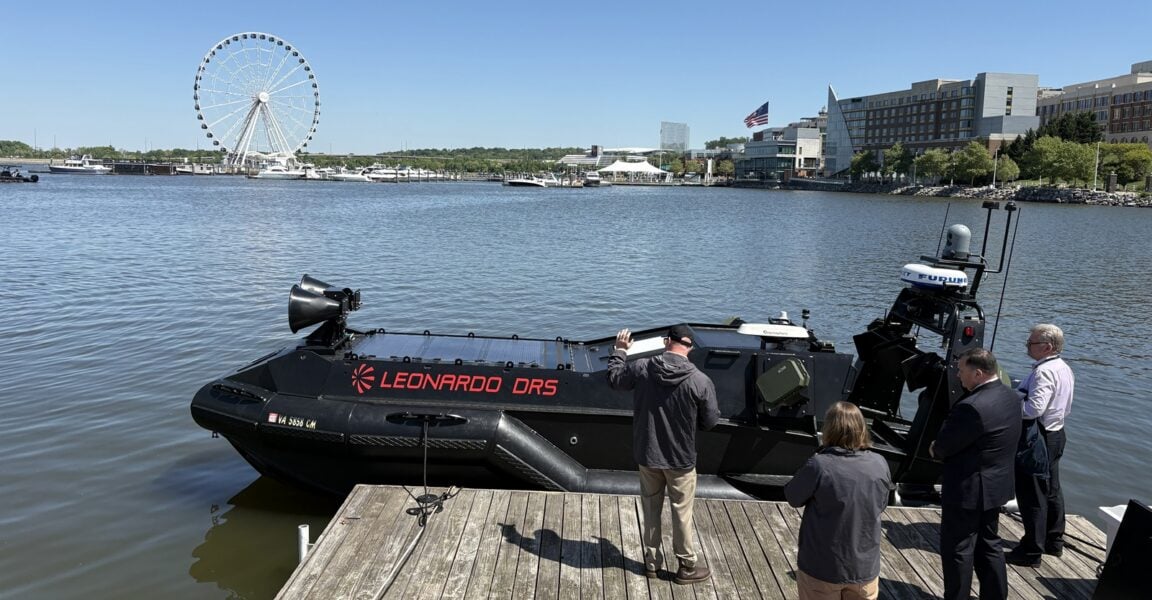
Leonardo DRS showcased its Autonomous unmanned surface vessel, which is integrated with its Maritime Mission Equipment Package. (Daniel Woolfolk / Breaking Defense)
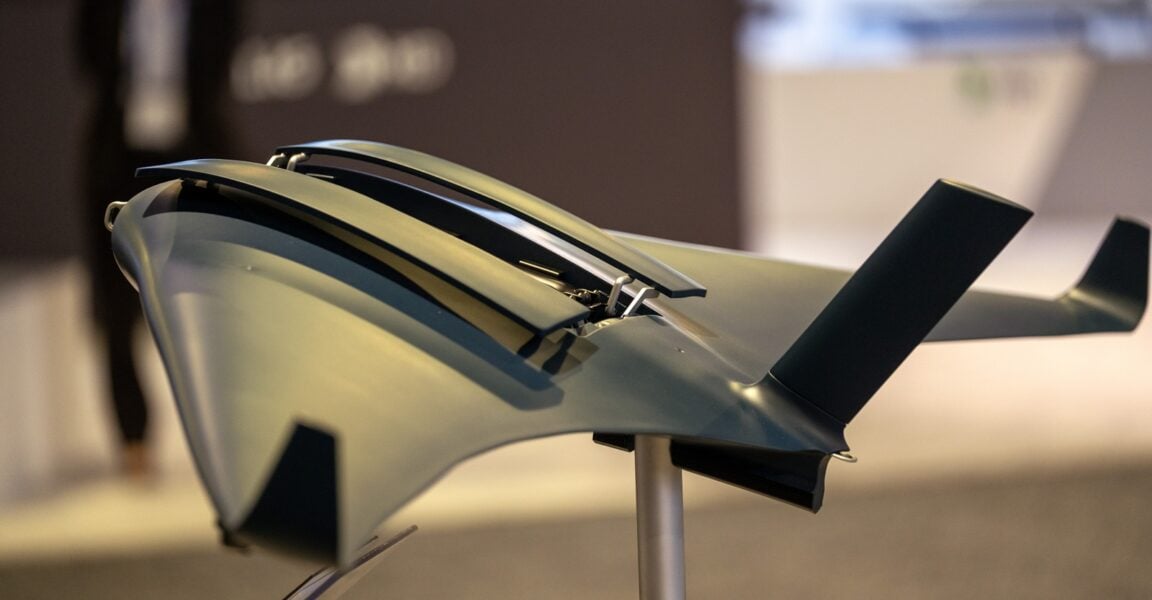
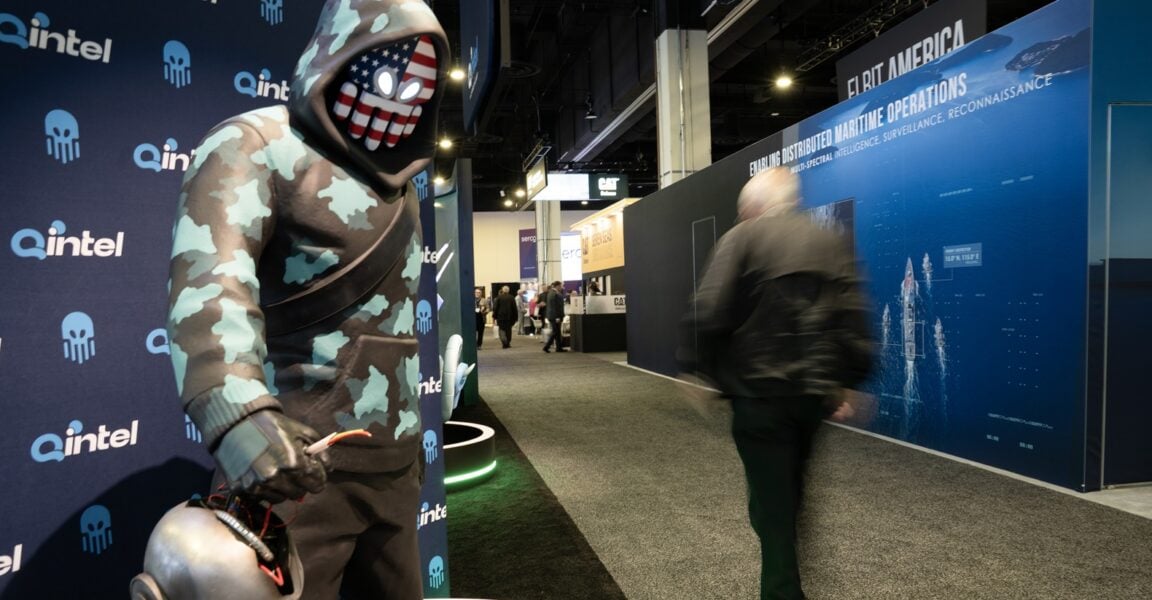
A dramatically camouflaged model stands at Qintel’s booth. (Daniel Woolfolk / Breaking Defense)
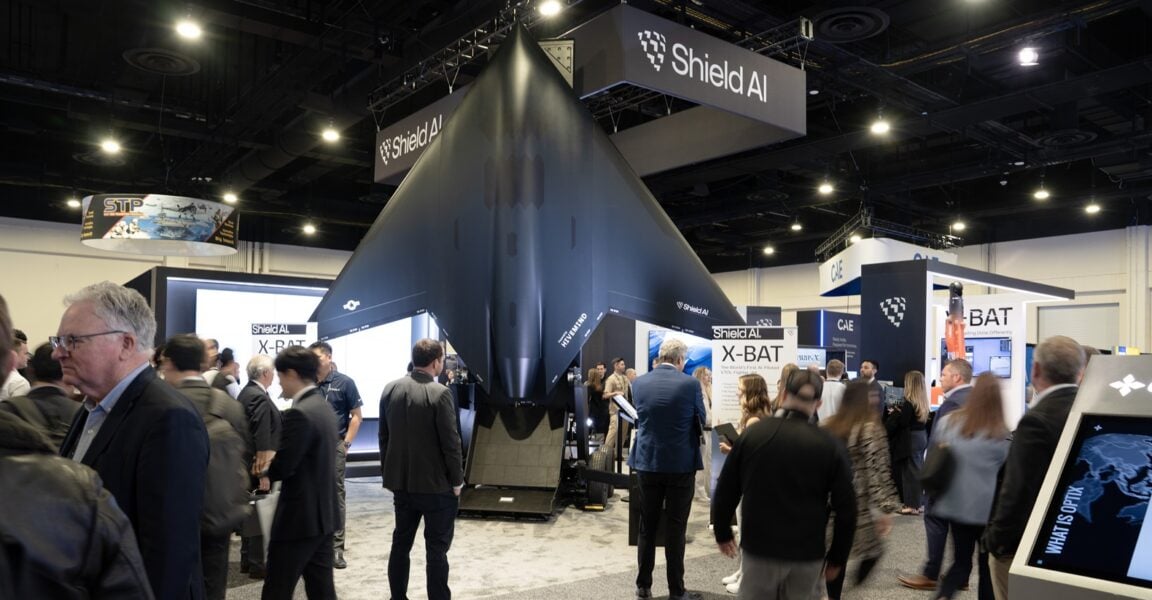
Shield AI’s X-BAT is an AI-piloted VTOL fighter jet apparently ready to blast off. (Daniel Woolfolk / Breaking Defense)
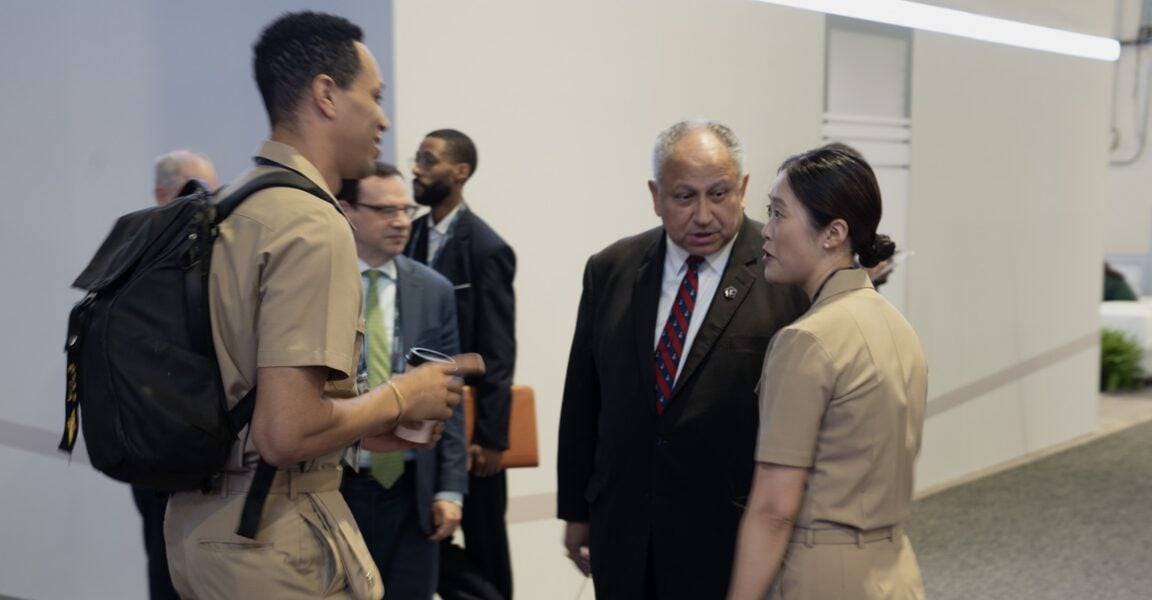
Former Navy Secretary Carlos Del Toro visits with sailors at the Sea-Air-Space conference. (Daniel Woolfolk / Breaking Defense)
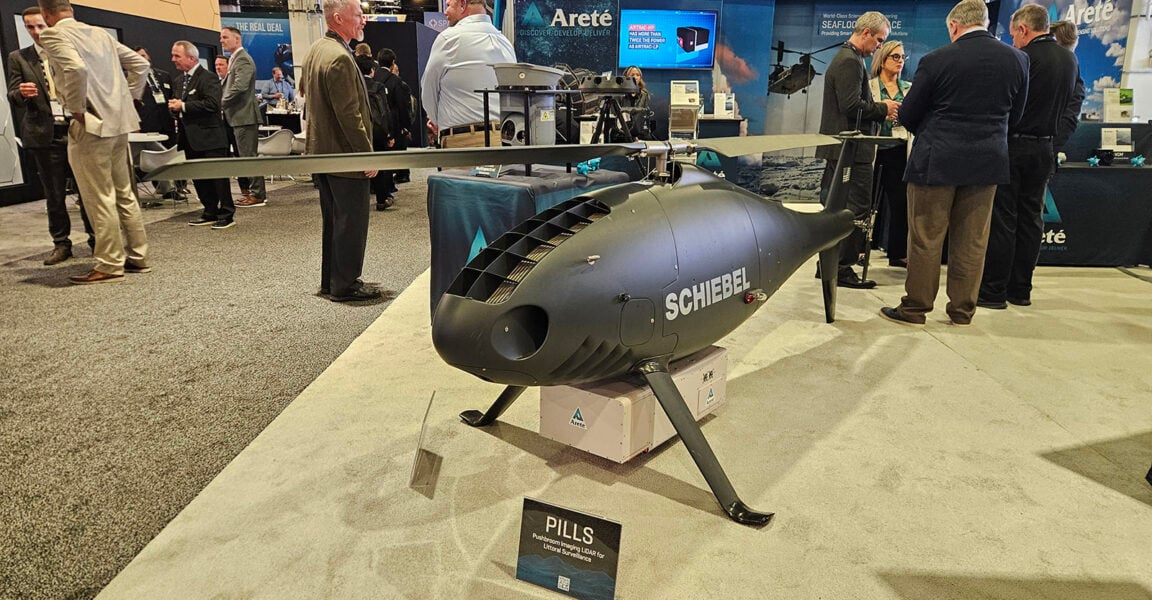
Schiebel displays the PILLS unmanned rotorcraft at Sea Air Space 2026. (Breaking Defense)
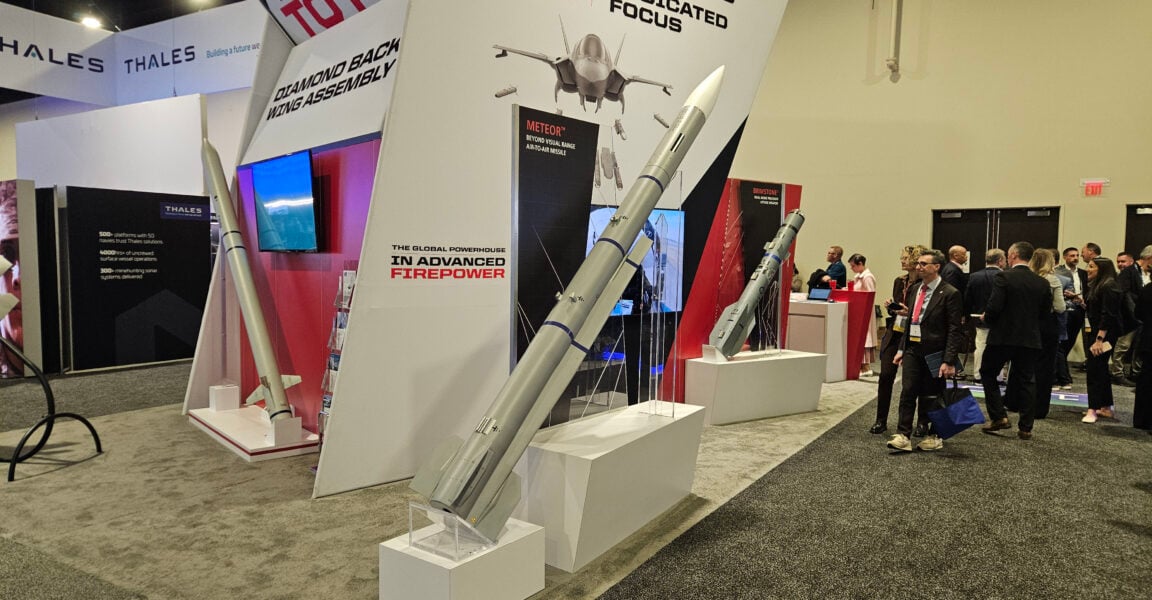
An American arm of European missile-maker MBDA displays the Meteor missile at Sea Air Space 2026. (Breaking Defense)
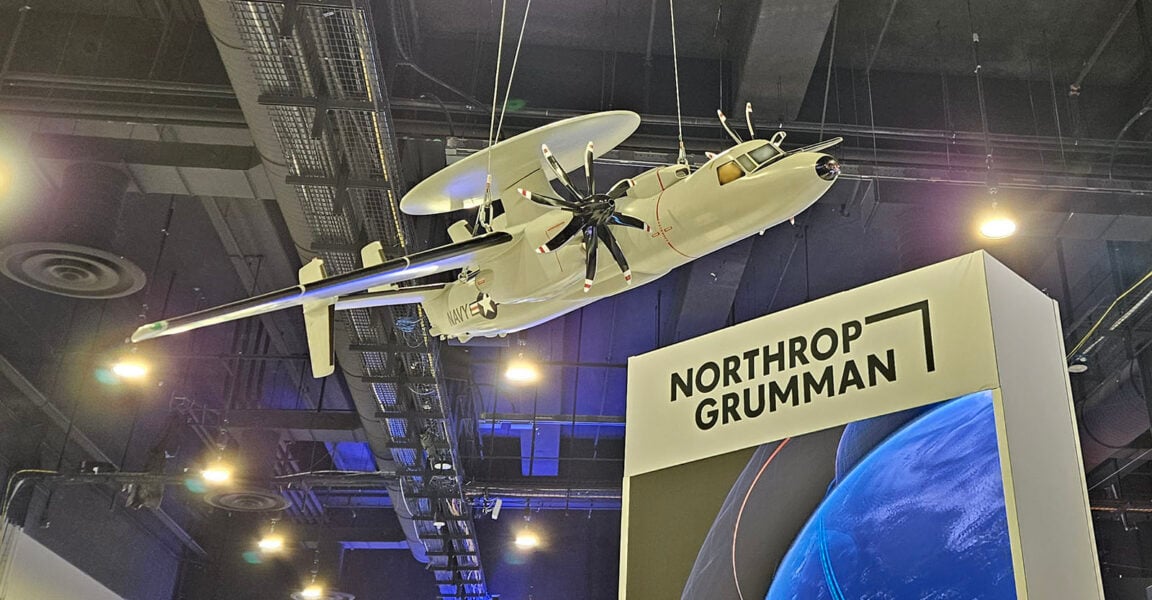
A Northrop Grumman surveillance plane (model) looms over attendees at Sea Air Space 2026. (Breaking Defense)
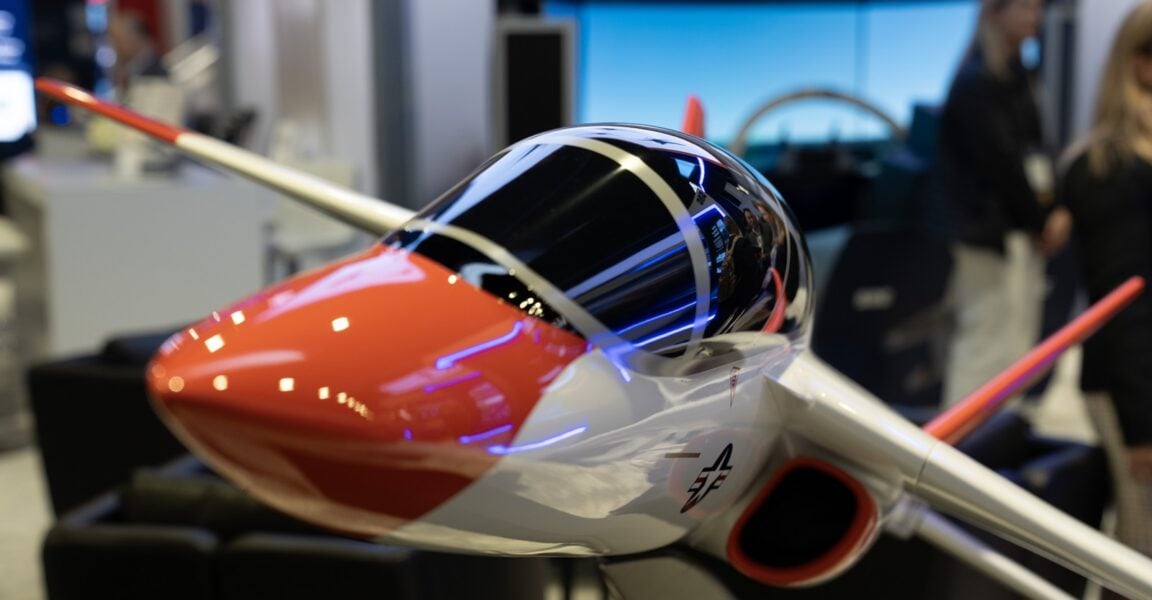
An SNC Freedom Trainer on display at Sea Air Space 2026. (Daniel Woolfolk / Breaking Defense)
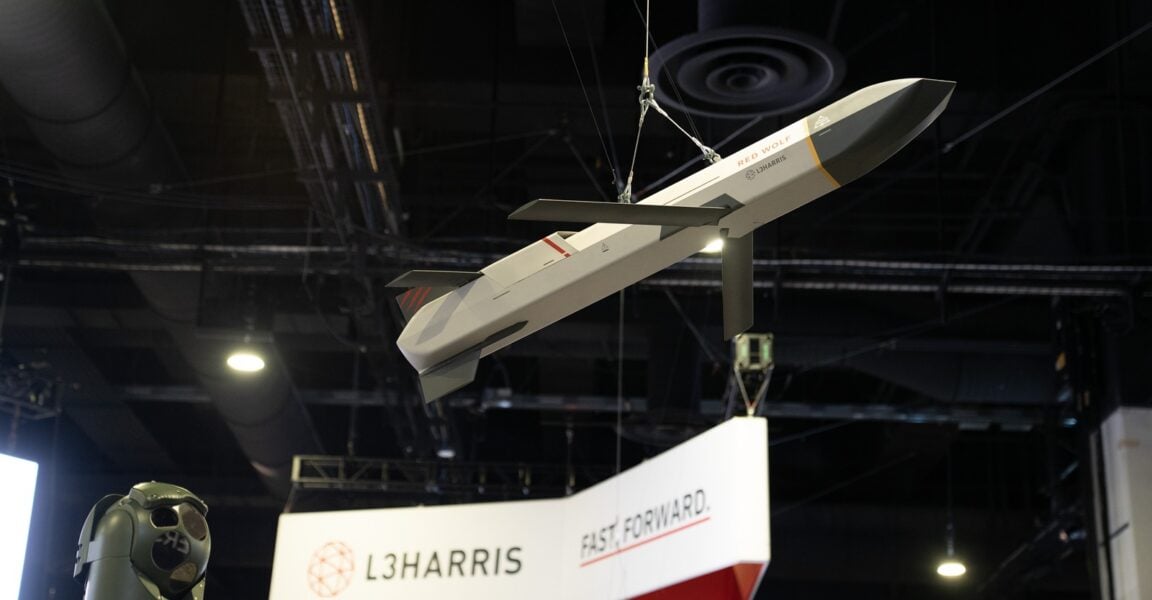
The U.S. Naval Air Systems Command selected L3Harris to develop its Red Wolf munitions for the Marine Corps’ Precision Attack Strike Munition program. (Daniel Woolfolk / Breaking Defense)
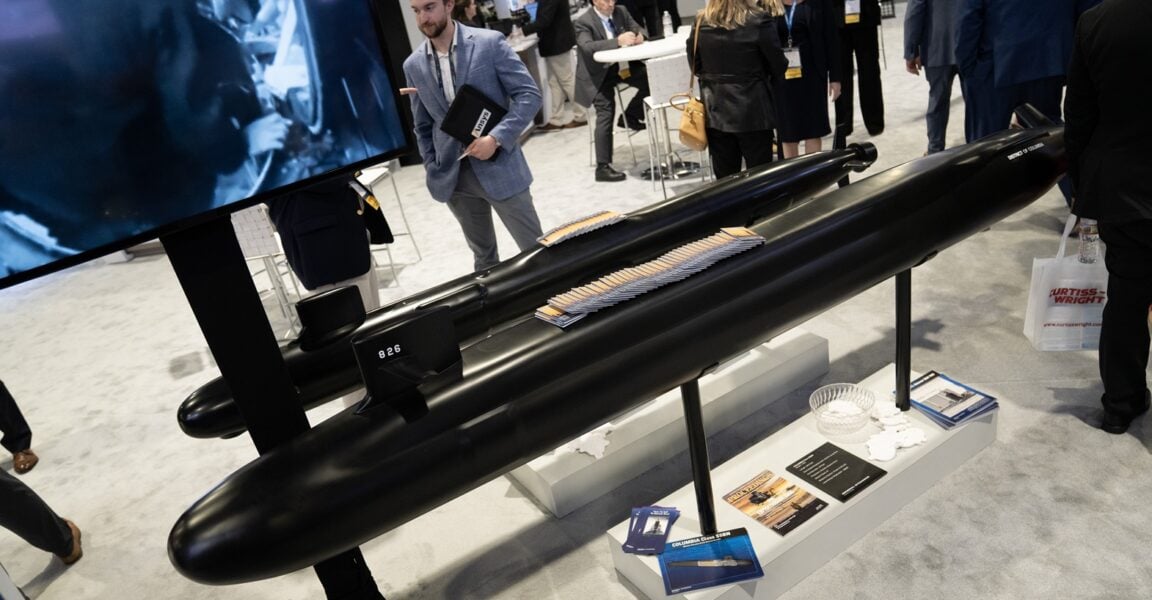
General Dynamics Electric Boat Columbia Class submarine (front) and Virginia Class submarine (back). (Daniel Woolfolk / Breaking Defense)
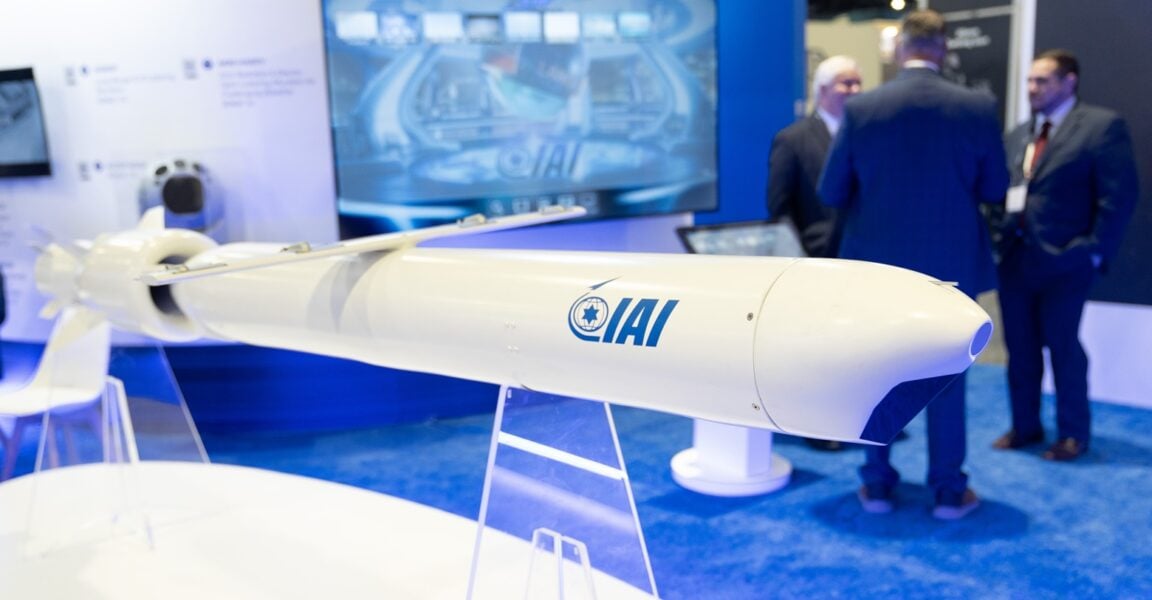
IAI’s Sea Demon - Affordable Surface to Surface Cruise Missile on display on the show floor. (Daniel Woolfolk / Breaking Defense)
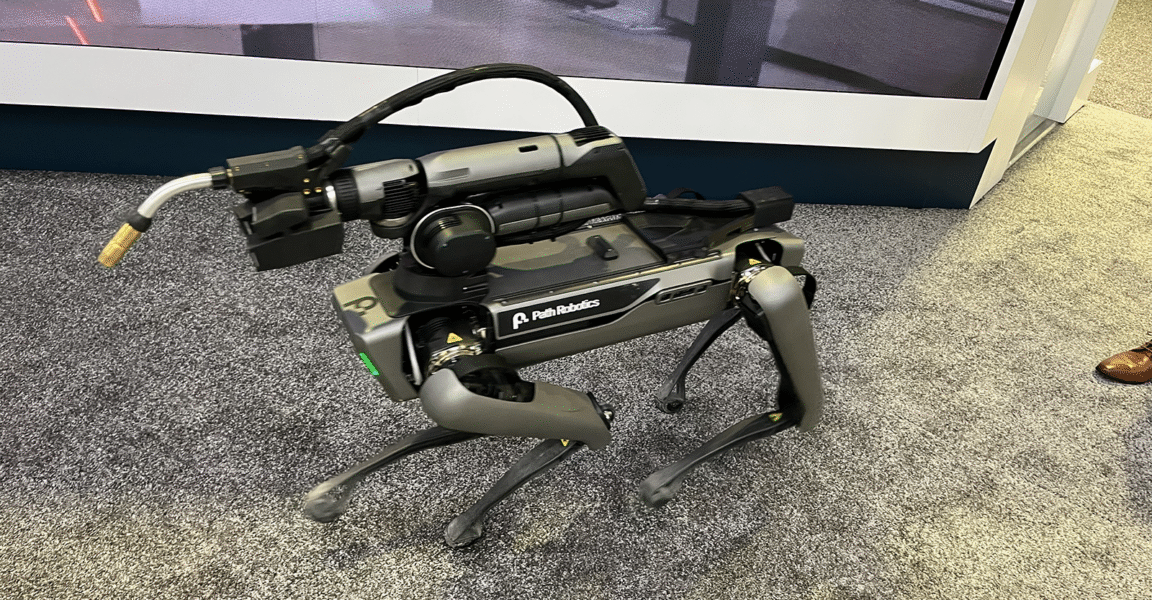
Path Robotics robot "dog" with welding torch on its "head," as seen at at Sea-Air-Space 2026. (Sydney Freedberg / Breaking Defense)
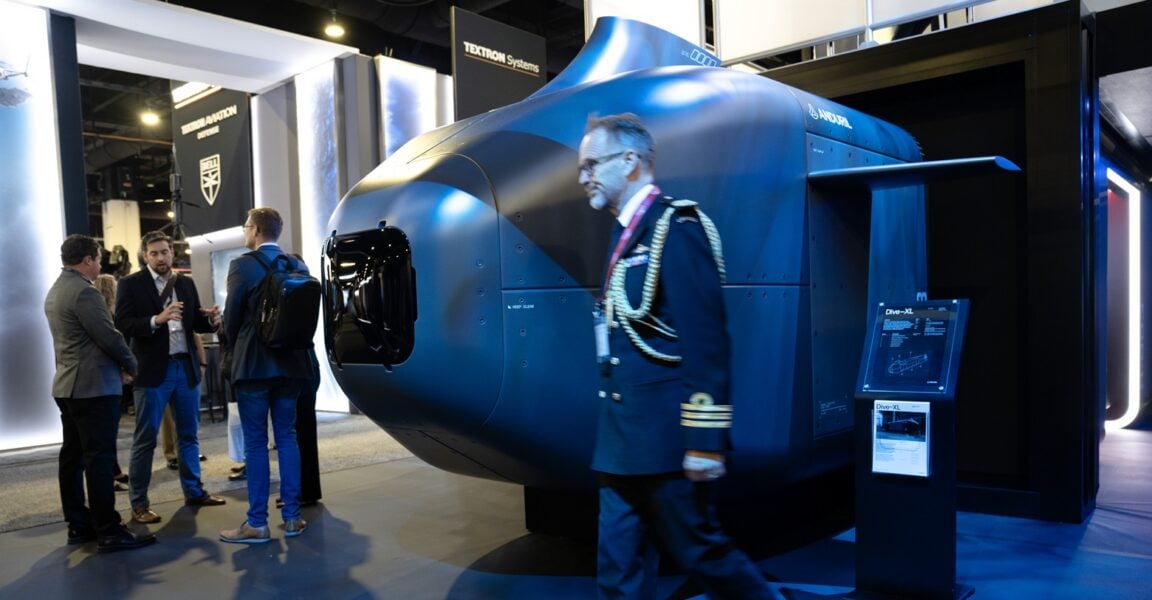
Anduril displays its Dive XL nose and this year's Sea Air Space. (Daniel Woolfolk / Breaking Defense)
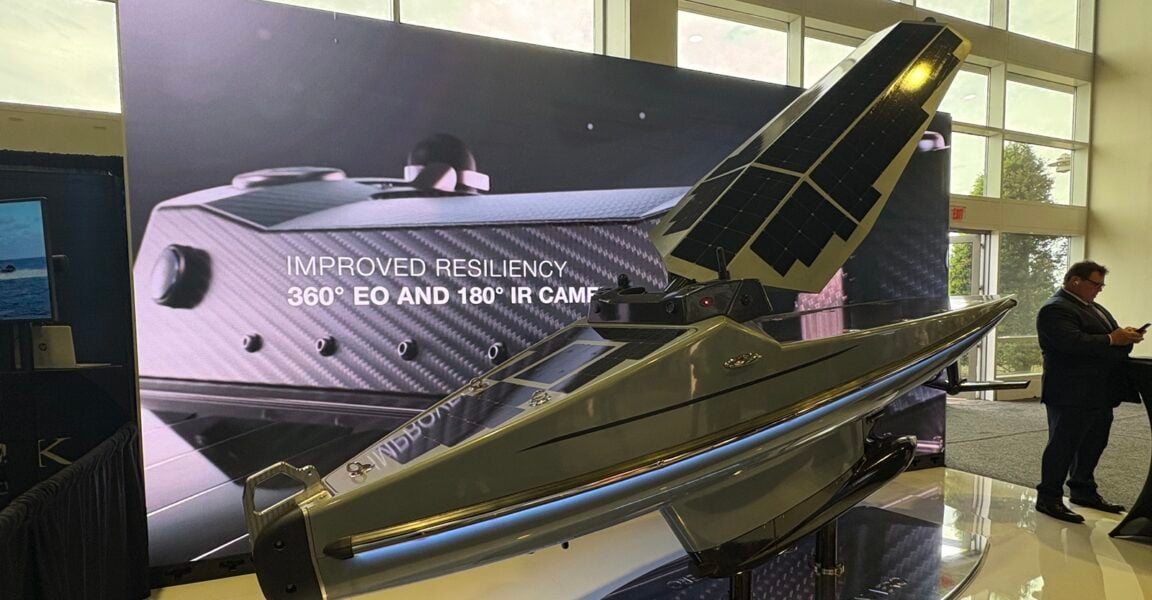
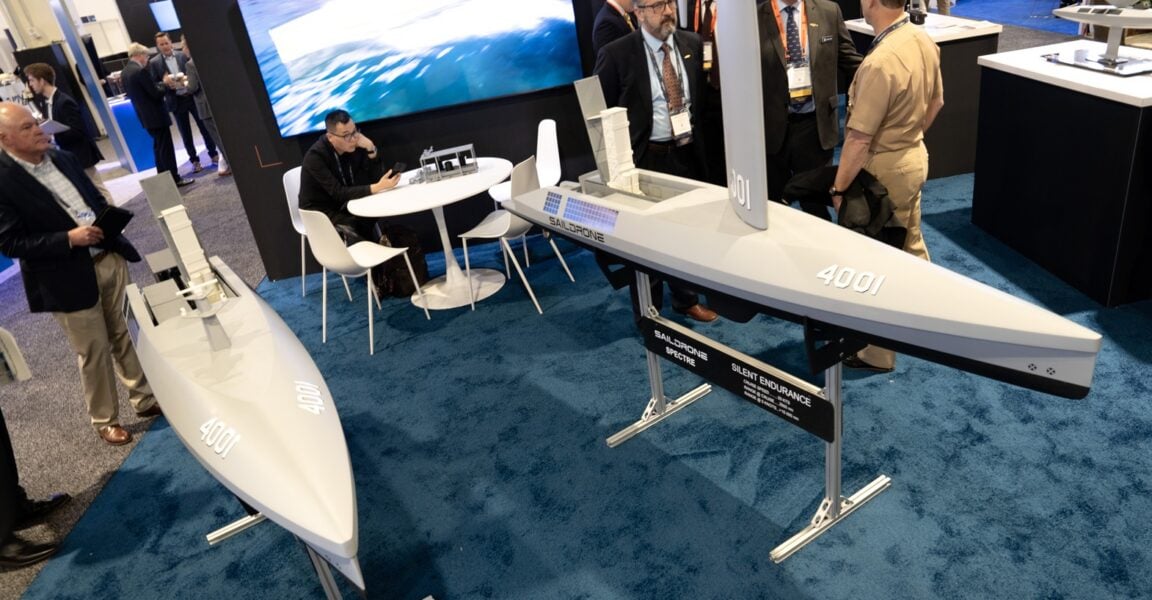
Saildrone released a wingless Spectre USV. (Daniel Woolfolk / Breaking Defense)