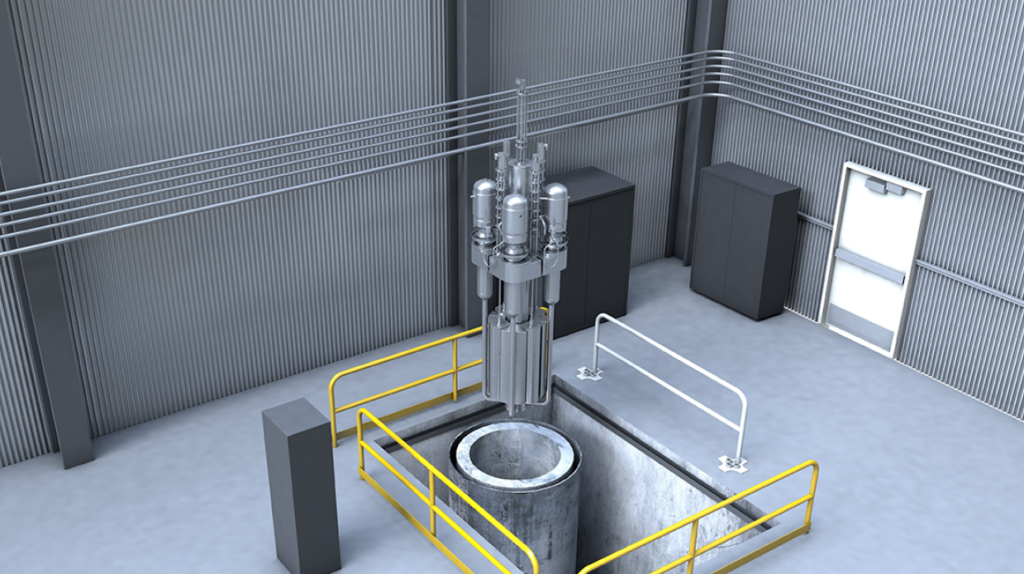
WASHINGTON — If you’re a servicemember living or working in Texas, Colorado or Montana, new microreactors for nuclear power could be coming to a military base near you.
A government team of the Defense Innovation Unit and the Department of the Air Force have selected three companies to “potentially develop and operate” nuclear microreactors at military installations, according to an Air Force press release.
Eight competitors were deemed eligible for the Advanced Nuclear Power for Installations (ANPI) just over a year ago. The Air Force has now picked three companies from that vendor pool to proceed with design work for its installations: Antares Nuclear, Inc., Radiant Industries, Inc. and Westinghouse Government Services. (The Army has its own parallel nuclear microreactor project, and was part of the larger vendor pool.)
The Air Force’s press release, published Wednesday, says Antares would be paired with Joint Base San Antonio in Texas; Radiant with Buckley Space Force Base in Colorado; and Westinghouse with Malmstrom Air Force Base in Montana, which also hosts a nuclear missile fleet.
“The future of air and space dominance is powered by resilient energy,” Michael Borders, assistant secretary of the Air Force for Energy, Installations and Environment, said in the release. “By integrating advanced nuclear technology, we are not just keeping the lights on; we are guaranteeing that our most critical national security missions will never be held at risk by a power outage. This is a pivotal moment for the Department of the Air Force.”
The program could enhance national security by strengthening DoD’s energy sources, supporters of the effort have said. Critics, meanwhile, have argued that ANPI’s benefits are illusory, and come with too much cost and risk.
The Air Force is separately running a pilot program to demonstrate nuclear microreactor technology at Eielson Air Force Base in Alaska. The service announced last year that it intended to partner with the firm Oklo Inc. for that project.

Project Talon Portfolio puts mission autonomy at the center of future CCA operations
Truly autonomous aircraft can make decisions without continuous human input.
The ANPI effort is aiming to have “at least one” nuclear microreactor operating on a Department of the Air Force base by 2030, or sooner if possible, according to the release. Selected companies in conjunction with the government will now have to conduct an environmental assessment.