
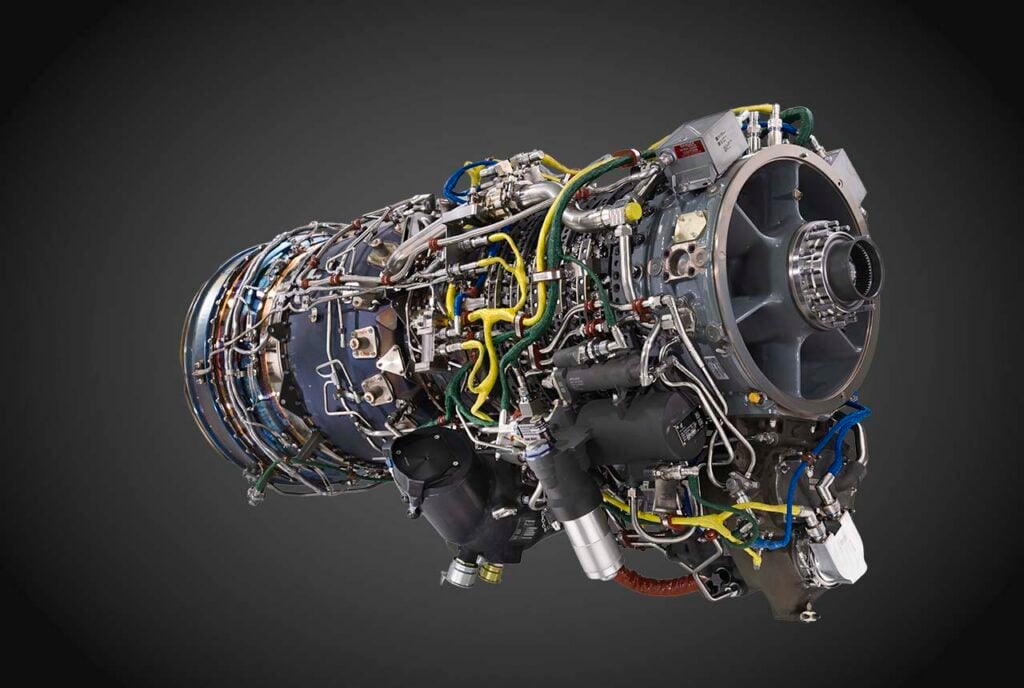
Deterrence today is enabled by advanced capabilities, operational reach, and the capacity to adapt faster than adversaries. Rolls-Royce enables this objective through its work on the MV-75 Future Long Range Assault Aircraft (FLRAA) program, among many others.
The MV-75 will provide groundbreaking maneuver capability for the U.S. Army that will transform the geometry of the battlefield, a strategic imperative for modern conflict particularly in geographically expansive theaters such as the Indo-Pacific.
Rolls-Royce is proud to be a member of team FLRAA, with AE 1107 engines powering the MV-75, providing the Army with twice the speed and range of the current fleet. This capability leap will enable U.S. forces to outpace and outmaneuver potential adversaries by supporting rapid insertion, extraction, and sustainment at extended ranges.
Continuous Improvement for State-of-the-Art Propulsion
The AE 1107 is part of the larger Rolls-Royce AE engine family – proven, dependable engines that support the accelerated milestones the Army has requested for the MV-75 FLRAA program.
Rolls-Royce helps translate the National Defense Strategy’s core idea of “peace through strength” into reality by powering U.S. aircraft to fly farther, faster, and return our warfighters home safely.
Rolls-Royce engines power many of the nation’s most critical platforms, directly contributing to U.S. military capabilities and readiness – keeping aircraft mission-ready, extending operational reach, and sustaining deterrent strength day in and day out.
With more than 90 million flight hours across both military and commercial aircraft, AE engines have benefited from three decades of continuous improvement. Over that span, Rolls-Royce has invested hundreds of millions of dollars in direct product enhancements to keep the AE engine family at the forefront of safety, technology, capability, and performance.
Those improvements have included hardware upgrades across all major engine subsystems which have improved power, reliability, and reduced fuel consumption and costs.
New AE propulsion systems will also feature cutting-edge survivability technologies like infrared suppression, a fully Modular Open System Approach (MOSA), cyber-resilient digital controls, and other advanced systems.
Benefitting from the proven performance and reliability of the AE common core, as well as advanced technologies integrated into its design, the AE 1107 is a modern, best-in-class engine solution for the Army’s MV-75 FLRAA program.
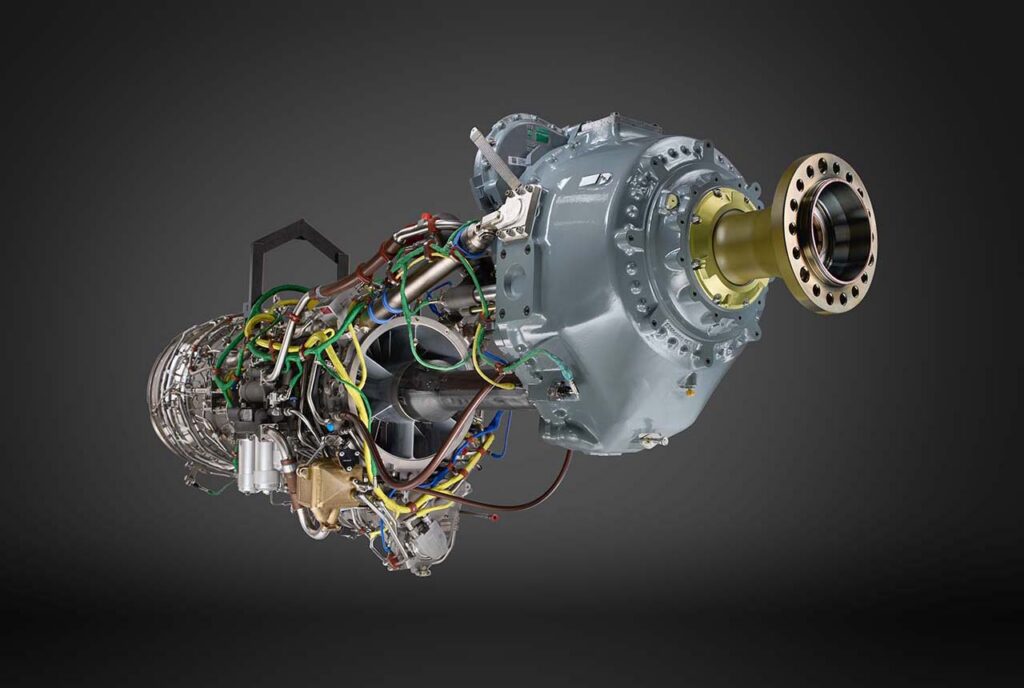
AE Engines Reliably Serving a Variety of Platforms and Missions
In the demanding world of military aviation, the AE engine family has truly proven its mettle.
The AE 1107C turboshaft engine, for instance, is the driving force behind the V-22 Osprey. These aircraft have operated in all sorts of austere environments and demanding conditions for AFSOC, the Marine Corps, and the Navy, from high-altitude and hot conditions in Afghanistan to the humid, salty maritime environments of the South China Sea.
The AE 2100 turboprop powers the C-130J Super Hercules, the workhorse of military transport worldwide, undertaking a diverse mission set from cargo delivery to special operations support to humanitarian and security missions. Decades of experience, high reliability, and stringent safety standards for Rolls-Royce engines ensure the Department of War and our partners can respond to crises without delay. Rolls-Royce helps Allies and partners keep aircraft mission-ready and deployable, supporting the National Defense Strategy vision of strong partnerships backed by capable, modernized allied militaries.
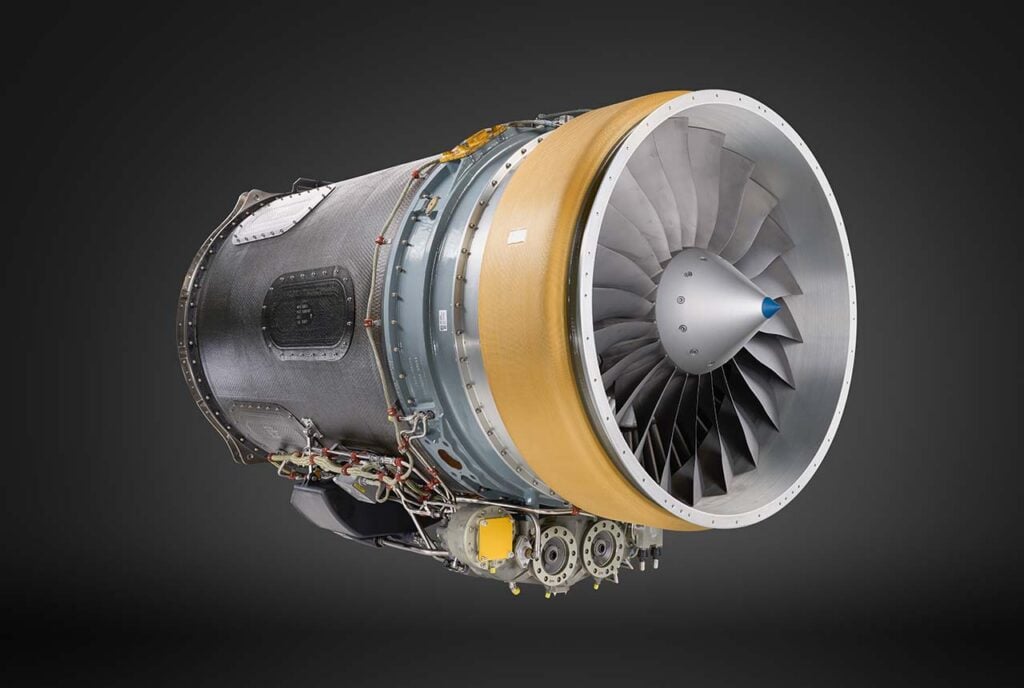
The AE 3007N turbofan engine powers the U.S. Navy’s MQ-25 Stingray unmanned aerial tanker. This engine is a variant of the AE 3007, which has a history of powering autonomous aircraft like the RQ-4 Global Hawk and the MQ-4C Triton. This platform demonstrates how Rolls-Royce contributes to the next generation of unmanned and autonomous systems that the NDS highlights as critical to future force design.
What makes the AE engine family even more remarkable is its significant presence in commercial aviation. The AE 3007 turbofan, for example, powers Embraer’s successful family of regional jets and Cessna’s Citation X business jets. The AE 2100 turboprop first entered into service on the SAAB 2000 regional passenger jet.
This “dual-use” capability, where an engine serves both military and commercial purposes, offers numerous advantages. For instance, advancements in fuel efficiency developed for commercial AE engine applications can translate to increased range and loiter time for military aircraft, enhancing their operational effectiveness. Commercial AE engine applications have also accelerated learning on important engine components, due to the unique civil aircraft operating environment that generates higher operating tempo in annual flight hours and cycle counts on critical hardware by orders of magnitude. As a result, the AE product family has world-class reliability and mission readiness for military applications.
Collaborative Combat Aircraft and Future Systems
Rolls-Royce continues to invest in propulsion solutions for unmanned and collaborative aircraft concepts. These technologies align closely with the War Department’s push toward more adaptable, resilient, and scalable force designs required for operations in complex theaters such as the Indo-Pacific.
Rolls-Royce offers proven autonomous propulsion experience, ready-now solutions, and scalable architectures. Combined with world-class capabilities around fuel efficiency, electrical power, embedded installation, and reliability at range, the company is well-positioned to support the developing requirements for the Collaborative Combat Aircraft program.
Made in the U.S.A. at the Rolls-Royce Advanced Manufacturing Campus in Indiana
Over the past 10 years alone, Rolls-Royce has invested more than $1.5 billion in modernization of advanced manufacturing and testing facilities in the U.S, and nearly $2.5 billion in Research and Development. Rolls-Royce’s Advanced Manufacturing Campus in Indianapolis, where all AE engines are produced, is one of the finest in the world.
Rolls-Royce is not resting on its storied legacy but adding to it. Today, Rolls-Royce is focused on improvements to AE engine cost, weight and performance. Despite already delivering best-in-class power density, Rolls-Royce can make further improvements to the AE engine power-to-weight ratio. There is potential to make double-digit percentage improvements to power – without increasing the weight of the engine.
The Rolls-Royce AE engine family stands as a success story of continuous improvement to modern propulsion, combining performance, dependability and innovation. AE engines have proven their reliability in countless military and commercial operations, and they exemplify how developments in one sector can benefit the other.
Ready to Deliver Now
Rolls-Royce continues to invest in the people, technologies, and communities that shape American capability — standing as a trusted, reliable partner for the U.S. military and supporting faster delivery to the warfighter.
This material is based upon work supported by the Army Contracting Command – Redstone Arsenal under Contract No. W58RGZ-23-C-0001. Any opinions, findings and conclusions or recommendations expressed in this material are those of the author(s) and do not necessarily reflect the views of the Army Contracting Command – Redstone Arsenal.