SINGAPORE — Taiwan’s parliament has approved a proposed government boost to defense spending after a protracted standoff — although it pared back the proposed supplementary budget by a third, and limited spending to US defense systems.
The 113-seat legislature, which is controlled by the opposition Kuomintang (KMT) and Taiwan People’s Party, passed a $780 billion Taiwan Dollar ($25 billion) supplementary budget on Friday in a 59-0 vote with 48 lawmakers from Taiwanese President Lai Cheng-te’s Democratic Progressive Party (DPP) abstaining.
The approved supplemental budget is much lower than the NT$1.25 trillion proposed by the Lai administration, with the funding going towards two separate US arms packages for Taiwan.
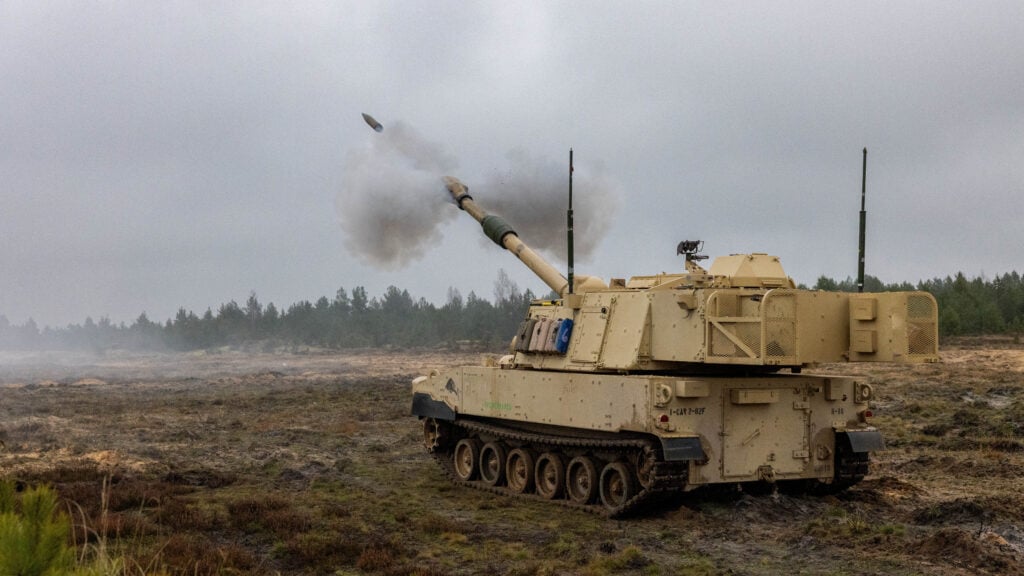
The two arms packages include the $11 billion USD in arms sales cleared by the US State Department last December for M109A7 tracked howitzers, Army Tactical Missile System (ATACMS) ballistic missiles, as well as BGM-71 Tube-launched, Optically tracked, Wire-guided missiles and Javelin anti-tank guided missiles.
A further NT 480 billion in the approved supplementary budget will go towards a future US arms package, which KMT caucus leader Fu Kun-chi said would include counter-drone systems, Patriot air-and-missile defense interceptors and Hellfire missiles.
Controversially, the budget would strip proposed funding for programs undertaken by Taiwan’s domestic defense industry such as the Chiang Kung (Strong Bow) anti-ballistic missile, which is meant to form the backbone of Taiwan’s new T-Dome air defense system.
The opposition says that this is due to a lack of clarity from the Lai administration about how the money will be spent, and that the defunding was a measure to guard against corruption, although the DPP has accused its opponents of hamstringing Taiwan’s defense and helping China.
Taiwan’s government had originally proposed the supplementary budget in November last year, although passage of the bill has been mired in wrangling until Friday’s vote.
The impasse has drawn concern from US officials including from de facto ambassador to Taiwan, Raymond Greene, who said in April that it was vital that the supplementary budget was approved.
Breaking Defense Video