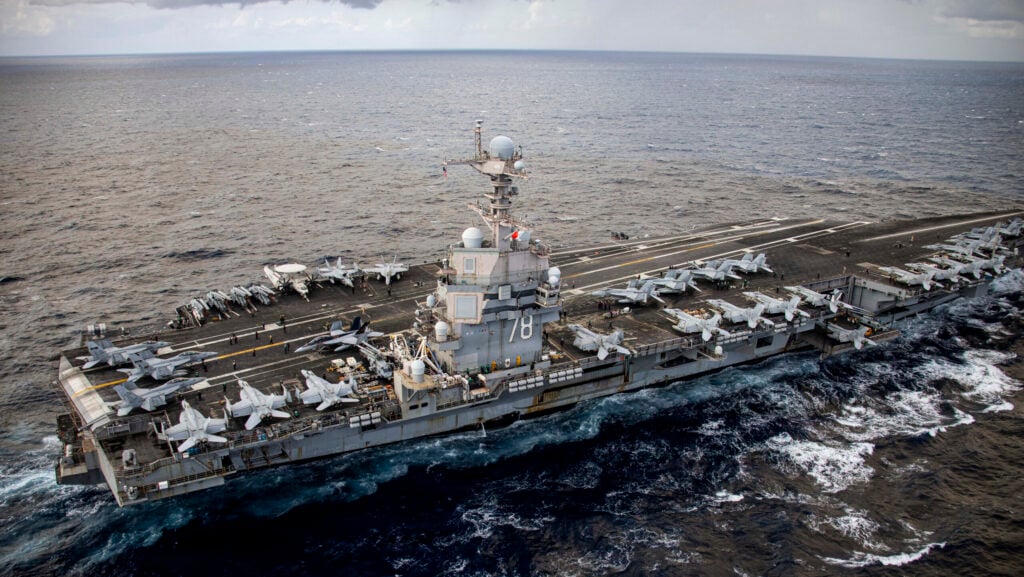
WASHINGTON — The Trump-class battleship will be outfitted with the same nuclear reactor that powers the aircraft carrier Gerald R Ford, according to the Navy’s top officer.
The Navy confirmed in its shipbuilding plan on Monday that the battleship would be nuclear-powered, and Chief of Naval Operations Adm. Daryl Caudle said that the battleship would share several design features with the Ford — including the A1B nuclear reactor on the carrier, the steam generator, and reactor cooling pump components.
“All of that technology that’s going into the design of the battleship, the nuclear battleship, from the reactor plant perspective, is all pull-through technology from the Ford class, as are most of the combat systems, radar system, missile system,” Caudle told lawmakers on the House Appropriations Committee today.
Caudle, who said he is “thrilled” that the ship will be nuclear-powered, also emphasized that the large combatant vessel is critical for the fleet to provide “significant payload volume for all future fights.”
“The fact it’s nuclear is going to give it the sustainment it needs,” Caudle said. “In particular, in the Pacific — an ocean is three times the size of the Atlantic — I need those types of legs and endurance to serve as a capital ship that comes with that firepower to be able to deliver that combat payload.”
According to the Navy’s new shipbuilding plan, the service wants an inventory of 15 battleships — the first of which is slated for delivery in 2036.
The ship comes with a hefty price tag, with budget documents showing the Navy expects to spend roughly $46 billion over the next five years to design and develop the vessel. For fiscal year 2027, the Navy is requesting approximately $1 billion in advance procurement and roughly $837 million in research and development funds.
Likewise, the Navy is planning to request roughly $17 billion in procurement funding for the first ship in FY28, and approximately $13 billion in 2030 for the second one, budget documents released in April show.
The cost of the ship has attracted scrutiny from some lawmakers.
“That’s another extraordinary cost for the Navy, and frankly, it seems unaffordable,” Ranking Member of the House Appropriations Subcommittee on Defense Rep. Betty McCollum, D-Minn., said today at the hearing.
Still, Navy leaders have previously pointed to design challenges with the next-generation destroyer to support the decision to move forward with the battleship, which has a larger hull size to accommodate more capability than the destroyers.
“This will be able to do many things that our DDGs cannot,” Rear Adm. Ben Reynolds, deputy secretary of the Navy for budget, told reporters in April. “Just like the frigate fills a hole that our DDG doesn’t.”
Breaking Defense Video