
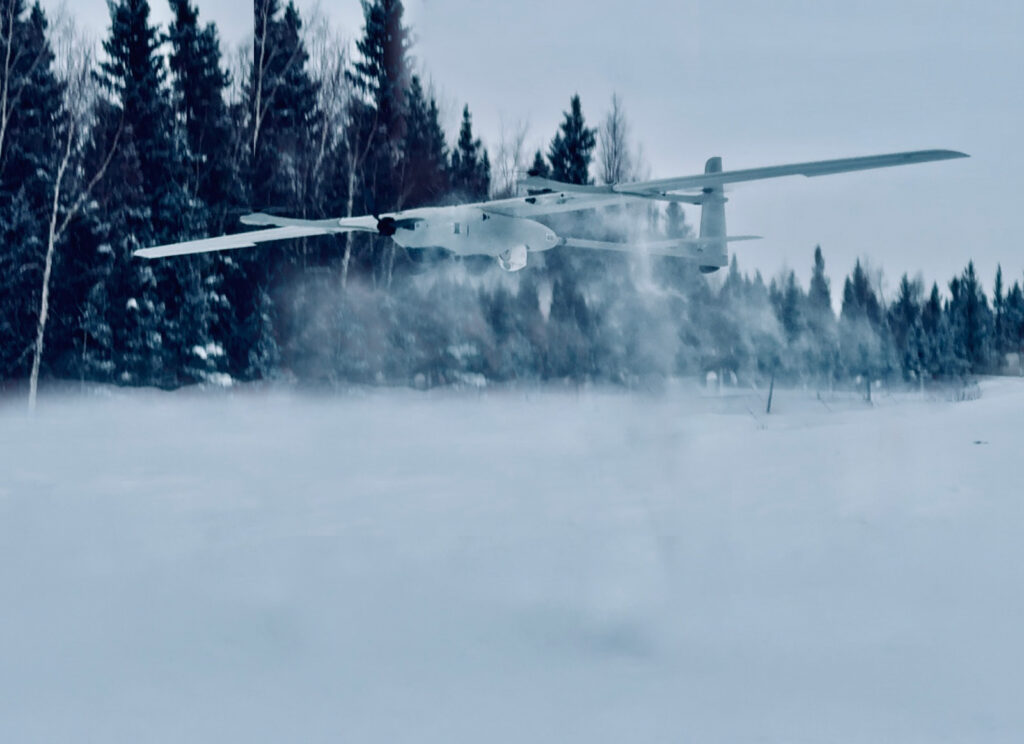
Recent conflicts in the Middle East have resulted in 24 MQ-9 Reaper drones, valued at roughly $720 million, destroyed by the adversary. The additional loss of an MQ-4C Triton surveillance drone over the Strait of Hormuz, with a value of approximately $250 million, brings the total recent financial hit to nearly $1 billion, according to recent news reports.
Traditional large uncrewed aerial systems (UAS) that are optimized for stealth, such as the RQ-170 Sentinel, for example, have a role to play in modern conflicts, but it’s time to rethink how we are deploying these costly traditional assets. To maximize the mission success of our warfighters while safeguarding national security, smaller assets like Group 2 UAS should be part of the equation – not just economically but tactically speaking.
Allen Gardner, Chief Technology Officer at Redwire Defense Tech, has spent 25 years in the UAS industry, working with large aircraft for most of his tenure. Gardner is not at all surprised by the strategic shift to small drones: “Because some large uncrewed systems are more easily detected, tracked, and targeted by traditional surface-to-air systems, they are vulnerable to threats that are becoming commonplace around the world, and the losses are mounting. The strategy must change.”
Thanks to recent advancements in technologies that can be integrated with the Group 2 class of UAS, these highly flexible systems now fulfill many capabilities that were once the sole domain of larger aircraft. At the same time, a distinct advantage of Group 2 UAS is that they are easier to deploy and preserve the mobility required to reduce a force’s attack profile.
What is needed in drone warfare today is a hybrid approach – a forward-looking strategy that works on behalf of the warfighter by bridging the capabilities of large UAS and very small drones.
Fortunately, this solution exists.
The strategic shift to small UAS
Contested environments like Ukraine have revealed strategic solutions to the economic imbalance of overreliance on large, expensive UAS that require a fixed location and are vulnerable to kinetic and electronic warfare attacks. Expendable, short-range, very small Group 1 and First-Person View (FPV) drones have entered the arena. Regularly used for assaults in eastern Europe, these drones are making headlines. Why?
They are both cost effective and combat effective.
Although very small UAS and FPV drones are redefining today’s combat scenarios involving troops fighting in close-range battles, Gardner believes “fighting yesterday’s wars” by going all-in on tiny drones would be a shortsighted, operational mistake. Future scenarios will demand drones that can meet a broad set of mission needs across a wide variety of combat environments, not just the short-range, close-combat situations encountered in eastern Europe.
“Very small and agile FPV drones are extremely effective in close-range operations like Ukraine where adversaries have found themselves stuck in a World War I-style trench warfare fight,” said Gardner. “But Ukraine is a unique scenario, and most western militaries like the U.S. and its allies try to avoid fighting this style of battle. They avoid fighting on equal footing with their adversaries. They prefer to fight with an overwhelming advantage.”
Long-range operations: The ultimate advantage on the battlefield
“The U.S. military has the incredible ability to operate at long range, often extreme distance,” said Gardner. “Range provides the ultimate unfair advantage. If you can attack your enemy from 500 kilometers away, and they can only attack you from five kilometers away, then you just made their job impossible. That is an overwhelming tactical advantage.
“You’re not going to launch an FPV drone from the middle of the Persian Gulf and fly it into Tehran, for example. It just doesn’t have that capability,” Gardner continued. “On the other hand, slightly larger systems can significantly expand mission range while keeping costs minimal and maintaining the small footprint and mobility required on the battlefield.”
Is there a “Goldilocks” solution that finds the ideal middle ground between the robust capabilities of larger UAS and the affordability and agility of smaller drones? Gardner thinks so. “Everything happening on the modern battlefield right now is pointing to small, long-range Group 2 UAS as the ideal solution that fills many capability gaps.”
The new Stalker Block 40: A game changer for the modern battlefield
Redwire is tackling the need for an extremely long-range, low-cost, and high-mobility drone with its Stalker Block 40 UAS. This aircraft fills the mission capability gap between large UAS and cheap small drones in several cutting-edge ways.
The Stalker’s use of solid-oxide fuel-cell technology is the primary innovation that gives this Group 2 VTOL aircraft significantly more range compared to a battery-only UAS. Not only does the fuel cell provide extraordinary endurance and range, but its all-electric operation also delivers a key benefit of batteries: sound, or rather, the lack of it. As a fully electric system, Redwire’s fuel cell is silent. A small, low-cost VTOL UAS that combines silence with long-range performance is a transformational development.
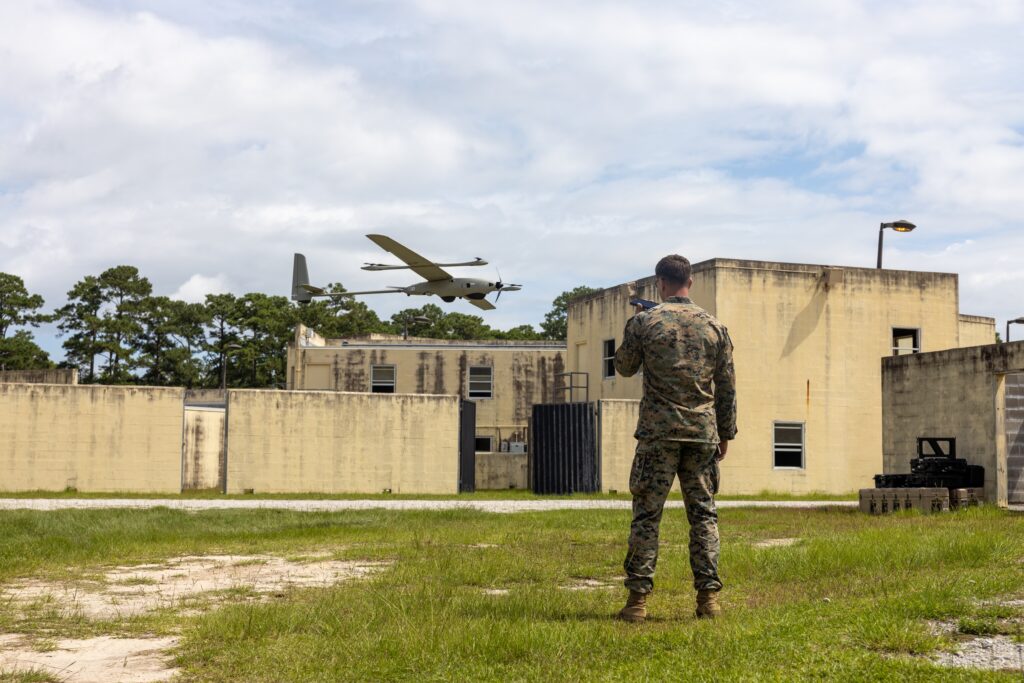
“Our fuel cells are a unique technology that doesn’t exist in any other company anywhere else in the world,” said Josh Stinson, Chief Growth Officer at Redwire Defense Tech. “This breakthrough allows Stalker to operate at three to four times the endurance and range of the highest-end batteries, all while remaining silent. And because the Stalker’s alternative energy source is not dependent on solar, it can perform long-endurance missions in both day and nighttime operations worldwide, even under the most challenging environmental conditions.”
What does this mean for the U.S. military and its allies? The cost-efficient, expeditionary, and highly tactical Stalker UAS stands ready as a ready solution to the mounting losses of large, incredibly expensive UAS in today’s conflict zones.
“We were recently in Alaska flying in arctic weather conditions, an environment where modern batteries notoriously fail or suffer from degraded performance,” said Stinson. “But our solid oxide fuel cell handled these extremely cold temperatures flawlessly, enabling the aircraft to thrive without any degradation to its endurance.”
With hundreds of thousands of flight hours accrued in harsh environments across six continents, Stalker is a proven solution to many urgent challenges warfighters face on the modern battlefield.
Flexibility and adaptability define the future of joint-force operations
The Stalker’s adaptability isn’t limited to survivability in diverse and contested environments. The benefits of small, long-range Group 2 UAS also extend beyond a single service, with capabilities that translate across missions, domains, and organizations.
“The U.S. Marine Corps has procured nearly 300 Stalker aircraft to date, and the United Kingdom Ministry of Defence operates more than 150 Stalker,” said Stinson. “The U.S. Army is employing Stalker to advance UAS operations across multiple echelons. It has also been fielded by the Secret Service for protective operations for the president and other senior-level cabinet members, and by Customs and Border Patrol for a range of mission sets to provide border security operations.”
This breadth of adoption reflects a simple reality: long endurance and long-range capabilities are not unique to Group 3+ systems, just as agility and affordability are not limited to smaller Group 1 UAS. As a robust, combat-proven Group 2 aircraft, Stalker delivers the flexibility and ease of use that make it “just right” for the ever-evolving battlefields of today and tomorrow.
To learn more about Redwire’s multi-mission UAS solutions, visit rdw.com/defense-tech/combat-proven.