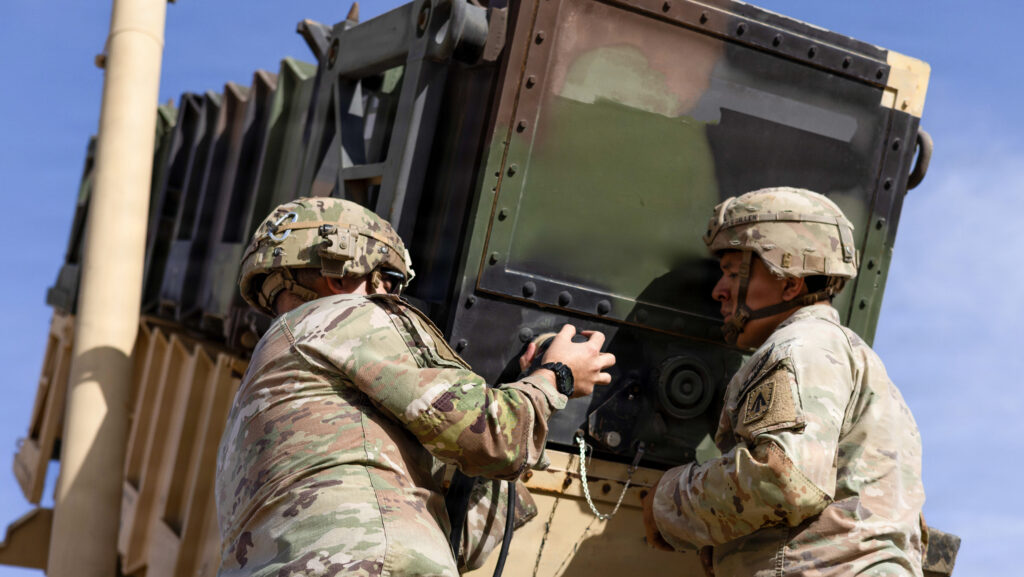
HUNTSVILLE, Ala. — As the Trump administration grapples with munition stockpile numbers, the Army needs a new “comprehensive missile defeat strategy” that shores up magazine depth, while also adding new, cheaper options into the mix, according to a three-star general.
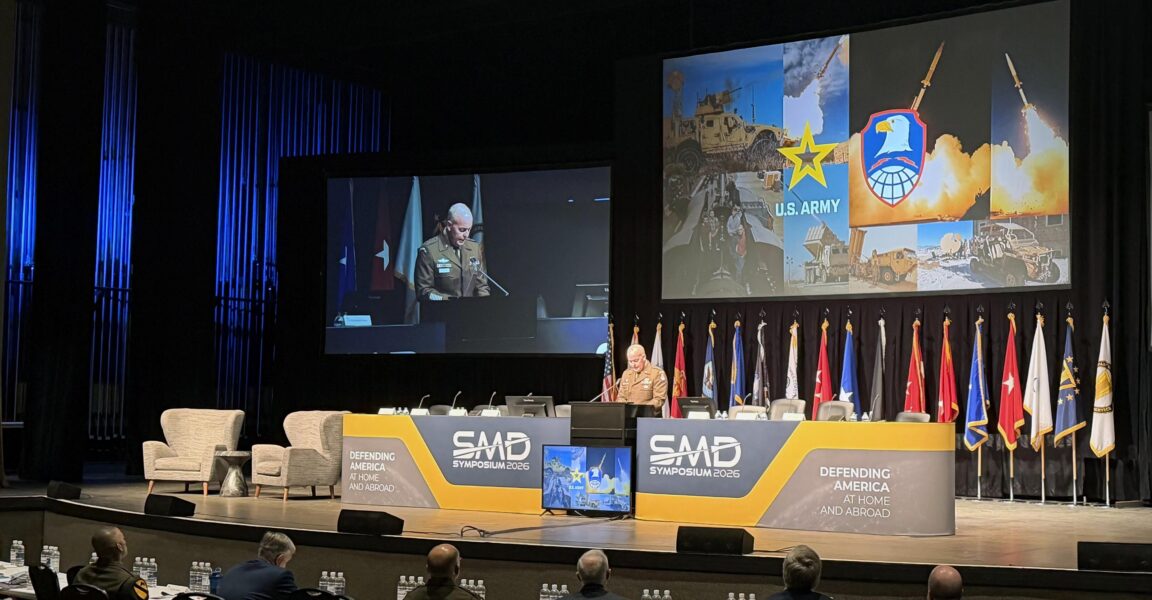
Lt. Gen. John Rafferty, who assumed command of Army Space and Missile Defense Command (SMDC) in late April, kicked off the annual symposium in Huntsville, Ala. this morning by pointing to “critical gaps” in the air defense arena, including the numbers and types of munitions, that need to be addressed.
“I cannot add anything to the emphasis on magazine depth … or for the need for cheaper and a wide-ranging mix of interceptors,” the three-star general said this morning. “That couldn’t be made more loud and clear from the highest levels of our government.”
But filling that gap requires more than simply ramping up production of key air defense assets like Patriot Advanced Capability-3 (PAC-3) and Terminal High Altitude Area Defense (THAAD) interceptors that have played central roles for the US in the fight against Iran.
“Interceptors alone won’t” solve all the problems, Rafferty told the audience. “We need a more comprehensive missile defeat strategy that focuses on interceptors, [but also] equally so on non-kinetic effects, both electronic warfare and directed energy, and the type of targeting in C2 [command and control] enabled by that data strategy, and a cross-domain solution … that will enable us to use that data to make decisions to engage targets faster.
“That’s the kind of comprehensive missile defeat strategy that isn’t just about more interceptors,” he added. “It’s about integrating other capabilities, nonkinetics, and also decision making into them.”
Rafferty’s comments come nearly six months after the US and Israel launched a wide-scale attack on Iran. There have been a series of fits and starts to the conflict in the intervening months, with analysts and former military officials warning that US stockpiles of critical munitions are running low.
For example, late last month the Center for Strategic and International Studies released a report that said there were approximately 2,330 Patriot interceptors in the US inventory before the conflict started, and those numbers are now around the 759 to 827 mark. There were approximately 452 THAAD interceptors in late February, CSIS added, and those stocks dropped to somewhere between 234 and 278 by the end of July.
So far, the Trump administration has sought to downplay any concerns to US stockpiles and even threatened to “hunt down” leakers sharing information about dwindling stockpiles.
While Rafferty didn’t directly discuss US stockpile numbers today, he did talk more broadly about how the conflict is stressing the air defense force, and specifically some of the challenges he faces balancing operational demands, readiness and modernization plans.
“You’ve got less time to train and prepare, and test,” he said. “And, [we] are challenged to complete our modernization path because of the demand on the force.”
“Clearly, this places … a huge strain on soldier readiness and unit readiness,” Rafferty added.
PHOTOS: SMD 2026

 Gallery







Breaking Defense Video