WASHINGTON — The Navy has selected Rear Adm. Patrick Finney for a new role focused on advancing the integration of the Navy’s Nuclear Sea Launch Cruise Missile (SLCM-N) and hypersonic Conventional Prompt Strike (CPS) weapons systems onto surface vessels and submarines.
Finney is the first person to lead the new program management office based out of Naval Weapons Station Crane in Indiana, and reports to Vice Adm. Douglas Williams, the director of Portfolio Acquisition Executive Strategic Systems Programs.
Sen. Jim Banks, R-Ind., publicly identified Finney as the officer selected for the role Tuesday during a Senate Armed Services Committee hearing, noting Finney had arrived at his post in October. The Navy did not formally announce he’d been tapped for the role.
Even so, Banks first announced in May that Secretary of Defense Pete Hegseth and Acting Secretary of the Navy Hung Cao had decided to create the position for a Navy Reserve one-star admiral in Banks’ home state. Crane is home to a hypersonics research, development, test and evaluation facility.
Cao has also mentioned the new role since then, saying the position was critical to supporting the two weapons programs — despite broader Pentagon efforts to cut down on the number of flag and general officers.
“We did this in a time when we’re reducing flag and general officers and looking for ways to streamline,” Cao said in October at the Northeast Indiana Defense Summit. “But this is so important that we move the flag officer up here in order to focus on two critical weapon systems that will bring capability to our ships and aircraft.”
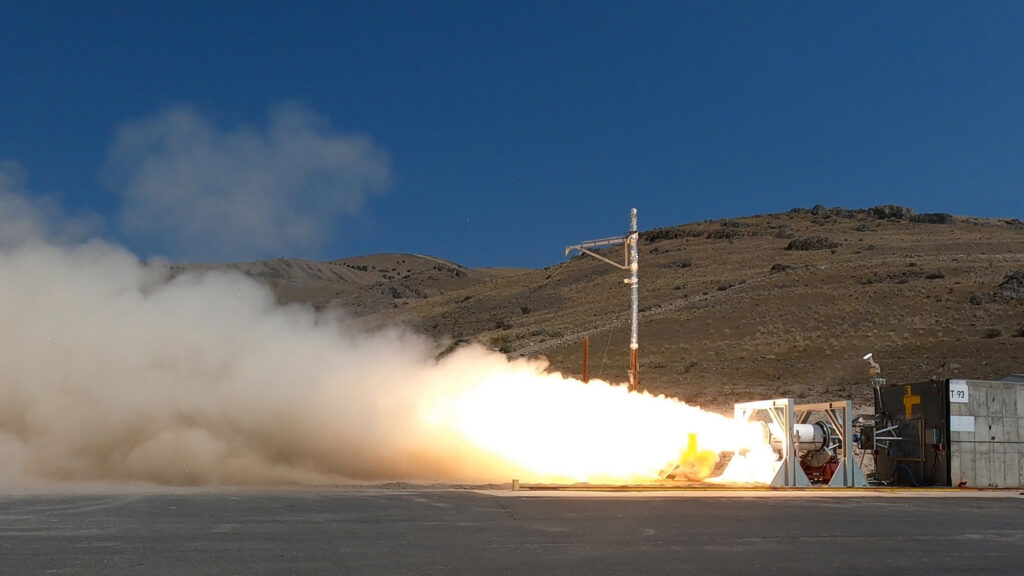
The Navy is currently modifying its Zumwalt-class destroyers with a vertical launch system to accommodate CPS missiles, and plans to equip some Virginia-class submarines with the system as well. The missile is being jointly developed with the Army, which is pursuing its own ground-launched version of the weapon under the Long-Range Hypersonic Weapon program, also known as Dark Eagle. Both services are seeking to pour more than $50 billion into the hypersonic effort, according to a Government Accountability Report from July.

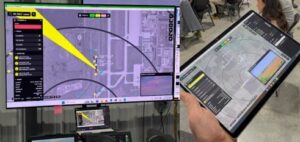
Three exercises that proved a new approach to C-UAS
Architecture that linked sensors, C2, RF effects, and lasers into a distributed c-UAS kill chain.
Meanwhile, the SLCM-N program officially launched in 2025, with plans to deploy the missile aboard Virginia-class submarines and the proposed Trump-class battleship. The program’s total acquisition cost is estimated at $15 billion to $20 billion, officials said in a separate GAO report released in July. The Navy is targeting an initial operational capability by 2034, although program officials acknowledged that timeline is “aggressive,” per the GAO report.
Finney previously served on the Los Angeles-class submarines Atlanta and Dallas, as well as tours with Submarine Group 10 and Fleet Forces Command, according to his official Navy biography. He’s also served as the commanding officer of the submarine tender Emory S Land, as well as commander of units assigned to US European Command and Submarine Force Atlantic, among others.
Breaking Defense Video