WASHINGTON — When the Army for the first time attempted to integrate Next Generation Command and Control (NGC2) tech from defense firm Anduril into its existing comms systems, not everything went exactly to plan, Army and company officials revealed to Breaking Defense this week.
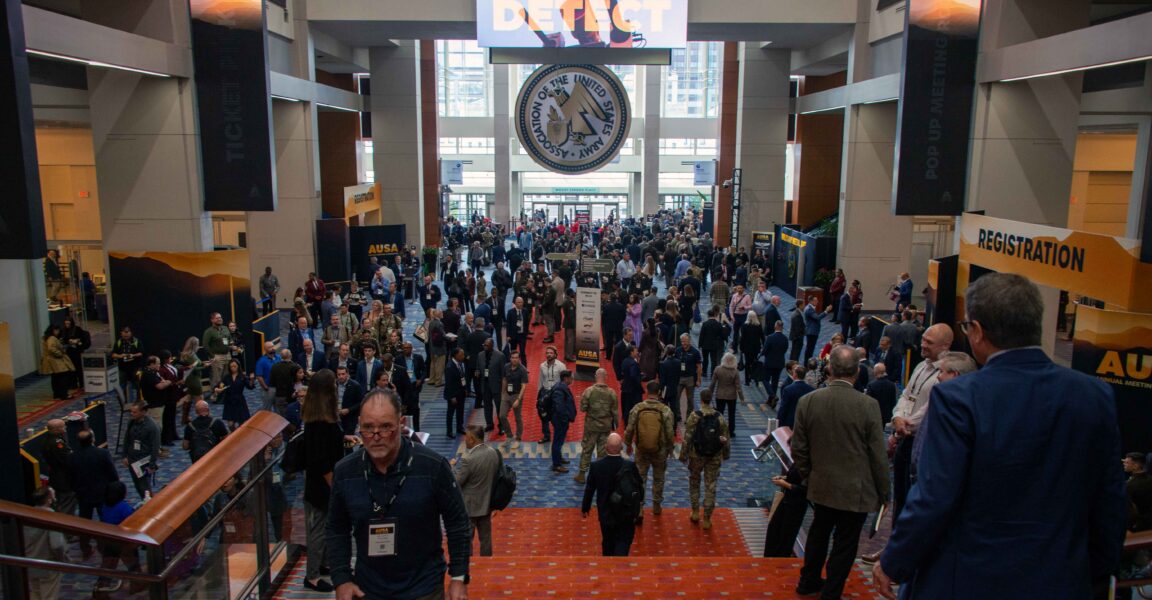
“It wasn’t seamless, and we and we learned a lot,” Brig. Gen. Shane Taylor, Portfolio Management Executive for Command and Control Information Network (C2IN), said on the sidelines of the annual AUSA conference this week. “There’s always growing point pains in these. I just think that a lot of the things that we saw out there were normal, like all right, we’re putting … a group that hasn’t necessarily worked together, so it’s just that normal growing pains with that.”
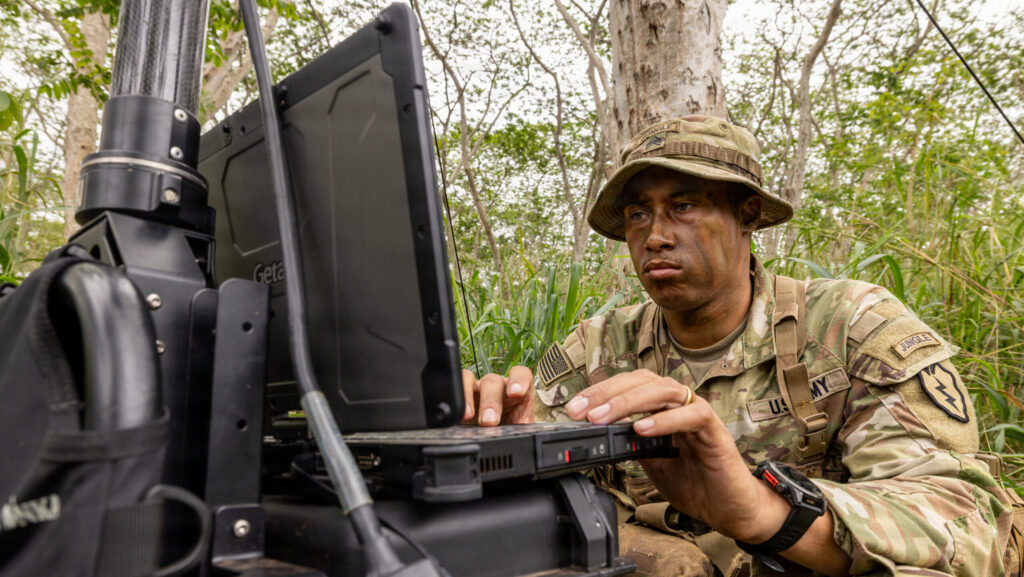
The test had come in September, when the Army’s 25th Infantry Division attempted to use Anduril’s Lattice platform during Lightning Surge 5 in Hawaii, which the Army described as a “multi-phase campaign to modernize its command-and-control architecture.” Up until then, Anduril’s NGC2 tech had been used by the 4th ID in Colorado where it was paired with new, mostly commercial hardware and software.
Lockheed Martin, which is leading the integration on the 25th ID’s portion of the NGC2 architecture, served as the integrator for Anduril’s platform. Chandra Marshall, vice president of multi-domain combat solutions at the defense giant, told Breaking Defense the company expected “it would be a challenge.”
“I would say outside of Lockheed Martin, yes, I think some people are surprised at how much of a challenge it has been,” Marshall said in an interview at the AUSA conference.
She explained scaling with Lattice was an issue passing data through the system “just is not at the state it should be right now with bringing in the Lattice product.”
An Anduril official, for his part, acknowledged the growing pains, but noted that they discovered technical limitations with the communications architecture writ large.
“It was our first time with a host of technologies at the 25th [ID],” James Craven, Program Manager for NGC2 for Anduril, said in an interview Wednesday. “Working on TSM radios that were not the same waveform or configuration that we had used at 4th ID, and [Lightning Surge] was also several novel mission threads as well.”
Getting Lattice and the older comms structure on the same page will be key to the Army’s NGC2 efforts, as Army and industry officials noted that the 25th ID’s architecture is largely representative of what they’ll have to build on top of as they begin to baseline and field other units within I Corps throughout the upcoming fiscal year.
“The major difference between the 4th Infantry Division and the 25th, is that [25th] will continue to preserve some legacy capabilities … and we’re going to make sure that that we maintain seamless integrations with legacy equipment because not everybody’s going to get a fresh fielding like the 4th Infantry Division,” Craven said.
Lockheed’s Marshall said that for its part, the company is making sure the 25th ID gets “back to working operational architecture so that we can continue to build on the capabilities.”
New Environment, Different Technology
Part of the challenge, Army and company officials said, was also just the vastly different environment the tech was called to operate in and on what mobile platforms.
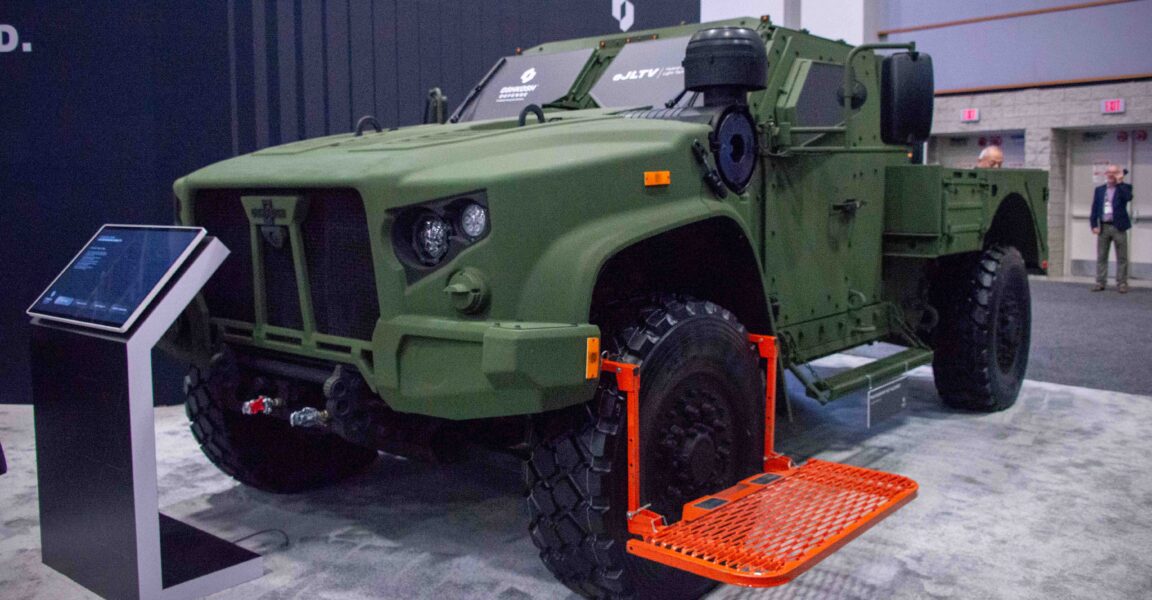
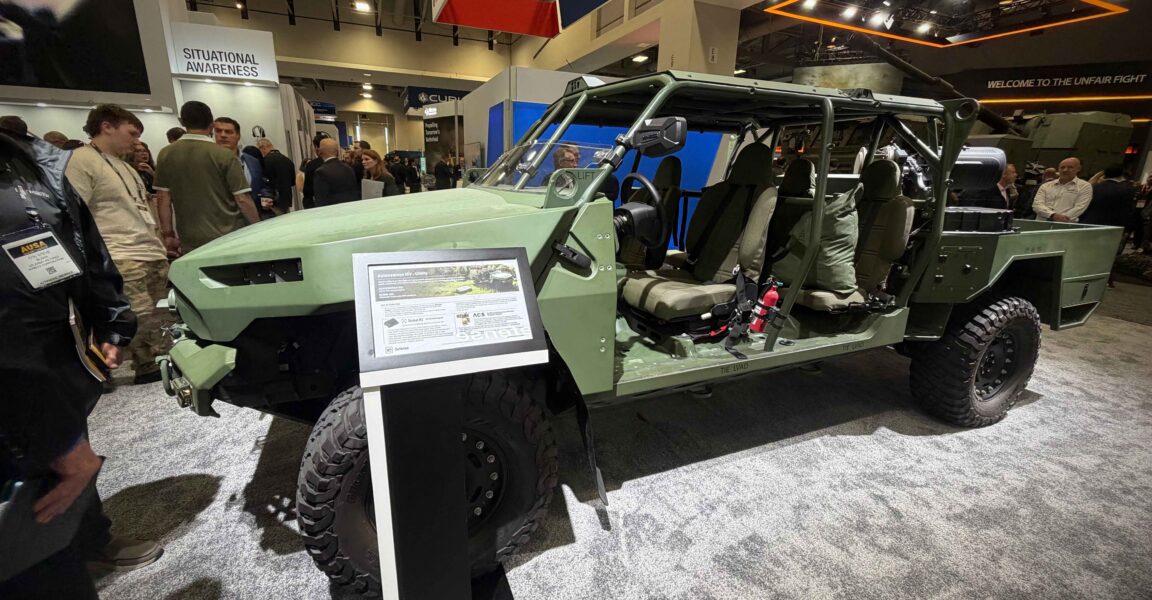
For example, Fort Carson, Colo., where 4th ID is based, is a much more open, plain environment as opposed to the dense jungle in Hawaii with 25th ID. Moreover, 4th ID is a heavier unit, with soldiers operating out of Strykers, while 25th ID’s primary platforms are lighter Infantry Squad Vehicles.
“We don’t have the same type of permissiveness from putting equipment on platforms perspective that we do with like Stryker brigades,” Joseph Welch, the Army’s portfolio acquisition executive for Command and Control (C2) and Counter C2, said in an interview at AUSA. “We’ve had to work through what does that really mean for a mobile infantry unit in terms of what types of transport solutions and what type of compute capacity we can put at echelon. … There’s probably some additional tweaks and optimizations we’re going to make that’s based on just the reality of the formation type.”
As for working with other legacy tech, Cravens said Anduril has been partnering with radio providers, C2IN and 25th ID to on the operational configurations such as how big the channels are, how to separate data from voice channels on radios, how to ensure the appropriate soldiers within a unit have beyond line of sight communications such as Starshield, all in order to provide a “fight tonight” capability for the data layer.
One of the key lessons at Lightning Surge 5, Craven said, was filling the request to go smaller on things like edge computing capabilities. While they integrated Lattice onto the Mounted Family of Computer Systems at 4th ID, last month was the first time they did it on tablets.
However, that integration was requested and done in the middle of the exercise, Craven said, hoping that next time, they’ll have a chance to work that integration before they get out to the field.
Outfitting More Divisions With NGC2
Following the decision to field I Corps with the NGC2 architecture and associated capabilities, the Army is in the process of providing the corps headquarters capabilities and applications while looking to baseline the other divisions.
Taylor echoed the idea that 25th ID is an important first step in that journey given a more representative approach to how the Army will have to field given many of the other formations are closer to them having not received any equipment.
“I think the 25th one was very helpful because those ITN divisions, when we come in with the Next Gen C2 capabilities, that’s the integration that we’re going to do,” he said.
Though, Welch said they’ll continue to upgrade 4th ID with some “burn down items” that came out of Project Convergence over the summer, they need to address in terms of systems to bring forward or leave behind.
Welch noted that the importance of testing over the past year with the ITN equipment in 25th has helped ensure the baseline is solid and they have good configurations.
While there is no definitive timeline in terms of when the other divisions under I Corps will get baselined, Welch said it will occur within the fiscal year. The continuing resolution is having some impact on that, he said, acknowledging they’ll have to look at “pacing” some systems.
Additionally, there are logistics the Army will have to take into consideration in terms of moving systems forward to the divisions, with units spanning up to Alaska and in the Pacific.
Overall, they’re trying to not overwhelm these units with new capabilities.
“We are trying not to have NGC2 coming in there as a disruptor to their mission focus, but as an enabler of it. As you know, NGC2 is a multi-layered stack capability. So our teams are in routine communications for the planning aspect of when we’re going to start introducing those,” he said. “It’s really more aligned to the opportunities that we have when we try to align to their exercises and their training.”
PHOTOS: AUSA 2026
 Gallery