Air Warfare

US-Norwegian startup Heaviside launches Tyr loitering munition

The company is headquartered in L.A. but partners closely with Norwegian arms-maker Nammo, which provides the anti-tank warheads and a range for live-fire testing.

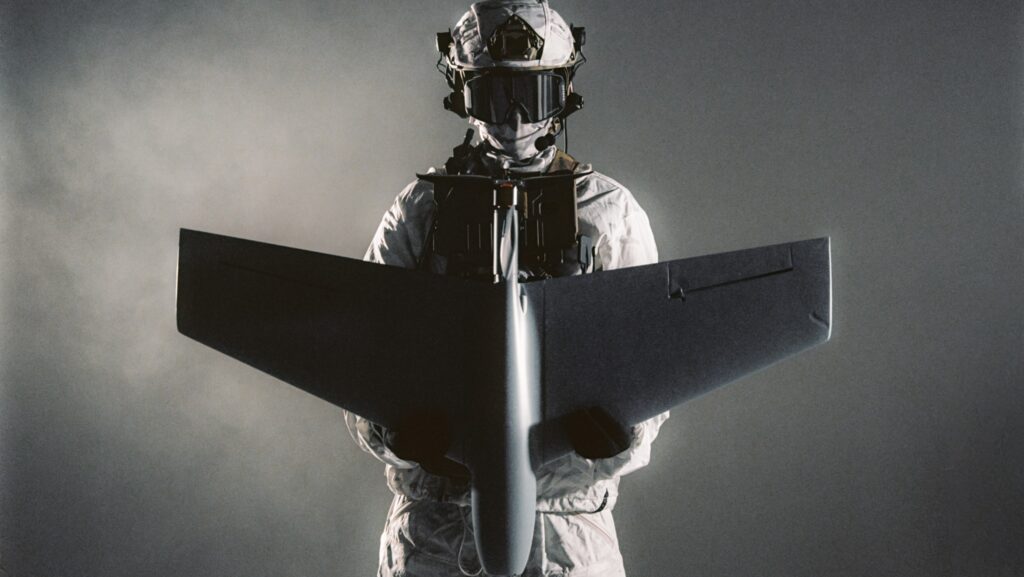
Heaviside's new Tyr anti-tank loitering munition (Heaviside photo)

WASHINGTON — Heaviside, a two-year-old US-Norwegian drone startup, has joined the competition for low-cost, expendable drones with its Tyr loitering munition, the company announced today.

The weapon is named after a Norse god, and while the company’s headquarters and most of its staff are in Los Angeles, most of the engineering, development, and testing are being done in Norway, explained Heaviside president Nils Haagenrud in an interview.

In fact, Haagenrud told Breaking Defense, the Scandinavian facility is just up the road from the company’s most important partner: Norwegian defense firm Nammo. Nammo provides Tyr’s anti-tank warheads, which are all derived from the company’s M72 LAW series, as well as a test range where Heaviside can not only fly its Tyr prototypes but use live explosives on practice targets.

“We’re just an hour and a half away from each other,” Haagenrud said. “We can do all the testing internally and move very fast. …. They can build and test the same day.”

In some tests, he said, Tyr has successfully flown to and detonated targets in Norwegian winter weather of 20 degrees below zero.

While Nammo isn’t an investor in Heaviside — the firm is VC-funded— Haagenrud argues the close relationship and strong backing by a well-resourced prime contractor is something that distinguishes the startup from other small, young firms rushing into the expendable-drone business. Another strength, he said, is the decades of experience many key staff have in drone development. That includes his own time at Teledyne FLIR working on the palm-top Black Hornet, which became the centerpiece of the US Army’s Soldier-Borne Sensor system.

Tyr is bigger than Black Hornet but still on the small end for drones, easily portable by a single soldier and weighing in at roughly 15 pounds. A third of that is warhead with enough explosive power to kill a main battle tank like the Russian T-72 or T-80. Though he didn’t give a price for the drone, Haagenrud says it’s “way under $100,000,” with extensive use of commercial off-the-shelf components to keep costs down and supply chains robust. (Those price and weight figures are for the drone itself, not including a reusable launcher).

The drone also incorporates some of the AI targeting features being field tested in Ukraine, although the company says it’s scrupulous about requiring a human in the loop to make the final call.

“We are doing video navigation … fusing the EO [electro-optical] and the IR [infrared] sensors,” Haagenrud said. The drone can fly itself to a human-designated strike zone, autonomously hunt for recognizable targets like a tank, and then ask the operator for permission to attack.

“The only thing I have to do is press ‘engage,” he said.

Heaviside also has an unmanned underwater vehicle (UUV) called Nyx in the works. While the firm isn’t disclosing details and no contract has been announced, Haagenrud told Breaking Defense “we are working directly with the DoW,” using the semiformal alternative name for the Department of Defense.

Heaviside’s one publicly announced defense contract is an Indefinite Delivery, Indefinite Quantity (IDIQ) award, with a ceiling of $99 million, from the Army’s Rapid Electronic Warfare and Signals Intelligence (REWSI) initiative. That’s for a handheld spectrum analyzer called MOTH, used to detect the telltale radio emissions from incoming drones.

PHOTOS: AUSA 2026

PHOTOS: AUSA 2026

Attendees file in during the first day of the 2026 Association of the US Army annual conference in Washington, DC, on October 12, 2026. (Breaking Defense)
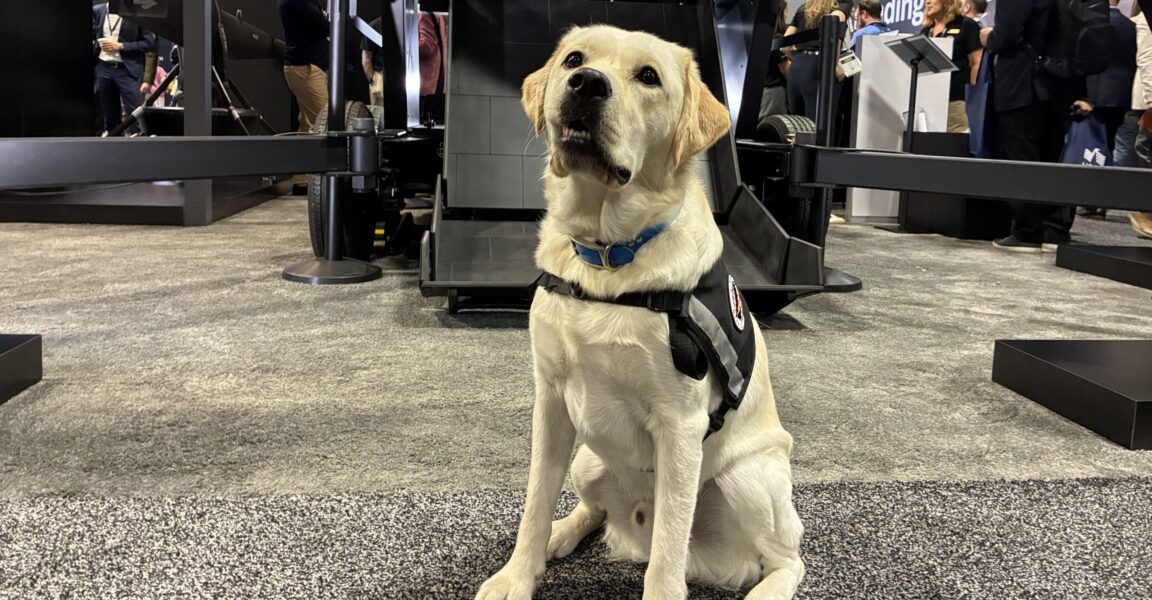
Patriot, who is expected to go to a wounded veteran when the dog’s training finishes, is happy to greet attendees outside the Shield AI booth on the show floor. (Breaking Defense)
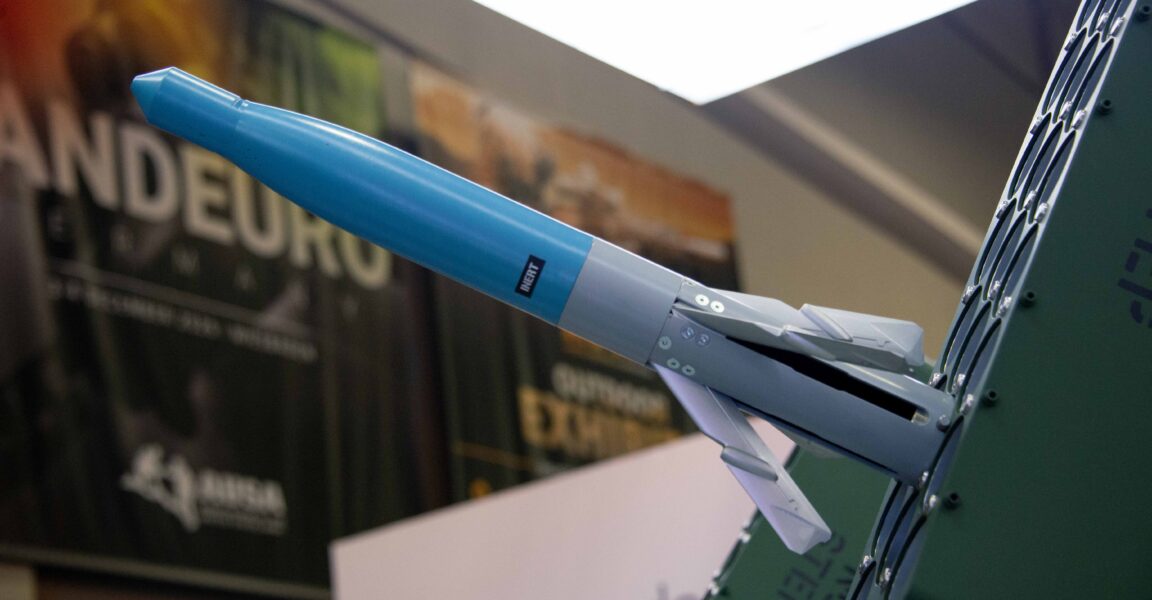
A close-up look at a munition from Sierra Nevada's Brawlr (Battery Revolving Advanced Weapons Launcher Reconfigurable) air-defense system, as seen at the 2026 AUSA conference. (Breaking Defense)
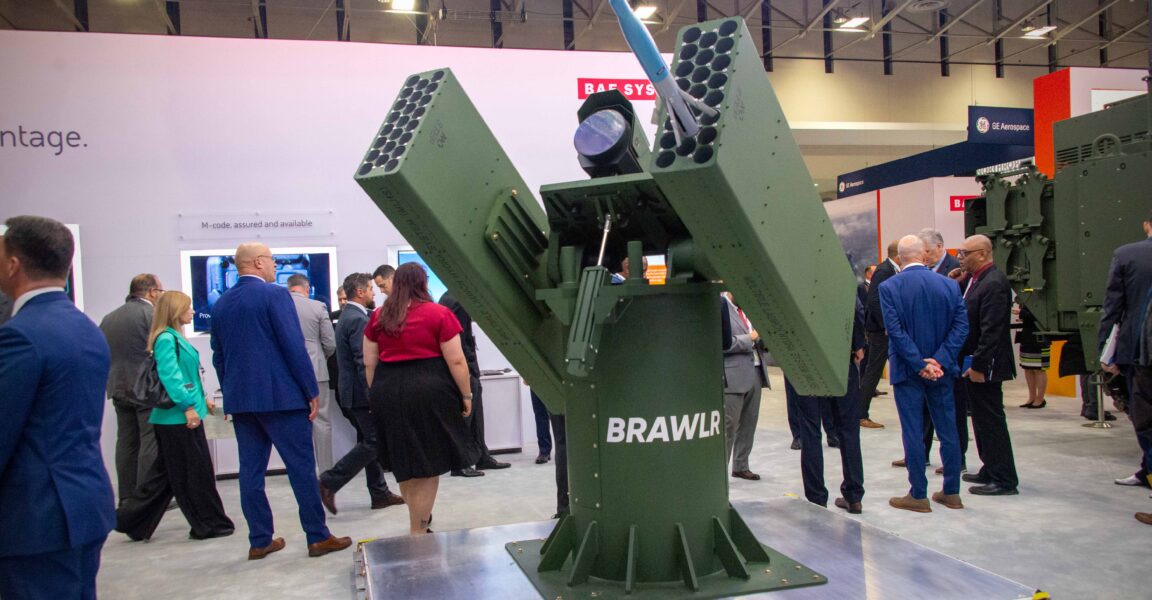
A wider shot of Sierra Nevada's Brawlr air-defense system at the 2026 AUSA conference. (Breaking Defense)
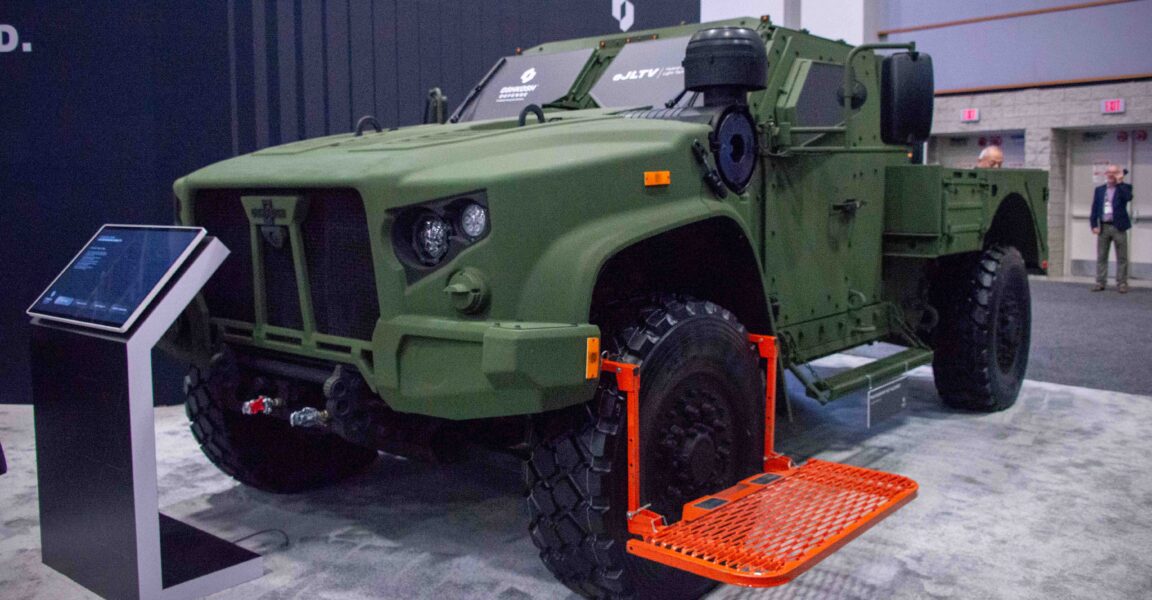
Oshkosh's electric Joint Light Tactical Vehicle on the AUSA show floor Oct. 12, 2026. (Breaking Defense)
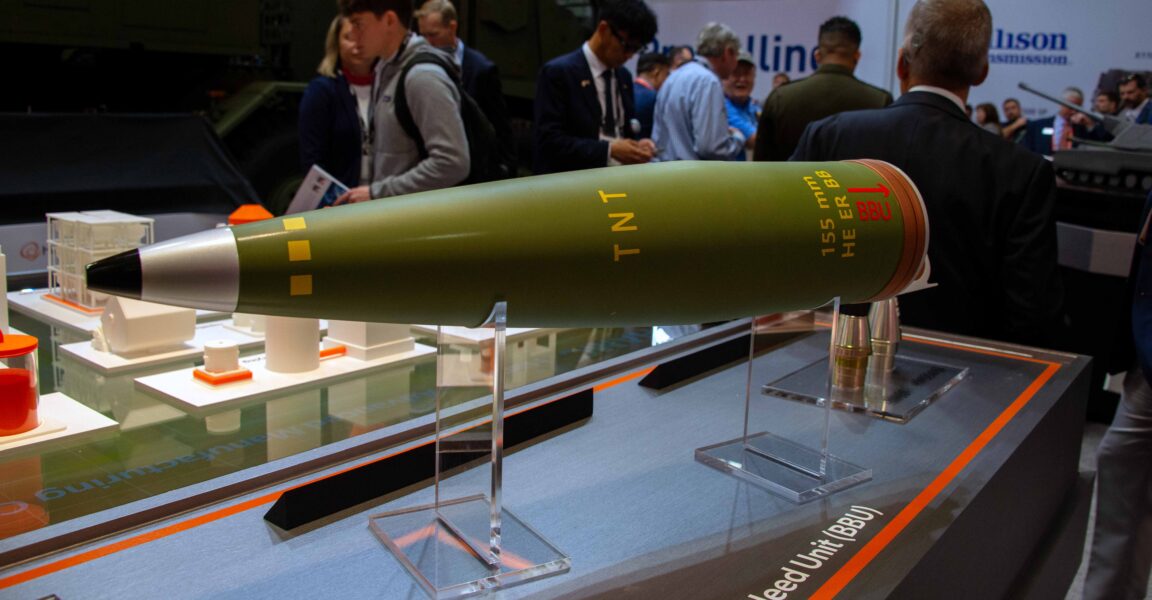
Hanwha Defense USA showed off its 155 mm artillery shells at the 2026 AUSA expo. (Breaking Defense)
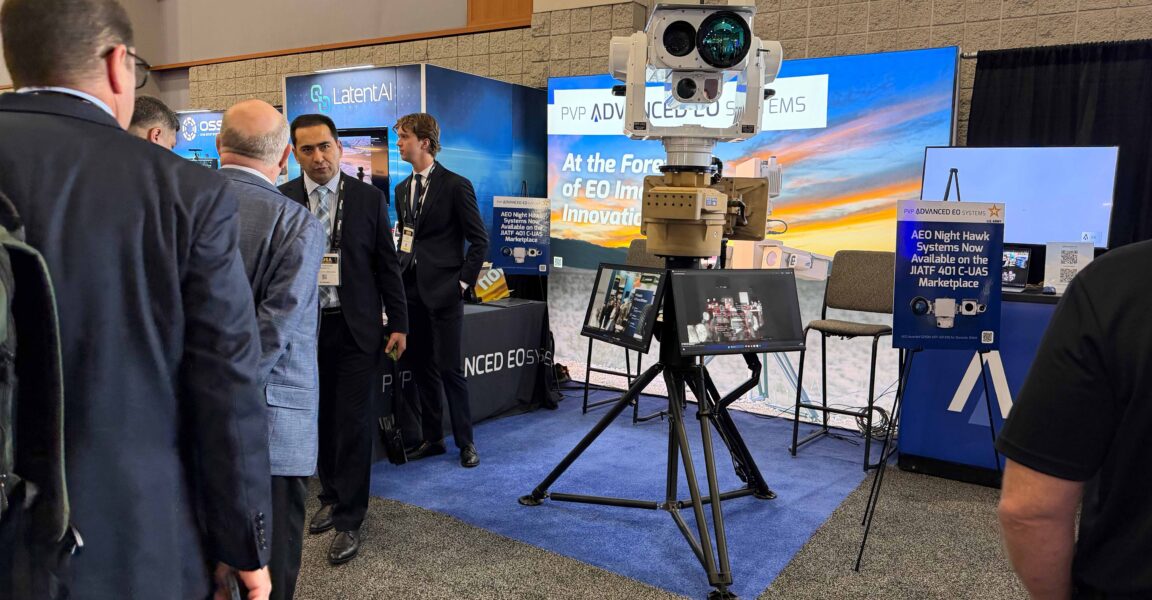
AEO Night Hawk Systems displayed their surveillance assembly, with sensors honing in on bystanders at the 2026 AUSA conference in Washington. (Breaking Defense)
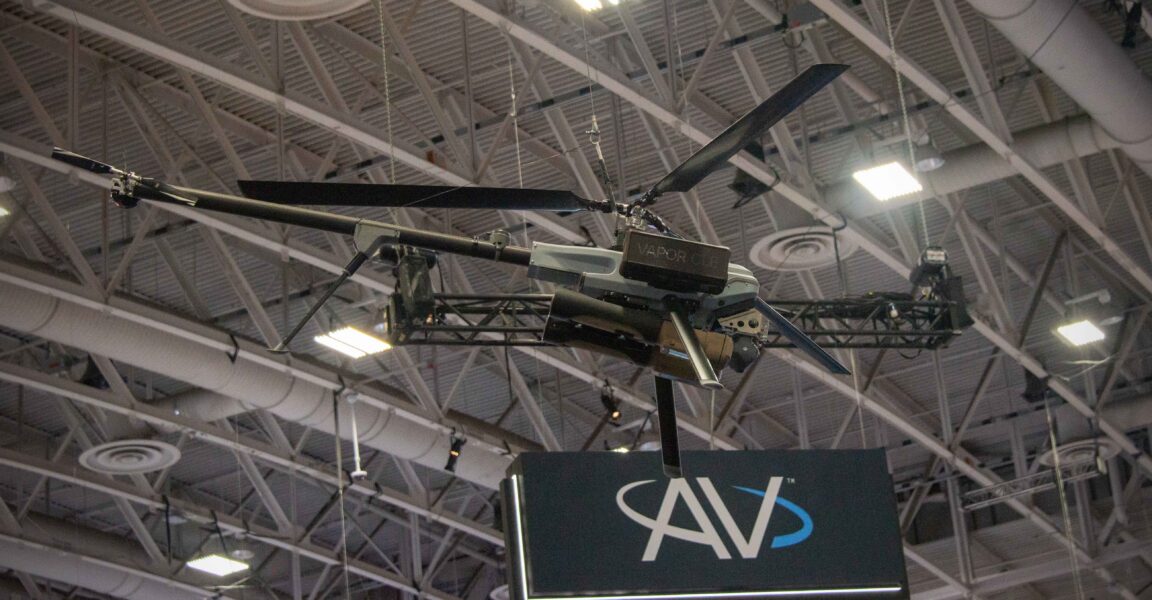
AeroVironment’s VAPOR is an all-electric, single-rotor vertical takeoff and landing (VTOL) helicopter unmanned aircraft system. Here it is suspended above attendees at the 2026 AUSA conference. (Breaking Defense)
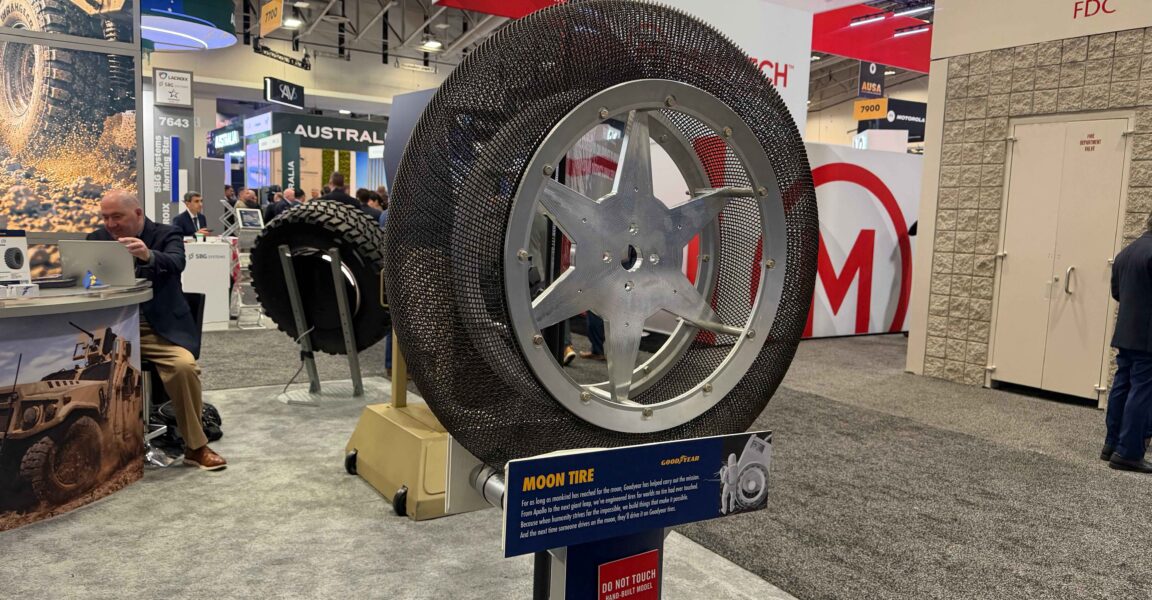
Goodyear representatives brought a sturdy but very unusual "moon tire" for lunar exploration to the 2026 AUSA expo. (Breaking Defense)
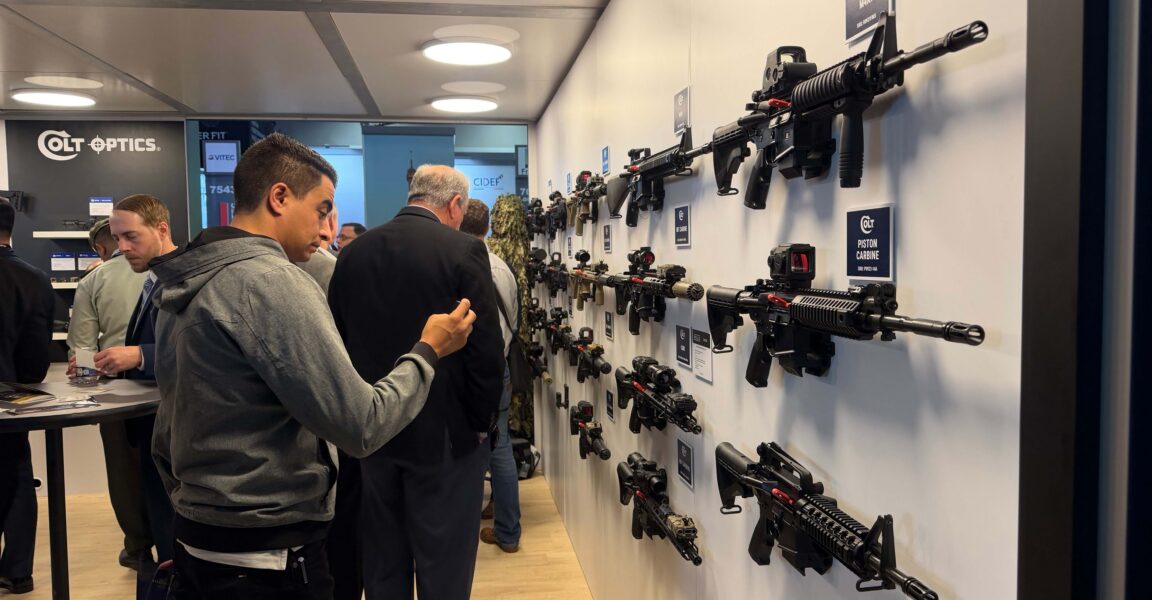
Colt optics had one of the busiest displays, with dozens of attendees observing a wall of assault rifles with specialized optics at the 2026 AUSA expo. (Breaking Defense)
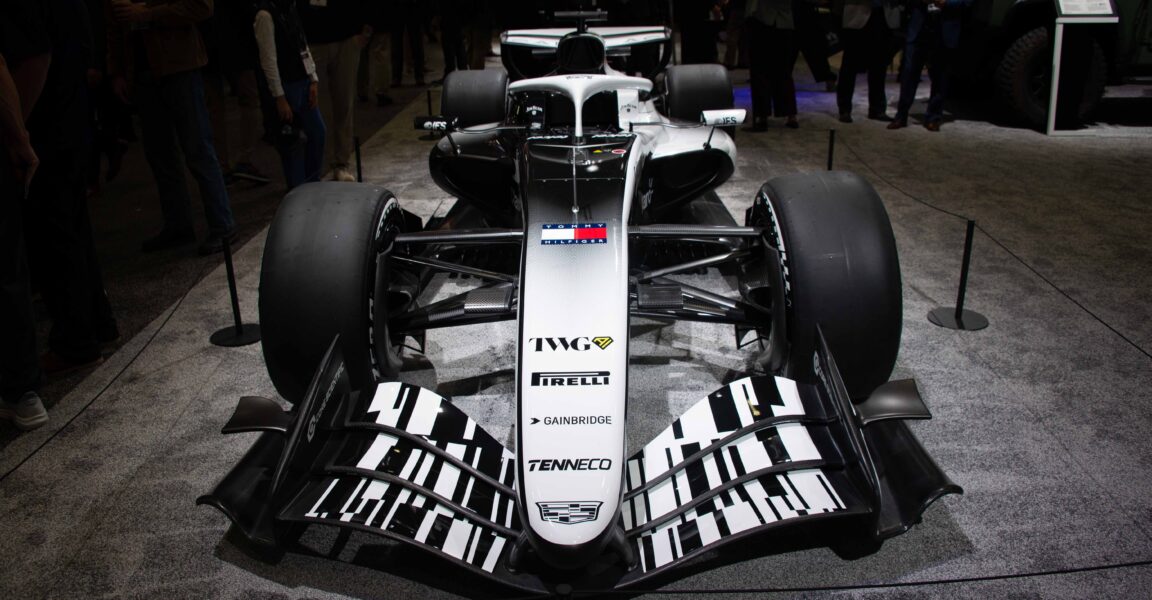
Cadillac brought its Formula 1 team racecar to the 2026 AUSA conference in Washington. (Breaking Defense)
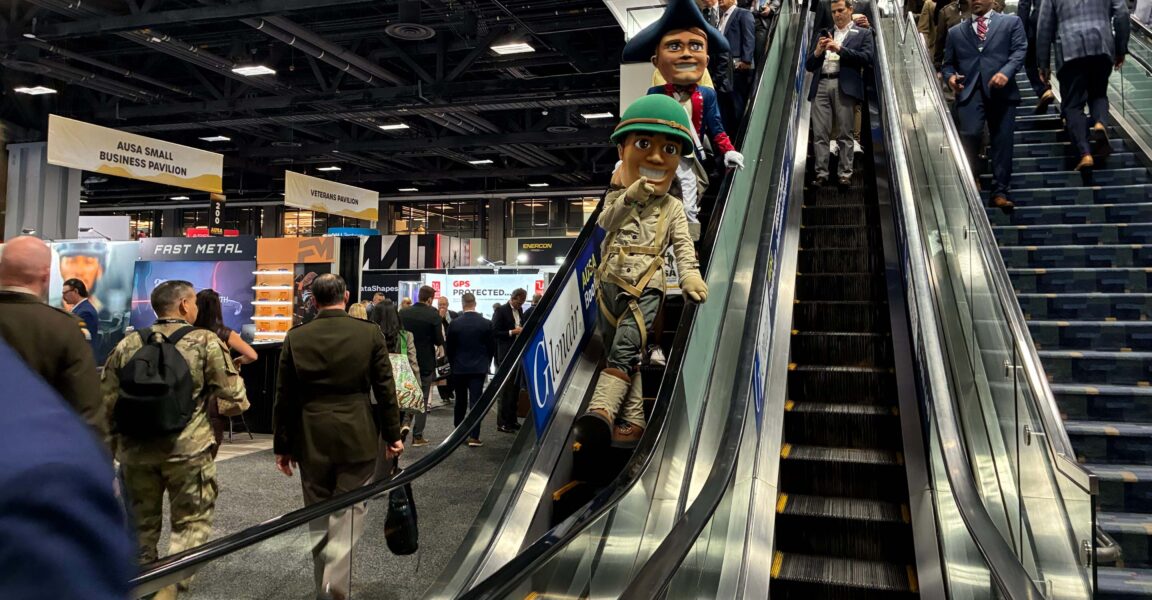
AUSA mascots Sgt. Hero and George Washington descend the escalator at the 2026 annual conference. (Aaron Mehta / Breaking Defense)
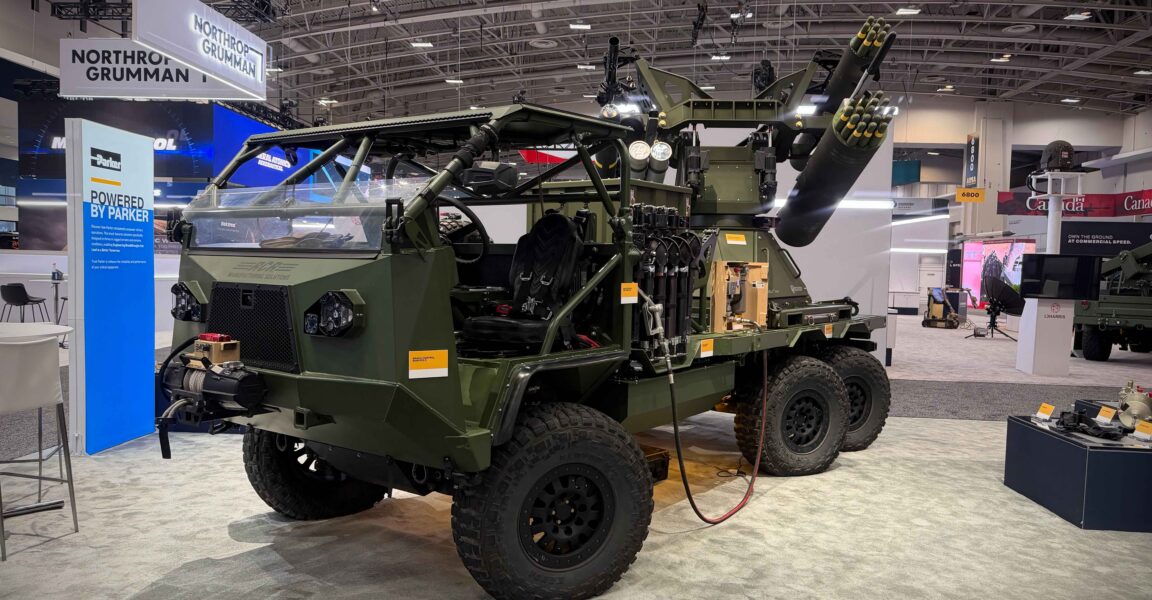
Parker Hannifin showcased many of its components onboard the MDH Strategic Services Airwolf c-UAS system, which is shown here fixed atop the RCR 6WAP vehicle. (Breaking Defense)
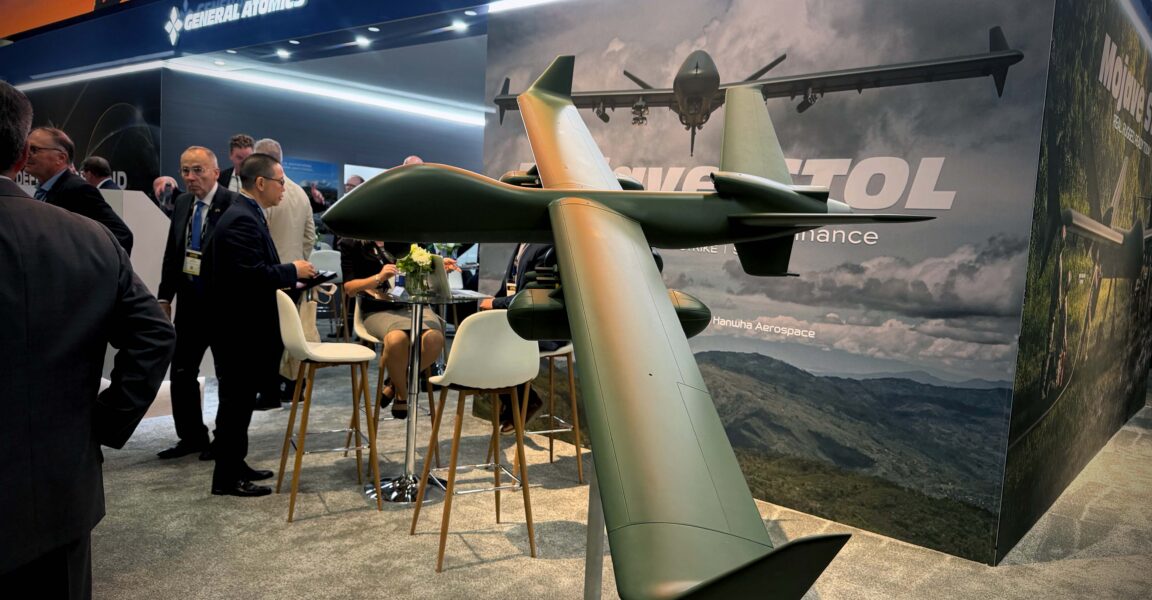
General Atomics Aeronautical Systems Inc. and Hanwha Aerospace co-developed the Mojave short takeoff and landing (STOL) uncrewed aircraft, pictured here at the 2026 AUSA trade show. (Breaking Defense)
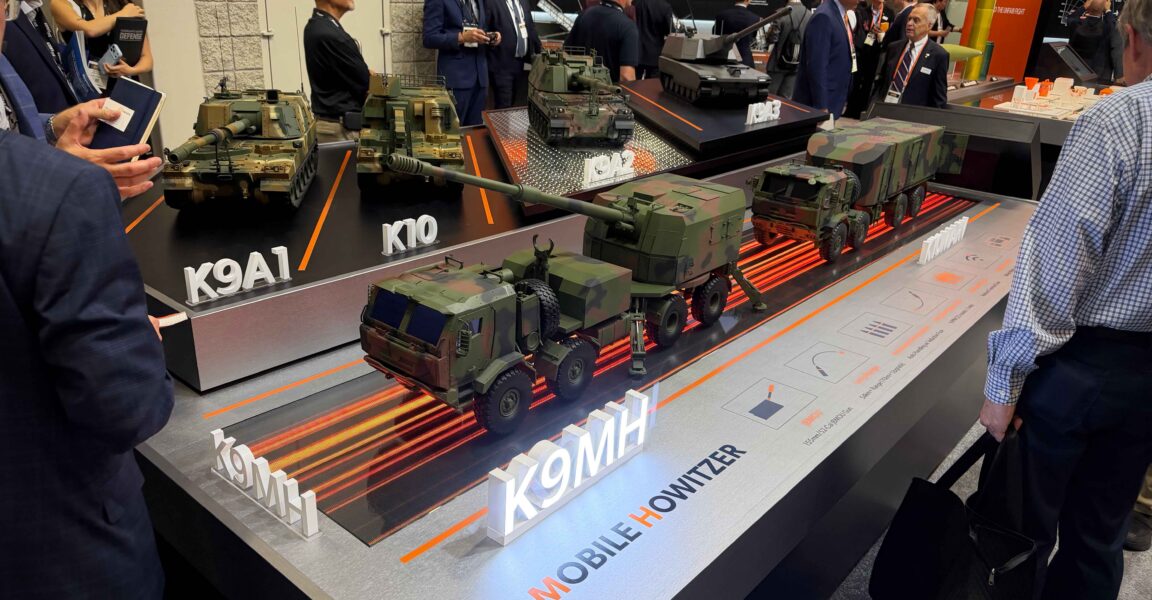
Hanwha Defense USA displayed a range of scale model armor and artillery systems on the AUSA show floor. (Breaking Defense)
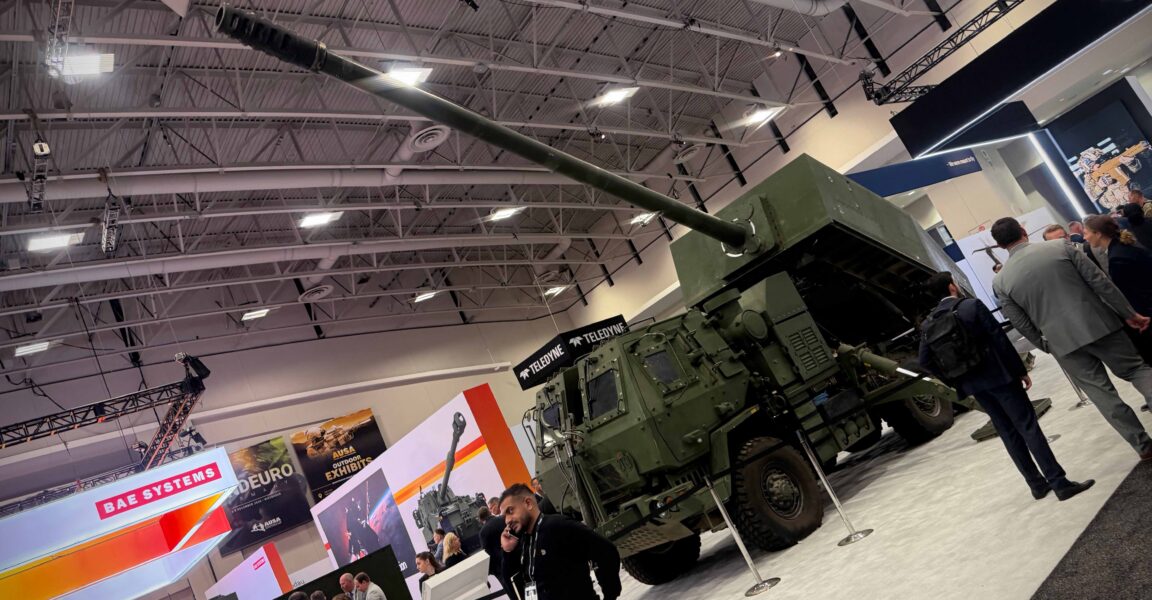
BAE’s Multi-Domain Artillery Cannon System stands tall at the 2026 AUSA trade show in Washington, DC. (Breaking Defense)
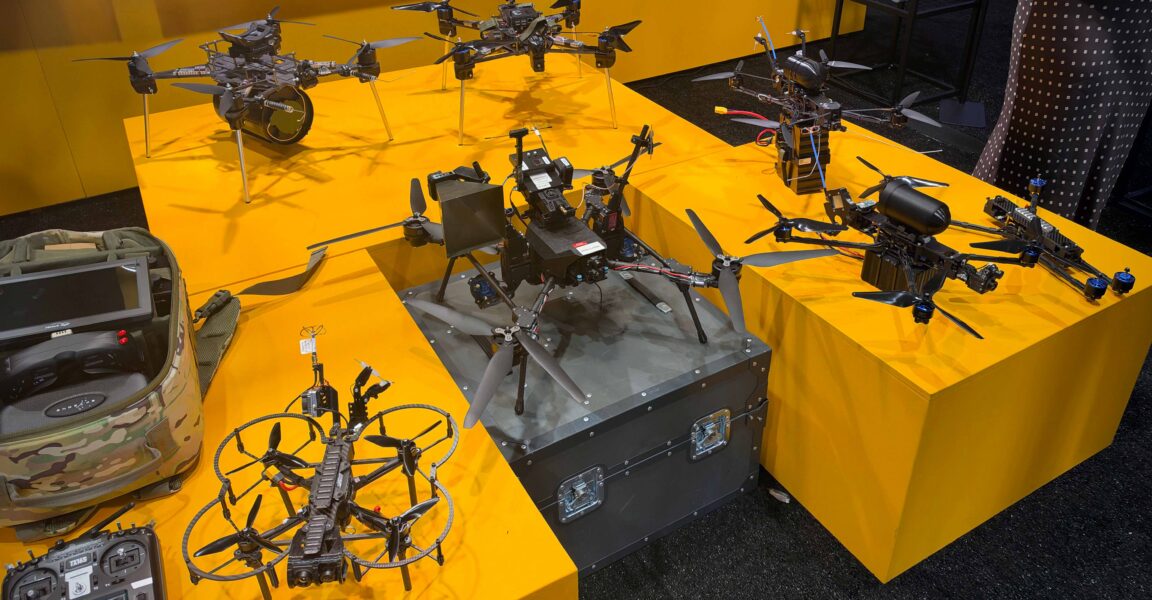
The Ukrainian military’s 3rd Army Corps brought a variety of small drones to the 2026 AUSA trade show. (Valerie Insinna / Breaking Defense)
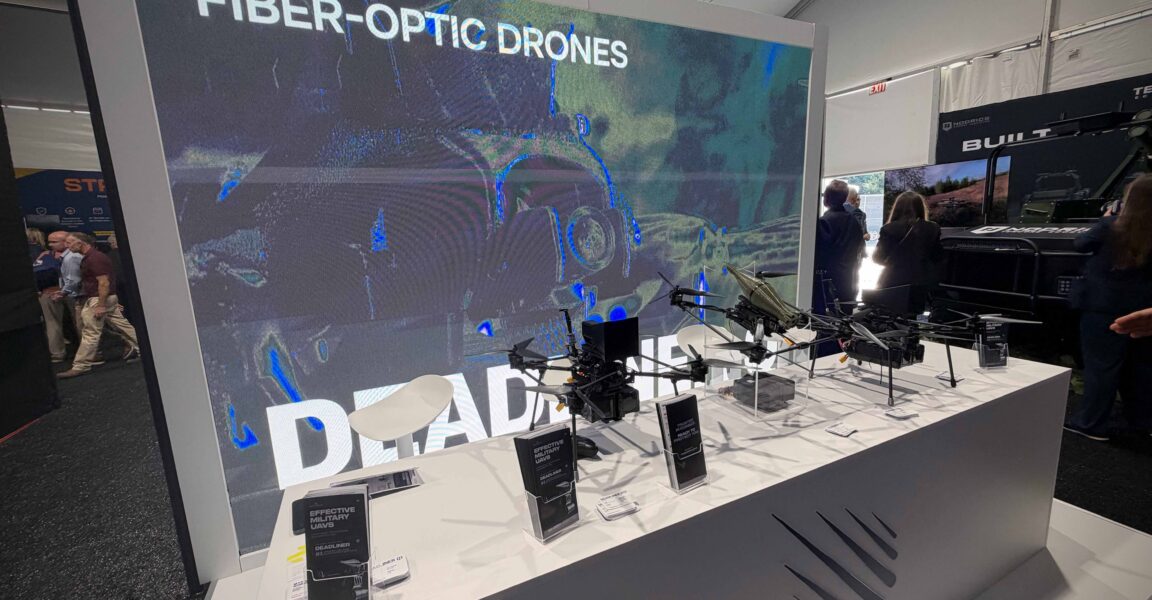
Kyiv-based defense tech firm Stellarion brought several fiber-optic drones to the 2026 AUSA expo. (Valerie Insinna / Breaking Defense)
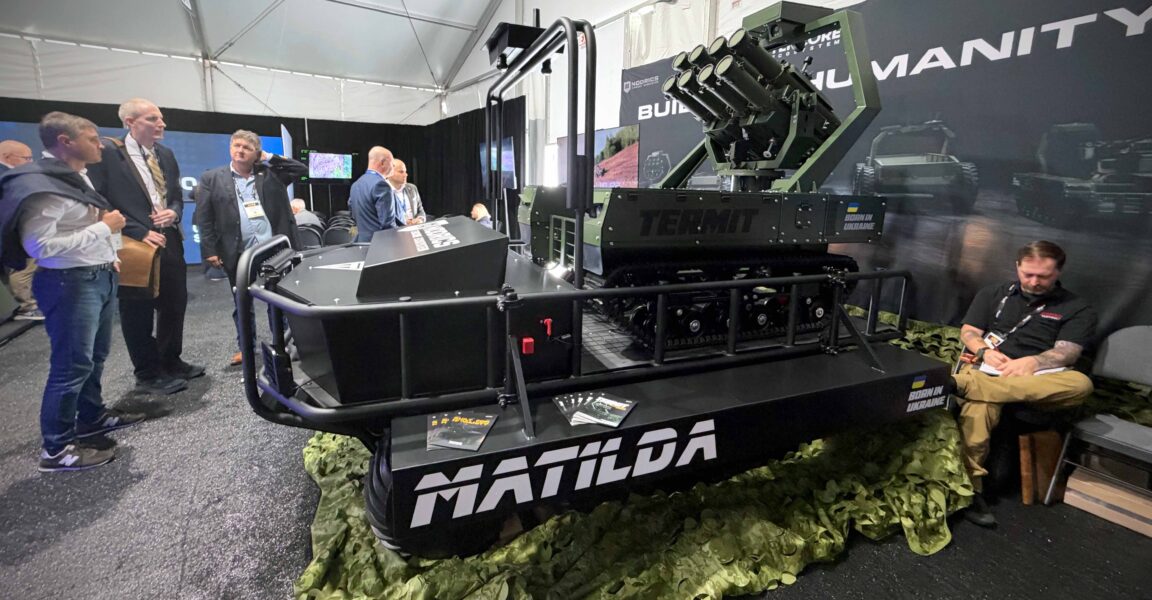
Ukrainian defense firm Tencore showcased an amphibious unmanned ground vehicle called MAT1LDA (Mesa Associates’ Tactical Integrated Light-Force Deployment Assembly), which is carrying Tencore’s TerMIT ground robot, at the 2026 AUSA trade show. (Valerie Insinna / Breaking Defense)
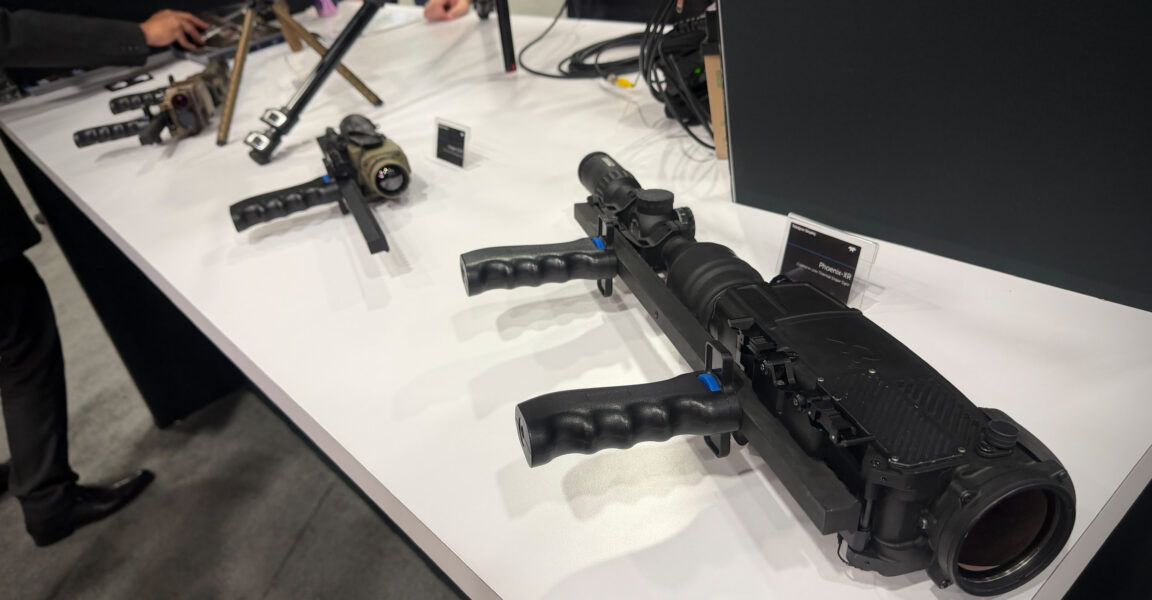
Teledyne Qioptiq brought several thermal weapons sights including the Phoenix-XR (right) and the Dragon-C12 S (middle) to the 2026 AUSA conference. (Breaking Defense)
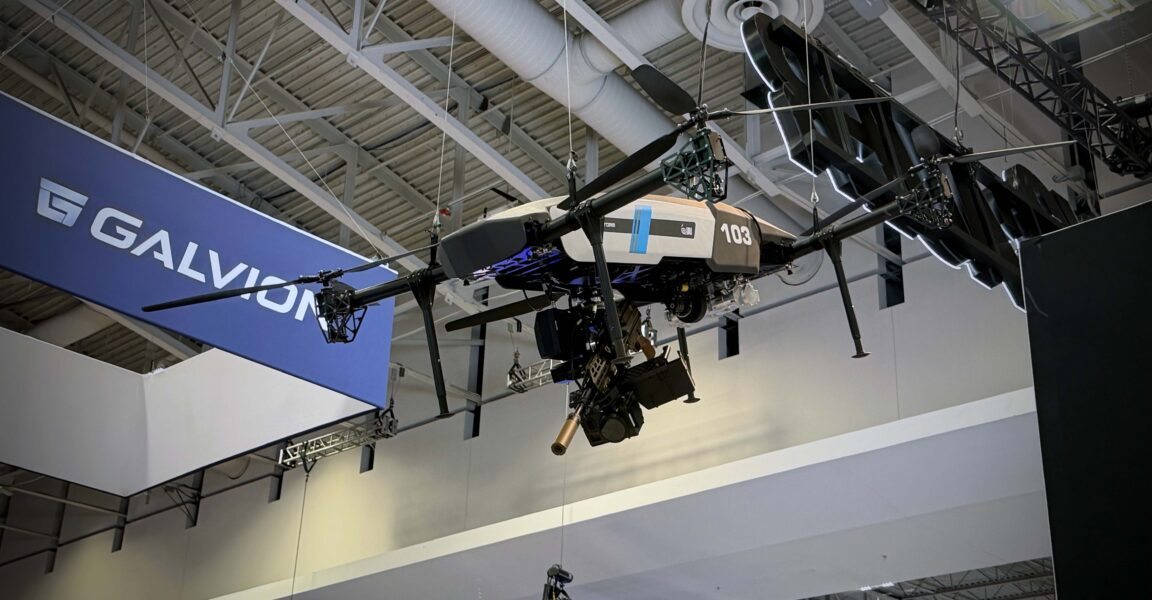
Israel Aerospace Industries’ and Sig Sauer’s Fire Storm 250 armed tactical quadcopter hangs above attendees of the conference. (Breaking Defense)
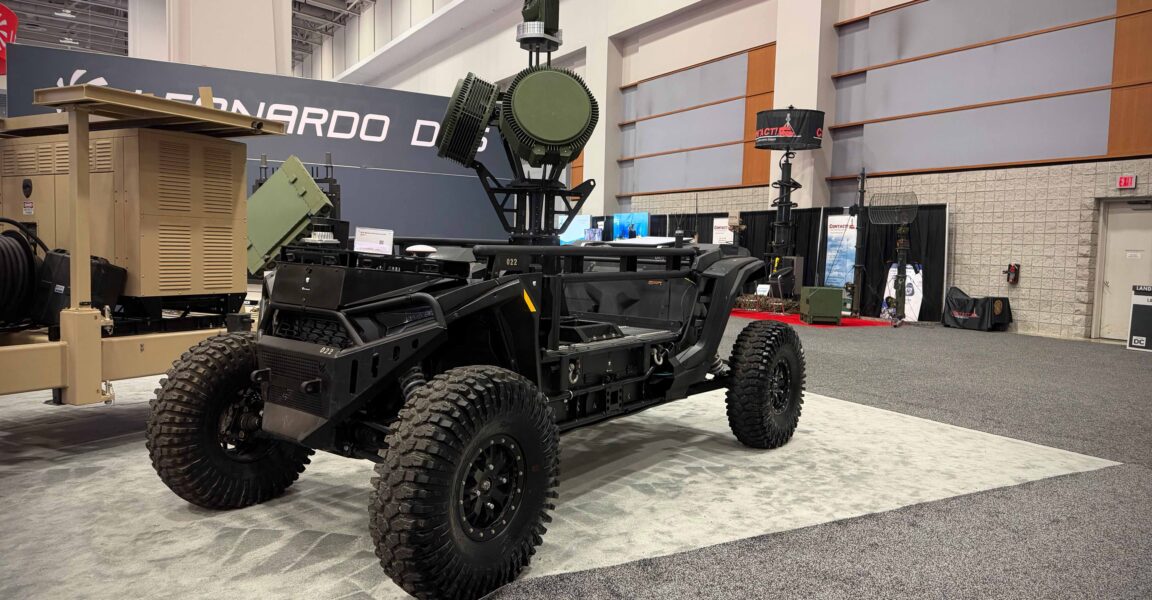
OverlandAI’s ULTRA autonomous ground system hosts a multi-mission hemispheric radar from Leonardo DRS, shown here at the 2026 AUSA expo. (Breaking Defense)
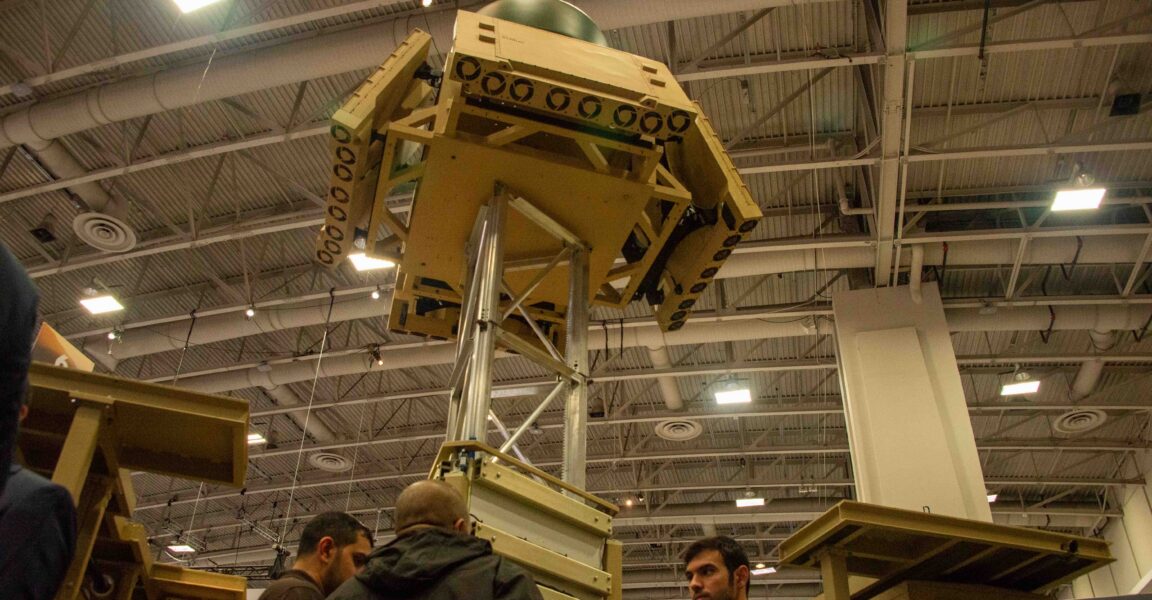
Leonardo DRS displays its Extended Mast Surveillance System, which features an exMHR radar system on a trailer platform with an extendable mast for a higher-altitude perspective. (Breaking Defense)