Drone threats give defenders less time to determine intent and select the appropriate response to protect borders, military installations, and critical infrastructure with no/low collateral damage.
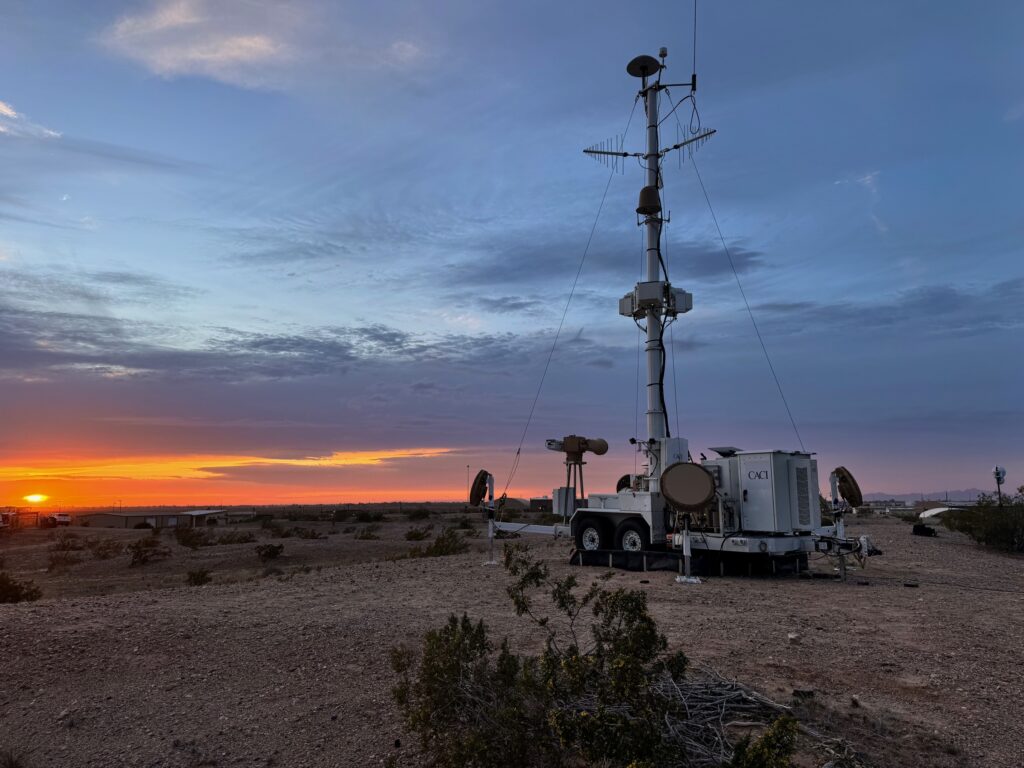
CACI International’s SkyValor next generation drone defense system is designed to expand that decision space through long-range detection and a layered architecture that combines radio frequency (RF) sensing, radar, electronic warfare, cellular detection, and electro-optical and infrared sensors. Breaking Defense talked about SkyValor with CACI’s CTO Jason Bales.
Breaking Defense: Before we get into the details of SkyValor, what threat scenarios is it designed to address, and why are these concerns more urgent now?
Bales: SkyValor builds on more than two decades of designing and deploying counter‑UAS systems worldwide. Over 300 fielded systems have informed our understanding of how drone threats evolve across national security missions, homeland defense, and critical infrastructure protection.

We’ve taken that day‑to‑day operational insight and transformed it into a commercial offering purpose‑built for homeland and national security missions. Border defense is a major focus—tracking drones operating near or across national boundaries, as well as protecting critical infrastructure from incursions. Our long‑range detection gives operators the decision space to determine intent and escalate force appropriately across a rapidly shifting threat landscape.
Range is one of SkyValor’s attributes. Tell us about this.
SkyValor doesn’t just extend the detection envelope, it transforms the entire decision space. While most Group 1–3 systems spot a drone only one to five kilometers out, giving operators a frantic 10‑second window to react, SkyValor reaches an impressive 75 kilometers. That jump in range turns split‑second choices into a deliberate, 18‑ to 20‑minute tactical advantage, giving operators the breathing room to read intent, weigh options, and apply precisely the right level of force.
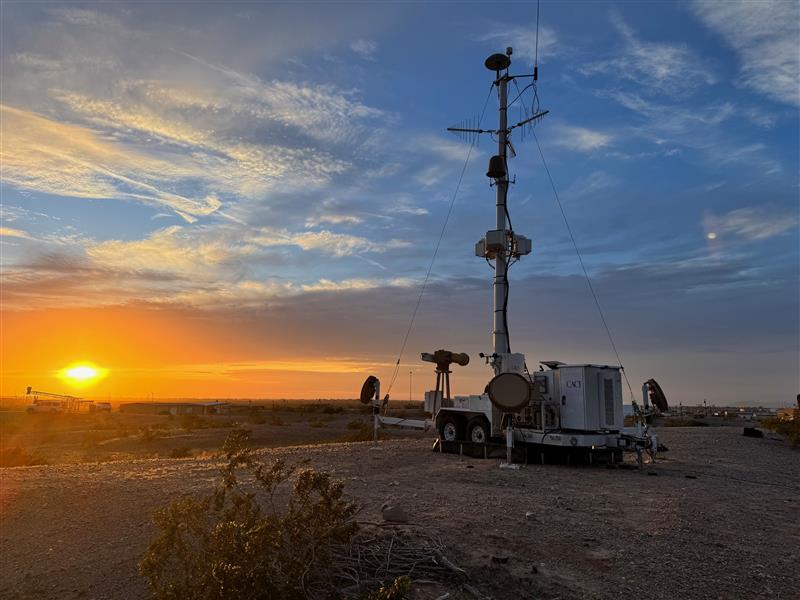
Describe SkyValor and its components, and where it fits within a broader counter-UAS architecture.
It’s a multi‑layered architecture built for a fast‑moving threat. Our RF heritage enables long‑range detection, signal analysis, and the ability to break into a drone’s communications and create cyber effects—and to apply those effects to steer or take over the platform. The system can also jam broadly when confronting swarms. Our RF and EW capabilities are built in‑house, and we integrate commercial radar for added range and precision. A key differentiator is our cellular‑network technology, which detects and mitigates drones using cellular links, alongside EO/IR sensors and integration with kinetic interceptors.
Tell us about your non-kinetic defeat options.
Non‑kinetic effects allow us to neutralize a drone with almost surgical precision. Instead of relying on expensive interceptors that may require multiple shots, we use software‑driven energy effects that deliver low or no collateral damage and provide an essentially unlimited magazine. It’s the difference between having to physically remove a threat and being able to outthink it by using the system’s intelligence to quietly and efficiently disable or redirect a platform long before it becomes a problem. Kinetic tools certainly have their place, but SkyValor’s long‑range detection lets operators be deliberate rather than reactive. When you have minutes instead of seconds, you can choose the right level of force instead of defaulting to the most aggressive one. That measured escalation preserves valuable interceptors for situations where they’re truly needed.
How does being software-defined change the equation?
Being software‑defined changes the entire equation. It means our non‑kinetic effects aren’t fixed – they evolve. At a recent event, a drone operator tried [JB1] to slip past us by altering their waveform. In half an hour, we pushed a new update across the system and reasserted control. That agility is a hallmark of SkyValor: rather than chasing the threat, we stay ahead of it. The platform adapts in real time, letting operators counter new behaviors as soon as they appear.
What did the recent testing of SkyValor at Yuma and the southern border demonstrate?
Our recent work with JIATF-401 at Yuma and along the southern border was a real proving ground. It combined controlled test runs with unpredictable, real‑world encounters—short‑range pop‑ups, long‑range crossings, low‑altitude skimmers, and drones using a mix of communication links. Every time the environment changed, SkyValor kept pace. Those trials didn’t just validate performance metrics; they demonstrated the system’s ability to adapt to a living, evolving threat landscape.
What does CACI uniquely contribute in detection, tracking, processing, and non-kinetic defeat?
We designed SkyValor to operate autonomously from day one. That means it can collect, detect, track, and relay information without waiting for human intervention—all while feeding curated, AI‑filtered insights back to operators. The autonomy isn’t about removing humans from the equation; it’s about giving them cleaner, more actionable intelligence. When the system is doing the heavy lifting behind the scenes, operators can focus on making confident, well‑timed decisions in a compressed battlespace.
What real-world scenarios best illustrate where SkyValor adds the most value?
Border protection is a prime example. You want to know when a drone is approaching long before it crosses the line, and SkyValor gives you that early warning, turning a few frantic seconds into a structured decision window. In high‑density conflict zones, where threats evolve nightly and new drone behaviors emerge constantly, the system’s software‑defined nature gives operators an advantage: real‑time updates, remote adjustability, and layered sensing that keeps pace with the fight. And when it comes to critical infrastructure like power plants, data centers, and other assets central to national resilience, SkyValor provides the persistent coverage needed to keep mission‑critical sites secure.
What should readers take away about SkyValor?
SkyValor is the culmination of two decades spent tackling the drone problem in the real world. It’s field‑proven, adaptable, and built for missions where speed, scale, and flexibility matter most. Because of our extensive C-UAS knowledge, we successfully moved from concept to deployment in 12 months. Now, as we have moved into full‑rate production, customers are getting more than just a product, they’re getting a foundation for modern layered defense – one that can grow, shift, and respond as fast as the threat itself.