The collapse of Europe’s Franco-German-Spanish sixth-generation fighter program has left Germany searching for a new path, France possibly pursuing its own aircraft, and the UK-led Global Combat Air Programme (GCAP) as the continent’s only remaining multinational next-generation fighter effort. Meanwhile, the emergence of collaborative combat aircraft (CCA) is raising a fundamental question for European air forces: How much of their future combat capability needs to depend on traditional fighter jets?
The decisions come as European governments increase defense spending in response to Russian aggressiveness, reassess their dependence on American technology and support, and confront the cost of replacing aging aircraft. What emerges will determine not only the composition of Europe’s air fleets for decades, but also which countries control the technology, production, and sustainment of their combat aircraft.
In a four-part Breaking Defense video roundtable series on European airpower, Editor-in-Chief Aaron Mehta examined those issues with Douglas Barrie of the International Institute for Strategic Studies and Breaking Defense Europe Co-Editors Tim Martin and Elisabeth Gosselin-Malo. A separate conversation with Dave Alexander, president of General Atomics Aeronautical Systems, explored how industry is responding to Europe’s growing demand for unmanned capabilities.
Together, the discussions point toward a future combining upgraded fourth-generation fighters, F-35s, new sixth-generation aircraft, and a growing assortment of drones. The challenge is how European governments will afford, integrate, and sustain that mix while preserving sovereign control over critical military technologies.
Europe’s Existing Fighters Are Far From Over
Europe’s fighter-modernization challenge extends beyond developing sixth-generation aircraft. Governments must decide how much to invest in their existing fleets, what new capabilities are needed to counter emerging threats, and how to integrate crewed and unmanned systems into an airpower strategy that can meet both near-term operational demands and longer-term requirements.
“The Europeans are moving, if you like, from Rafael, Typhoon, Grippin, but at a pace where those aircraft are going to be in service well into the 2040s, possibly in some cases beyond,” said Barrie. “At the same time, obviously, the F-35 is appearing more and more in European air forces.”
Russia’s military threat is accelerating modernization across the continent, but national priorities differ. Countries bordering Russia such as the Baltic states are emphasizing smaller drones and expanding operator training across their armed forces. Larger European powers are investing in more sophisticated unmanned aircraft intended to operate alongside conventional fighters.
Lessons from Ukraine are also demonstrating the need to balance inexpensive first-person-view (FPV) drones with longer-range strike systems and traditional airpower. Gosselin-Malo emphasized the importance of “not putting all your eggs into one basket,” noting that FPV drones alone cannot deliver the range of capabilities required for modern warfare.
That mix is necessary as European governments seek to expand combat mass without relying entirely on additional crewed fighters. This also creates opportunities for domestic manufacturers to develop new aircraft and mission systems while established fighter programs continue production and modernization.
The Sixth-Generation Fighter Dilemma
The falling out among France, Germany, and Spain over the Future Combat Air System (FCAS) program has fundamentally changed Europe’s next-generation fighter landscape. Political disagreements and disputes over industrial responsibilities undermined the effort, leaving the UK/Italy/Japan GCAP program as the principal, remaining multinational sixth-generation fighter effort involving European countries. France is expected to pursue its own aircraft, while Germany must decide whether to join another partnership, pursue a national program, or redirect investment toward other capabilities.
GCAP is targeting 2035 for entry into service, a schedule driven largely by Japan’s need to replace its Mitsubishi F-2 fighters. There have been thoughts of adding partners to the program, though that would complicate negotiations over production, financing, and technology responsibilities, potentially delaying that timeline. Canada’s decision to become an observer in GCAP provides a way to evaluate the program without immediately entering those negotiations.
Even among the existing partners, industrial workshare remains unresolved. Martin reported that GCAP executives at the Farnborough Airshow acknowledged that “the workshare arrangements haven’t been agreed yet and that’ll come at the end of the concept phase.”
Similar hanging issues contributed to FCAS’s failure, although Barrie also pointed to the political structure underpinning the program. Changes in national leadership made it increasingly difficult to maintain agreement among participating governments and manufacturers. Germany now represents one of the most consequential uncertainties, given the financial resources it could bring to another fighter program.
“If you look at the sheer financial firepower Germany is bringing to defense right now, it is the kingmaker in a lot of ways,” said Mehta.
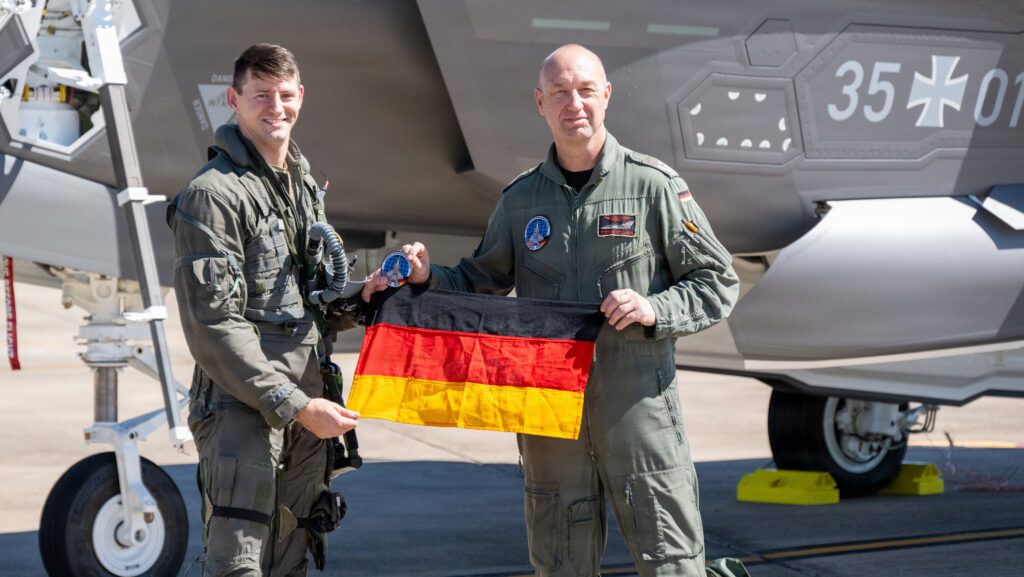
Airbus has signaled that any future arrangement must offer meaningful industrial participation. At the same time, additional F-35 purchases remain an option. Sweden’s Saab continues to deliver new JAS 39 Gripens while continuing exploratory research on its own next-generation fighter technologies.
The choices facing Germany and Sweden illustrate Europe’s longstanding difficulty reconciling national industrial priorities with the cost and complexity of developing advanced combat aircraft. Joining an existing program may reduce development costs, but also limits the influence a new participant can exert over its design and manufacturing responsibilities.
Unmanned Aircraft Offer Another Path
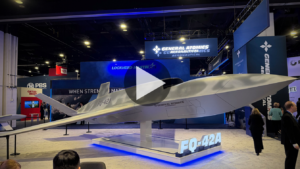
Collaborative combat aircraft are emerging as another way for European air forces to increase combat capability without developing an entirely new crewed fighter. Designed to operate alongside manned platforms, CCAs could extend sensor coverage, carry weapons, support electronic warfare, and undertake missions that would permit crewed aircraft to operate at standoff distance.
CCAs, however, are substantially more complex and costly than the drones being used extensively in Ukraine. Barrie estimated that a CCA could cost about one-quarter of a crewed fighter, so equipping manned craft with multiple CCAs would represent a substantial additional investment.
Germany is aiming to field a CCA capability in 2029, potentially making it the first European country to operate such aircraft, according to Martin, while the UK has similarly committed funding for development. Still, Germany’s Luftwaffe leadership continues to emphasize the need for a sixth-generation crewed fighter, suggesting that unmanned aircraft will initially supplement rather than replace traditional combat aviation.
During the discussion, Mehta raised the possibility that Germany and other European countries could instead concentrate their resources on developing CCAs, continuing to operate existing fighters, and eventually acquiring a sixth-generation crewed aircraft developed elsewhere. That approach could offer an alternative to the industrial and political complications of another multinational fighter program, although it would require governments to reconsider the importance of independently developing a crewed combat aircraft.
This is where the case for sovereign control of mission software and electronic systems comes in. European operators of American aircraft including the F-35, however, may face restrictions on independently modifying certain capabilities, potentially slowing upgrades.
General Atomics Sees Industrial Sovereignty Driving Demand
The emphasis on national control is already influencing how American manufacturers approach Europe’s unmanned aircraft market. General Atomics has built a European presence through its MQ-9 family, extending that experience into development of CCAs and additional mission capabilities traditionally performed by crewed platforms. Industrial cooperation is central to that strategy, including European production of aircraft components, integration of locally developed sensors, and domestic maintenance and repair capability.
“You can go in there and have the best system in the world, but if you’re not willing to open up and make it theirs, make it their own, it’s not going to go anywhere,” said Alexander, emphasizing sustainment as an element of sovereignty. With aircraft potentially operating for 40 years, domestic maintenance and repair capabilities can be as important to a customer as participation in manufacturing, he noted.
General Atomics sees growing opportunities for its MQ-9B in maritime surveillance, anti-submarine warfare, and airborne early warning, where long endurance and lower operating costs could provide alternatives to larger crewed aircraft.
The same industrial approach is shaping its CCA offering, particularly as European requirements diverge from those driving US Air Force development.
“Most of the CCA customers are looking for air to ground, not air to air,” Alexander said, pointing to GA’s Gambit family of six variants built around capabilities such as ISR or strike that can integrate local payloads rather than depend entirely on US-developed mission equipment and software.
He emphasized that European countries could contribute their own artificial intelligence and autonomy capabilities, allowing them to adapt the platform to national requirements. That approach could also provide a path for European companies to participate in CCA development without building an entirely new aircraft, in the same way that the Netherlands has joined the US Air Force CCA program to provide wingmen for its Royal Netherlands Air Force F-35As.
See here for the video roundtable series on European airpower.
Breaking Defense Video