
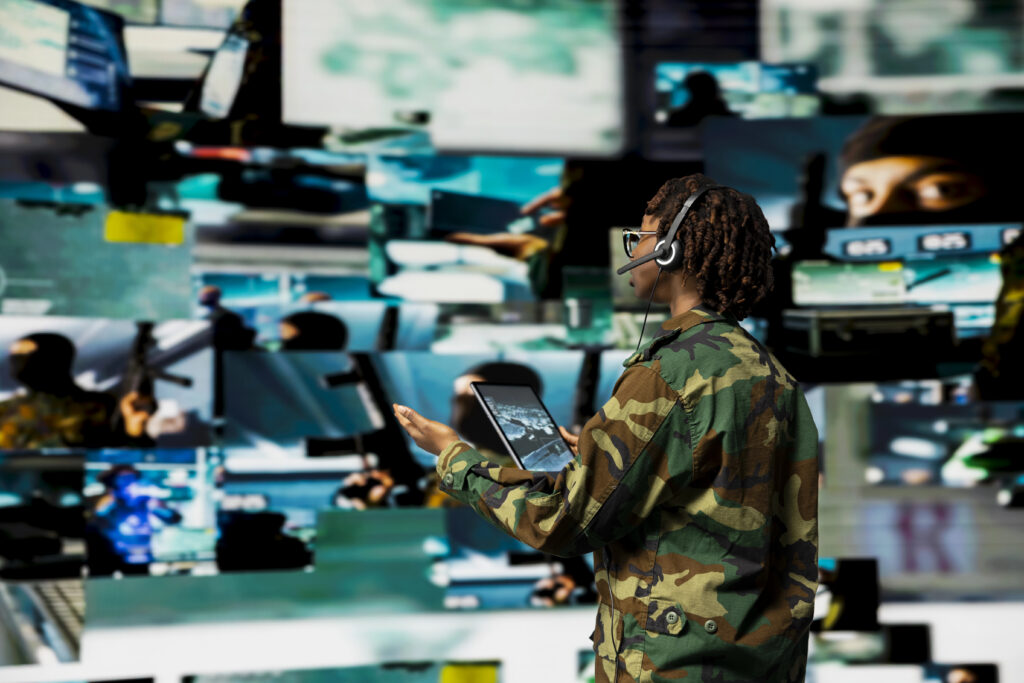
Modern defense operations increasingly require coordination across military services, allied forces, government agencies and other mission partners. However, organizations operating toward the same objective may rely on different communications systems, creating barriers to timely information sharing.
For example, the United States Marine Corps is often dispatched for humanitarian assistance and disaster relief missions, whether it’s helping in the aftermath of hurricanes and earthquakes or deploying during periods of political upheaval. These missions don’t always follow the same playbook as standard operations. One unique challenge is communicating on the ground with local government agencies, aid organizations like the Red Cross, and local law enforcement. This can be complicated, with every group using their own systems and tools. They’re not always speaking the same language, both literally and figuratively.
Defense teams know this is a problem, but efforts to find a concrete solution – one that’s safe, secure and easy-to-use – have been mostly fruitless.
These gaps are more than a technology inconvenience. When critical information must pass through intermediaries because systems cannot communicate directly, coordination can slow, situational awareness can suffer, and decision-making can be compromised.
As defense organizations pursue more integrated command-and-control capabilities, the challenge is ensuring that existing and emerging systems can work together securely, without requiring wholesale replacement of established infrastructure.
The operational consequences of fragmented communications
Consider a joint operation in which personnel from multiple services or partner organizations identify a developing threat. If their communications systems are incompatible, critical information may need to be relayed through another team or channel before reaching the people who need it.
The information starts moving from person to person instead of reaching everyone who needs it directly. If you remember the children’s game of telephone, you can imagine what happens to the quality of that information as it’s passed along. Every additional handoff introduces the potential for delays, incomplete information and misunderstandings. Even when personnel share the same operational objective, fragmented communications can prevent them from developing a common understanding of events.
The July 2024 shooting at a Donald Trump campaign rally showed how consequential the gap in information can be: a first responder lost his life shielding his wife and daughters, and countless others were put in danger. A Department of Homeland Security-Office of the Inspector General post-mortem analysis found that critical information was shared only in fragments. It didn’t reach all security personnel at the site.
While Butler is not a direct analogy for military command and control, and no single communications technology would have guaranteed a different outcome, its broader lesson is that operational coordination depends on more than capable personnel and equipment: information must securely reach the right people in a timely, usable form.
The bigger picture
Proprietary hardware, incompatible networks and legacy infrastructure can make it difficult for different organizations to communicate seamlessly. Replacing every system is expensive, disruptive and often impractical, particularly when equipment remains essential to ongoing operations.
It’s not just a technology problem. The issue isn’t that organizations lack the right tools. When the secure behavior an organization expects is too hard for employees to consistently perform, the result is failure. Some organizations believe their tools are secure but don’t fully understand what truly constitutes a secure platform, or governance and compliance with internal policies aren’t consistently enforced.
Recent research conducted by SENTRIQS revealed discrepancies between security in theory versus security in practice. The findings showed that “fewer than three out of five (58%) respondents in both the military/defense and government sectors say their employees always use appropriate tools for sensitive/confidential information.”
This highlights a larger organizational challenge: secure communications cannot rely solely on individual judgment. Defense organizations need clear, consistent expectations and leadership that makes secure practices the standard.
Connecting existing systems while preserving security
Defense organizations need a new method of secure communication that is purpose-built for high-consequence environments. Organizations shouldn’t have to choose between top-tier protection and ease of use. The secure choice must also be the easy-to-use choice.
Software-defined, hardware-agnostic communications offer one potential approach. By reducing dependence on a particular device or proprietary system, these solutions can help bridge existing communications environments and enable personnel to connect across different platforms.
Secure collaboration platforms can address a complementary challenge: enabling personnel and mission partners to exchange messages, files and other information without resorting to tools that fall outside organizational security requirements.
This is where a solution like GLYPH comes in. Rather than bolting encrypted chat onto a chat platform, GLYPH connects teams and partners seamlessly across organizations, letting them communicate securely across devices and networks while maintaining control over sensitive information. Users get the same capabilities they’ve come to expect from standard commercial collaboration platforms, including messaging, file sharing, calls and meetings, all in one protected environment designed for mission actors.
Built on decades of collective experience in some of the most high-consequence, sensitive and mission-critical industries, GLYPH enables post-quantum encryption plus messaging layer security (MLS) for encrypted communications that protect against everyone and everything. That includes GLYPH itself, which can’t access information shared within the platform.
Closing the interoperability gap
As defense operations become more distributed and increasingly dependent on joint and coalition coordination, communications interoperability is fundamental to operational readiness. The ability to share information securely and reliably across organizational boundaries can be as important as the capabilities of the individual systems involved.
It’s not just about investing in new hardware. Defense leaders must address incompatible systems, inconsistent security practices and the organizational barriers that prevent information from reaching those who need it. Ultimately, the goal isn’t to add yet another communications tool but rather to ensure that existing and emerging capabilities work together. That will enable personnel to exchange critical information securely, efficiently and when operational conditions demand it.
Damien Fortune, Chief Executive Officer
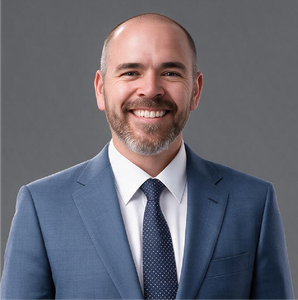
As CEO of SENTRIQs, Damien Fortune is responsible for the operational delivery of all SENTRIQS products, including standalone secure collaboration tools and integrated secure communication solutions. In addition, he works directly with SENTRIQS clients to design agency- or enterprise-wise communication programs to help reduce the risk of compromise by bad actors.
Damien serves as a director of the Critical Infrastructure Security Consortium, a non-profit organization focused on security critical power and water systems in the US, and leads its Post-Quantum Security committee.
Prior to joining SENTRIQS, Damien was the chief operating officer and chief financial officer of Savory, a tech-enabled food delivery company in New York City. Before becoming an operator, Damien spent over a decade working in the financial services industry at various investment banks, including JPMorgan, and in private equity as a portfolio manager investing in technology companies. Through these roles, he has extensive experience in project management, operational efficiency, and technology development.
He holds a Juris Doctorate from the Cardozo School of Law, and a bachelor’s degree in finance from the College of William & Mary.