When the US and Israel began military operations against Iran on Feb. 28, Russia was quickly identified as a chief beneficiary of the chaos that ensued.
It’s easy to see why: The Trump administration’s lifting of U.S. sanctions on Russian oil and the surge in global energy prices has helped Moscow with its budget deficit and is providing a boost to its defense spending. Amid Washington’s pivot to the Persian Gulf, the rift between the U.S. and NATO partners is widening. For the Kremlin’s global information network, the U.S. military’s operations in the Middle East have provided an abundance of content about Washington’s militarism.
Yet, for all these benefits, none of them will result in a strategic windfall for Russia. In fact, Ukraine will likely emerge as the bigger beneficiary long term — if Kyiv and its allies are able to take advantage of the moment.
Energy prices may remain elevated in the short-term, benefitting Russia, but a cessation of hostilities will likely resume costs per barrel that are unfavorable to Moscow’s undiversified economy. Despite the US lifting some restrictions on Russia’s energy sector, the EU has committed to maintaining its sanctions, and Russian tankers remain under threat from Ukrainian attacks and European seizure. Ukraine’s strikes on Russian refineries and other sites relevant to energy will also continue to harm Moscow’s capacity to sell oil and gas.
Geopolitically, Russia’s support for Iran has likely harmed the country’s relationships with the Gulf states. From providing Iran with targeting data and drones to issuing public pronouncements of solidarity with Tehran, the Kremlin has created ample fodder for years of grievances, even if both sides keep their differences out of the public eye. Moreover, whereas the inability to sustain the Assad regime or prevent the capture of Nicolas Maduro was viewed by the Gulf monarchies as a sign of Moscow’s limited influence, aiding Tehran demonstrates the Kremlin’s commitment to the Axis of Upheaval, a direct threat to the regional stability and prosperity that the Gulf monarchies have sought to cultivate.
In contrast, Ukraine has turned a challenge into a triumph. President Volodymyr Zelenskyy’s whirlwind trip to the Middle East in March has led to defense agreements with the UAE, Saudi Arabia, and Qatar. Even the portion of the deals that is publicly known is impressive: Ukraine secured decade-long agreements that involve Kyiv exchanging its warfighting know-how for energy shipments, financial aid, and missile interceptors. Ukraine is also pursuing three similar agreements with Bahrain, Oman, and Kuwait.
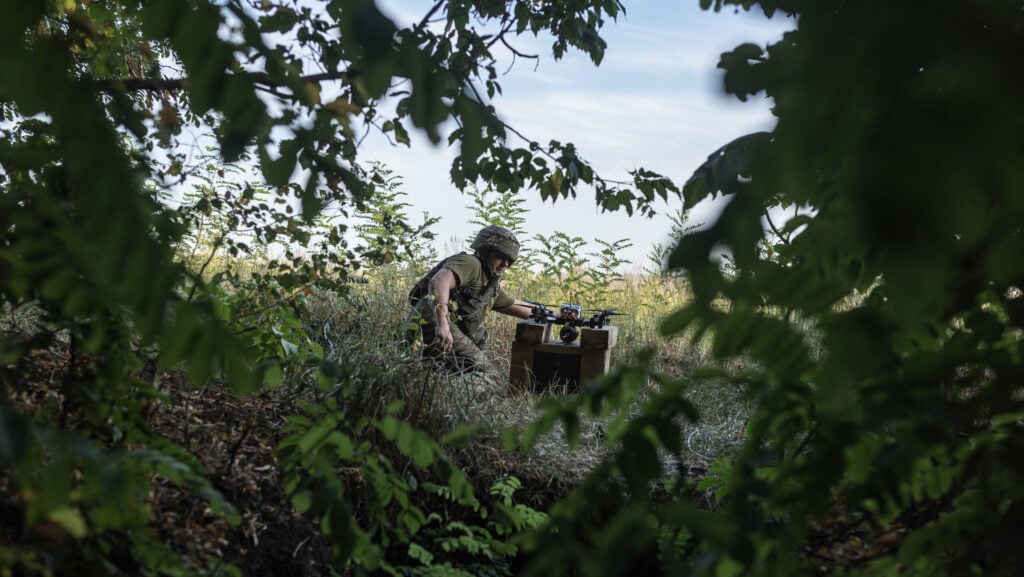
Concerns about the Iran conflict preventing the transfer of American interceptors to Ukraine pose a risk to Ukraine’s security today, but domestic firms are already developing robust air defenses, including an alternative to the Patriot system. Fire Point, the Ukrainian company responsible for the Flamingo cruise missile, is working with European companies to create a low cost air defense system by 2027. This development is part of a broader ecosystem of innovation that is helping Ukraine blunt Russian assaults and become a sought after partner.
Ultimately, Kyiv will emerge from the Iran war with durable, long-lasting agreements that will foster closer political, military, and economic ties with a group of nations who have the resources to support Ukraine’s current struggle, and the nation’s postwar reconstruction. Given the presence of American military bases in the region, and the importance of the Strait of Hormuz to Europe’s energy security and the global economy, it is in the national security interests of both Washington and Europe to encourage regional powers to tie up with Ukraine.
Kyiv’s traditional supporters can use their substantial diplomatic heft to encourage the Gulf monarchies to treat Ukraine as a trusted and capable partner. This may include potential multilateral arrangements that tie security assistance from Ukraine to strategic investments and pressure on Moscow by the countries reeling from Iran’s attacks. The US and many European states also have more experience than Ukraine in navigating the Middle East’s complex political systems and incentive structures. Active guidance on their part may help Ukraine secure balanced agreements more quickly. Over time, stronger defense and economic ties between Kyiv and the Gulf monarchies will lessen the need for Europe to provide assistance to Ukraine — a return on investment for any European nations who help make deals now.
Moscow’s partnership with Tehran and the Kremlin’s long-term geopolitical calculus — that global divisions and instability support its economic and political objectives — ensure that Russia will ultimately be the loser of the Iran war. As the world enters a Drone Age defined by decentralized, low-cost aerial threats, Kyiv will cement its role as the vanguard of armed resistance. Ukraine has already seized the moment and leveraged its wartime experience to begin expanding its network of symbiotic partnerships.
For their own security and prosperity, Europe and the US should support this effort.
Artur Kalandarov holds an MA in Russian, East European, and Eurasian Studies from Stanford University. He is a senior associate at The Cohen Group, a business advisory firm based in Washington, DC, where he advises clients on business operations in Eastern Europe. He has previously been published in Modern War Institute, Defense One, Newsweek, The National Interest, and the Hill. His views do not necessarily reflect those of his firm.