NATIONAL HARBOR, Md. — Lockheed Martin is doubling down on its internal investments for its Vectis stealth drone, announcing today that the company will build an additional four prototypes along with the one currently in production.
The additional aircraft will be used to accelerate testing and validate production processes, said Ron Fehlen, who runs Lockheed’s Skunk Works advanced development division.
“Development work on those additional aircraft is already underway, and we’ll have more specifics to share soon,” he said.
Fehlen added the company will “build and we will fly these four vehicles even more quickly” than the first prototype, which was announced last year and is set to fly by the end of 2027.
Vectis will be center stage for Lockheed this week at the Association of the Air and Space Force conference, with the company showcasing a full scale model of the drone on the show floor.
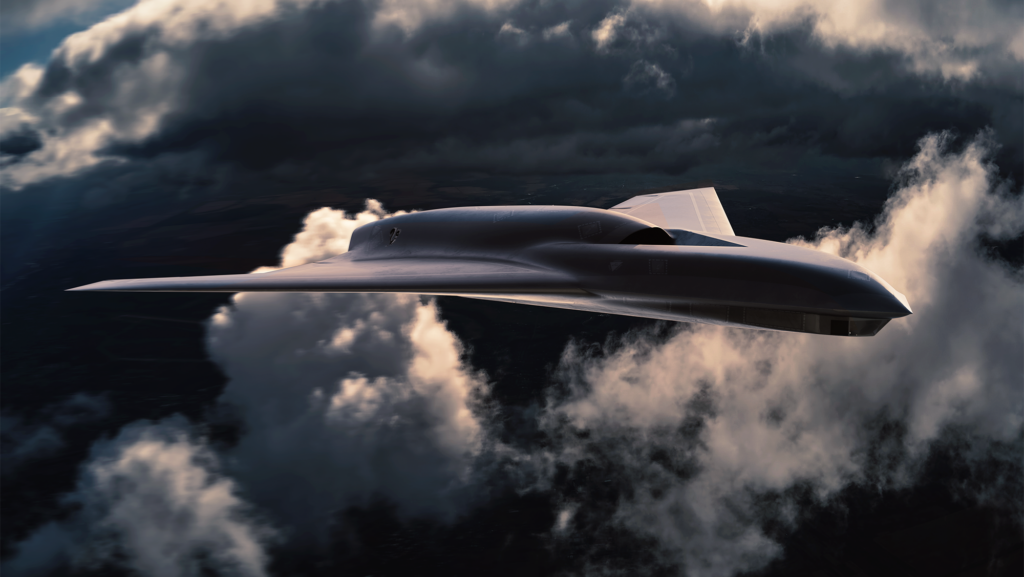
Lockheed has described Vectis as a large “Group 5” stealth drone, with flexibility as its major selling point. It is designed to be adaptable to multiple mission sets — including air-to-air, air-to-ground and ISR — with payloads and mission systems that can be customized for the customer.
The world’s largest defense company is betting big on Vectis. The company won’t disclose the size of its investment, and Fehlen was tightlipped when asked about potential customers for the drone.
“There is no reason to say, ‘Well, it’s one customer or another,’” he said.
However, when asked whether Lockheed could offer Vectis for the Mass Modular Aircraft program — which would perform the same long endurance ISR and strike mission as the MQ-9 Reaper — Fehlen said “the mission is a little different” and that Vectis is more aligned with efforts to field Collaborative Combat Aircraft, or drones that would partner with fighter jets.
Lockheed is targeting unit costs “to be [at] the CCA competitive price,” he said. (For the first increment of the CCA program, which was won by General Atomics and Anduril this year, the Air Force settled on a $20 million per aircraft cost target.)
With the full scale Vectis model clearly visible in the AFA exhibit hall, Lockheed is releasing several new technical specifications. The tailless aircraft is about 34 feet long, with a wingspan of about 38 feet, making it about as long as an MQ-9 Reaper with a similar wingspan of an F-35.
Fehlen also highlighted the submerged inlet on the top of the aircraft, stating that it helps to reduce drag and prevent debris from being sucked into the aircraft — a boon for maintainers having to upkeep the aircraft if it were to be deployed to an austere environment.
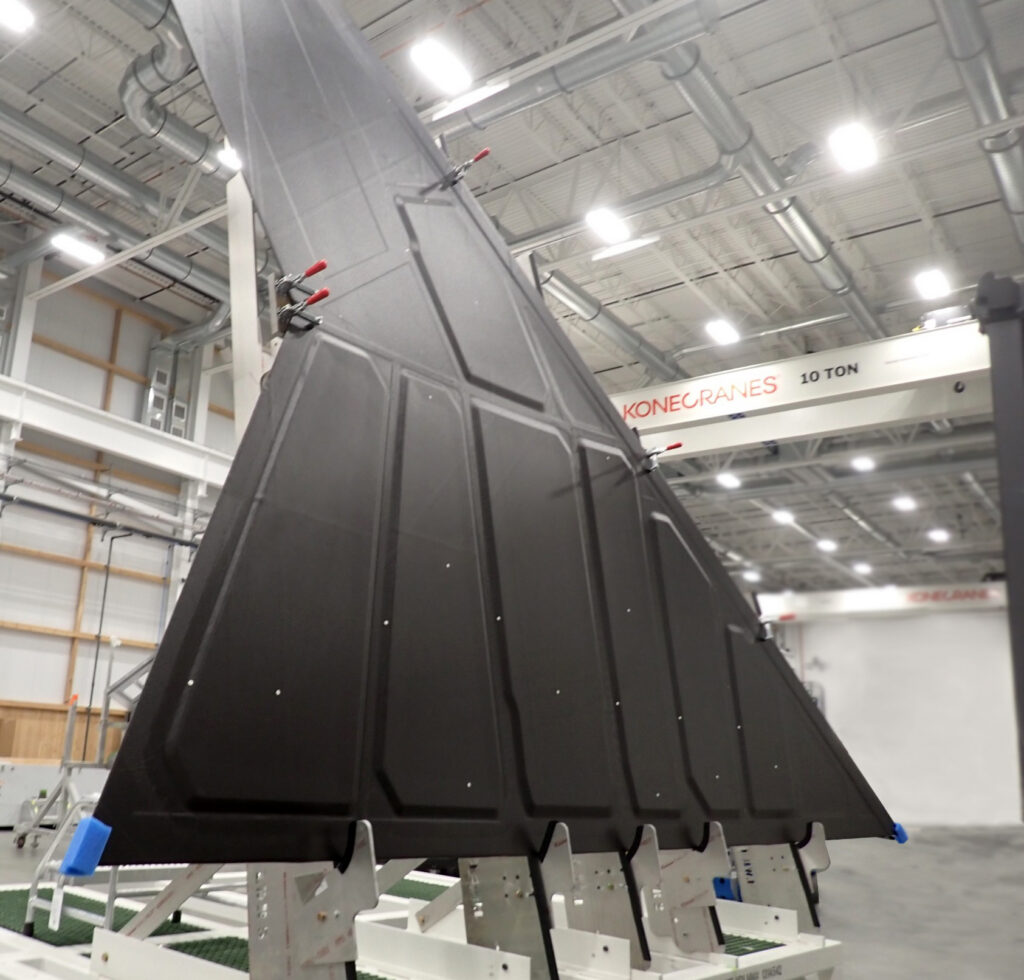
Production of the first prototype is currently ongoing, with Lockheed showing reporters multiple photos of the airframe being assembled.
“How fast are we really going? This team, when kicked off, took a design on a napkin … and then two months later, they were in the wind tunnel validating the design,” he said. “We had the first digital build in six months, and the first part release in eight months.”
The company is using a technique called “minimal tooling determinate assembly” to simplify the process of manufacturing the airframe and cut costs, with Fehlen likening the process to putting together furniture from Ikea.
“It’s a technique that really enables an increased level of affordability and speed through really reducing the amount of touch labor required and increasing the first pass yield,” he said. “We’ve seen, in many cases, an 80 percent reduction in labor hours to build up the aircraft itself.”