Ground robots have proven their value in recent conflicts, handling logistics runs, evacuating the wounded, and keeping troops away from the most dangerous environments. But unmanned ground vehicles (UGVs) have a critical limitation: they aren’t fully autonomous. UGVs are remote-controlled or teleoperated, tethered to a communications link that can be jammed, spoofed, or severed. They also require the full attention of their human operator, which is cognitively expensive.
Overland AI’s fully autonomous ground vehicles (AGVs) represent a significant advancement over UGVs.
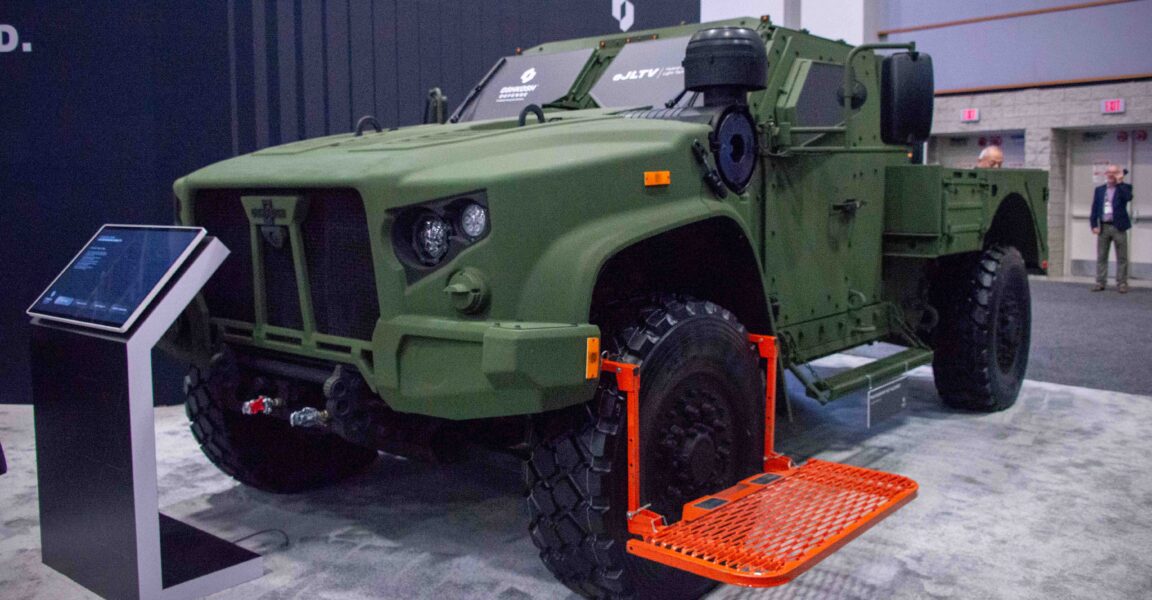
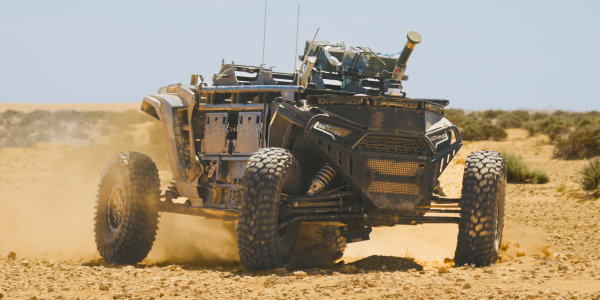
Leveraging proprietary software and hardware, Overland AI’s AGVs can sense and navigate the world around them independently, overcoming obstacles such as boulders, dense vegetation, steep slopes, and unexpected ditches at tactically relevant speeds. They can do this even when signals are degraded or lost entirely. Using natural language prompts, a single operator can task and orchestrate an entire fleet of these AGVs simultaneously—without teleoperation or remote control.
Overland AI’s technology has been refined and validated through rigorous field testing and extensive work with warfighters. In a joint U.S. military exercise in Africa this year, Army officers estimated that two AGVs replaced 40 humans, allowing troops to move faster with more protection. The vehicles reduced distribution time on a drop zone by 52 percent at another recent military event. During breaching, one of the most dangerous tasks for troops, service members face extreme casualty rates. When fully autonomous vehicles are deployed, humans are removed from the most dangerous places on the battlefield, life expectancy skyrockets, and more U.S. troops can return home to their families.
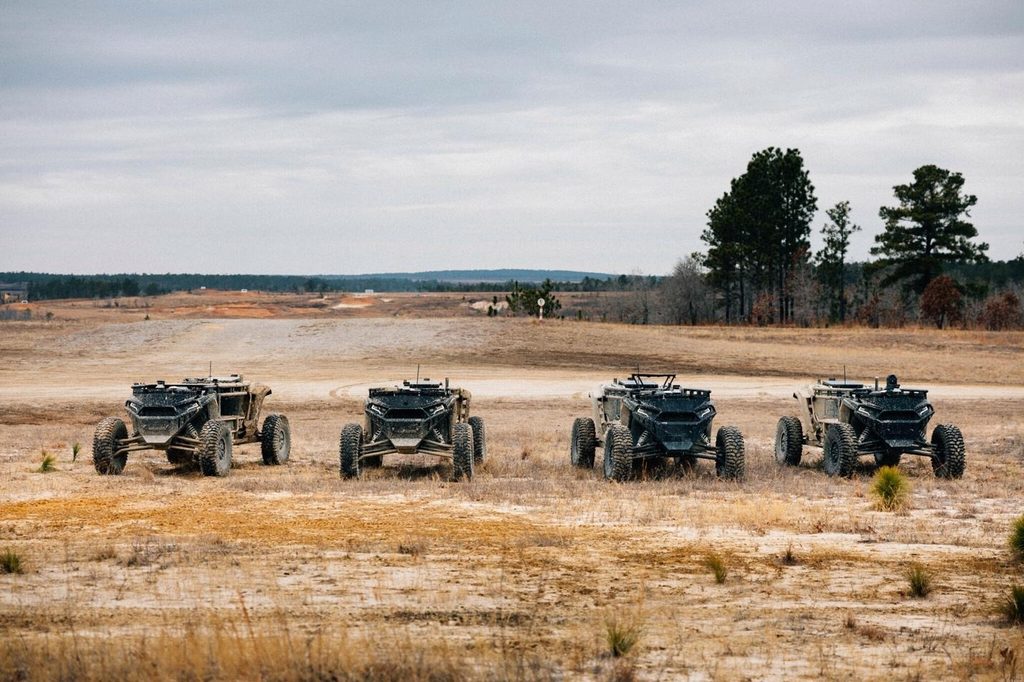
Overland AI recently became the first ground autonomy company to prime a production contract for the U.S. military. Under a $20 million agreement through the Accelerate the Procurement and Fielding of Innovative Technologies (APFIT) program, the company is working with the U.S. Marine Corps to produce and field AGVs in support of the Marine Air Defense Integrated System (MADIS).
The APFIT award is the culmination of a push within the Department of War to move autonomous systems into programs of record and operational use. Missions such as breaching fortified positions, delivering critical supplies under fire, and detecting and defeating enemy drones are ready for autonomous deployment.
Truly autonomous ground vehicles are not a future capability—they are operational now. This is important because however the battlefield evolves, wars are still won on the ground. Territory must be taken, held, and defended by forces operating across austere environments marked by uncertain conditions and degraded communications.
The robotics revolution in land warfare is here, and Overland AI is driving it. The next step is fielding this technology broadly across the services.
PHOTOS: AUSA 2026

 Gallery