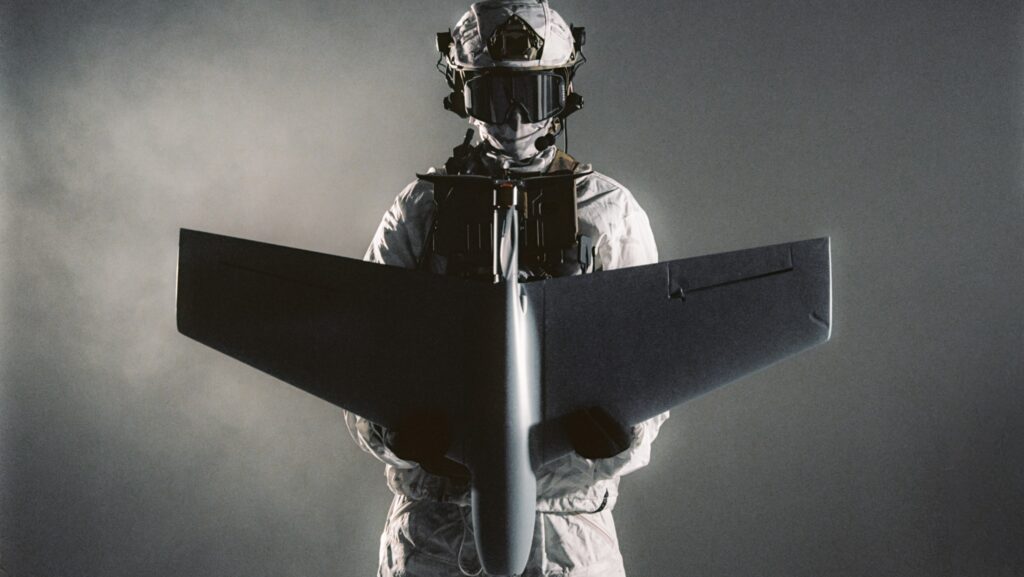
WASHINGTON — Heaviside, a two-year-old US-Norwegian drone startup, has joined the competition for low-cost, expendable drones with its Tyr loitering munition, the company announced today.
The weapon is named after a Norse god, and while the company’s headquarters and most of its staff are in Los Angeles, most of the engineering, development, and testing are being done in Norway, explained Heaviside president Nils Haagenrud in an interview.
In fact, Haagenrud told Breaking Defense, the Scandinavian facility is just up the road from the company’s most important partner: Norwegian defense firm Nammo. Nammo provides Tyr’s anti-tank warheads, which are all derived from the company’s M72 LAW series, as well as a test range where Heaviside can not only fly its Tyr prototypes but use live explosives on practice targets.
“We’re just an hour and a half away from each other,” Haagenrud said. “We can do all the testing internally and move very fast. …. They can build and test the same day.”
In some tests, he said, Tyr has successfully flown to and detonated targets in Norwegian winter weather of 20 degrees below zero.
While Nammo isn’t an investor in Heaviside — the firm is VC-funded— Haagenrud argues the close relationship and strong backing by a well-resourced prime contractor is something that distinguishes the startup from other small, young firms rushing into the expendable-drone business. Another strength, he said, is the decades of experience many key staff have in drone development. That includes his own time at Teledyne FLIR working on the palm-top Black Hornet, which became the centerpiece of the US Army’s Soldier-Borne Sensor system.
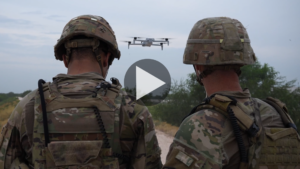
Tyr is bigger than Black Hornet but still on the small end for drones, easily portable by a single soldier and weighing in at roughly 15 pounds. A third of that is warhead with enough explosive power to kill a main battle tank like the Russian T-72 or T-80. Though he didn’t give a price for the drone, Haagenrud says it’s “way under $100,000,” with extensive use of commercial off-the-shelf components to keep costs down and supply chains robust. (Those price and weight figures are for the drone itself, not including a reusable launcher).
The drone also incorporates some of the AI targeting features being field tested in Ukraine, although the company says it’s scrupulous about requiring a human in the loop to make the final call.
“We are doing video navigation … fusing the EO [electro-optical] and the IR [infrared] sensors,” Haagenrud said. The drone can fly itself to a human-designated strike zone, autonomously hunt for recognizable targets like a tank, and then ask the operator for permission to attack.
“The only thing I have to do is press ‘engage,” he said.
Heaviside also has an unmanned underwater vehicle (UUV) called Nyx in the works. While the firm isn’t disclosing details and no contract has been announced, Haagenrud told Breaking Defense “we are working directly with the DoW,” using the semiformal alternative name for the Department of Defense.
Heaviside’s one publicly announced defense contract is an Indefinite Delivery, Indefinite Quantity (IDIQ) award, with a ceiling of $99 million, from the Army’s Rapid Electronic Warfare and Signals Intelligence (REWSI) initiative. That’s for a handheld spectrum analyzer called MOTH, used to detect the telltale radio emissions from incoming drones.
Breaking Defense Video