Land Warfare

Army again tweaks acquisition structure to remove unwanted layer of bureaucracy 

With this newly implemented change, the service has attempted to increase communication between its Portfolio Acquisition Executives and their subordinate program manager offices.

Brent Ingraham, assistant secretary of the Army for acquisition, logistics, and technology, speaks during a panel titled “Transatlantic Industrial Power: Production at Speed and Scale” during Eurosatory 2026 at the Paris Nord Villepinte Exhibition Centre in Villepinte, France, June 17, 2026. (U.S. Army photo by Maj. Alexander Watkins)

WASHINGTON — A year after the Army’s sprawling acquisition overhaul, the service has again realigned the structure of its weapons portfolios, albeit at a much smaller scale, senior service members recently told reporters. 

With the new changes, the Army has attempted to remove a layer of bureaucracy between its Portfolio Acquisition Executives (PAEs) and its program managers after Congress ordered it to do so in the 2026 National Defense Authorization Act (NDAA). Brig. Gen. Troy Denomy, PAE for Maneuver Ground, said this will better ensure the acquisition and operational sides of the service are in tandem with each other. 

“What’s critically important for the PAEs to deliver for the Army is the alignment, synchronization, and staying closely connected to our operational counterparts,” Denomy said Oct. 8 ahead of the annual AUSA conference “We cannot deliver those formation-based outcomes if we are not tied at the hip and synchronized closely together.” 

The adjusted acquisition structure comes nearly a year after the Army underwent a major acquisition reorganization, which consolidated the original 12 Program Executive Offices under the six PAEs for a reduction on the number of general officers at the top rank. The goal: to remove constraints and hone its processes to move much faster. 

Under last year’s changes, the Assistant Secretary of the Army for Acquisition, Logistics and Technology (ASA(ALT)), along with the Army’s secretary, would direct acquisition orders down to the Army’s six PAEs and their deputies. The PAEs would then communicate orders down to their Capability Portfolio Executives (CPEs) which then pushed those down to the relevant program managers — the latter being the individuals who most often collaborate with soldiers in the field to see what they need. 

However, those changes were rolled out prior to the 2026 NDAA becoming law, meaning the mandates from the legislation were not fully implemented until recently, Ingraham explained. 

To meet the legislative guidelines, the Army has removed CPEs from where they formerly lay and placed them to work alongside the PAEs. The purpose of this is to ensure that a specific program is being “managed appropriately on behalf of the PAE” but there is no official reporting structure between them and the program managers, Brent Ingraham, the head of ASA(ALT), told reporters Oct. 8. 

The Army also renamed the CPEs to Program Manager Executives (PMEs), Ingraham said. 

The PMEs are needed, Denomy said, as they help to keep track of the day to day duties of the program managers and their “enablers” within each PAE, which would be too burdensome a task for one person. For example, he said he has nine program managers under him and each one comes with an “enabler.” 

“So 18 direct reports will be very difficult to manage day-to-day. So how do we use and empower the PMEs […] to help with that day to day management?” Denomy said. “In a metaphor that doesn’t follow exactly, but it’s almost like CEO versus COO or CFO from a C-suite perspective. A much similar organization, and it seems to also, when I talk to industry about how we’re organized, seems to resonate with them because it’s very akin to how they tend to organize.” 

Another change spurred by the 2026 NDAA was to have all PAEs be “certified acquisition officials.” Prior to this change, three out of the Army’s six PAEs fell into that category and the other three had backgrounds in more of an “operational role,” or served as the heads of the Army’s various Centers of Excellence (CoE), Ingraham explained.

Now, Ingraham said, all deputies come from CoEs or prior operationally-based roles.

“We put requirements, resources, and acquisition authority all under the PAEs, where you can make those decisions in parallel instead of waiting for those sequential handoffs we always had in the past,” Ingraham said. “I can say, one year in this, we can point at real results.”

PHOTOS: AUSA 2026

PHOTOS: AUSA 2026

Attendees file in during the first day of the 2026 Association of the US Army annual conference in Washington, DC, on October 12, 2026. (Breaking Defense)
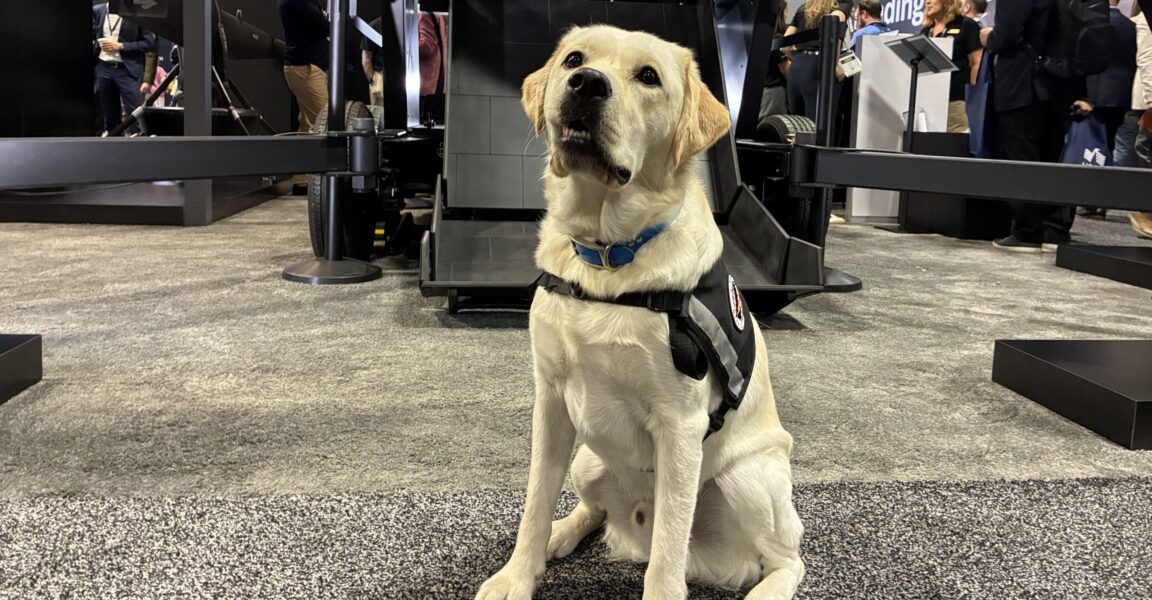
Patriot, who is expected to go to a wounded veteran when the dog’s training finishes, is happy to greet attendees outside the Shield AI booth on the show floor. (Breaking Defense)
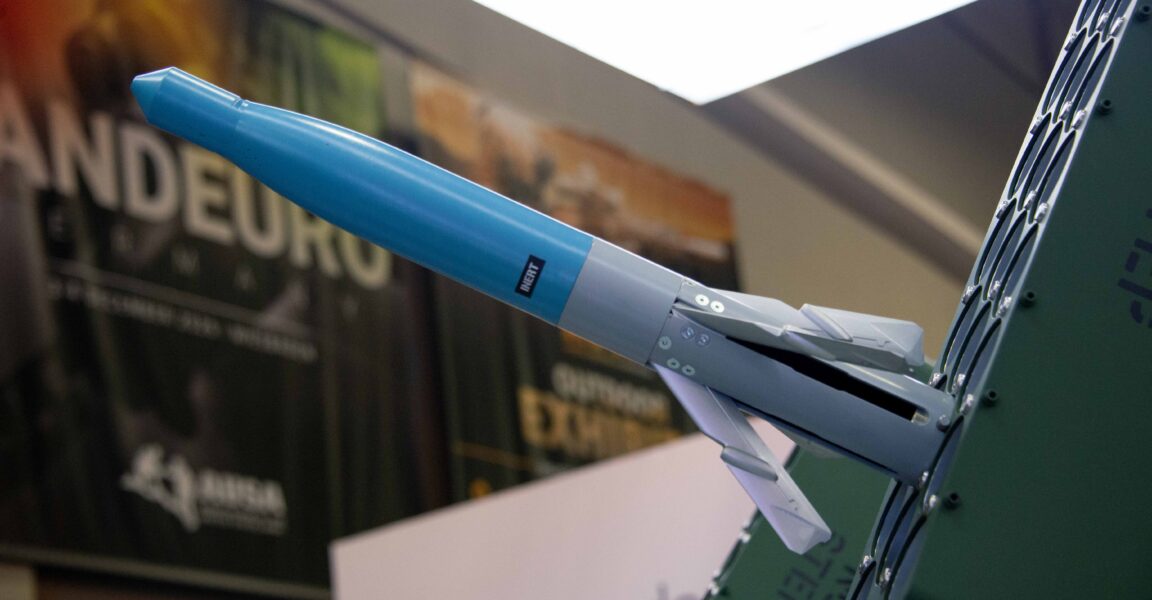
A close-up look at a munition from Sierra Nevada's Brawlr (Battery Revolving Advanced Weapons Launcher Reconfigurable) air-defense system, as seen at the 2026 AUSA conference. (Breaking Defense)
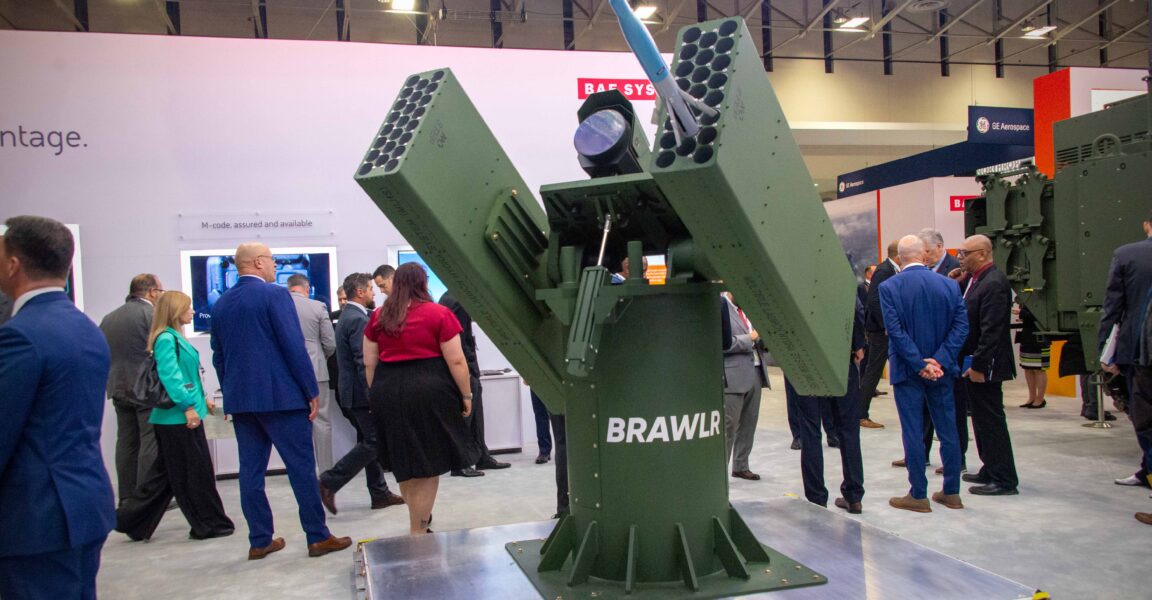
A wider shot of Sierra Nevada's Brawlr air-defense system at the 2026 AUSA conference. (Breaking Defense)
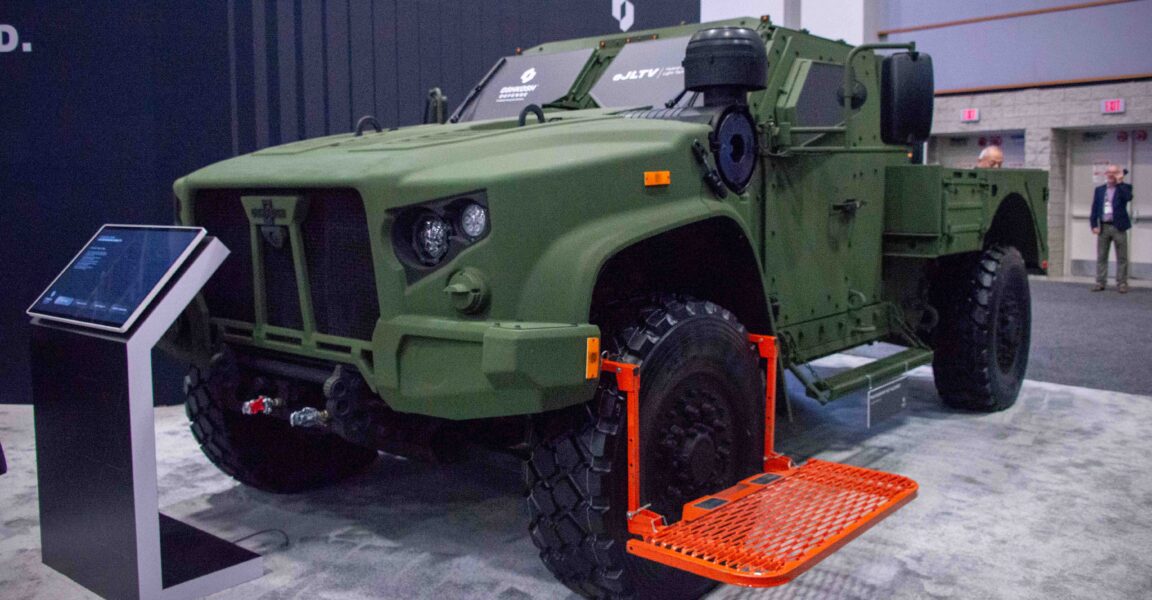
Oshkosh's electric Joint Light Tactical Vehicle on the AUSA show floor Oct. 12, 2026. (Breaking Defense)
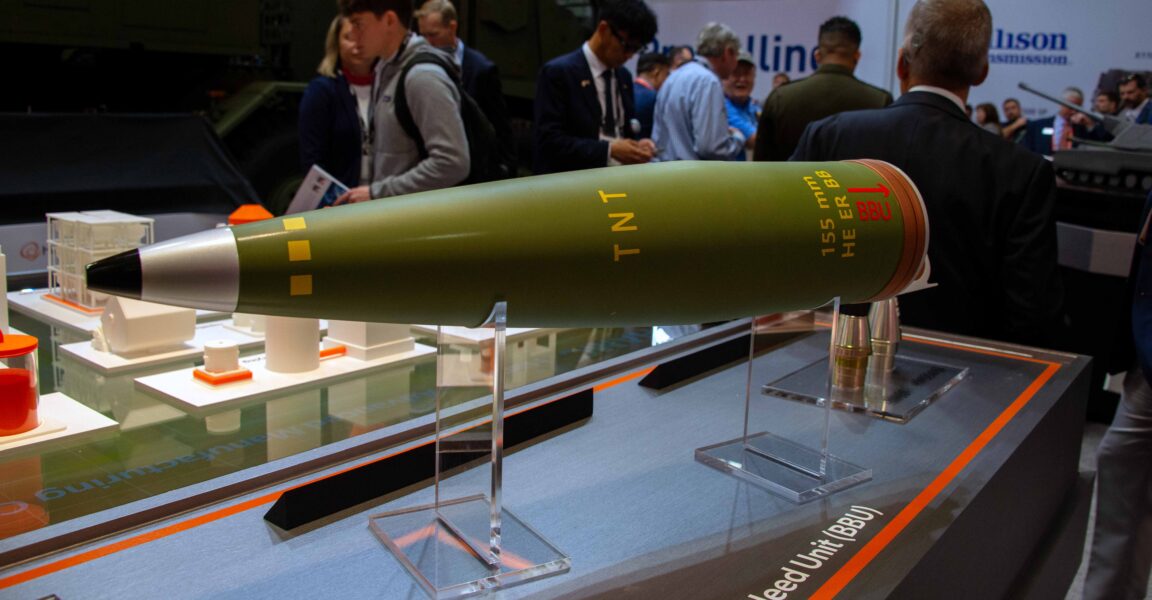
Hanwha Defense USA showed off its 155 mm artillery shells at the 2026 AUSA expo. (Breaking Defense)
AEO Night Hawk Systems displayed their surveillance assembly, with sensors honing in on bystanders at the 2026 AUSA conference in Washington. (Breaking Defense)
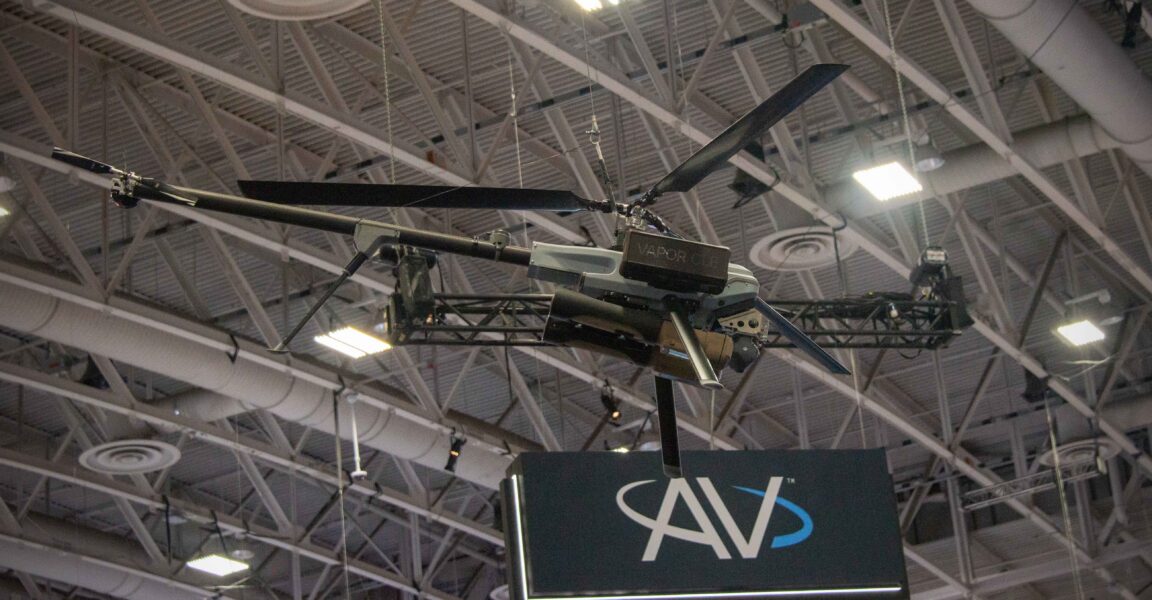
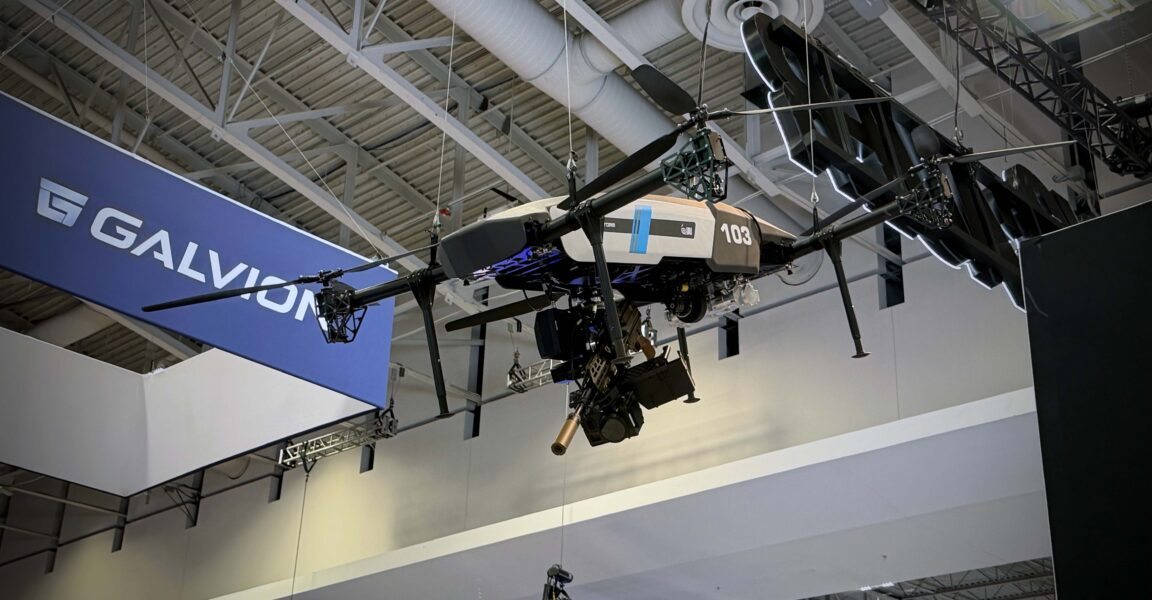
AeroVironment’s VAPOR is an all-electric, single-rotor vertical takeoff and landing (VTOL) helicopter unmanned aircraft system. Here it is suspended above attendees at the 2026 AUSA conference. (Breaking Defense)
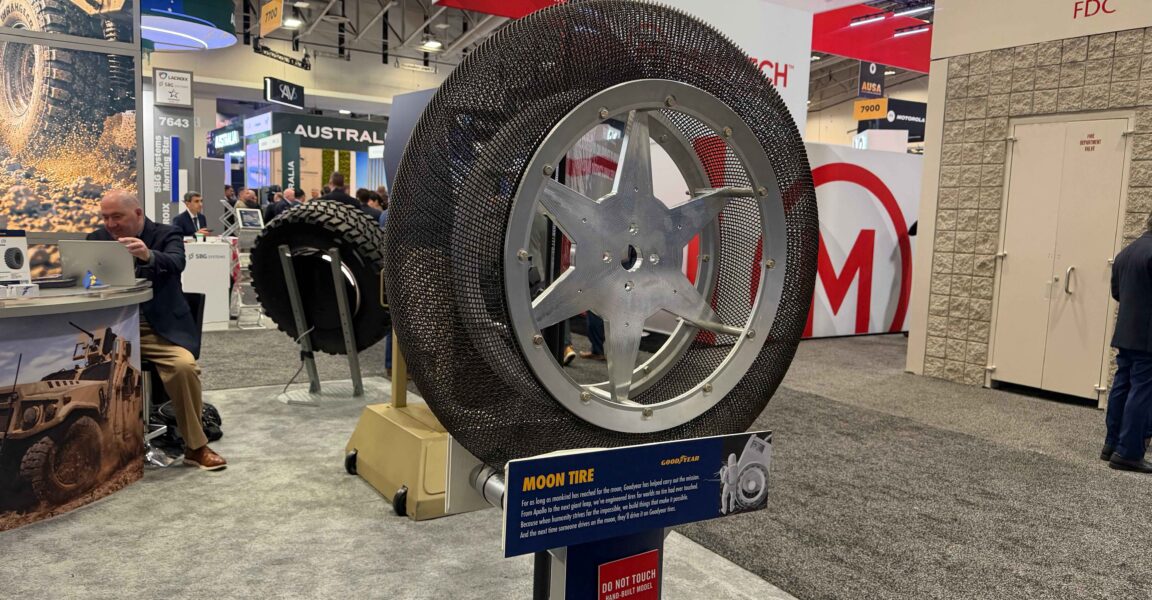
Goodyear representatives brought a sturdy but very unusual "moon tire" for lunar exploration to the 2026 AUSA expo. (Breaking Defense)
Colt optics had one of the busiest displays, with dozens of attendees observing a wall of assault rifles with specialized optics at the 2026 AUSA expo. (Breaking Defense)
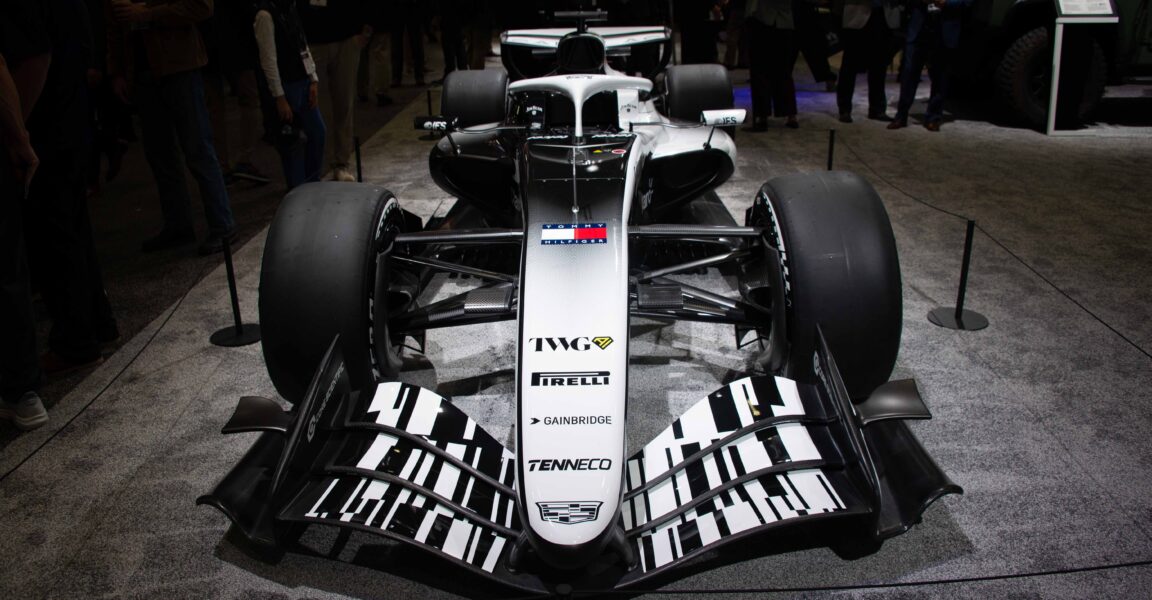
Cadillac brought its Formula 1 team racecar to the 2026 AUSA conference in Washington. (Breaking Defense)
AUSA mascots Sgt. Hero and George Washington descend the escalator at the 2026 annual conference. (Aaron Mehta / Breaking Defense)
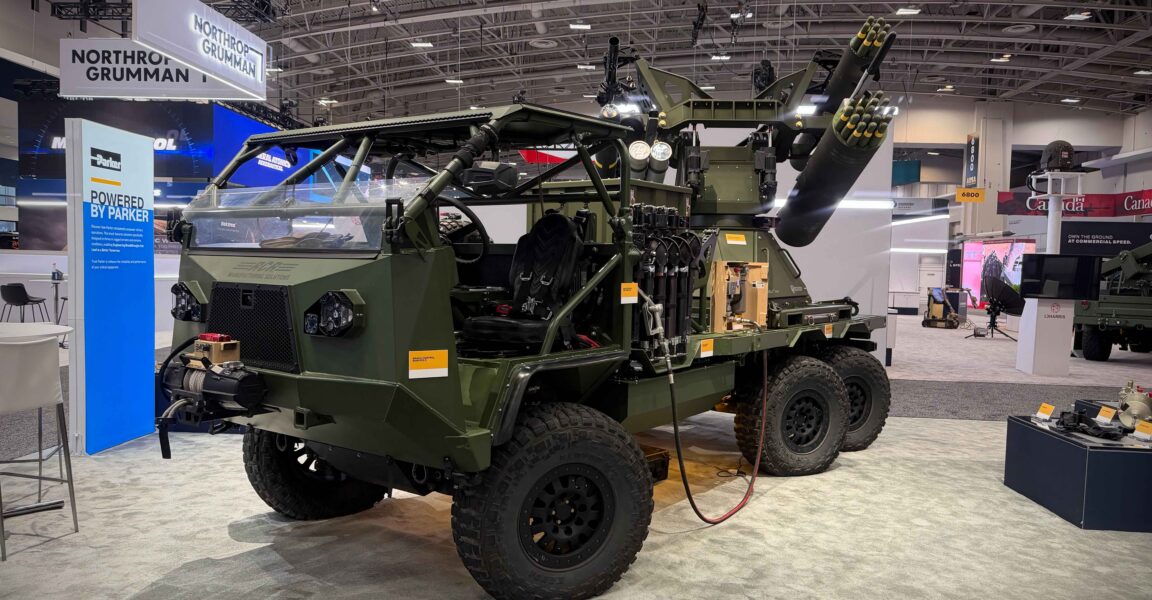
Parker Hannifin showcased many of its components onboard the MDH Strategic Services Airwolf c-UAS system, which is shown here fixed atop the RCR 6WAP vehicle. (Breaking Defense)
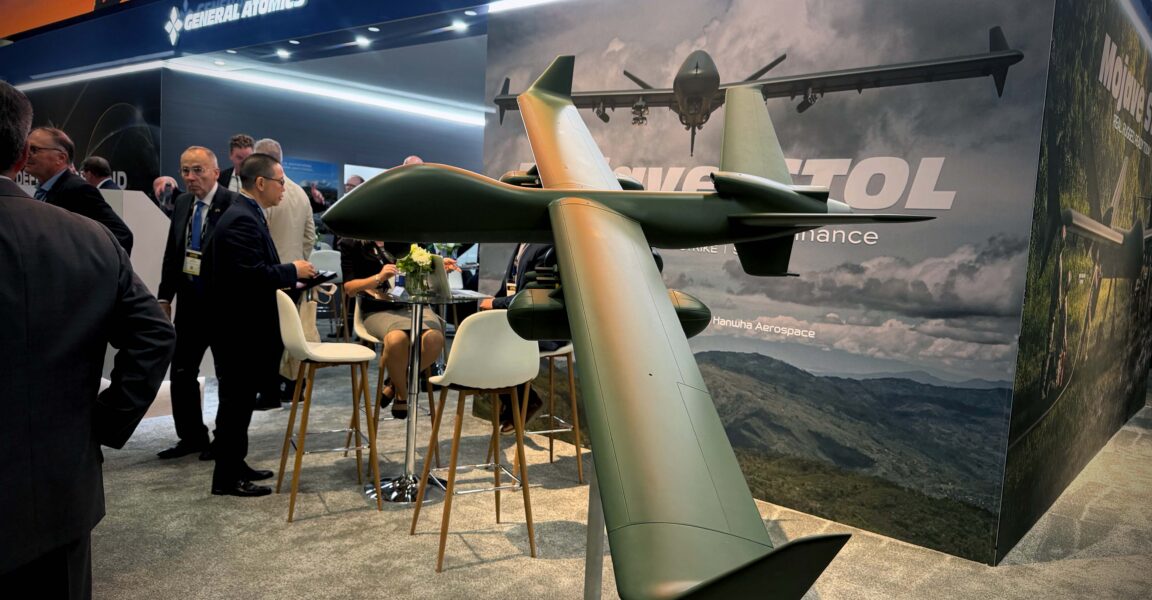
General Atomics Aeronautical Systems Inc. and Hanwha Aerospace co-developed the Mojave short takeoff and landing (STOL) uncrewed aircraft, pictured here at the 2026 AUSA trade show. (Breaking Defense)
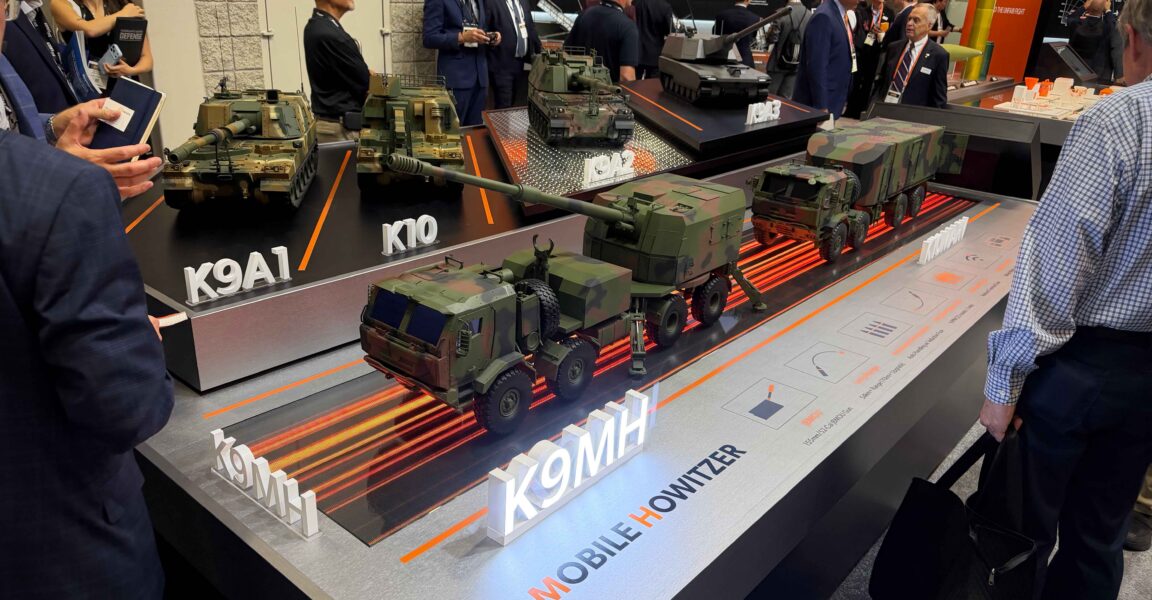
Hanwha Defense USA displayed a range of scale model armor and artillery systems on the AUSA show floor. (Breaking Defense)
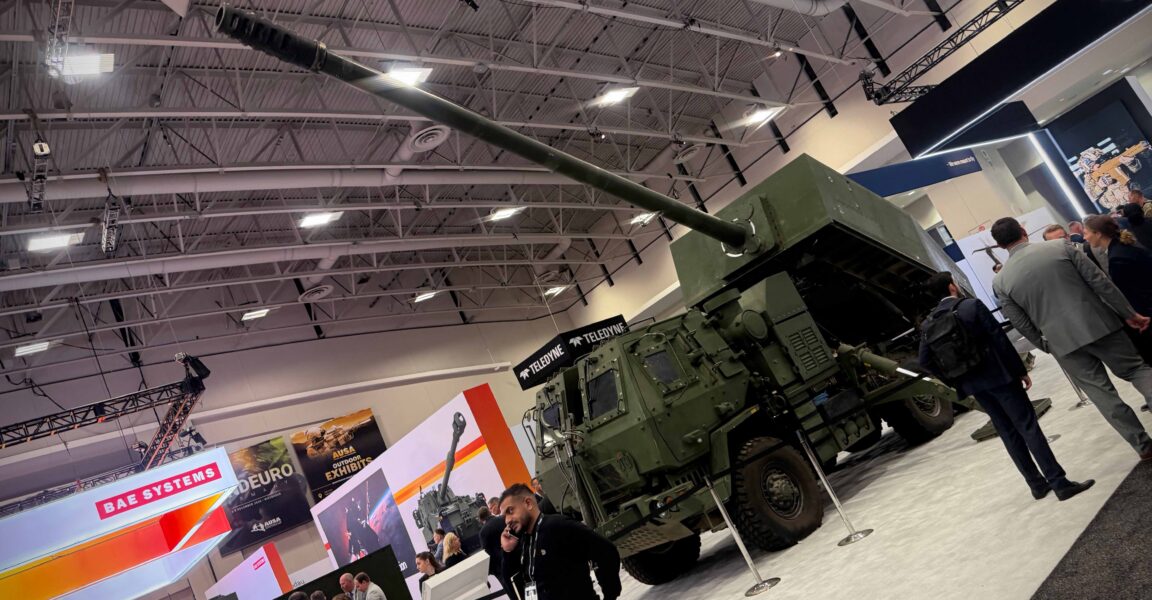
BAE’s Multi-Domain Artillery Cannon System stands tall at the 2026 AUSA trade show in Washington, DC. (Breaking Defense)
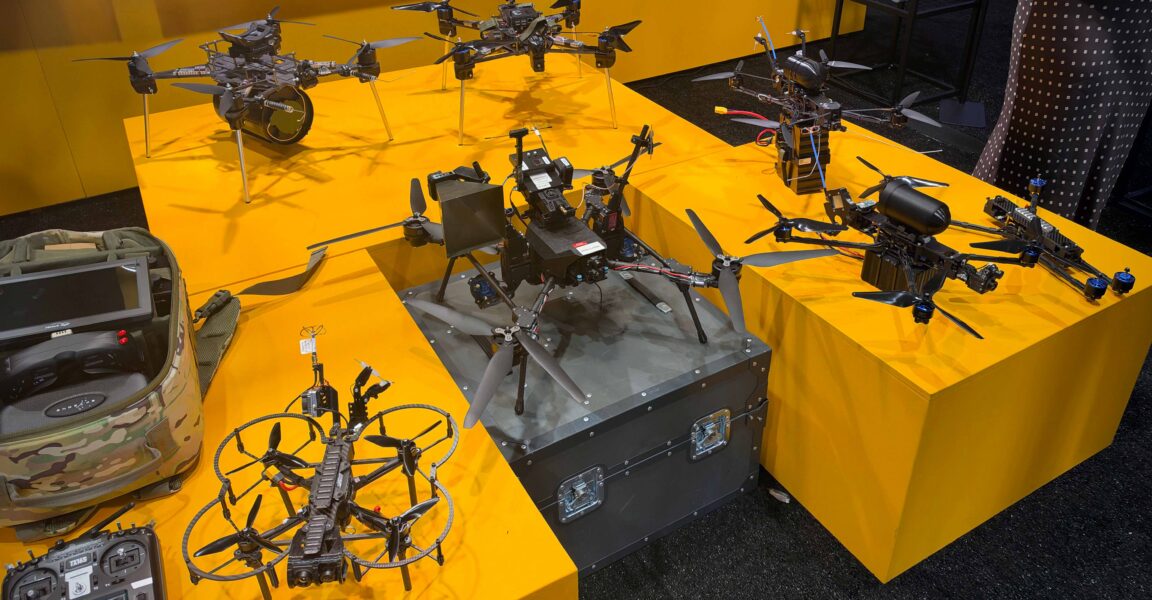
The Ukrainian military’s 3rd Army Corps brought a variety of small drones to the 2026 AUSA trade show. (Valerie Insinna / Breaking Defense)
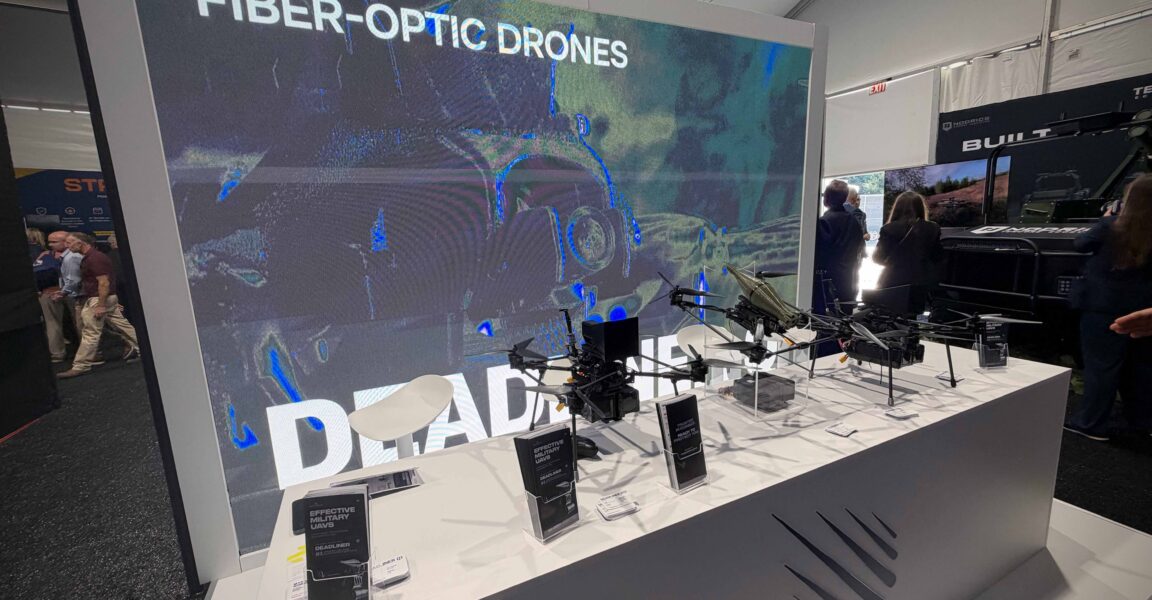
Kyiv-based defense tech firm Stellarion brought several fiber-optic drones to the 2026 AUSA expo. (Valerie Insinna / Breaking Defense)
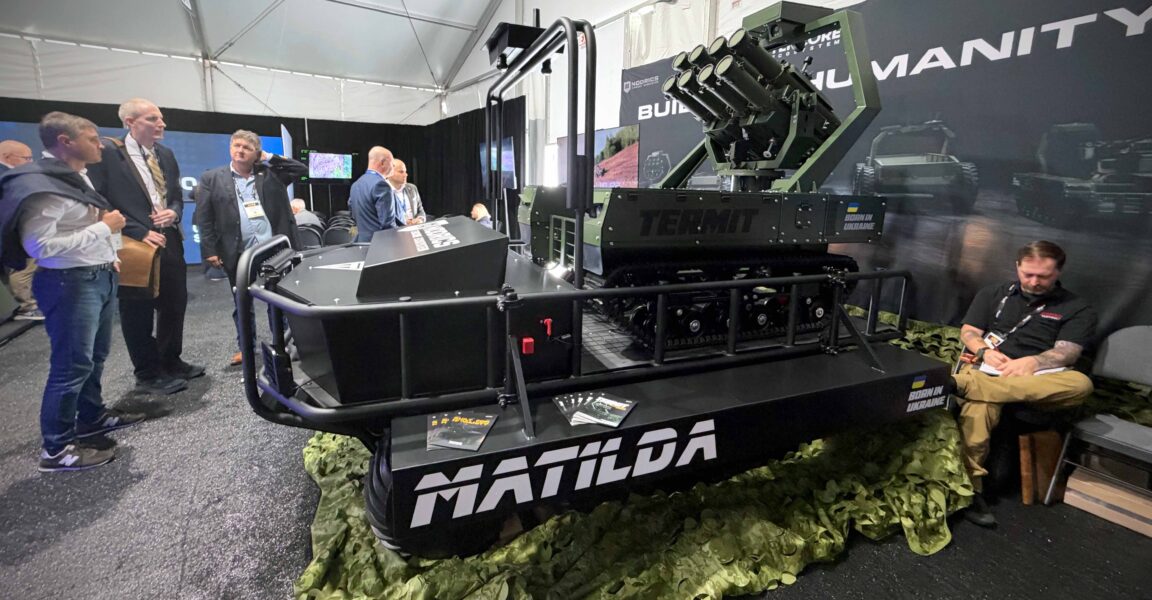
Ukrainian defense firm Tencore showcased an amphibious unmanned ground vehicle called MAT1LDA (Mesa Associates’ Tactical Integrated Light-Force Deployment Assembly), which is carrying Tencore’s TerMIT ground robot, at the 2026 AUSA trade show. (Valerie Insinna / Breaking Defense)
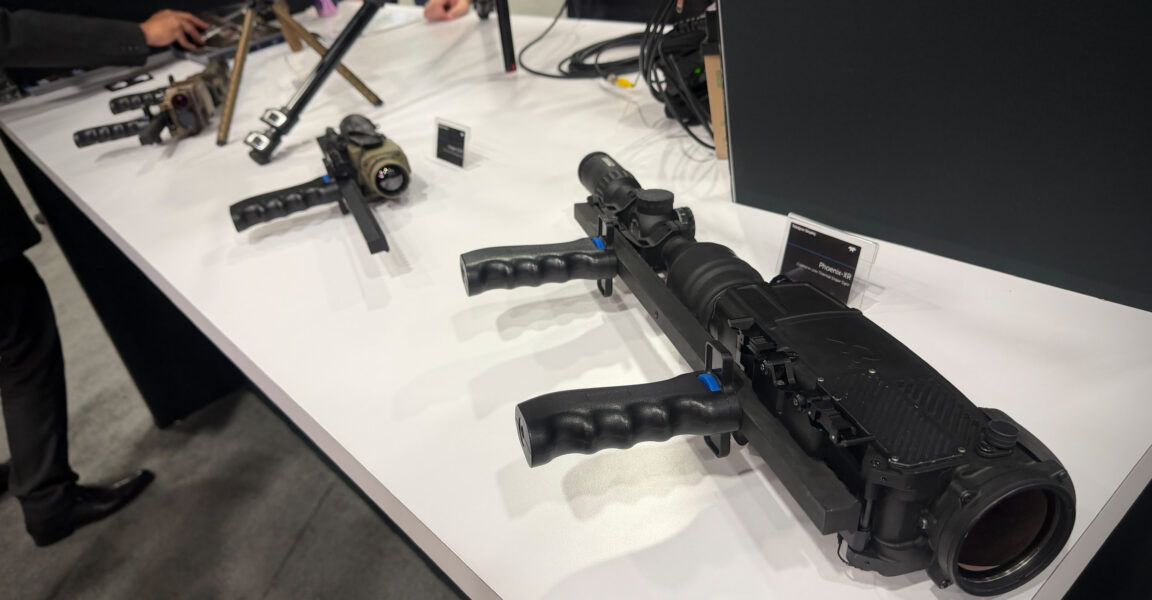
Teledyne Qioptiq brought several thermal weapons sights including the Phoenix-XR (right) and the Dragon-C12 S (middle) to the 2026 AUSA conference. (Breaking Defense)
Israel Aerospace Industries’ and Sig Sauer’s Fire Storm 250 armed tactical quadcopter hangs above attendees of the conference. (Breaking Defense)
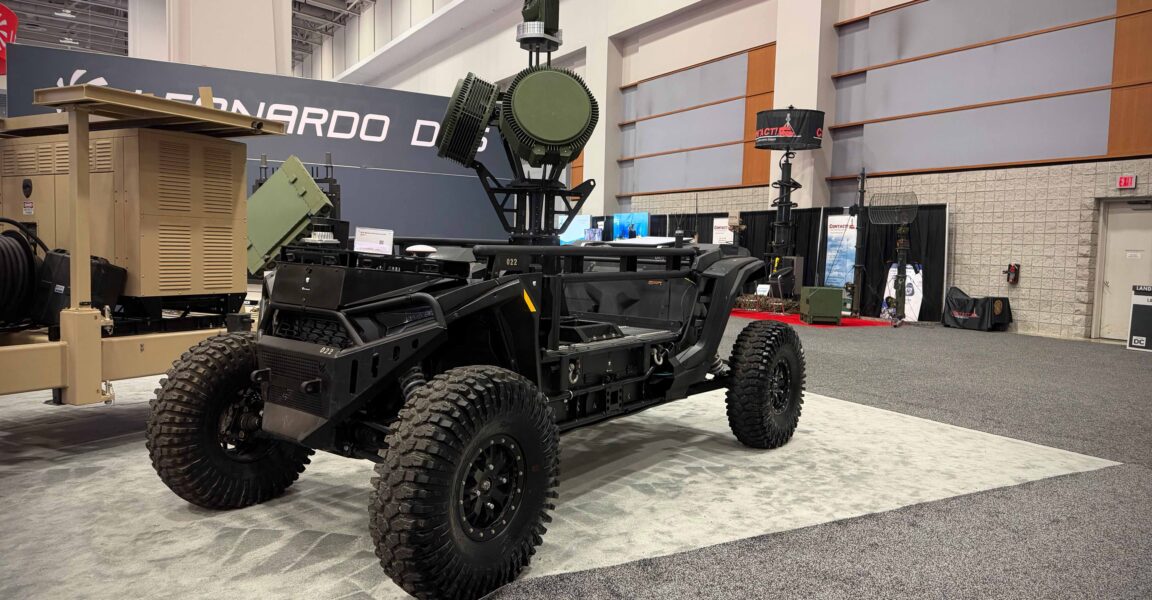
OverlandAI’s ULTRA autonomous ground system hosts a multi-mission hemispheric radar from Leonardo DRS, shown here at the 2026 AUSA expo. (Breaking Defense)
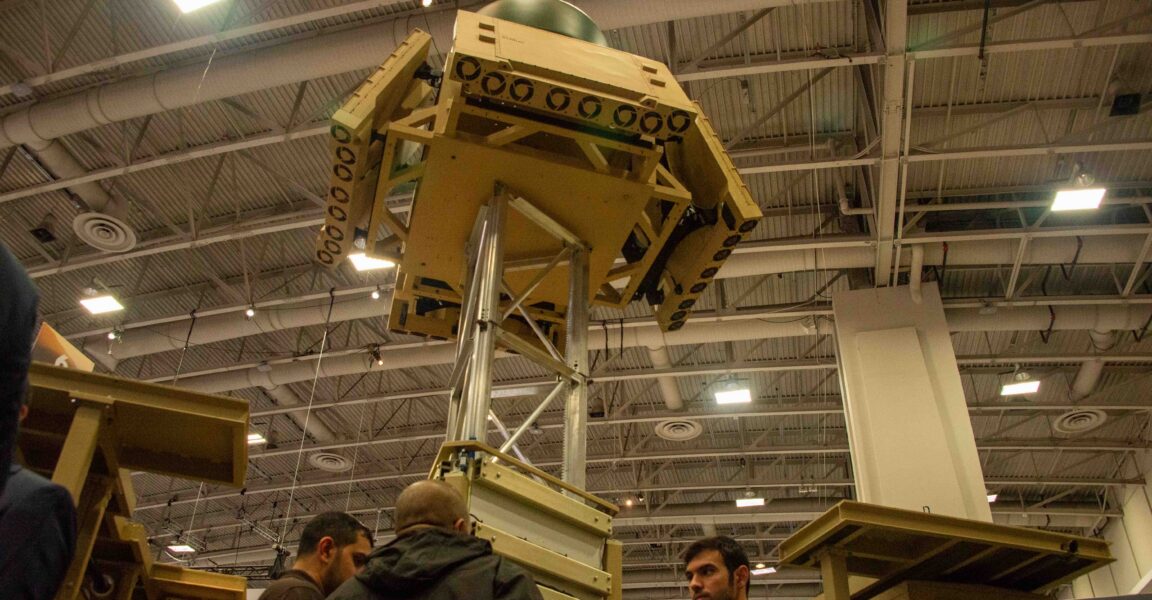
Leonardo DRS displays its Extended Mast Surveillance System, which features an exMHR radar system on a trailer platform with an extendable mast for a higher-altitude perspective. (Breaking Defense)
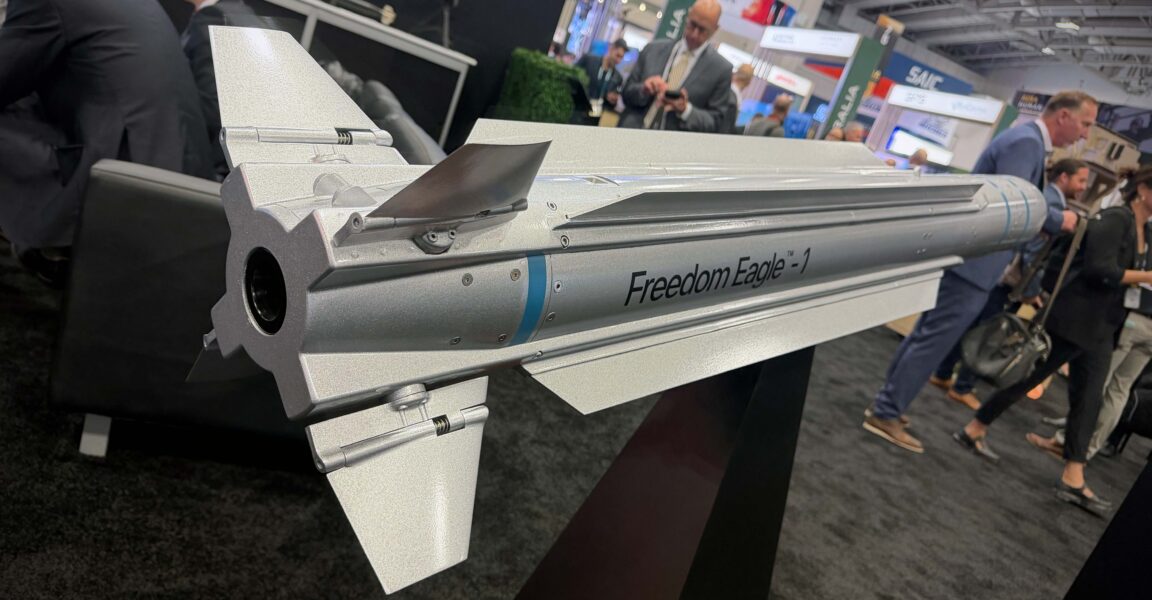
AeroVironment's Freedom Eagle-1 (FE-1) is marketed as a low-cost kinetic counter-UAV munition as well as a "long-range kinetic interceptor missile." (Breaking Defense)
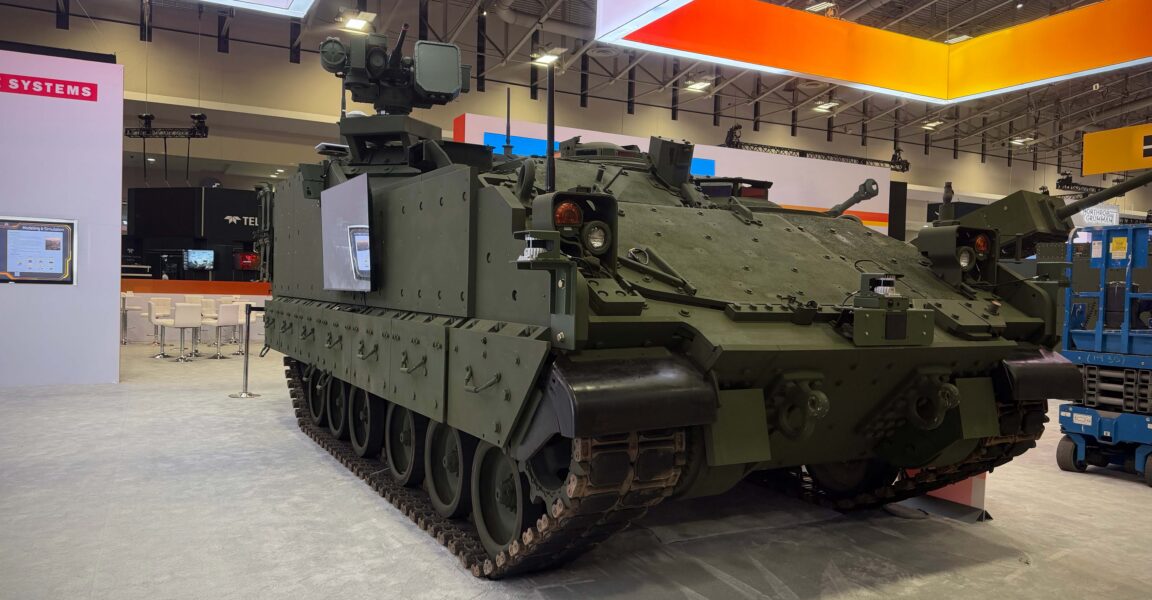
BAE's AMPV-30 (Armored Multi-Purpose Vehicle) is shown here on the trade show floor at the 2026 AUSA conference in Washington. (Breaking Defense)
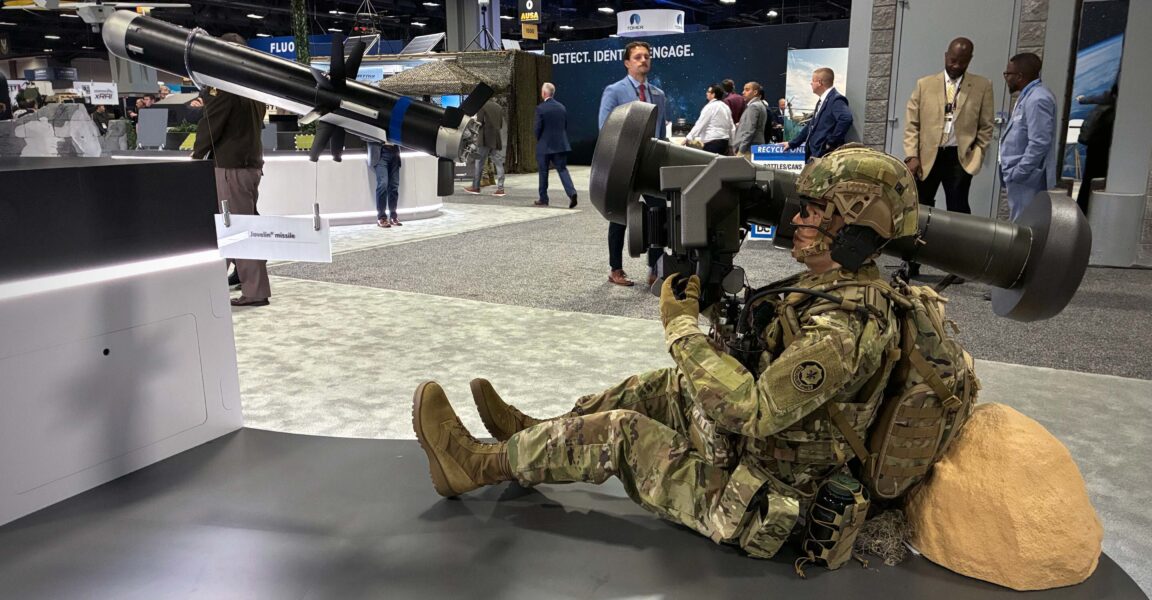
Here is the Javelin anti-tank guided munition system from RTX, as displayed with a fully-kitted soldier on the floor of the 2026 AUSA expo. (Aaron Mehta / Breaking Defense)
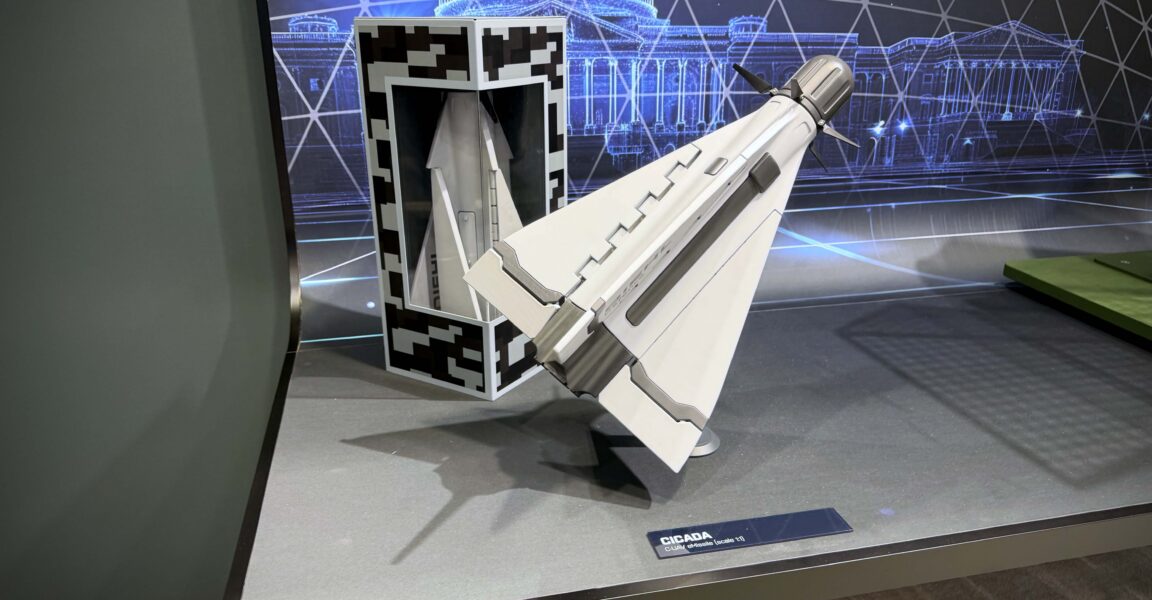
Diehl Defense's Cicada counter-drone munition is an electrically propelled missile that can feature a fragmentation warhead or a safety net. (Breaking Defense)
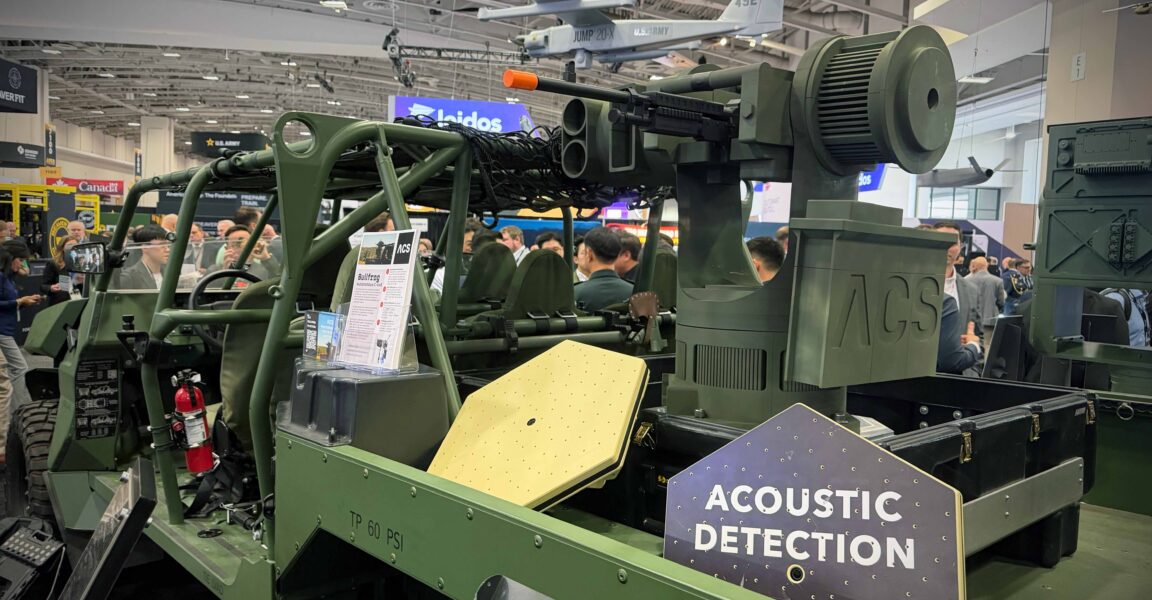
AeroVironment's Bullfrog M240 autonomous weapon system, seen here in the bed of a utility vehicle, has a range of 1,500 meters for defense against drone groups 1 through 3, according to AV. (Breaking Defense)
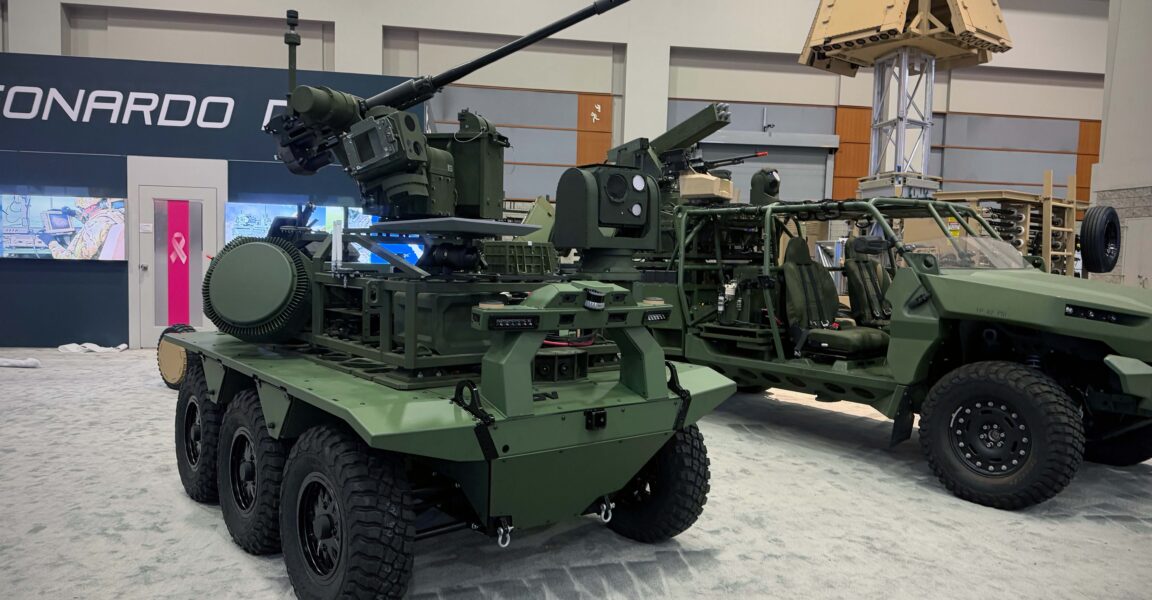
Leonardo DRS brought several vehicles and hardware to the 2026 AUSA conference, including the VIKING Uncrewed Ground Vehicle (left) equipped for air defense missions. (Breaking Defense)
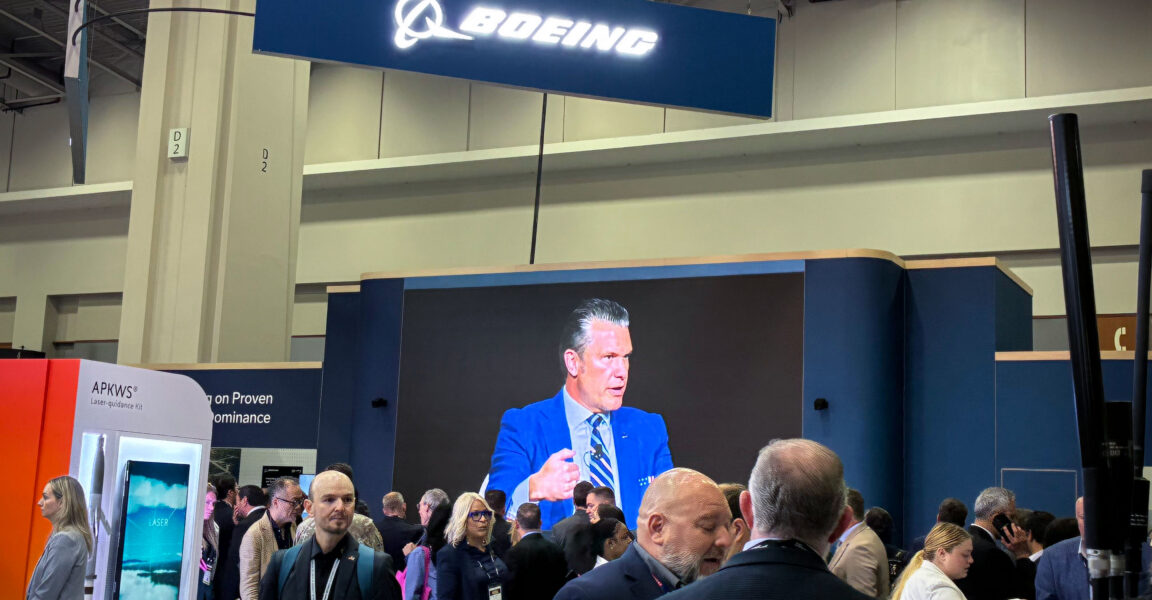
Defense Secretary Pete Hegseth's remarks at the 2026 AUSA expo were livestreamed at Boeing's booth on the show floor. (Breaking Defense / Aaron Mehta)
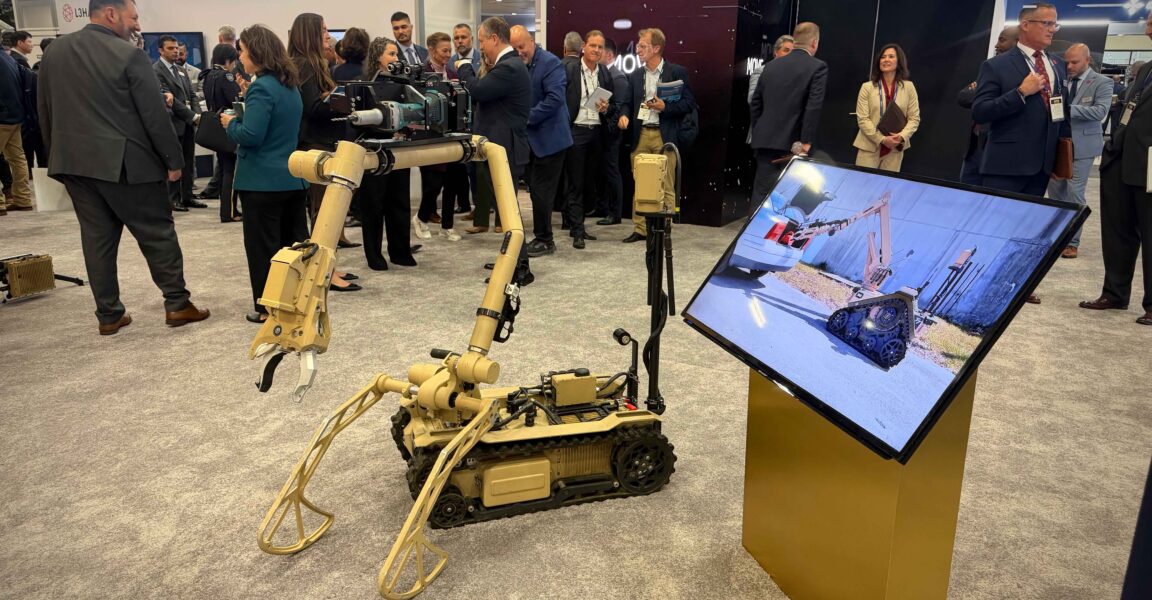
L3Harris brought its T4 Robotic System, an all-terrain unmanned ground vehicle intended for explosive ordnance disposal and hazardous materials clearance, to the 2026 AUSA conference. (Breaking Defense)
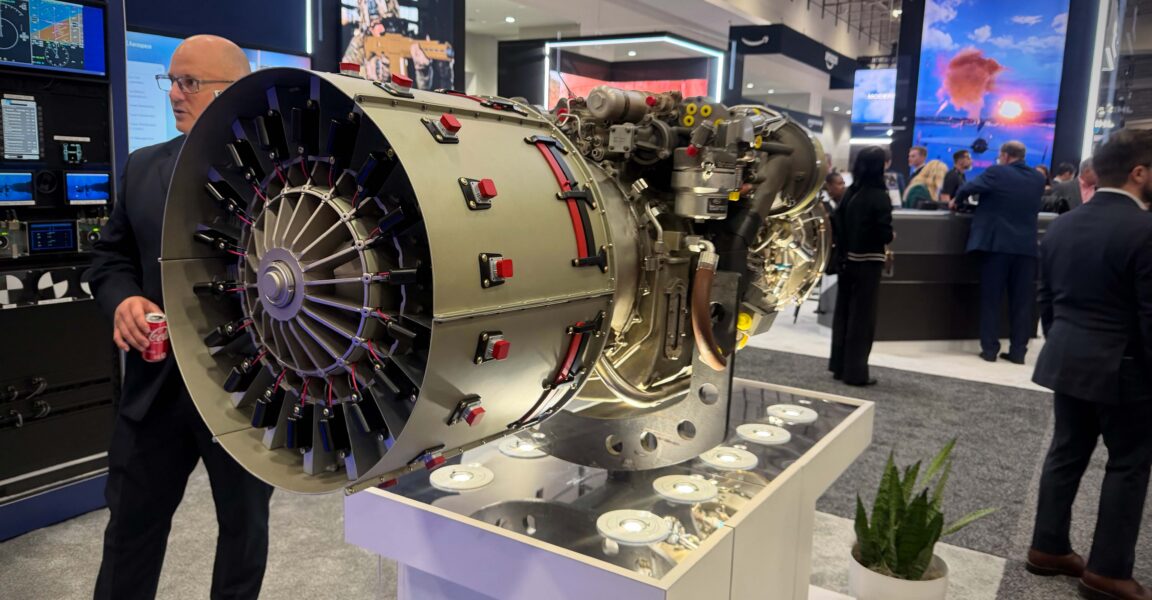
GE Aerospace showcased several large engine components -- including this hybrid-electric turbogenerator for the MV-250 autonomous, hybrid-electric vertical takeoff and landing cargo drone -- at the 2026 AUSA expo. (Breaking Defense)
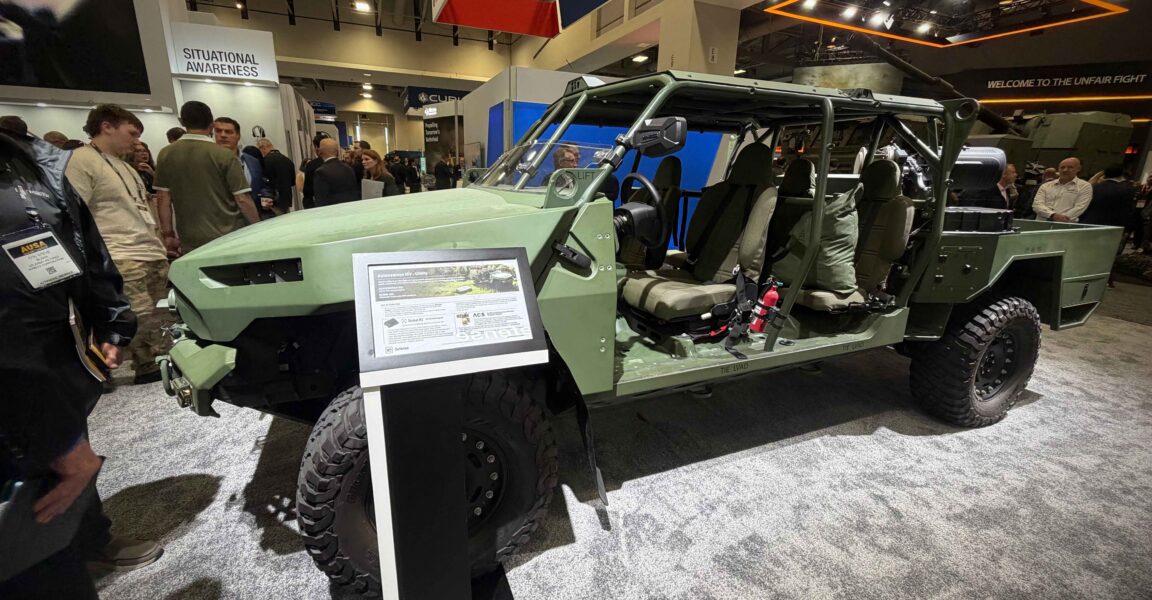
GM Defense's Autonomous ISV-Utility can accommodate up to five passengers as well as a wide range of equipment in the bed, including mortar systems, counter-drone as well as high-energy and electronic warfare systems. (Breaking Defense)
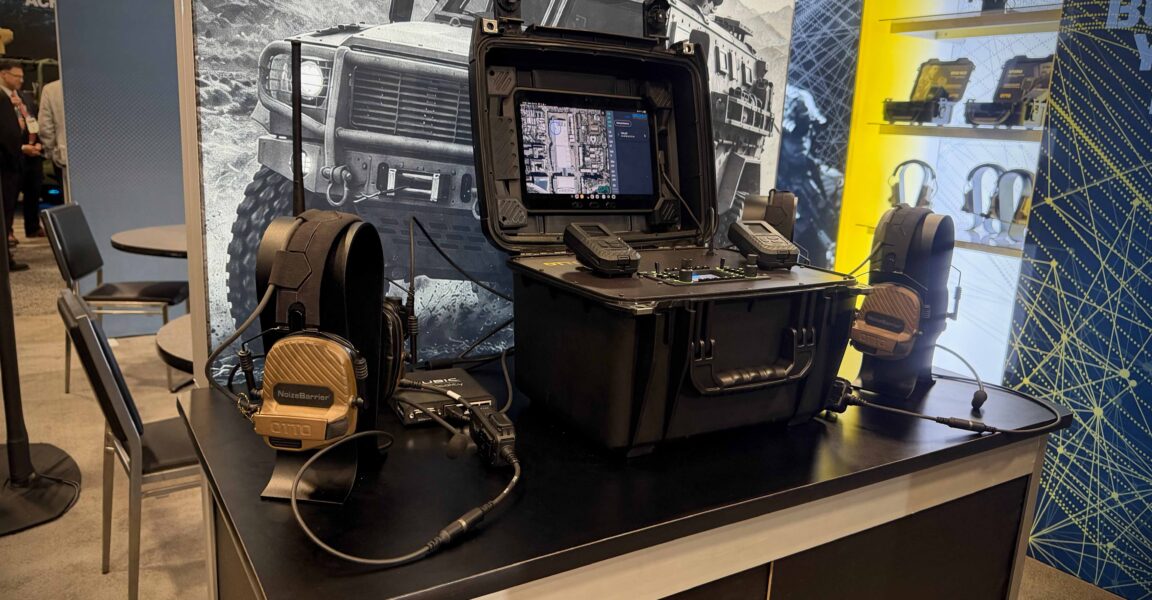
Illinois-based OTTO Engineering shared one of their hardened systems and associated equipment at the 2026 AUSA trade show. (Breaking Defense)
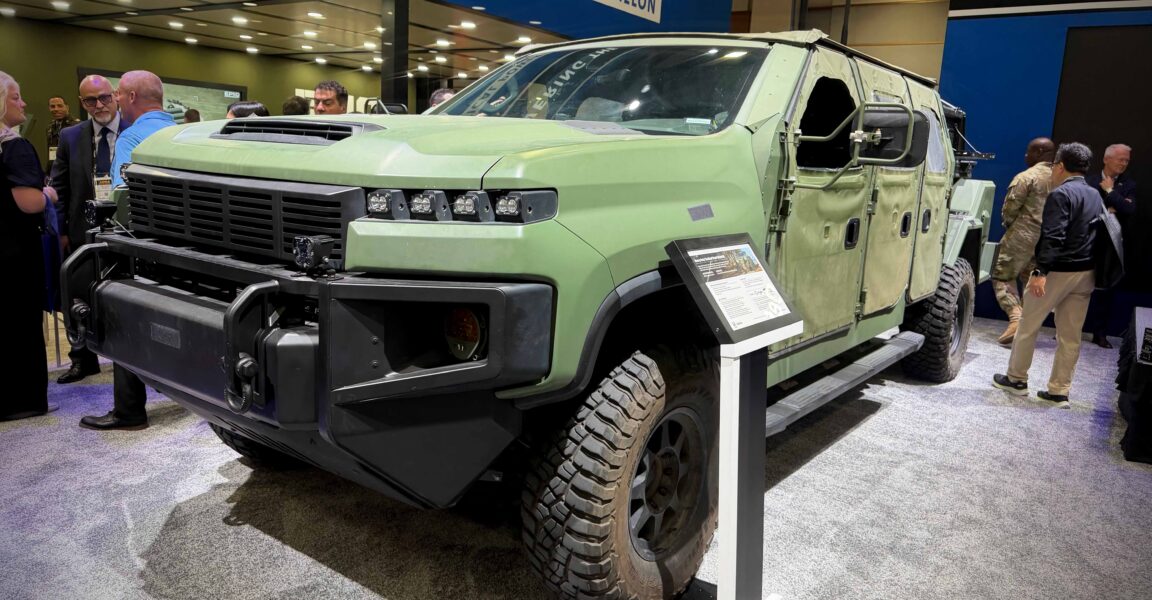
This is GM Defense's hybrid-powered Heavy Duty Tactical Truck, which is based on the Chevrolet Silverado. The truck includes a "silent" drive mode "to reduce acoustic and thermal signatures," the firm says at its 2026 AUSA display. (Breaking Defense)
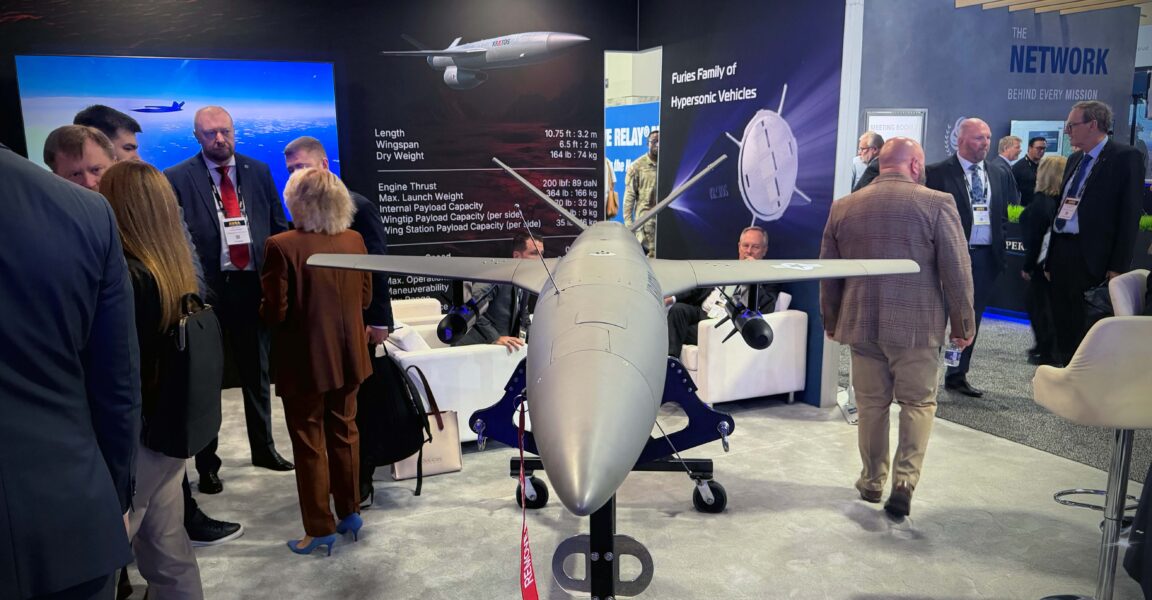
This is the Tactical Firejet from San Diego-based Kratos Defense & Security Solutions, Inc., pictured on the show floor at the 2026 AUSA expo. The Firejet is marketed as a low-cost drone that can fly at 0.8 mach speed and with a range of 500 nautical miles. (Breaking Defense)
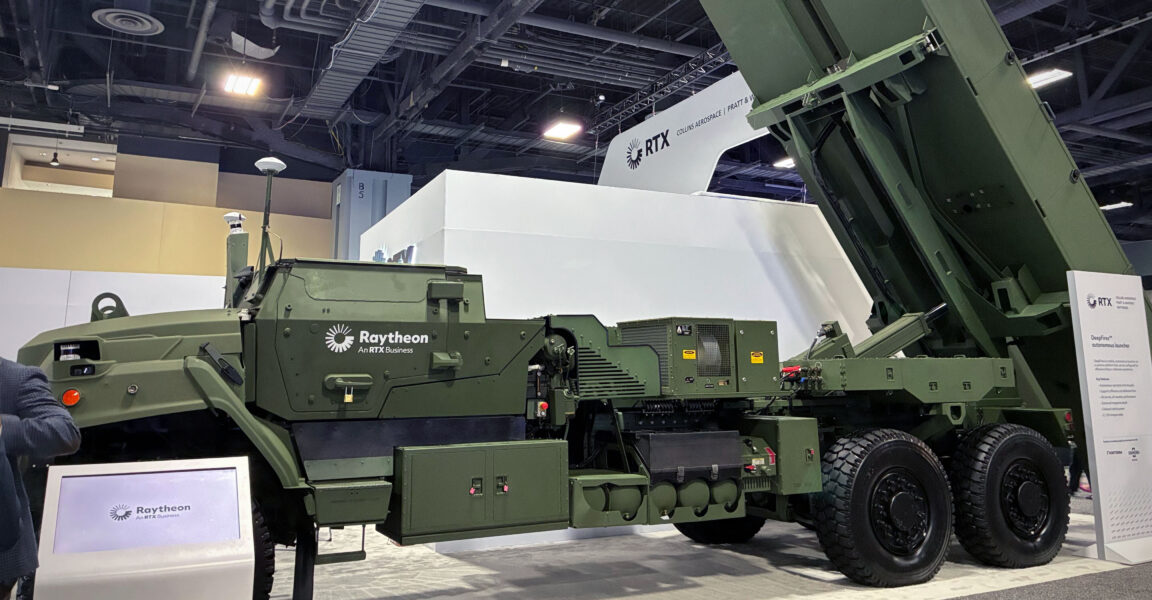
This is the DeepFires autonomous launcher from RTX, spotted on the show floor at AUSA 2026. It's an all-terrain, all-weather system that's transportable via C-130 cargo planes. (Aaron Mehta / Breaking Defense)
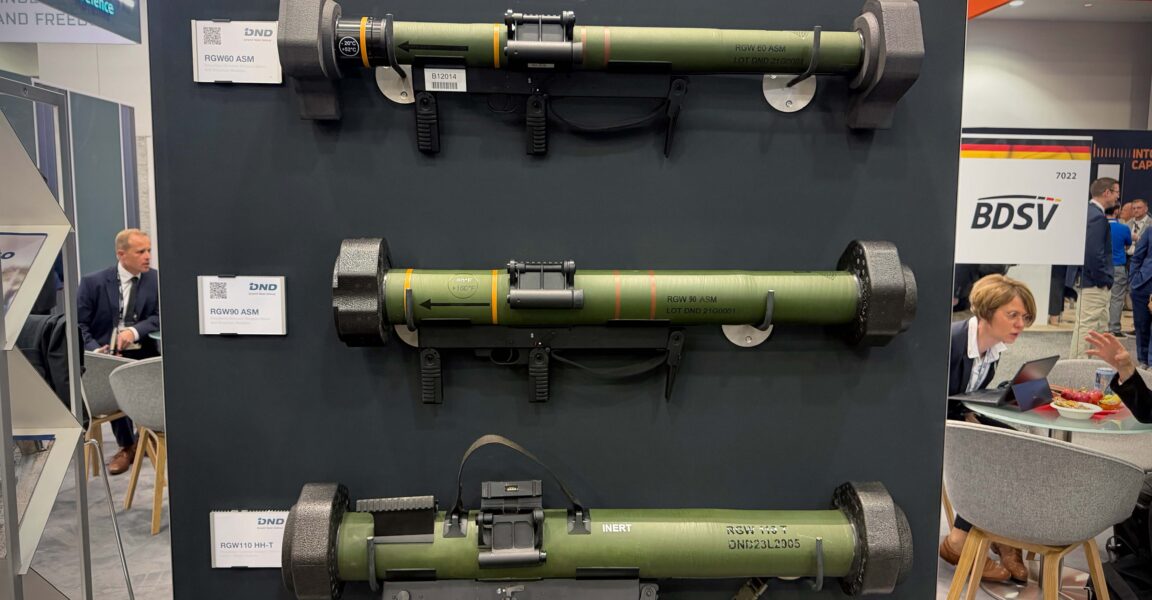
German defense firm Dynamit Nobel Defence GmbH (DND) showed shoulder-fired, anti-armor weapons at the 2026 AUSA expo. (Breaking Defense)