The Army’s Next Generation Command and Control (NGC2) effort rests on a simple premise: the service can no longer afford C2 systems that can’t talk to one another, take years to update, or fail when an adversary jams a link. Those issues become particularly glaring when viewed in the light of operations across a theater as vast as the Indo-Pacific.
The Army’s answer is a shared data foundation with applications layered on top, replacing the separate, platform-specific systems that now serve fires, air defense, and logistics. Each piece is built so it can be swapped out while maintaining interoperability with the rest.
At its core, NGC2 is about “shifting the paradigm to a mission-centric operation,” said Chandra Marshall, vice president, programs, enterprise operations at Lockheed Martin. The Army wants a composable architecture with common applications and core services, she said, enabling integration of new software, weapons, and sensors without rework and knocking down silos at every echelon.
A threat picture that punishes stovepipes
The case for that shift starts with the electromagnetic spectrum. Josh Wallin, a defense program fellow at the Center for a New American Security, points to Ukraine, where Russian forces jam, interfere with, and track electromagnetic spectrum emissions. The US hasn’t faced an enemy that targets the spectrum so heavily, and the risk to communications and data links between Army forces grows against a capable adversary in the Indo-Pacific, he said.
Then there is geography. Neither the Global War on Terror, nor the current fight in Iran, nor even the war in Ukraine has required the Army to connect systems that might sit thousands of miles apart, Wallin said. Commercial infrastructure could fill some gaps, although relying on cellular networks would be more difficult. Satellite communications could offer another means of connectivity.
Bandwidth may prove the harder constraint. The Army, Navy, and Air Force are all pursuing distributed operating concepts, which assume scattered units will continually pass data among nodes to stay synchronized. With less massing of forces in a few locations, that data has to travel farther and over more contested paths.
Speed adds pressure, and in Ukraine, “we might be talking on the order of minutes from acquisition to servicing a target,” Wallin said.
The problem exists inside individual warfighting functions, too. For air defense, only recently have Patriot and THAAD been able to cue each other, with a THAAD radar controlling a Patriot interceptor. Layered defense can’t work if each system fights alone, Wallin argued. It’s “super inefficient,” he said, and against a large volume of incoming threats, stovepiped units may simply be unable to share information fast enough to coordinate a response.
The data layer is the foundation
The NGC2 data layer ingests information and makes it available to any application or operator according to role, access level, and warfighting function, Marshall explained. The Army sets the rules, and the system uses them to determine who needs a given piece of data and at what level of the force it should go.
This is a key challenge for NGC2 because air defense, logistics, and fires each run their own data and communications infrastructure. Centralizing data across them, according to Wallin, will give logisticians trying to sustain distributed forces visibility into ongoing operations, the threat picture, and intelligence feeds that once lived in separate systems.
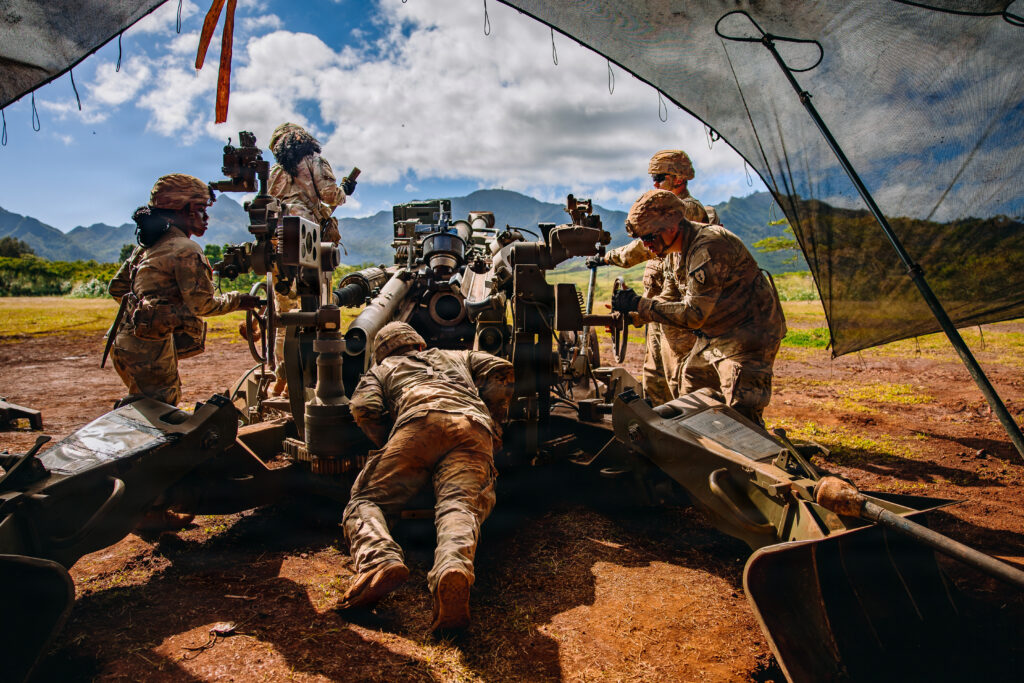
Pooling the data is the first step. The next is drawing conclusions about how information across functions relate. The 25th Infantry Division in Hawaii has been the experimental unit charged with demonstrating the approach, with Lockheed Martin serving as the Full Stack Operational Implementation Lead.
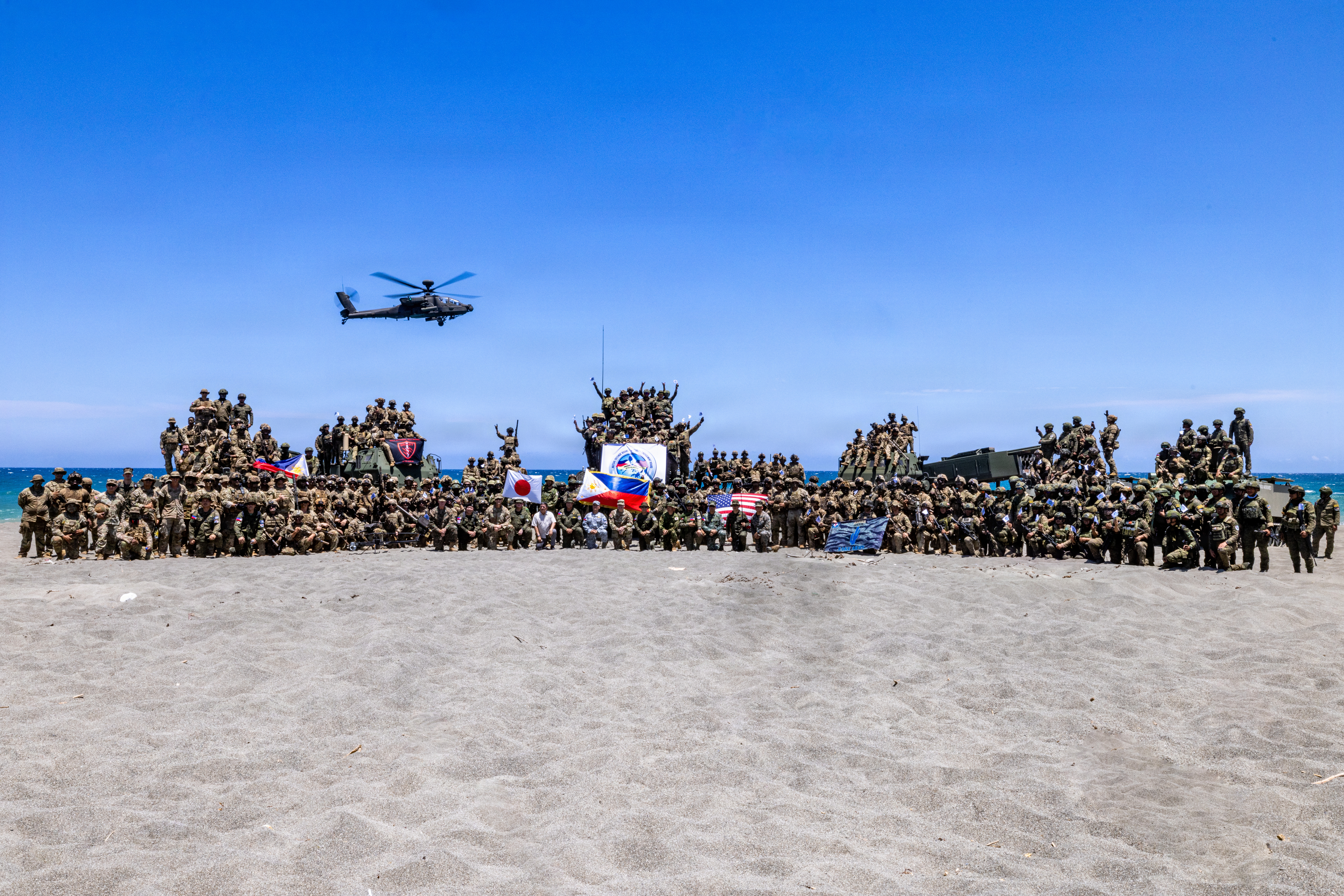
During Lightning Surge 3 in April, the team fused sensors, fires systems, and airspace data into a single cloud-enabled picture, according to Marshall. She called it the first demonstration of cross-domain data sharing in the 25th ID environment, working across multiple locations that spanned Hawaii, the Philippines, and the broader Indo-Pacific. The outcome was a shared real-time view and compressed sensor-to-shooter timeline, she said.
The NGC2 program is also changing how the Army develops and fields C2 software. Rather than giving industry a fixed set of technical requirements, the Army established operational objectives that could be refined as soldiers used the systems. That has allowed developers to incorporate feedback directly from the field instead of waiting for the next major upgrade cycle.
“They give us feedback real time so we can make software changes within minutes, hours, days, depending on the complexity of the feature,” Marshall said. “When we conduct Lightning Surges, it’s about operational fight-tonight capability the 25th ID can use now. It’s not a prototype, so it’s been powerful in that regard.”
One example came during Lightning Surge 4, when soldiers wanted to operate the system without having to interact physically with a screen. Developers responded by integrating an AI-driven hand microphone with an Army edge device, allowing soldiers to issue spoken commands instead of touching. The capability was designed, built, and delivered within days, according to Marshall.
The approach represents a departure from programs in which requirements are established years before soldiers receive the resulting capabilities. Marshall said the team delivered NGC2 solutions in less than 10 months that the 25th ID used operationally across the Pacific and exercised during Balikatan, the annual US-Philippine military exercise.
AI as an aid, not a decider
Artificial intelligence (AI) is one of the applications layered on top of the data foundation, though both Marshall and Wallin were careful about how much weight to put on it. AI can comb through available data and turn it around to commanders quickly, cutting latency from minutes to seconds, according to Marshall. However, it is one tool among several, and it isn’t making decisions for the Army. It correlates data and offers recommendations so commanders have the right information at the right time. The decision aids already demonstrated are “very powerful,” she said.
The practical hope for AI, in Wallin’s view, is to automate what can be automated and speed up tasks that are heavily manual today. Even “a 60 percent solution on something that was 100 percent manual before” could free operators to focus on other responsibilities, he said.
Another important feature of NGC2 is that its architecture is designed so its layers can be pulled apart and replaced independently. The Army is trying to separate the physical data links, meaning which cable runs to which radio and which satellite, from the compute infrastructure, and to separate both from the software that manages the data, Wallin said. Soldiers interact with the application layers on top.
If an adversary finds a new way to jam or track something like a satellite terminal, the Army could replace that hardware with something less vulnerable without disturbing everything above it. Advances in computing power and the shrinking size of computing hardware could give the Army more room to accommodate future applications. More importantly, the service is moving away from the assumption that software and hardware acquired today must remain in service for decades.
The goal is to create an architecture that can continuously evolve as adversaries develop new methods of disrupting communications, targeting military networks, and exploiting vulnerabilities. Instead of replacing an entire C2 system, the Army could update individual components while preserving the larger data infrastructure.
Building a C2 ecosystem that evolves
Implementation of the Army’s Modular Open Systems Approach to NGC2 also makes it easier to move beyond specific suppliers and systems when they underperform or aren’t pacing evolving threats with improvements. At the 25th ID, Lockheed Martin runs what Marshall called a strict onboarding and offboarding process, evaluating each element with the Army to decide whether it is the right fit for its piece of the architecture.
That differs from traditional acquisition programs in which a single prime contractor may control much of the system and replacing a supplier can mean extensive integration work. By establishing common interfaces and services, the Army is attempting to make competition and continuous upgrades part of the architecture itself.
The ecosystem is already large. More than 60 companies have contributed to the Army’s NGC2 effort or are under analysis for it, Marshall said, including small businesses, nontraditional innovators, and commercial-technology providers. The 25th ID’s data platform is based on Raft’s Raft Data Platform. Amazon Web Services supplies Wickr Chat, a communications and collaboration tool. Rune Technologies delivered TyrOS for contested logistics.
For the Army, the larger test will be whether the approach demonstrated by the 25th ID can be extended to other formations without recreating the stovepipes NGC2 was designed to eliminate. The ongoing Lightning Surge exercises and the 4th Infantry Division’s Ivy Sting exercises at Fort Carson represent opportunities to evaluate how common data infrastructure, modular applications, and soldier-driven software development can support different operational requirements.
The stakes are particularly high in the Indo-Pacific, where formations will be separated by thousands of miles and forced to operate with intermittent comms. A shared architecture will not eliminate those constraints, but it could give commanders the ability to exploit available data, change communications equipment, and incorporate new capabilities without rebuilding the entire C2 network.
Breaking Defense Video