
Army Flight School Next: A new way to train the next generation of aviators
An innovative program to draw on industry resources to train helicopter pilots in a different way.


An innovative program to draw on industry resources to train helicopter pilots in a different way.

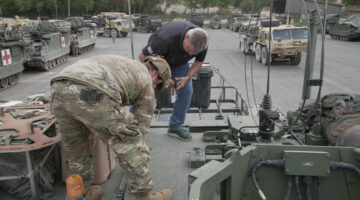
The network transport architecture for NGC2 could be a hybrid approach that combines high assurance communications with 5G, WiFi, and multi-orbit satellites.

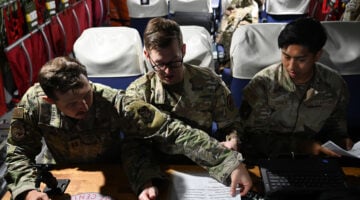
Do more with less: streamline workflows, reduce duplication, invest upfront to save long-term.


The industrial base is building the infrastructure needed to secure domestic production of artillery shells.


As drones become more capable and deadlier, counter-drone technology and strategy must adapt to stay effective.

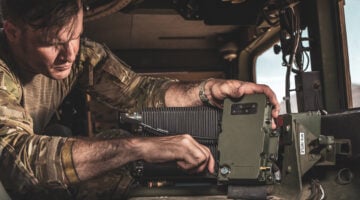
The U.S. Army’s MAPS Gen II program of record for assured PNT provides an authoritative and reliable source of truth for combat vehicles in a highly contested battlespace.

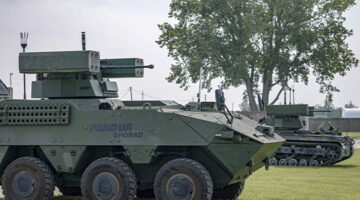
Maneuverable and deadly drone swarms are driving demand for platform-agnostic solutions for cannons and missiles.

As threats rapidly evolve, digital engineering, manufacturing capacity and robust supply chains are critical to meeting challenges.

The future of Army aviation will be avionics flight testing where new code is written and uploaded before the helicopter lands.


The Black Widow ISR quadcopter was also approved for procurement by NATO member nations and partners.


Reducing cognitive overload on warfighters while improving “time to trust” for autonomous systems is a matter of design.


With potential adversaries no longer predictable, training must move beyond just live exercises and flight simulators.


The Sixth Domain is not defined by geography. It’s a new kind of conflict in which autonomy and networked systems allow thousand-dollar consumer electronics to destroy multi-million-dollar conventional weapons systems.


The jet-powered transport’s speed, survivability and multi-mission agility position it as a viable option to the C-130 for the US and NATO allies.


Artificial intelligence, autonomy, and local innovation will take center stage.


The artificial intelligence arms race will require the U.S. to invest heavily in compute power.


Securing data can help stop attack vectors like API calls and cloud uploads.