
OpenSpace: Using Software, Not Hardware, To Reconfigure The Satellite Ground Segment For A 5G World
Diversifying space architectures and the need for interoperability is driving a shift to dynamic, flexible, software-based infrastructure.

Barry Rosenberg is an expert journalist in defense cybersecurity and information technology issues. He is former editor of the trade magazine C4ISRNET, which he helped relaunch in 2013. Before that he was editor of Defense Systems at 1105 Media, focusing on IT and C4ISR topics. He recently worked in key content roles at information technology firms SILA, which specializes in blockchain technologies and cyber security, and Trace Systems. Earlier in his career he was founding editor of Aviation Week’s Overhaul & Maintenance magazine, editor of Defense News’ show daily and managing editor of Aviation Week’s Show News. Rosenberg is a Philadelphia native, an avid writer and co-author of "Mavericks of the Sky: The First Daring Pilots of the U.S. Air Mail".

Diversifying space architectures and the need for interoperability is driving a shift to dynamic, flexible, software-based infrastructure.


Agile, open networks will let the DoD make command decisions faster, distribute its forces, and operate at a standoff distance to counter new weaponry like hypersonic missiles.


Traditional thinking about how to protect facilities must adapt to new threats such as drones or downstream attacks.


The near-term challenge for DMO is figuring out how to take existing platforms and systems and quickly evolve them to provide JADC2-like capabilities to a dispersed fleet.


Bell’s V-280 Valor builds upon 600,000 hours of experience with the V-22 tiltrotor with a clean-sheet design to meet the Army’s requirement for an air-assault platform.

A layered architecture of geosynchronous, medium-earth, and low-earth-orbit satellites will provide resilient sensor coverage for Joint All Domain Command and Control.

The U.S. Space Force’s Space Systems Command and Raytheon Intelligence & Space are enhancing mission management and mission-data processing to shift the focus of GPS operations from satellite command and control to basic, user-oriented effects-based operation.


A commitment to long-term operational value.


A bright future for tactical vehicles. See Breaking Defense Game Changer here.

The common and shared need to understand and improve UX is a DoD-wide imperative.

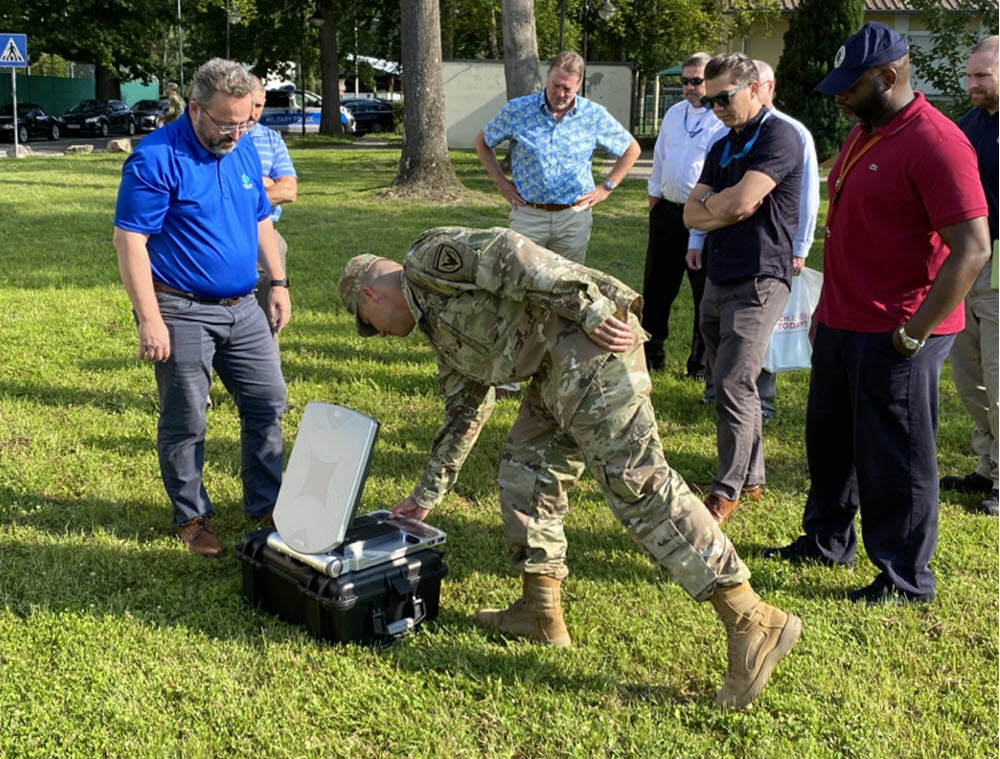
Intelsat’s satellite services provide options to address a variety of missions, including all-domain defense operations, border security management, and disaster/humanitarian relief.


IOM will enable Joint Force Headquarters-DoD Information Network to gain real-time visibility over all defense networks.


A decorated combat aviator and biotech CEO advocates preparing for novel viral threats before the next crisis.


The Chinook Block II program helps the Army retain its need for enduring heavy lift while it modernizes with Future Vertical Lift’s FLRAA and FARA programs.

To facilitate the pivot to the Great Power competition against adaptive enemies with advanced capabilities, the Navy is developing the flexibility to decentralize its forces while remaining fully networked.

Aligning current and emerging technologies for Joint All-Domain Command and Control is the enabler that will let warfighters acquire data and quickly act on it by applying effects where they need them, when they need to, and on the timeline they need them.

Bell created the V-280 Valor with agility, speed in excess of 280 knots, and more than 500 nm of range that is needed to quickly take advantage of tactical opportunities in multi-domain operations in theaters across the globe.