
Military services’ zero trust plans to go under the Pentagon’s microscope
The strategy for each service and other defense organizations is meant to align with the Pentagon's aim of getting to "targeted" zero trust by 2027.

Jaspreet Gill covers defense networks, C4ISR and emerging technologies for Breaking Defense. She previously worked as the senior technology reporter and an associate editor for Inside Defense, where she reported on emerging technologies, cybersecurity and the US Army, focusing on the service’s modernization priorities and acquisition programs. Jaspreet, an upstate New York native, is an alumna of Syracuse University’s renown S.I. Newhouse School of Public Communications, where she received a master’s degree in journalism.
The strategy for each service and other defense organizations is meant to align with the Pentagon's aim of getting to "targeted" zero trust by 2027.

“We're focused on not only the core technology, but the companies and industries that comprise that both in the areas that are kind of more closer to the department… artificial intelligence for autonomy, for example, but also in areas that are deep within the supply chain, like semiconductors,” Jason Rathje said.

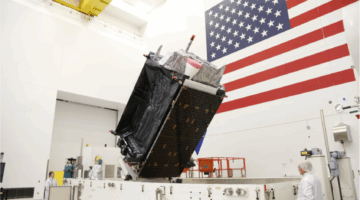
The GPS network continues to prove its unmatched reliability, and it’s only getting stronger.

The testbed will ultimately support the Marines’s “Expeditionary Advanced Base Operations (EABO) goals, which involve Marines operating in contested environments with increased bandwidth requirements,” according to Lockheed Martin.
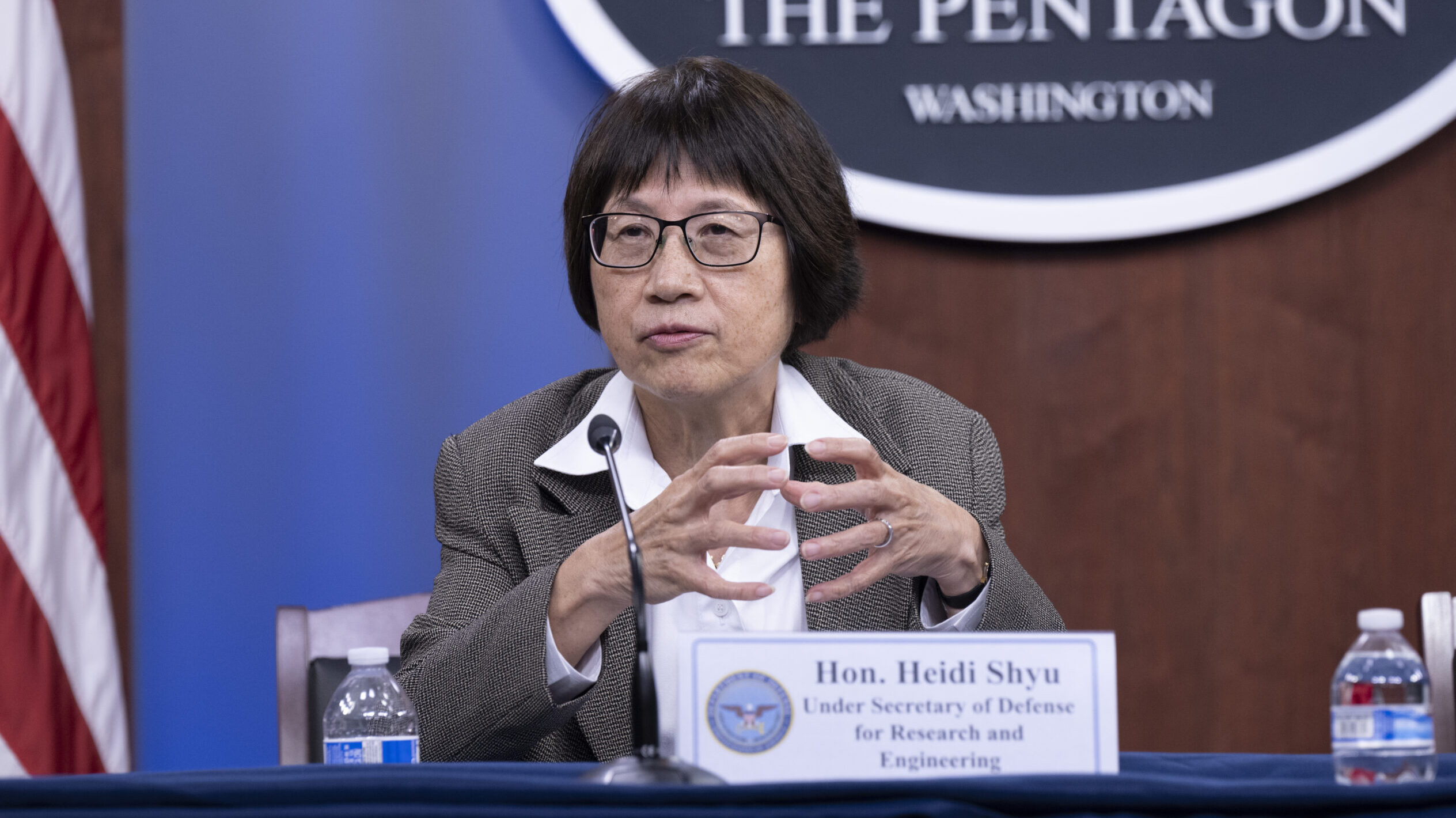
“So the decision at the DMAG will be, should that be a single service, or [does] every service just buy what they want, right?” Heidi Shyu told reporters about the Rapid Defense Experimentation Reserve.

"A path that I proposed is linking that together to show a portfolio of capabilities," Heidi Shyu said about a new AUKUS announcement. "So that will be coming out soon.”

"So we think we can actually help make it easier for you to be able to get after the key programs that the warfighter needs," Adm. John Acquilino said.


Knowing when to build on commercial systems and when to develop something new can be the difference between parity and information dominance.

Though being "cagey" about details, Deputy Secretary of Defense Kath Hicks said the new Replicator program is meant to get "multiple thousands" of autonomous systems in the hands of servicemembers with two years.

"Anybody who leads knows that the hardest thing to do is change culture,” Mark Gorak told Breaking Defense. "And I think we have to do that in order to retain the force we have.”

“We're in the early stages of it," Maj. Gen. Paul Stanton said about an AI pilot program. "But my point is we're not sitting on the sidelines and watching, we're diving in.”
“I think our focus right now is we have to grow fast…And that’s done through good hiring actions…it’s also the retention of employees that we have," Christopher Green said. "I want to make sure we build a culture where people want to come to work everyday, they want to stay with us and they want to help us build our capabilities.”

Why edge and endpoint security can’t be an afterthought.

Brig. Gen. Ed Barker said he’s outlined a 100-day plan as he takes over the Army's program executive office for intelligence, electronic warfare and sensors.

DISA Director Lt. Gen. Robert Skinner also provided an update on the Pentagon's sprawling cloud effort, saying 13 task orders have gone out, totaling some $200 million.

“This one, we’re still continuously talking to industry about and we want feedback because…we’re going down this path for the same reasons,” Young Bang said about AI BOMs. “We want to reduce our attack surface from an algorithmic standpoint.”

“I think across our entire portfolio, there are opportunities for us to simplify and deliver capabilities that allow for our units to have a more flexible network infrastructure,” Mark Kitz said.