
Project Hecate: The Space Force’s quiet effort to keep GPS survivable after 2040
Meanwhile, the Space Warfighting Analysis Center is pushing the use of signals from communications satellites in low Earth orbit as a near-term alternative to GPS.
Meanwhile, the Space Warfighting Analysis Center is pushing the use of signals from communications satellites in low Earth orbit as a near-term alternative to GPS.

Meanwhile, House and Senate appropriators are foot-stomping the need for improvements to the GPS constellation and new, resilient alternatives.


The Sixth Domain is not defined by geography. It’s a new kind of conflict in which autonomy and networked systems allow thousand-dollar consumer electronics to destroy multi-million-dollar conventional weapons systems.
The FCC's concerns echo those from DoD and the Space Force about the ease of GPS jamming — and the rapid rise in deliberate jamming by governments and militaries in hot spots around the world such as Syria, Ukraine and the Red Sea.

Outgoing DoD space acquisition czar Frank Calvelli told Breaking Defense in an exclusive interview that he is confident the troubled OCX software will be up and running by year-end.
"In short, if GPS goes down, critical infrastructure fails and our nation plunges into chaos," writes Rear Admiral USN (ret.) David Simpson.
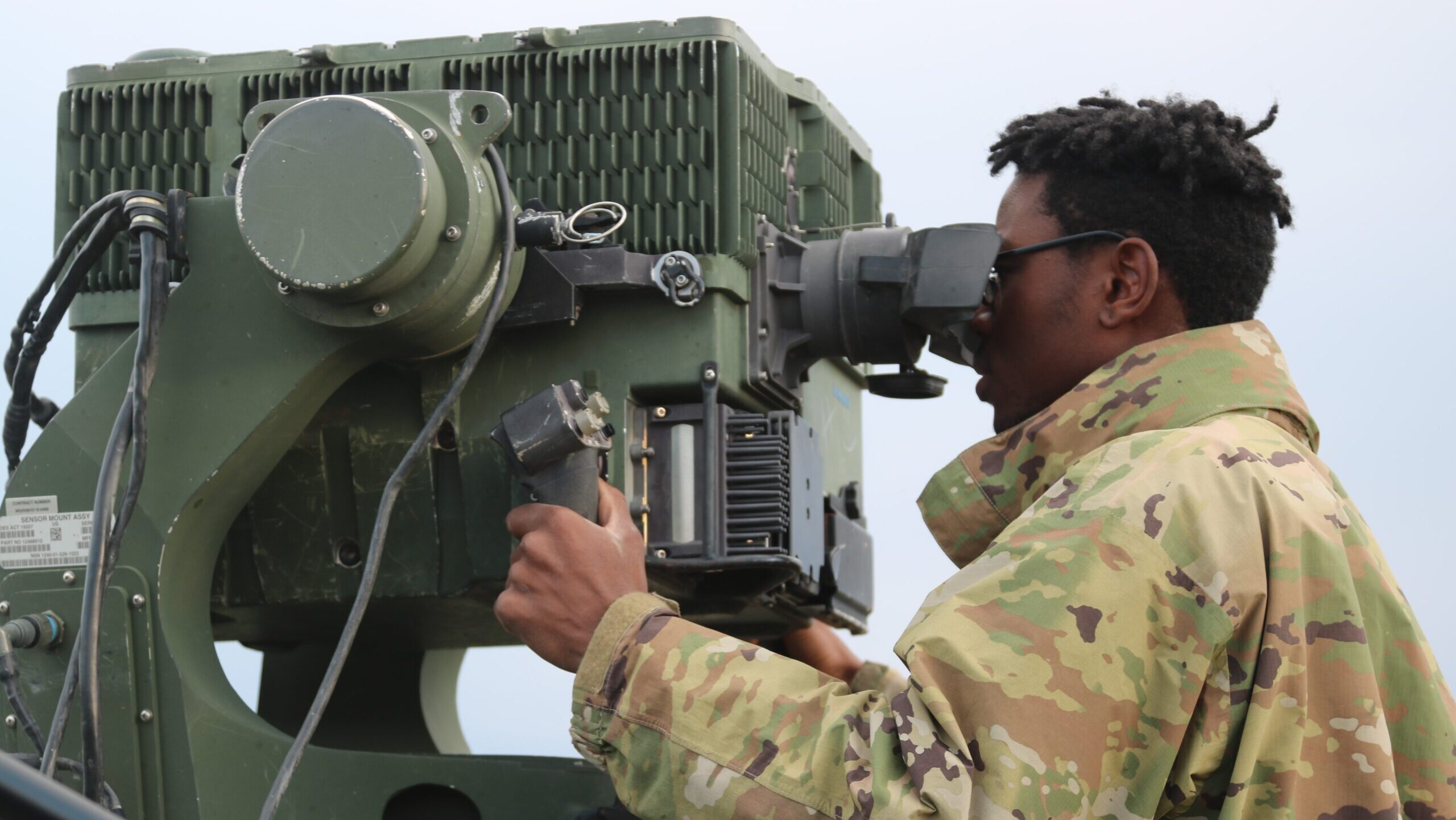
The troubled OCX ground system to allow users access to the jam-resistant M-Code GPS signal will go into operational tests by the end of the year, and the Space Force also has shaken up its effort to field M-Code radios and receivers, said Cordell DeLaPena, who heads those programs for Space Systems Command.


As threats rapidly evolve, digital engineering, manufacturing capacity and robust supply chains are critical to meeting challenges.
The four companies chosen for the GPS augmentation program are Astranis, Axient, L3 Harris, and Sierra Space.

"Every dollar invested brings asymmetric returns, while every cut risks asymmetric losses, given the continued advancements of the competitors, the Space Force budget needs more, not fewer, resources to do our job," said Gen. Michael Guetlein, Space Force vice chief.
The President’s National Space-based Positioning, Navigation, and Timing Advisory Board recommends that the Biden administration create a new “locus of authority and accountability for PNT decision-making beyond DoD GPS program management.”

The language in the SASC version of FY25 NDAA demands that DoD detail what military systems have previously and currently have operated in, or in those adjacent to, "the 1525-1559 megahertz and the 1626.5-1660.5 megahertz" radio frequency bands at the center of the long-running DoD-Ligado dispute.


Do more with less: streamline workflows, reduce duplication, invest upfront to save long-term.
Each technique available now or in the foreseeable future for what is known as alt-PNT comes with a need to make size, weight, power and cost trade-offs based on what type of platform is being used, according to experts.

"I don't want to take a very expensive, very, very capable [alternative] PNT system that belongs on, let's say, a Stryker platform or an Abrams tank or something like that, and ... stick it on the robot that is the one that I'm training to take first contact," Michael Monteleone, head of the Army's new All-Domain Sensing CFT, explained.

Maxar has been working on the Army's virtual map program since 2019.

Space Force's primary acquisition command, Space Systems Command (SSC), is seeking industry input on the possibility of building smaller, lighter and cheaper GPS satellites.