
Autonomous Capabilities For Future Vertical Lift
Autonomy will tie together aircraft, sensors, payloads, and human operators capabilities to enable humans to move from “operator” of one system to “manager” of many.

Autonomy will tie together aircraft, sensors, payloads, and human operators capabilities to enable humans to move from “operator” of one system to “manager” of many.

The Future Attack Reconnaissance Aircraft (FARA) must have enough artificial intelligence to fly unmanned at least part of the time, a secure network to control drones, and combination of speed and range that's impossible for traditional helicopters.

Midsized companies can offer flexibility and agility while keeping intellectual property in the hands of the government.
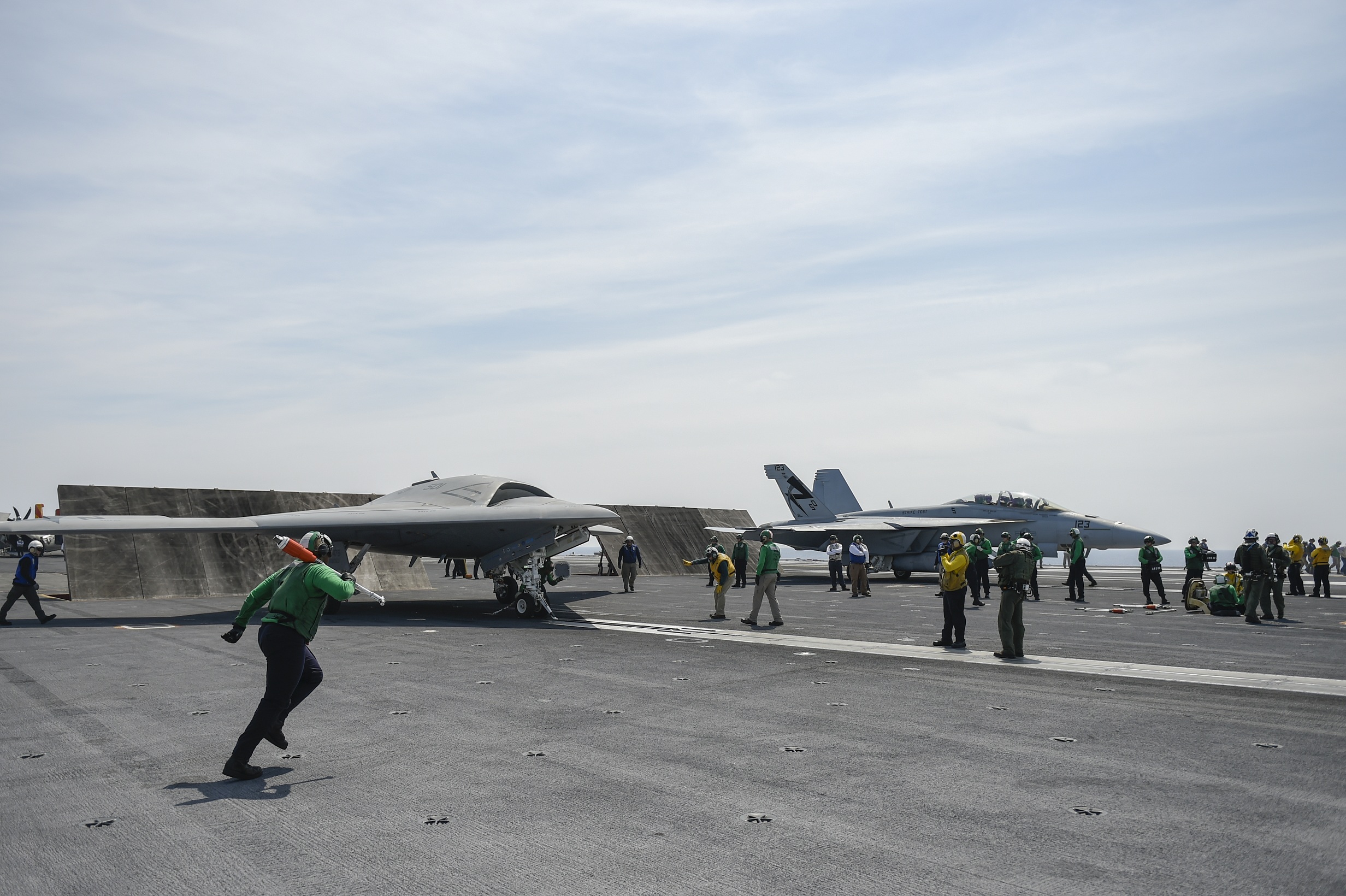
If you’re following the Navy’s new drone program, hold on to something. Keeping track of the various names of what used to be UCLASS and then became CBARS and is now the MQ-XX Stingray — or perhaps the MQ-25 — may make you as dizzy as keeping up with what the Navy plans to do with […]

[UPDATED with TRADOC & additional Work comment] We’ve talked a lot in these pages about drones and robots, networks and swarms. But there’s new way of looking at these weapons that Bob Work made clear is at the heart of the Defense Department’s high-tech “Third Offset Strategy.” It’s an approach that relies not just on technology […]

Graduation season is ending, but some people are still waiting for final exam results. Take for example the Army offices that manage the General Atomics MQ-1C Gray Eagle — that service’s version of the armed Predator drone – and Textron’s One System Remote Video Terminal, a laptop soldiers on the ground can use to see […]
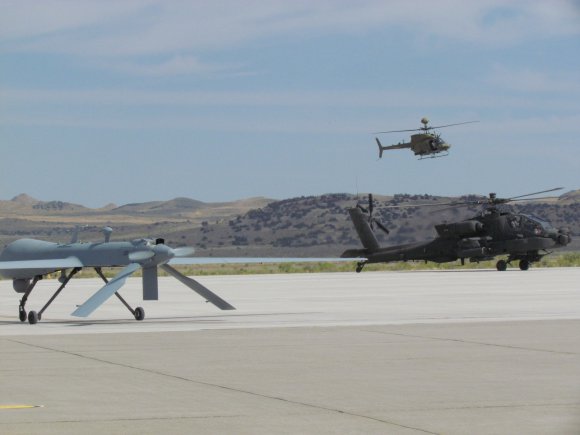
VIRGINIA BEACH, VA.: Manned-Unmanned Teaming, when manned aircraft crews control drones from their cockpit, is a child of the drone revolution still in its infancy. So maybe it’s no surprise that Army Apache helicopter units with new AH-64Es equipped to control MQ-1C Grey Eagle armed drones have gotten off to a crawl rather than a run using […]

Do more with less: streamline workflows, reduce duplication, invest upfront to save long-term.