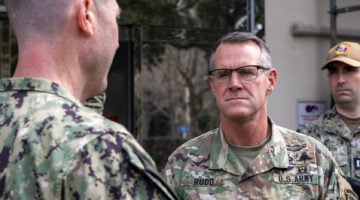
Special ops leader Rudd confirmed to helm CYBERCOM and NSA
The Senate voted to confirm Lt. Gen. Joshua Rudd to lead CYBERCOM and NSA.
The Senate voted to confirm Lt. Gen. Joshua Rudd to lead CYBERCOM and NSA.
Lt. Gen. Joshua Rudd’s nomination comes after the dual-hatted position has been empty for nearly eight months following the abrupt firing of Gen. Timothy Haugh.


As global navies adapt to evolving underwater threats, ASELSAN’s integrated sonar, countermeasure, and sonobuoy solutions offer a scalable, future-ready approach.

Air Mobility Command chief Gen. John Lamontagne — one of several new military nominees submitted by the White House on Monday — would fill a role left vacant since the firing of Gen. James Slife in February.

An advisory said the campaign is "likely connected" to the compromise of surveillance cameras in Ukraine and neighboring countries, which are used to watch the movement of equipment.

Reps. Don Bacon and Richard McCormick shared concerns over the SOCOM-like model in today's hearing.

Lt. Gen. William Hartman took over for Lt. Gen.Timothy Haugh last week after Haugh was controversially ousted by the Trump administration.
Discover how unmanned systems and emerging technologies are shaping the future of U.S. naval power in Breaking Defense’s new eBook.

Lt. Gen William Hartman, who served as Haugh’s deputy at Cyber Command, will take over Haugh’s Cyber Command duties. Sheila Thomas, NSA’s deputy director, will assume Haugh’s’ NSA responsibilities.

"They’re not going to be motivated to stop," David Frederick, assistant deputy director for China at NSA, said of the Volt Typhoon hacking group.
The Cyber National Mission Force's commander "has that team of expertise as a tool that when she’s got a hard problem, she can use that task force as one of the solutions."

"We must build a robust understanding of AI vulnerabilities, foreign intelligence threats to these AI systems and ways to counter the threat in order to have AI security," Gen. Paul Nakasone said. "We must also ensure that malicious foreign actors can't steal America’s innovative AI capabilities to do so.”
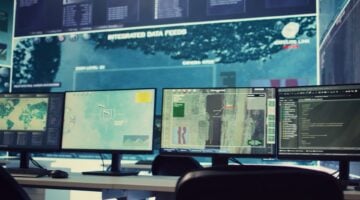
Government can’t stop to update systems, so modernization has to happen without interruptions.

The nomination comes as Gen. Paul Nakasone plans to step down after leading both agencies for five years.

“You don't want to be starting that planning the week before an invasion, when you're starting to see the White House saying it's coming,” said NSA’s Rob Joyce. “You want to be doing that now.”


Modernizing cryptographic systems is a lot more complicated than a software patch or iOS update, and oftentimes unfunded, but is vital to securing the nation’s most important secrets.

The memorandum pushes agencies to adopt zero-trust architecture implementation plans, cloud technologies, multifactor authentication and encryption.