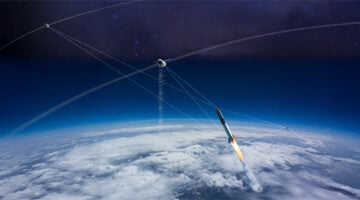
Countering missile threats with enhanced warning and tracking payloads
Missile speed, maneuverability, and destructive power requires more capable payloads for accelerated kill chain timelines.

Missile speed, maneuverability, and destructive power requires more capable payloads for accelerated kill chain timelines.

Program officials overseeing the Next Generation Overhead Persistent Infrared (Next-Gen OPIR) effort told GAO investigators that the delay was caused not only by developmental problems, but also the Space Force's launch backlog.

Do more with less: streamline workflows, reduce duplication, invest upfront to save long-term.

"Space Systems Command intends to award a second vendor, but the quantity will depend on the selected vendor’s proposal. The timing and scope of that award is subject to the outcomes of the on-going FY26 budget deliberations," Col. Rob Davis, SSC's head of Space Sensing program, told Breaking Defense.
Space Systems Command (SSC) in recent weeks has issued a flurry of contracts for the key hardware and software "thrusts" that make up the FORGE program, following a restructuring in 2023 that broke the effort into more manageable pieces.

"We are leaning forward establishing this technical IPT to try to pull together all of the systems and start thinking about it from an overarching perspective," Chief of Space Operations Gen. Chance Saltzman said.

The two Northrop Grumman satellites, which will take highly elliptical orbits over the Earth's poles, are expected to be launched in 2028.


On today’s battlefield, mobility isn’t optional - it’s mission-critical.

The delay in the review, however, is not expected to impact the planned delivery schedule, an Air Force spokesperson said. That said, neither the Pentagon nor the NRO has revealed the hoped-for schedule.
The Next Generation Overhead Persistent Infrared constellation's first satellite may see its launch pushed back by a year to 2026.
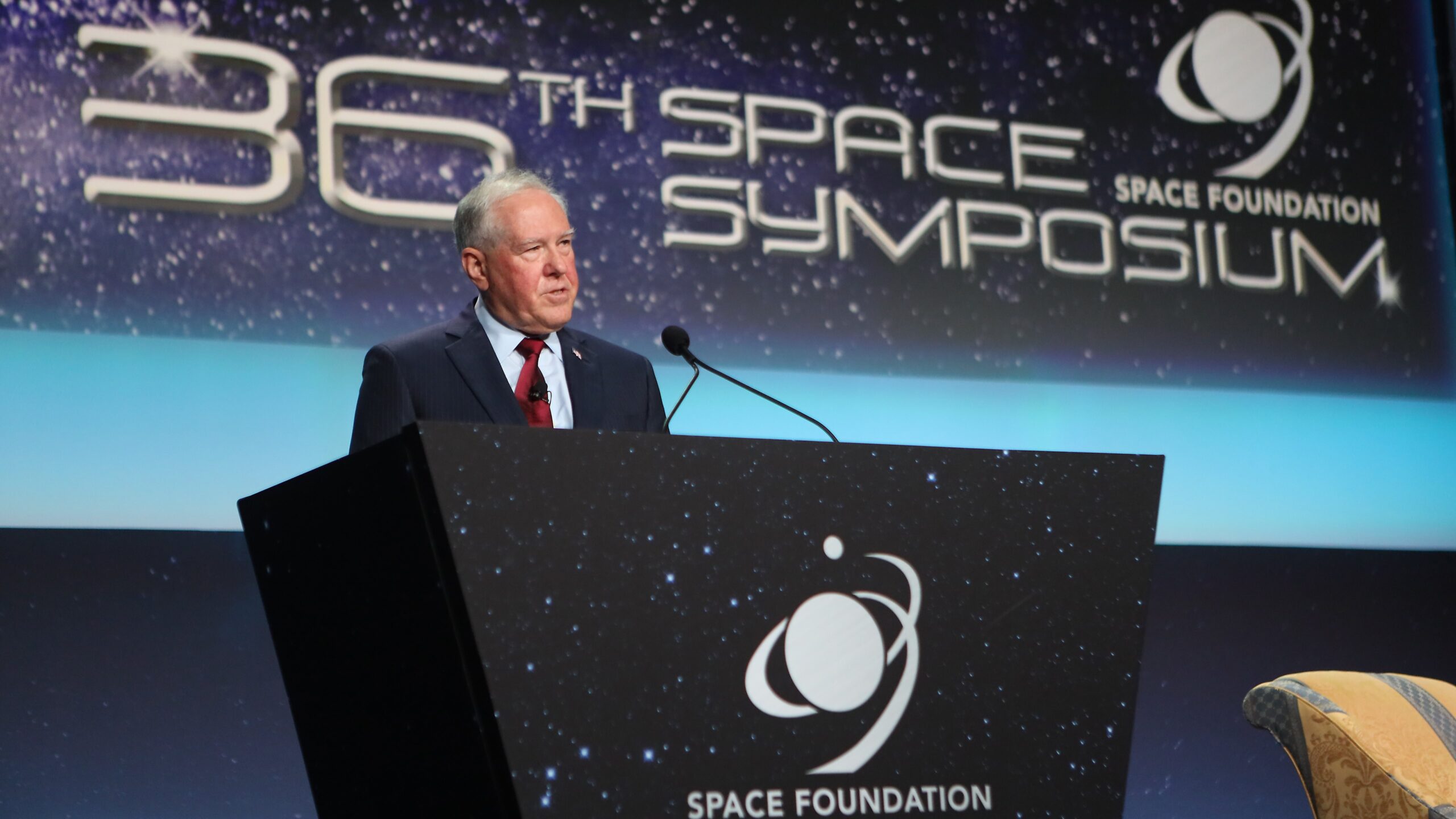
Air Force Secretary Frank Kendall explained that the "small decrease in the number for the Space Force" isn't itself quite reflective of reality, as there are mitigating circumstances that lessen the blow.

With apparent frustration with another program, Space Force acquisition chief Frank Calvelli asked, “What I don't get… [is] why would somebody want to have this sort of reputation-ruining stain in the papers all the time?”

Partnerships with outside industry are a cornerstone of the kingdom’s ambitious growth strategy.

The Space Force expects the multi-faceted Future Operationally Resilient Ground Evolution (FORGE) program to cost a total of $2.4 billion.

A five-year funding chart included in the strategy shows a steep increase in planned missile warning spending.
The contract, announced by the company today, will support Space Systems Command's Program Executive Office for Space Sensing, which is responsible for the service's missile warning, weather monitoring and "persistent tactical surveillance" programs.
The Space Force in May 2020 awarded Northrop Grumman a $2.37 billion contract for the development of the two satellites, which will travel in a highly elliptical orbit crossing over the Earth's poles.