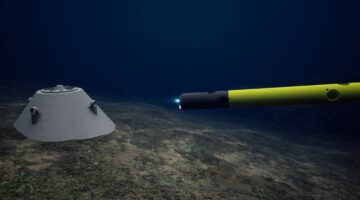
Closing the Navy’s find, fix, and finish kill chain with remote mine hunting
Remote mine hunting combines autonomy, AI, and advanced sonar to clear waterways faster with less danger.

Remote mine hunting combines autonomy, AI, and advanced sonar to clear waterways faster with less danger.

Breaking Defense visits production lines for made-in-America circuit boards, displays, and missile components.


A decorated combat aviator and biotech CEO advocates preparing for novel viral threats before the next crisis.

Hybrid communications requirements will shape the Army’s data infrastructure of the future.

Ability to reconfigure avionics on the fly allows for faster, better development of crucial capabilities.
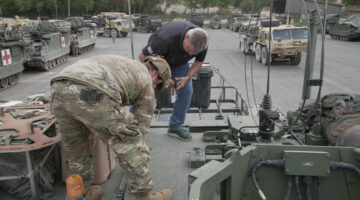
The network transport architecture for NGC2 could be a hybrid approach that combines high assurance communications with 5G, WiFi, and multi-orbit satellites.

The future of Army aviation will be avionics flight testing where new code is written and uploaded before the helicopter lands.


Decentralized Embodied Collaborative intelligence enables better reconnaissance, logistics and combat capabilities.

With new-but-proven technologies, the Navy can maintain its undersea dominance even as the strategic landscape grows more complex.

Distributed anti-submarine warfare leverages autonomy and advanced comms and networked sensors that already exist.
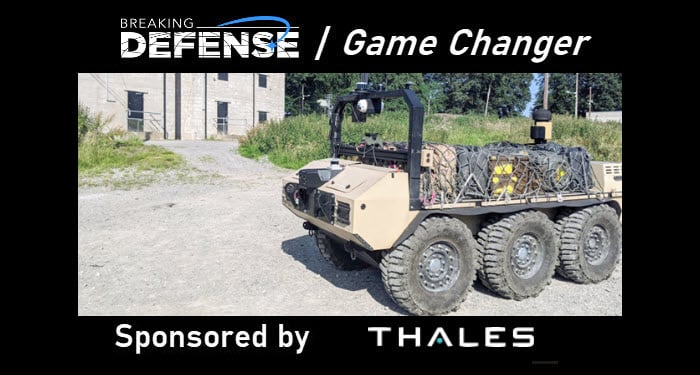
Maneuver formations face multifaceted threats that include kinetic force-on-force and non-kinetic effects such as electronic warfare.

Ground platform situational awareness is critical as vehicle crew survivability depends upon it.


APKWS® laser‑guidance kit provides reliable precision‑guided munitions across missions and platforms, delivered quickly to meet evolving operational demands.

Command posts that aren’t mobile are vulnerable to attack from electronic warfare and long-range drones.

Expeditionary forces jumping from island to island in the Indo-Pacific need a mobile way to command and control from vehicles, hotels, and homes.