Space Development Agency launches first ‘operational’ satellites for data relay
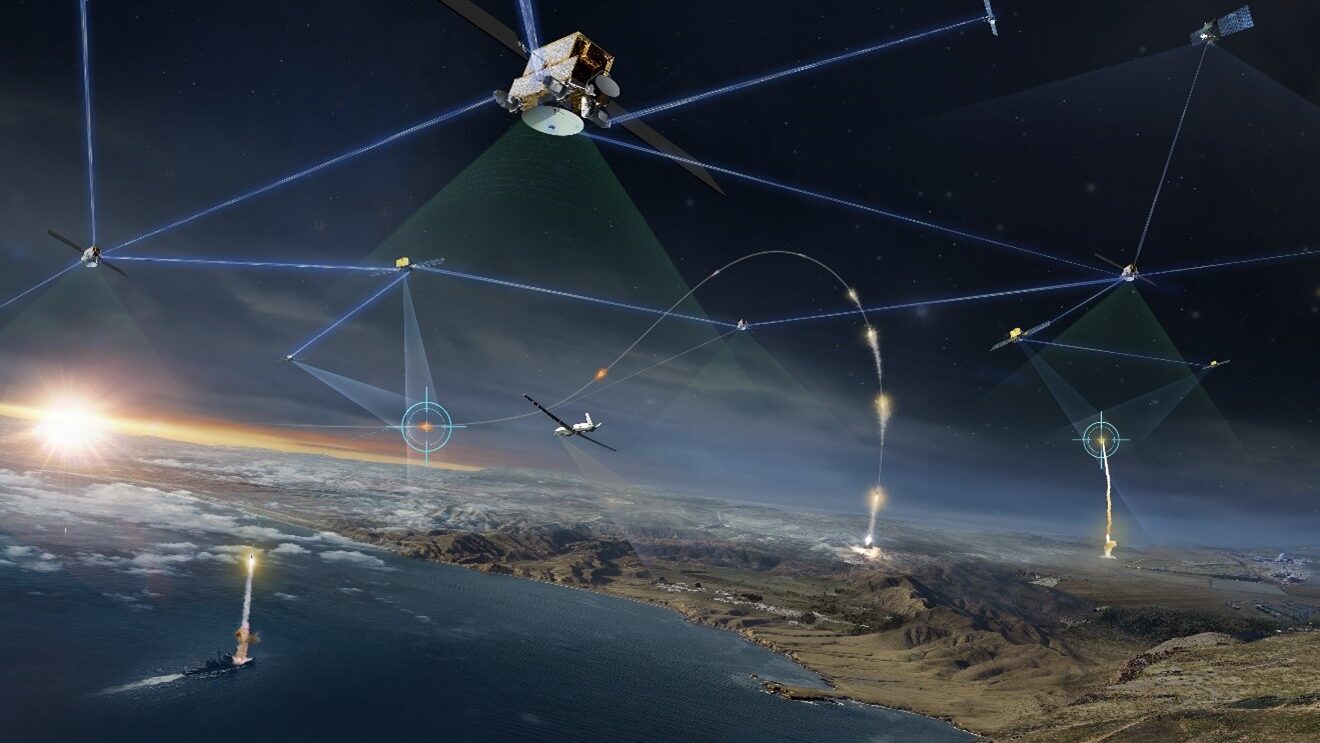
The 21 satellites lofted today on a SpaceX Falcon 9 were all built by York Space Systems and provide Link 16 and K-band communications.
"I would say that we are at the point now where the technology has matured and it's commoditized, so that radar based AMTI from space is feasible," outgoing SDA Director Derek Tournear told Breaking Defense in an exclusive interview.
In an exclusive interview with Breaking Defense, outgoing SDA Director Derek Tournear said the agency's three biggest technological successes have been proving the viability of space-based Link 16; missile tracking from LEO; and low-cost laser links.
SDA originally had hoped to begin launching the Tranche 1 Transport and Tracking Layer constellations for its Proliferated Warfighter Space Architecture stationed in low Earth orbit in September 2024.
The Space Development Agency "has taken steps to develop laser communications technology but has not yet fully demonstrated it in space," finds a report released today by the Government Accountability Office.
"We are leaning forward establishing this technical IPT to try to pull together all of the systems and start thinking about it from an overarching perspective," Chief of Space Operations Gen. Chance Saltzman said.
The court filings do not provide a proposed schedule for the new bid process, but do reveal that it will be managed by officials who were not involved in overseeing the original contract awards.
The SDA call for studies on speeding HBTSS "missile defense capabilities" is interesting, as its wording differs somewhat from language in an earlier solicitation from the Missile Defense Agency for proposals that appears to refer to an HBTSS satellite constellation.
The memo calls into question whether the Space Development Agency's approach to its Proliferated Warfighter Space Architecture is meeting warfighter needs.
Under the draft, by Feb. 28 the chairman of the Joint Chiefs of Staff, DoD components, military departments, combatant commands and the Missile Defense Agency (MDA) are to put together three "scalable reference architectures" for "small, medium and large options" for the shield using "kinetic and non-kinetic" weapon systems, including costs.
“I describe PWSA, the Proliferated Warfighter Space Architecture, as the Android model,” said Space Development Agency director Derek Tournear. “If we get vendor lock, if only one works, or if they can't talk to each other, that falls apart pretty quickly.”
Tournear said that the optical intersatellite link demonstration was final success in a trifecta of baseline challenges to SDA's plan to network hundreds of military satellites in LEO, as well as to eventually to integrate commercial satellites into the mix.
While author Andrew Berglund gives SDA full kudos for its "impressive speed" so far in concluding development contracts and fielding its first satellites, he also warns that those advocating the agency's approach as the way for all DoD acquisitions in the future may want to curb their enthusiasm given the early stage of the agency's work.
The study notes that NC3 is one of the least understood of the many parts that make up the US nuclear weapons architecture, in part because of the high levels of secrecy that surround it. Thus, it is difficult for policymakers and service leaders to focus needed attention on it.