
FVL: Sikorsky-Boeing Defiant Hits 235 MPH, Aims For 288
Despite COVID-19, the SB>1 Defiant team is testing furiously to catch up with archrival Bell’s V-280 tiltrotor, which has almost 10 times as many flight hours.
Despite COVID-19, the SB>1 Defiant team is testing furiously to catch up with archrival Bell’s V-280 tiltrotor, which has almost 10 times as many flight hours.

Congress stopped the US Army from cancelling advanced procurement, while Germany, Israel, and the UK are all potential purchasers – but none has signed a production contract yet.

Government can’t stop to update systems, so modernization has to happen without interruptions.
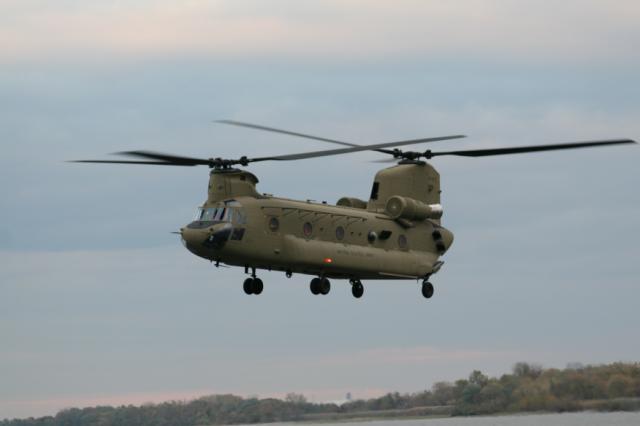
The Army wants to keep its options open on upgrading its heaviest cargo helicopter. Boeing is worried the window of opportunity -- and its factory -- will close before the Army makes up its mind.

The Sikorsky-Boeing super-copter has just over an hour of flight time, but the Army says it has all the data it needs to accelerate the program. How?

While Bell's rival V-280 uses tiltrotor technology, proven in widespread service on the V-22 Osprey since 2007, the Defiant uses Sikorsky's revolutionary compound helicopter technology, which promises superior agility -- but which has only actually flown in two experimental aircraft, the X2 and S-97 Raider, both of which are much smaller than Defiant.
Sikorsky and Boeing are saying that their aircraft is taking longer than Bell's because their design is more inventive -- harder, riskier, and more time-consuming, yes, but ultimately better. In particular, while the SB>1 looks like it'll be a little slower than the V-280, going by the companies' projections for top speed, Sikorsky and Boeing say their machine will be much more maneuverable.


The Sixth Domain is not defined by geography. It’s a new kind of conflict in which autonomy and networked systems allow thousand-dollar consumer electronics to destroy multi-million-dollar conventional weapons systems.