
Army’s Space and Missile Defense Command expands homeland defense mission
“The ground-based midcourse defense mission that we traditionally held under NORTHCOM has expanded to air and missile defense holistically,” said Lt. Gen. Sean Gainey.
“The ground-based midcourse defense mission that we traditionally held under NORTHCOM has expanded to air and missile defense holistically,” said Lt. Gen. Sean Gainey.

“We have a requirement to grow a Patriot force structure; we will grow a Patriot force structure,” Lt. Gen. Daniel Karbler told reporters today.


Midsized companies can offer flexibility and agility while keeping intellectual property in the hands of the government.

"It means that our adversaries are growing increasingly bold in their hostile acts of using ballistic missiles cruise missiles and UAS," Lt. Gen. Karbler said. "They're crucially bold in their conduct of irresponsible space activities. It means the Joint Force will demand more from the Army's Space and Missile defense capabilities and expertise going forward."

Experimental AI software, Prometheus and SHOT, can turn masses of data – from both government and commercial satellites – into precise targets for long-range missiles and cannon. But what do the humans do?

“I spent the first 15 years of my career walking around in a lab with a laser, saying ‘does anyone want this…’ and the warfighter [kept] going ‘that’s adorable,’” Craig Robin recalled ruefully. “Just recently there’s been a tremendous pull [because] we simply just got out it into the user’s hands and they recognized the value.”
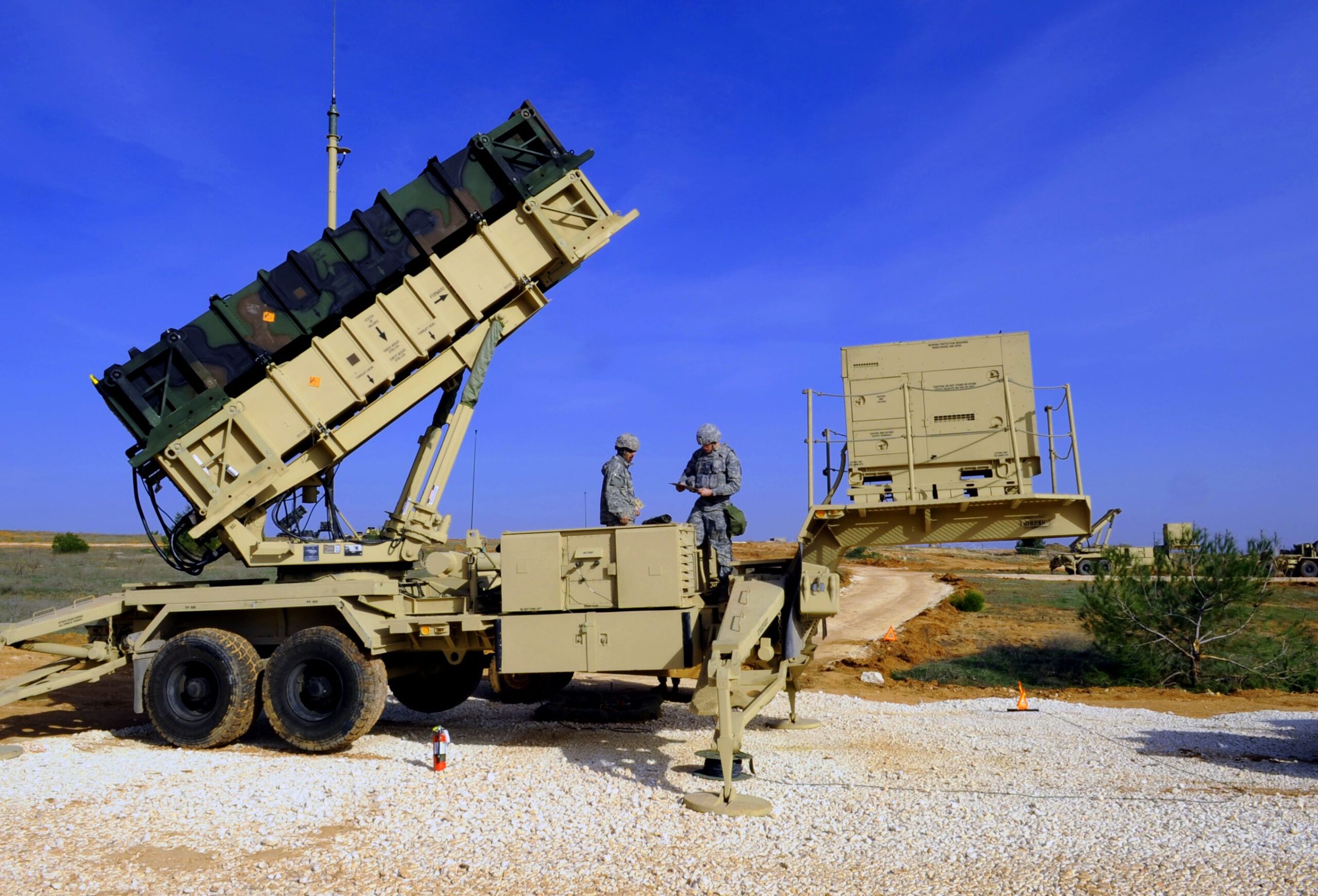
"This is a radar they're going to buy for, I don't know, 30 years? So you want to make sure you've got new technology that can meet the threats of the future."


The MQ-9B and Gambit Series represent parallel capabilities that address global challenges for security head-on.

"Real-time tasking and receiving data is going to b the future," Capella CEO Payam Banazadeh says. "Over time every single remote sensing company will go this direction."
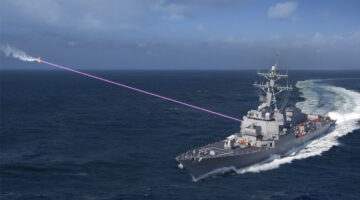
Miitary lasers are getting more and more powerful, fast. But raw power isn't all you need for a workable weapon.

"We were never above probably a total of eight people," the aviation Cross Functional Team chief, Brig. Gen. Wally Rugen, told me. "We’re not this big colossal thing, we’re a lean, mean organization."

Lockheed is as close to an incumbent as you get in the rapidly evolving world of high-energy fiber lasers. Raytheon, by contrast, only recently made a big play for laser weapons, but they can draw on their experience with lower-powered but exquisitely tuned laser sensors.


Balancing security and access to data are critical to providing users with trustworthy, reliable data for real-time decisions.

So, I asked, could a sufficiently high-powered neutron beam not just detect a nuclear warhead from a distance, but actually disable it? Dent, who worked on the Safeguard missile defense system as a young Army officer and later on Reagan's Star Wars initiative for SAIC, pondered a moment. Then he said: “Could it fry the electronics ? Yes, it could."
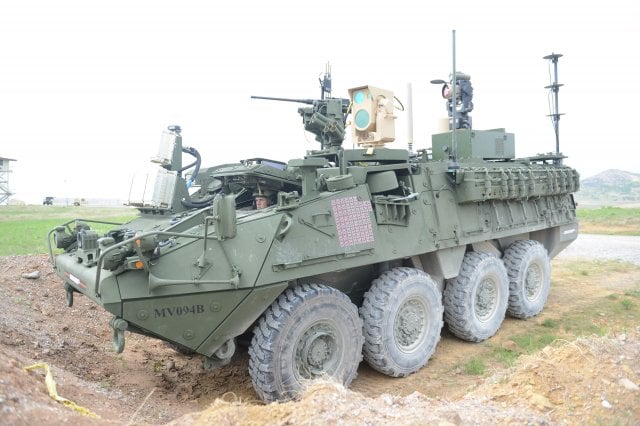
HUNTSVILLE, ALA.: The Army keeps putting more powerful lasers on smaller vehicles. Battlefield lasers in testing today can shoot down snooping quadcopters and other small drones. By the early 2020s, however vehicles mobile enough to keep up with combat brigades – Strykers and FMTV trucks – will have power in the 50 to 100 kilowatt […]

ARLINGTON: The Army is dialing up its lasers, from 5 to 10 kilowatt weapons that torched quadcopters in successful tests to 50 to 100 kW weapons that could kill helicopters and low-flying airplanes — and, possibly, blind cruise missiles as well. Given rising anxiety over Russia’s Hind gunships, Frogfoot fighters, and Kalibr missiles, the technology […]
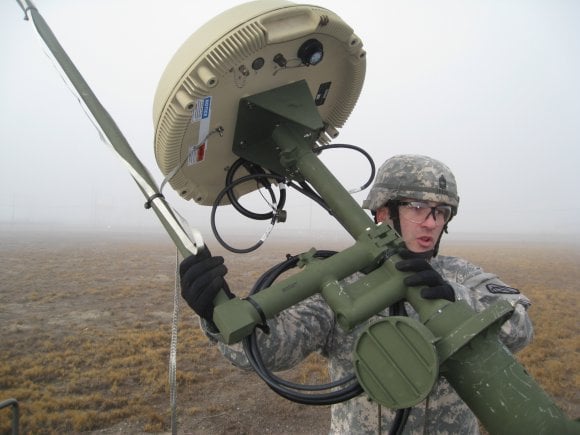
HUNTSVILLE, ALA.: After two decades of largely ignoring the danger, the Army is seriously training for a scary scenario: What if GPS, our satellite communications and our wireless networks go down? It’s hardly a hypothetical threat. Russian electronic warfare units locate Ukrainian troops by their transmissions and jam their radios so they can’t call for help, setting them […]