A Calibrated Response To ISIL

on December 05, 2014 at 4:29 AM

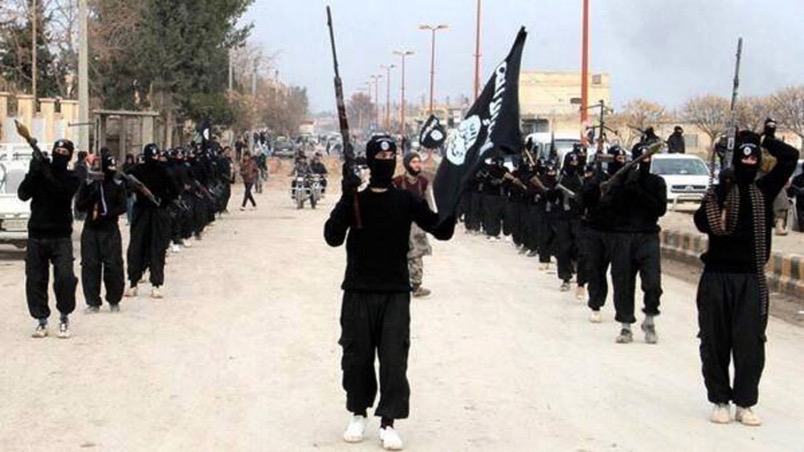
ISIL militants

The ISIL-induced crisis in the Middle East is a major one with regional implications. With several years of dynamic change in the region, and the failure to create a stable Iraq during the period after the overthrow of Saddam Hussein, ISIL has functioned like a match thrown into a gas can. What  should we do?

We tried occupation and unification via support of an Iraqi Army controlled by Baghdad. That did not work, but what are realistic alternatives which can be pursued with realistic means and are appropriate to the evolving situation?

This is about ends and means; it is not about replaying the past decade. There is little doubt that a transitional opportunity was missed by the Obama Administration, but with a new Republican Congress we clearly do not need to hear simply that Obama was wrong or that he had no choice and that we need to repeat the past decade.

We need Congress to consider realistic policy options and to debate those options in an open manner to gain the trust of the American public, which has every right not to be handed an ultimatum from the Administration or be simply dictated to by events.

Let us start with the simple proposition: Iraq 2014 is not Iraq 2003. In an earlier article on Breaking Defense, we argued that the President can build on two important realities providing him opportunities in Iraq. First, Iraq in 2014 is not the Iraq of 2003. Not the least of the differences is the embrace of allies in the effort. Second, secular forces in Iraq are fighting for their very lives, one which provides the force on the ground and which can anchor sanity in the region, namely the Kurds. Even more significantly, the first trend intersects with the second.

But Iraq 2014 is not Iraq 2003 in another key dimension: directly dealing with the failure of the Baghdad government to govern Iraq instead of using its assets to try to dominate Iraq in the interests of the Shia.  This means that the Iraq Army, a central focus of attention for the US Army in stability operations and nation building, is an inherently flawed instrument of power.

An alternative path needs to be highlighted and supported. The US and its allies can commit to the territorial integrity of Iraq but also to one which is federal in character, rather than one dominated by a Shia Baghdad. In the current environment, there are three key players, each of whom is playing a key role and which can anchor a federal Iraq.

The Kurds are clearly focused on fighting and protecting their region and can be counted open to play a key role in any future Iraq federation. The US and its allies have clearly seen the value of working with the Kurds, and training and operating from Kurdish territory.  But there is a limit to what the Kurds will do with regard to the integrity of Iraq.

The Turkish President is playing a deadly game of leveraging the ISIL crisis to augment his internal power and to seek to play a role in shaping the future of Syria but doing precious little to help deal in a concrete manner with ISIL. To be clear, this is more about domestic politics and the efforts of the current President to reverse course in the classic Ataturk solution set for Turkish identity.

Amatzia Baram, a leading Israeli expert on the Middle East and Iraq, underscored the dire regional implications of dealing with ISIL. Baram provided some guidance on what the US could do to deal with Turkey, which is clearly at a crossroads of either supporting NATO or befriending ISIL, notably pushed by the question of the Syrian Kurds.

“What to do about support for the Syrian Kurds? Here Turkey comes into play; the support of the current Turkish administration for ISIL is making the Obama administration absolutely furious, but not quite furious enough to provide weapons and other supplies to the Syrian Kurds. And as far as the Turkish reluctance to allow the use of their airbase, it may come to choosing sides between ISIL and NATO. This crisis is that serious.”

The airbase issue is a crucial one in determining Turkey’s role in dealing with ISIL and policies generally in the region. There are reports that an agreement may emerge between Turkey and the US that would allow agreement to proceed in dealing with ISIL. The proposed agreement would allow U.S. and coalition aircraft to use Incirlik and other Turkish air bases to patrol  a protected zone along a portion of the Syrian border that would be off-limits to Assad regime aircraft and would provide sanctuary to Western-backed opposition forces and refugees.

If this agreement does not happen and the current Turkish government fails to execute a serious effort to deal with ISIL, then the US could build a new airbase in north-eastern Jordan (or expand the existing one there) to alleviate its reliance on the Turkish base.

The second key player is the Iraqi Shia. They will fight to defend Baghdad. The target of the ISIL leadership is clearly Baghdad and the fight between Sunnis and Shia could revolve around the current capital city. But it is very likely that the militia and the fighting remnants of the Iraqi Army can defend Baghdad when aided by US and allied air strikes and the Iranian Quds Force.

So this leaves the crucial Sunni factor to be dealt with in determining the future of a federal Iraq. Here the US and its allies face no easy choices. The Sunnis simply do not trust the Baghdad government. To broker a federal Iraq, Mosul needs to be captured and managed by an honest broker, not the Iraqi Army. The Sunnis are crucial to a federal Iraq, and need to be enlisted for their help.

Clearly, the Sunnis do not want to be dominated by a Baghdad Shia government. It must be demonstrated that simply playing out of a Baghdad Shia Army coming north and conquering Mosul is not the only option. The Sunnis seek ways to provide for their own ability to defend themselves against other forces within Iraq and outside of it. The re-taking of Mosul needs to be done by an honest broker and not seized by the armies of Baghdad. And in so doing, the shaping of Sunni self-defense forces can be facilitated as the way ahead in shaping a federal Iraq.

One way to achieve this is to return the 101st Airborne to Mosul to start the recovery process. The performance of the 101st its last time in Mosul was outstanding and it is crucial to return the same unit to make the same point – we are here to manage in the interests of the citizens of Mosul, not the rulers of Baghdad. As an airmobile force, there is no group of “boots on the ground” better suited to return to Mosul, help throw back the ISIL and to broker peace than the 101st.

They would be part of a new approach whereby the Kurds, the Shia and the Sunnis could have autonomy within a federated Iraq. Guard units would be funded from a national account to provide security in each of the federated territories and able to ensure that each of these territories could be defended against security threats of the sort constituted by the ISIL.

And one could toss into the mix the notion of moving the capital from Baghdad. When the US was created we could not agree on a capital so a swamp was picked we got a new national capital in a territory no one wanted. Perhaps something equally drastic is necessary to break the stranglehold of Shiite-dominated Baghdad on Iraq.

The 101st could broker the Sunni transition and then leave. The Kurdish effort would be supported with training and engagements to a level which makes tactical and strategic sense.

Either an ability to use Turkish bases or he new air base in Jordan would in part support the military side of this, sea-based capabilities to insert force as necessary. Add perhaps an airstrip in Kurdistan for military operations in support of the Iraqi Federation. Only a light footprint would remain to support military operations with political support to the Federation of Iraq as the core political objective.

What is clear is that air strikes without clear strategic objectives is not enough.  And “boots on the ground” to do the past 10 years all over again is not on offer and makes no sense. There is a way ahead, which can build around a federated Iraq, assisted with targeted military aid and assistance, but not a repeat of an Iraqi occupation.  Iraq 2014 is not Iraq 2003.

Robbin Laird, a defense consultant, is a member of the Breaking Defense Board of Contributors and owner of the Second Line of Defense website. While a member of Bush Administration, Ed Timperlake authored a major study on contraband weapons and dual use technologies in Iraq.

Comments

  • HERK

    here we see isil marching down the street. WHERE ARE THE DRONES WHEN WE NEED THEM?

  • originalone

    After the 1st Gulf war, there was the “No Fly Zone”, then in 2003, Iraq was invaded and the rest is history. What genius thought up this latest idea, that it has a better chance at working then any of the past efforts? The only given, is the outpouring of American treasure and deaths. When do the people who pull the strings get their collective heads out of where the sun don’t shine and see the light? All these so-called brains/experts, sitting on their golden easy chairs, haven’t learned anything in the past 20 years, so now we should try another plan, which in reality, is just another scam on the population.

    • Krasniak

      You sir, are not alone!

    • Jeffery Surratt

      Remember a EX-is a has been, and a SPERT or spurt-is a drip under pressure. I just wish the U.S. would have never invaded IRAQ

  • areyoukidding

    I was actually reading this as a serious discussion until the authors mention sending the 101st to Mosul. Seriously? That one statement shows a profound, astounding lack of understanding of what is occurring. In the authors own words MOSUL IN 2014 IS NOT MOSUL IN 2003. Do they seriously think that the 101st can simply walk right into the city center and start the “sunni transition”? Jesus. Taking Mosul will be a dedicated fight. A penetration of a hardened city. It will be the battle of Fallujah in a city exponentially bigger. It can be done, but for results, just take a look at Kobani right this minute. ISIS has purged most – if not all – of any allies in that city, and cavalierly tossing around the idea of plopping an Army division into the heart of the Iraqi islamic State is ridiculous. After the battle – after the blood has been washed off the streets and the bodies have come home – what do we do? Oh, wait. The authors covered that in a single sentence: “The 101st could broker the Sunni transition, then leave.” AHHH. Why didn’t we think of that before? Oh, wait, we did. WE SPENT TEN YEARS TRYING TO BROKER THE SUNNI TRANSITION. I could type forever, but I believe I’m becoming dumber responding to this article.

    • On Dre

      I’ve heard its just 6 months from turning the corner.

    • Hammer6

      Agree that the authors don’t rely on their own tenet – that 2014 is not 2003. Further, infatuation with a single unit – vs. capabilities – and suggesting moving the capital from Baghdad – leaves me thinking the authors are grasping at straws. A robust SOF presence with robust air support could help an Iraqi government re-assert sovereign control. But that would require a federal governmental framework, something the Iraqis have resisted. The political side needs attention and consensus, then we can find a way to support it.

      • Ed Timperlake

        US spent 10 years propping up a totally corrupt Shia
        government, that was in no way ultimately helpful to a Sunni Transition. A truly good faith effort to make Iraq a federal political state has perhaps the only chanceof having both sane Sunni and Shia tribes turn on ISIS fanatics especially in helping if it comes to a city fight over Mosel, ISIS has yet to be really battle tested.

        http://www.familysecuritymatters.org/publications/detail/confronting-schrecklichkeit-in-iraq

        A Baghdad based extremely corrupt Iraq Army solution, with continuing overwhelming Shia leadership is what we did allow for ten years and that approach failed

        .I visited 101st in Mosul, (Dec 2003) looking for conventional contraband weapons smuggled in under the UN Oil-for-Food (aka weapons) program-the 101st is one of the most impressive combat units in the world.

        http://www.sldforum.com/2014/08/making-haider-al-abadi-new-prime-minister-iraq

        Please note—our most important point:

        “We need Congress to consider realistic policyoptions and to debate those options in an open manner to gain the trust of theAmerican public, which has every right not to be handed an ultimatum fromthe Administration or be simply dictated to by events.”

        –If the Americanpeople do not want to engage it is their call 100%-we just offered insights especially about Kurds, Turkey and what has been tried before and are offering just another way ahead in this evolving robust and necessary public debate to address a very very
        hard problem-

        • Hammer6

          Ed –
          Thanks for your response. I appreciate you taking the time. I also appreciate you “putting yourself out there” with some thinking. It is far easier for folks to criticize than advance ideas, esp. via the internet.
          I agree that the it is for Congress and the American people to decide the extent of our involvement, and applaud you making that point. All to often in the past, we’ve drifted into foreign policy situations, reacting with fewer options than we would like.
          The challenge I see is that there are, for now, few viable options, given Iraq’s ineffective government. Nothing for Congress or the people to consider leading to regional stability – and longer-term security for the USA.
          The challenges are primarily political, but we focus on military options. If Clausewitz is right, that war is politics by other means, then he may also be right in noting that war is a last resort.
          So what can we do – leveraging our other elements of national power (political, economic, social) – to help Iraq realize political stability? I agree with Colin Powell’s “Pottery Barn” dictum. Through our 2003 invasion, we’ve broken an awful lot. But have we really taken ownership of the aftermath?
          Going forward, I hope the debate can focus on Iraqi politics, as political stability is on the “critical path” to denying ISIL sanctuary – and promoting US security. In this framework, the limited/focused military assistance you reference makes much sense.

  • Sand Man

    How about making a parking lot out of Iraq?

    “We should declare war on North Vietnam. We could pave the whole
    country and put parking strips on it, and still be home by Christmas.”

    Ronald Reagan

  • Dual-use?

    While a member of Bush Administration, Ed Timperlake authored a major study on contraband weapons and dual use technologies in Iraq. Hmmm. “Contraband weapons”? “Dual-use technology”? Was the study titled “Here’s how Saddam is hiding his WMD program”? I’m pretty sure if we’d ignored that major study we wouldn’t be discussing ISIS today.

    • Ed Timperlake

      In December 2003 I was sent through out Iraq to inventory the conventional contraband weapons shipped to Saddam Hussein in violation of arms embargoes. The weapon smuggling effort was initiated under the provisions of the “oil-for-food” program managed by the French Bank PNB Paribas. The objective of my task was to assess “ground truth” from items found in Iraq in order to identify and bring to justice those individuals and criminal syndicates that had violated UN sanctions.

      Support was provided to my mission by those in charge of captured enemy ammunition and unexploded ordnance (CEA/UXO) cleanup. The Army Corps of Engineers and 101st Airborne Division personnel who provided the data that were available.

      Countries ranked in violation of arms embargo to Iraq:
      U.S.S.R. 122 different types of munitions, total number 12,878,291
      China 19 different types of munitions, total number 377,885

      http://archives.republicans.foreignaffairs.house.gov/112/Tim041511.pdf

  • jstrong365

    The duly elected government in Baghdad has refused to allow US combat troops to enter Iraq. The Dawa party’s power base is the Iranian backed Shiite militias. These militias have stated they would attack any US combat troops.

    Now, you can put the 101st in Mosul. But, you would be declaring war against the state of Iraq. You would also need to construct a large airbase in Iraqi Kurdistan to guarantee lines of supply.

    We should start building that airbase today. The only thing both Turkey and Iraq fear is an independent Kurdistan. That fear has already caused the Iraqi government to acknowledge constitutional requirements to share oil revenues.

  • jstrong365

    A No Fly Zone? This old trope? We have seen the results. Just look at Libya.
    You can institute a no fly zone and IS will be there to fill the void.

    No one is flying over Kobani except the US. Air power has muted a ground offensive.
    If we had instituted a no fly zone over Kobani and nothing else, the Kurds would have already been slaughtered.

  • ycplum

    “We tried occupation and unification via support of an Iraqi Army controlled by Baghdad.”
    .
    True, we tried that. But, US actions in Iraq could be textbook case of what NOT to do. While I do not advocate occupying and reshaping Iraq (that ship has sailed in my opinion), I do not feel that the US effort should be evidence that occupation will always lead to failure.
    .
    I will whole heartedly agree that one of the key obstacles to a strong Iraq is the Shia stranglehold on power. The federal power must be shared or there is no Iraq.