
Adversaries’ mobile land-based missiles – surface-to-surface, surface-to-air, and anti-ship missiles mounted on transporter erector launchers (TELs) – continue to be an unsolved problem for American military planners and strategists. The success these weapons enjoy by hiding and moving to where they are needed means that virtually all new land-based missile systems, whether short-range anti-aircraft weapons or intercontinental ballistic missiles (ICBMs), are now deployed on TELs, with mobility built into their operational concepts. These mobile systems, now operated by China, Russia, Iran, and many other possible U.S. adversaries, threaten to raise the costs and risks to potential U.S. expeditionary operations.
Relying solely on interceptor-based missile defense is not a solution to the mobile missile problem. Missile defense systems, both land- and sea-based, have had mixed success in actual combat. With the effort and resources being expended by the Pentagon on missile defense, we should expect better performance in the future. But we should also expect that, against high-end opponents capable of mounting multi-axis saturation attacks, some attacking missiles will get through.
They will inflict great damage, especially on modern warships. Most important, the all-in cost of interceptors is as much as an order of magnitude greater than their targets, giving the attacker a steep advantage in this competition. Having the capability to hunt TELs, or “attack the archer,” will be highly desirable, especially if doing so can undermine an adversary’s fundamental assumptions and strategy.
Developing technologies and operational concepts to counter adversary mobile missiles should thus be a top priority for the Pentagon’s new Defense Innovation Initiative, also known as the Third Offset Strategy. Indeed, as this essay will discuss, some of the pieces needed for effectively countering mobile missiles before they are launched could be on the threshold of reality, available for Pentagon planners to assemble into a combat capability useful to field commanders. When successful, this counter-missile capability would disrupt a popular and effective operational concept currently employed by many potential adversaries, threaten their large investments in mobile missile forces, and likely cause these potential adversaries to lose confidence in their plans and strategies. That result — if achieved at a reasonable cost — would be the essence of a “competitive strategy.”
The Navy’s problem with land-based missiles

Power at the sprocket: it’s the transmission that gives tracked vehicles their control
Army vehicles like Bradley need greater power at the sprocket for speed, braking, and manueverability.
The frustrating “Scud Hunt” during the Persian Gulf War revealed how hard it is to counter missiles mounted on TELs. Soon after the coalition air campaign started against Iraq in January 1991, Saddam Hussein ordered his mobile surface-to-surface missile units in Iraq’s western desert to begin bombarding Tel Aviv and other targets in an attempt to draw Israel into the war and hopefully break up the Arab coalition opposing Iraq. Coalition forces were required to divert hundreds of strike sorties away from strategic targets and Iraq’s army occupying Kuwait in a largely fruitless effort to find and attack Iraq’s mobile Scud missiles. Eight years later, during NATO’s air campaign to eject Serbian forces from Kosovo, a surface-to-air missile unit successfully employed mobility and deception to shoot down a stealthy U.S. Air Force F-117 strike fighter.
The problems posed by mobile missiles are especially vexing for the U.S. Navy. Land-based “anti-navy” mobile missile forces threaten to stop the Navy from establishing useful control over vital sea lines in East Asia, the Arabian Sea, and the Persian Gulf during conflicts. It will not be enough for the Navy and joint forces to sink enemy fleets, a task that should not be an excessive challenge for highly dominant U.S. submarines and maritime air power. As long as long range land-based mobile anti-ship missiles have an inland sanctuary and can target military and commercial shipping far out to sea, the U.S. and its allies will not be able to use these critical sea lines of communication for commerce or persistent military operations.
Perhaps the most notorious such “anti-navy” capability is China’s DF-21D anti-ship ballistic missile, which employs a maneuvering and guided hypersonic warhead to target ships up to 1,500 kilometers away. As far as is known, China has not yet performed an end-to-end test of the missile against a moving target at sea. In addition, the missile’s command and target cueing infrastructure is thought to be vulnerable to disruption by U.S. forces. Chinese planners are undoubtedly aware of these fragilities and the Navy should assume that Chinese engineers will eventually fix them.
The Navy should also expect China, and perhaps other competitors, to eventually field a long range, stealthy, and smart anti-ship cruise missile, similar to the Navy’s forthcoming Long Range Anti-Ship Missile (LRASM). LRASM is based on the Joint Air-to-Surface Standoff Missile-Extended Range (JASSM-ER). This missile has a range greater than 900 kilometers, is stealthy, can receive updates and new targeting instructions in flight, can sense and avoid threats to its mission, and can precisely distinguish its target and aim point within an underway task force of ships.
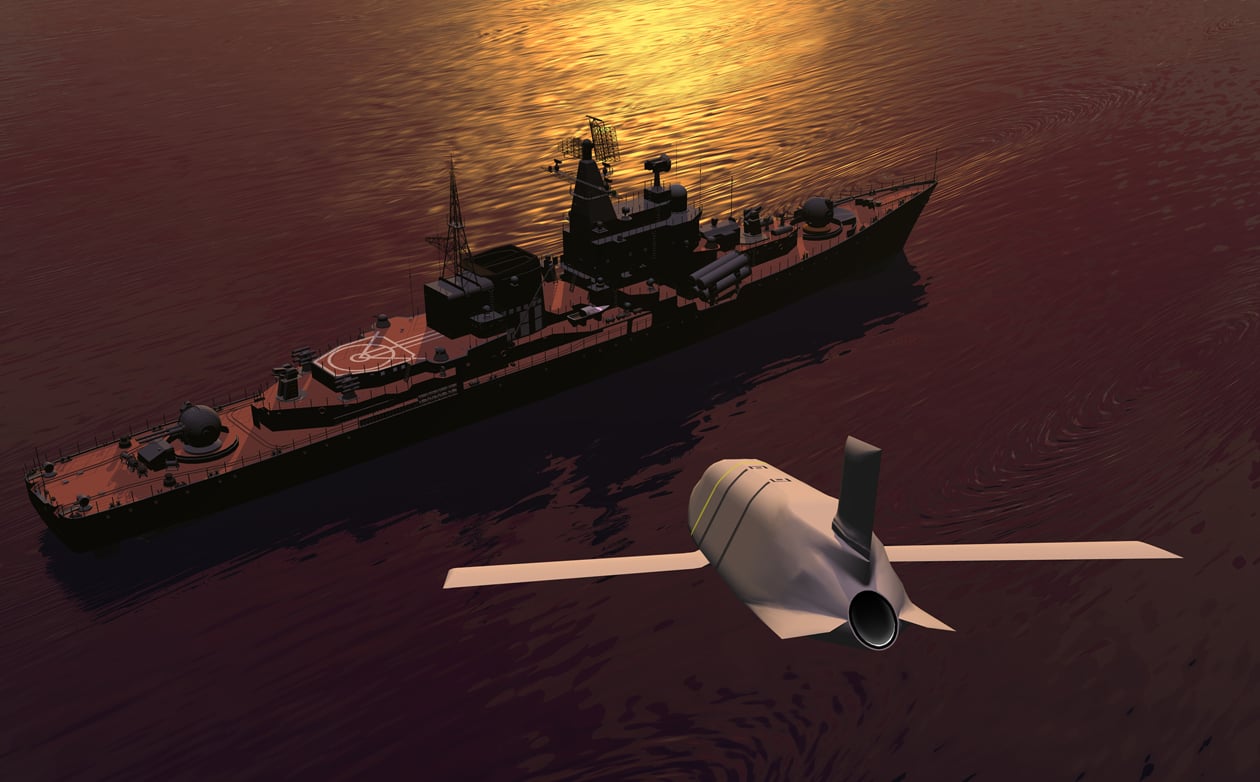
China already possesses the HN-3 cruise missile, a TEL-mounted weapon with a range up to 3,000 kilometers. It is reasonable to assume that China’s engineers (assisted in no small measure by the country’s industrial and cyber intelligence efforts) will by next decade be able to field a TEL-mounted anti-ship cruise missile with many of LRASM’s characteristics and range. Upon detecting a U.S. Navy task force, China could launch many such missiles into a systematic search pattern, which would communicate their findings to other missiles and receive targeting updates from other sensors and Chinese platforms. We can conclude that the Navy’s problems with long range land-based anti-ship missiles are only going to get worse.
LOCAAS, the first dedicated missile-hunter
In the 1990s, after the frustrating Scud Hunt, the U.S. Air Force researched new operational concepts for targeting mobile missiles. One result by the late-1990s was the Low Cost Autonomous Attack System (LOCAAS), a one-meter-long, air-launched, and jet-powered missile that could be programmed to search for and attack specific ground vehicles, such as TELs. LOCAAS was fitted with a laser-radar sensor (LIDAR or LADAR), which is now used on experimental self-driving cars to sense their surroundings, steer, and avoid collisions. LOCAAS used its LIDAR to very precisely discriminate the shape of specific target types such as TELs, with better accuracy than human aircrews. When identified, LOCAAS would dive down and destroy the target. LOCAAS had enough fuel to fly for about 30 minutes and used its LIDAR at very low altitude under a cloud base to search about 60 square kilometers. When mass-produced, a LOCAAS missile would have cost about $75,000, far less than its intended targets.
Unfortunately, the LOCAAS program was shuttered a few years after it began. Anticipating adversary electromagnetic jamming, designers deliberately made LOCAAS an autonomous attack system and thus removed the “man from the loop.” Policymakers apparently got cold feet at the prospect of a lethal drone and terminated the program.
But since then, as we have seen, the mobile missile problem has compounded, with the need to hunt TELs more critical than ever. In addition, top policymakers may have warmed up to the need for autonomous systems, even lethal ones. The U.S. Air Force’s new strategy paper identified autonomy as one the service’s top technology priorities. And in his roll-out of the Defense Innovation Initiative (known to most of us the new Offset Strategy), Secretary of Defense Chuck Hagel listed autonomous systems as a focus of the initiative.
The Air Force’s Miniature Air Launched Decoy (MALD) could be modified to be the “Son of LOCAAS.” MALD, about three meters long and weighing about 300 pounds, is an air-launched, jet-powered drone used to confuse enemy air defense systems by mimicking the flight characteristics and radar signature of friendly aircraft. MALD can cover over 900 kilometers in 45 minutes before exhausting its fuel. The Air Force purchased a recent batch of MALDs for about $322,000 per unit.
Under the new offset strategy, MALD, or a similar micro-jet, could be re-fashioned into a new Miniature Autonomous Search and Strike Missile (MASSM), a much-improved successor to LOCAAS. MASSM would be as stealthy as practical and would feature LIDAR, millimeter wave radar, and an imaging infrared sensor. With soft targets such as missiles on TELs in mind, MASSM would require a very modest warhead, leaving more space and weight for electronics and fuel. Satellite communications capability would enable controllers to redirect MASSMs during their missions and allow the missiles to report their search results.
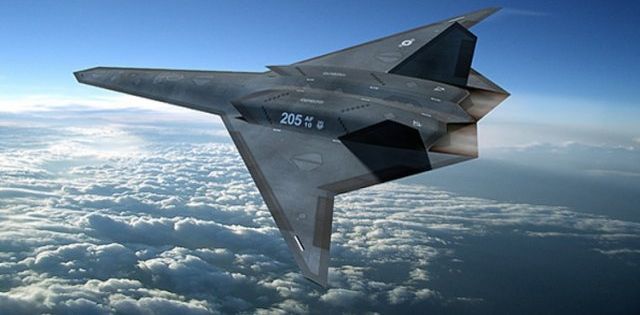
With the addition of radar and infrared sensors, MASSM would be able to search from a much higher altitude than LOCAAS, greatly expanding the sensors’ field of view. MASSM would vary its search altitude as required, and combine data from the sensors to identify preprogrammed targets. With a much wider field of view, greater endurance, and higher speed than LOCAAS, it should be realistic for one MASSM sortie to search 3,000 square kilometers of terrain. Mass production should bring the cost below MALDs $322,000 per unit. DARPA has also proposed a project to recover drones in flight; MASSMs that don’t find suitable targets would be recovered and reused.
Deploying MASSMs to hunt missiles
The Air Force would use aircraft such as the B-2 or future Long Range Strike-Bomber (LRS-B) to deploy MASSM inside an adversary’s defended airspace. The B-2 can carry 80 500-pound Joint Direct Attack Munition bombs, for a total payload of 40,000 pounds. A realistic goal for MASSM would be 100 units per B-2 or LRS-B sortie (MALD weighs 300 pounds, a realistic target weight for MASSM). Deployed by the bomber over adversary territory in order to maximize search capacity, 100 MASSMs from one bomber sortie would be able to search up to 300,000 square kilometers of terrain.
As mentioned above, the U.S. Navy should have an interest in suppressing adversary land-based mobile missile activity if it is to achieve control over sea lines of communication that run near an adversary’s coast. In the case of threats such as the DF-21D or future long range anti-ship cruise missiles, this could mean searching for and suppressing TELs up to 1,500 kilometers inland from the coast. According to the U.S. Air Force, most of China’s TEL-mounted missiles are restricted to roads. However, the DF-21D is mounted on a TEL capable of off-road travel.
Careful analysis of an adversary’s roads and terrain will likely reduce the search problem. For example, narrow roads in heavily urban areas are probably unsuitable for positioning TELs. TELs with off-road capability, such as the DF-21D, certainly complicate the searcher’s task. However, these off-road capable TELs cannot go everywhere. Such heavy transporters will have to avoid swampy ground, thick vegetation, very steep slopes, and other terrain impassible to heavy vehicles with sensitive cargo.
Finally, data from other collection sources, such as imagery satellites and reconnaissance aircraft, can provide further guidance on where and where not the fleet of MASSMs should focus.
In the case of a hypothetical conflict with China, opening a sea line of communication in the East and South China Seas would require suppressing anti-ship missile TELs in a box 1,000 kilometers deep and about 2,000 kilometers wide (or two million square kilometers). With each MASSM-armed bomber sortie capable of searching up to 300,000 square kilometers, no more than seven bomber sorties would be required to search the required area. As mentioned above, identification of roads and terrain unsuitable for TELs would very likely reduce the required search area, perhaps significantly. Under this operational concept, the bombers would deploy hundreds of MASSMs, which would search for TELs, strike those in the open, and suppress the activity of those in hiding. Such suppression, even though temporary, could support other naval and air operations in the region such as the movements of merchant convoys, amphibious ships, and surface action groups in the western Pacific.
Using MASSMs to suppress a potential Iranian mobile missile threat would be a much less taxing “lesser included case.” According to the CIA Factbook, Iran has 198,866 kilometers of road. One bomber sortie with 100 MASSMs could search this entire network for road-mobile TELs. Iran’s land area is 1,531,595 square kilometers, with much of this area impassible to off-road TELs. In the worst case, five bomber sorties with MASSMs could search the entire country for exposed mobile missiles.
MASSM: A Competitive Strategy
More broadly, fielding such a capability, especially when it can be deployed in a relatively stealthy manner, would disrupt the assumptions and operating procedures of adversary missile forces. Their homeland and traditional operating ranges would no longer be sanctuaries. Missile commanders would understand that their forces in the open could come under attack at any moment. Missile forces would have to expend large resources developing additional protective shelters and new tactics for previously routine movements. Adversary leaders would lose confidence in their operational concepts, which would bolster deterrence.
There are undoubtedly numerous technical and engineering issues in this concept that will require further development and refinement. For example, during the 1991 Scud Hunt Iraq successfully employed decoys and hiding spots to frustrate coalition aircraft. Since then, developments such as LIDAR and more precise millimeter wave radar have greatly increased the fidelity of sensors. In addition, the concept described here relies on sensors, missiles, platforms, and other technologies that are in service or, in the case of LRS-B, will be in the medium term. The larger point is that it should soon be realistic to address the problem of adversary missile TELs in an affordable manner.
The concept described here represents a good example of the aspirations the new Offset Strategy is attempting to achieve. It applies U.S. comparative advantages in long range strike, unmanned systems, sensors, and systems integration toward a specific and consequential military challenge. The result is a new operational concept that threatens the large investments several competitors have made in their preferred strategy, namely mobile missiles. The result should be improved deterrence as these competitors lose confidence in their operational concepts and strategies. This is the outcome competitive strategies should seek to achieve.
Postscript: The Next Move In The Chess Match
Successful fielding of the MASSM concept will certainly not be the last move in the chess match between missile hiders and missile finders. One possible move by mobile missile commanders will be to hide and deploy their missiles in standard civilian 40-foot shipping containers, a move already foreshadowed by the provocative arrival in 2010 of the Russian “Club-K” anti-ship missile, a Sizzler anti-ship missile deployed and launched from just such a civilian shipping container. The legality, political consequences, and military effectiveness of hiding and employing long range missiles from under the cover of non-combatant status merits examination in a separate essay. The conclusion for now is that such a potential development should not deter the development of the MASSM concept, which promises to be an effective cost-imposing strategy.
Robert Haddick is a former Marine Corps officer and an independent contractor at U.S. Special Operations Command. He writes here in a personal capacity. His book “Fire on the Water: China, America, and the Future of the Pacific,” is now out from Naval Institute Press.