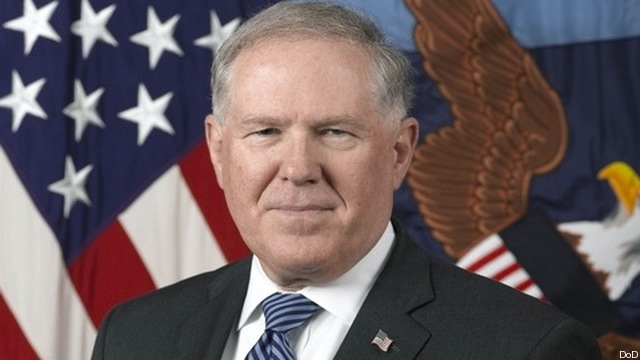
PENTAGON: Sen. John McCain’s push to boost the power of the four service chiefs to manage Pentagon weapons programs is coming at the “worst time” and may well lead to more increased costs and busted schedules, the military’s acquisition chief, Frank Kendall, told Breaking Defense in an interview.
“The thing that bothers me the most about the SASC bill is that it destroys my ability to lead. I’ve been really trying hard to lead from this office for five years. And that act will destroy my ability to lead the department in acquisition because it will move decision making to the services. They will be able to ignore me and it will send a very, very strong message to the departments that I am not in charge anymore,” Kendall told me during the interview in his Pentagon office. He was discussing the sweeping acquisition reforms included in the just-passed Senate Armed Services Committee version of the 2016 National Defense Authorization Act.
- The heads of the four armed services will get increased control over weapons programs and requirements, something outgoing Army Chief of Staff Ray Odierno has pushed hard for. The Office of Secretary of Defense (OSD) — in particular the undersecretary of acquisition, technology and logistics — will lose some power.
- The services will be punished for poor performance and must ensure they know about changes in requirements, cost and schedule. In the event of a Nunn-McCurdy breach, the services will have to pay a 3 precent penalty to a rapid prototyping fund overseen by OSD. Also, oversight of the program would shift to OSD until the program is back on track.
A key reason Kendall worries so much about the timing of the McCain reforms is a study of Pentagon acquisition that has become a key reference point for much of what he does. The Institute of Defense Analyses study by Dave McNicol and Linda Wu found that when the Pentagon budget was tight, big weapons programs had “much higher growth.” Kendall noted that “production cost overruns are three times as high for programs started when money is tight, like it is today, than in flusher budget times.”
“I am particularly concerned now. In fact if you wanted to restore more authority to the services now, this is about the worst time to do it because of that data. Right now the inherent pressure to be optimistic is very strong,” he said, pointing to what he said was a strong penchant by the services to be overly optimistic.
The Army, Navy, Marine Corps and Air Force want to buy as much as possible for as little as possible and they want it as quickly as possible, Kendall says. “I’ve watched this over and over and over. Basically, there is inherent built-in bias and incentives for optimism in the services. It’s driven by a lot of factors,” he said. “Every single undersecretary of defense (for acquisition, technology and logisitics) has had to resist the forces and bias for optimism.”


Scaling AI for Defense Teams Without Increasing Data Risk
AI is expanding the mission data footprint across defense environments, increasing the need for scalable, layered data-at-rest (DAR) protection.

Clearly hoping to avoid a head-on fight with Sen. McCain — which many observers believe Kendall just can’t win — he added that he shares McCain’s concerns about cost and schedule overruns. “We share the goal of getting rid of these most egregious overruns. And a lot of that can be down to good solid planning up front, which is what I’ve been trying to do for the last five years, working with the services, I think with some success. They don’t always like the fact that I am disciplining them in a way to make sure they have sound plans.
“They (service chiefs) would like to have more freedom. but on the other hand I think the results you can expect if that happens — and history bears us out — are going to be exactly what both Senator McCain and I both want to prevent.”
Kendall added that there is, in fact, “a lot in the (SASC) bill we like…. I even agree with the section on giving the chiefs a greater role… involving them more in some of the decisions that we make at milestones, involving them more intimately in making tradeoffs. The place where I hesitate is in areas that are more part of the acquisition professions — contract types, incentive structures, risk reduction programs. I’ve seen a lot of programs that have gotten in trouble because a strong chief leadership — chief or secretary — dictated unrealistic terms to the program.”
The problem is that when a service leader makes a decision, the people who work for him are dedicated to making it happen — no matter what, Kendall argued: “One of the things people in the military departments know how to do is how to salute, and if a chief dictates a schedule they will do their best to meet that schedule. The classic example of this was the Future Combat System, one of our greatest wastes of taxpayer dollars.”
I pointed out that the SASC had included punishment for the services should they botch a program’s management. Wouldn’t that help keep them in line?
Kendall, who grew quite emotional about the proposed acquisition changes at one point, doubted that the proposed “punishment” for poor performance would work well.
“I don’t think a 3 percent penalty of the overrun, that is going to occur years after the decision to launch the program, is going to be an effective deterrent to optimistic planning. I also think there is a problem philosophically with that approach,” he said. “The problem is that if you increase the penalty then you’re hurting the service, and then, really, you’re hurting the country because the country presumably needs the equipment that the service wants. I’d love to have a conversation with Senator McCain about this. We haven’t had a chance to talk about these things. It would be very helpful if we could do that (Ed. emphasis added).”
Kendall added that he shares McCain’s “concerns about cost and schedule overruns” and works hard to “manage defense acquisition from the perspective of understanding the data and the causes and then attacking them. I think we’ve had some successes with that, and it’s really the first time this approach has been tried over the period of time needed to see results.”
Kendall pointed to the military’s largest program, the F-35 Joint Strike Fighter, as an example where managing by data and maintaining pressure from the heights of the Pentagon has led to results: “I think we’ve got the F-35 under control and it’s a little frustrating to hear the press reports on that because we’ve been bringing the production costs down for five years now. We’ve also beaten the CAPE predictions every year since 2011.”
One of McCain’s recurring themes is that he wants people to be held accountable for program gaffes and doesn’t see it happening. He often uses the example of the USS Gerald R. Ford aircraft carrier’s cost overruns. McCain recently asked Chief of Naval Operations Adm. Jonathan Greenert who was responsible for the ship’s $2.4 billion in overruns and the CNO had no answer. McCain wants that to change. So I asked Kendall how he ensures accountability and how he would define it.
“You start with the person who made the decision to award the development contract, the person who made the decision at Milestone B, That’s the point at which you are making the corporate decision that you are going to buy this product. Up to then you can get out of the game relatively easily,” Kendall said, noting that he signs every Acquisition Decision Memorandum (ADM) and includes the names of Service Acquisition Executives, Program Executive Officers and Program Managers as well. He said program leaders have been removed from their jobs for cause under his leadership, but it’s not simple. “The problem you have with holding people accountable is that usually it’s at least three years or more from that point Milestone B until the program is in a ditch and you understand that a mistake was made,” Kendall noted. “In our normal churn of leadership almost everybody rotates in that time frame.”
But, “at the end of the day, the buck stops with the undersec” — also known as Kendall. But that is also complex. “I don’t run programs here. I think that’s a misconception… what I do is closer to what a corporate-level executive would do when there are a number of large business units, all of which are making investments for the corporation,” he said, “I review and approve these decisions. Services define requirements, lay out a plan, and then every few years they get corporate approval from me to go ahead with the commitment of large investments.”
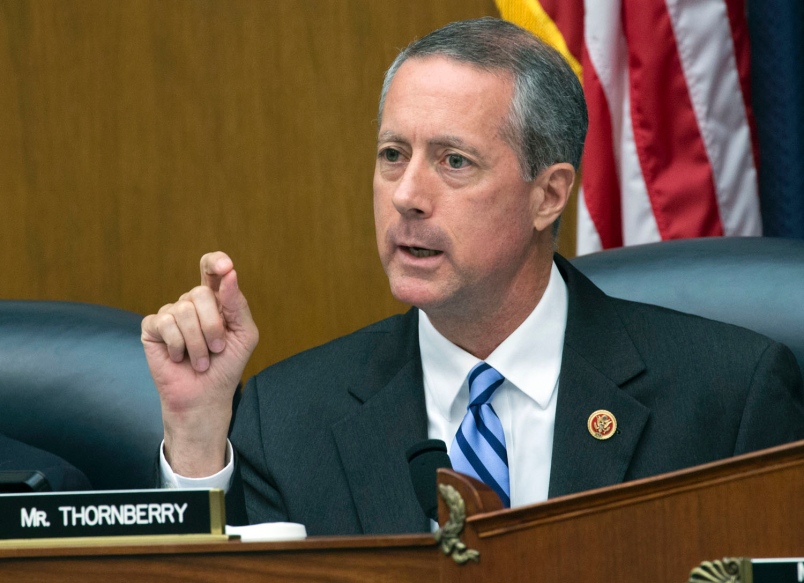
So, when you boil all of this down, we’ve got a deeply committed — even passionate — head of Pentagon acquisition who believes with all his heart and mind that Sen. John McCain’s efforts to boost the acquisition powers of the services will actually lead to higher costs and more schedules overruns as the big defense drawdown begins. On the other side, you’ve got a deeply committed and passionate McCain who believes the opposite. And you’ve got the four service chiefs who are likely to support McCain’s position. Add House Armed Services Committee Chairman Rep. Mac Thornberry, whose acquisition reforms were much less sweeping than McCain’s, and we’ve got an acquisition passion play. It’s a complex play, peopled by data, history, politics, bureaucratic imperatives, the needs of the military, the rights of the taxpayer and personal legacies. We’re honored Secretary Kendall chose us to help illuminate the stage.