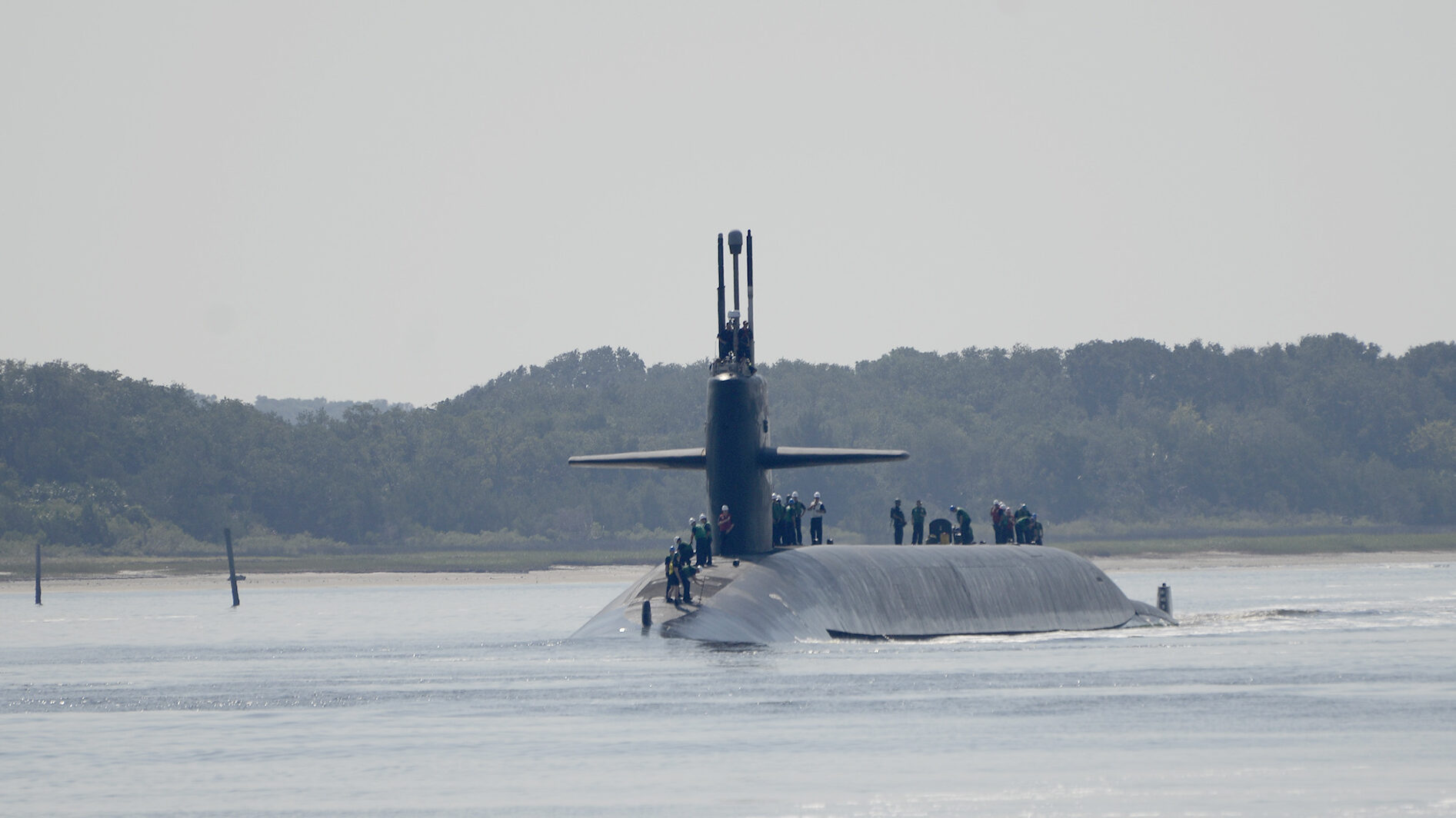
WASHINGTON — A project to upgrade government facilities designed to manage the spent fuel from nuclear-powered US Navy warships is more than $2 billion over budget and three years behind schedule, according to a new report from independent government auditors.
The project, known as the Spent Fuel Handling Recapitalization Project (SFHP), will be upgrading facilities at the Idaho National Laboratory. Naval Reactors, a joint Navy and Department of Energy office led by a four-star Navy admiral who oversees and advances the fleet’s nuclear propulsion technologies, has long used the site to prepare for the disposal of spent fuel — hazardous leftover materials generated by nuclear-power warships.
At the direction of lawmakers, the Government Accountability Office assessed Naval Reactors’ ongoing plans for the recapitalization and found the project has significantly overrun its original cost estimate of $1.69 billion and scheduled completion in the third quarter of 2025.
“Since [September 2018], Naval Reactors has experienced challenges in executing the project, including rising costs for construction services and some construction work not meeting Naval Reactors nuclear facility quality assurance requirements. As a result, Naval Reactors has revised the cost and schedule baseline estimates for the facility several times,” according to the report.
The latest figures — totaling $3 billion and a completion date in 2028 — were produced in 2022, according to GAO, and Naval Reactors was working through developing an updated baseline as of August 2024. A Navy spokesperson did not immediately respond to a request for comment from Breaking Defense.
In a written response to GAO’s audit, Jill Hruby, the undersecretary of energy for nuclear security, acknowledged the project’s cost overruns and schedule delays.


Voyager is accelerating access to space
After manifesting 1,400 payloads aboard the ISS, Voyager is applying its mission management expertise to the next generation of space stations, ensuring uninterrupted mission readiness and success from the ground to space.
“While factors such as the COVID-19 pandemic, volatile market conditions, and poor construction subcontractor performance have contributed significantly to these challenges, improvements in management of SFHP are required to meet the high standards of the Naval Nuclear Propulsion Program,” she wrote.
GAO recommended Naval Reactors follows best practices for credible cost estimates; obtains an “independent and objective analysis” of the root causes for the problems to date; and updates its implementation such that any future cost breaches will automatically trigger root cause analyses. Naval Reactors agreed with all of GAO’s recommendations.