ARLINGTON: As if Syria and sequestration weren’t complicated enough on their own, the combat training cutbacks required by the sequester are cutting into the military’s readiness to intervene, the Air Force Chief of Staff, Gen. Mark Welsh, told reporters this morning. Army Chief of Staff Gen. Ray Odierno has expressed similar concerns about his service’s… Keep reading →
A-10

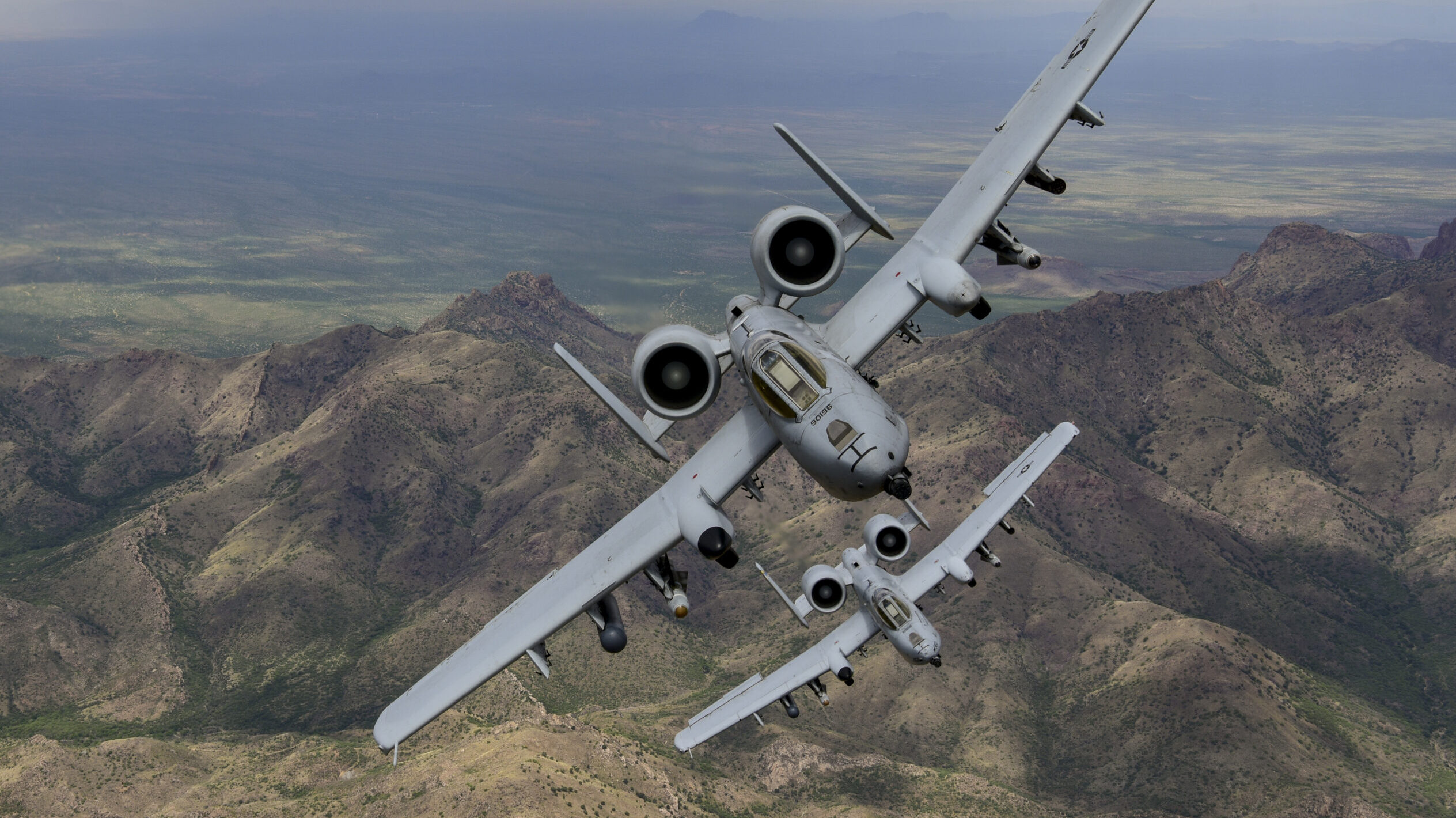
Sitting in the cockpit of her A-10 Warthog somewhere over Florida’s Eglin Air Force Base on Jan. 10, Maj. Olivia Elliott flipped a switch. In an instant her blunt, twin-engine warplane with the 30-millimeter cannon in the nose was transformed. No longer just the Air Force’s most heavily-armed attack jet, now the A-10 was also a flying wireless router, providing Internet connectivity to anyone in range — and with the right password.
The final test of the Network-Tactical, or Net-T, upgrade to the Northrop Grumman LITENING and Lockheed Martin Sniper targeting pods, carried by A-10s and other warplanes, is the latest in a long chain of communications breakthroughs by the U.S. military and the defense industry. Keep reading →

The Air Force provides the essential capabilities that make America’s joint operations possible and has been involved in nearly every military operation overseas since 1991. As the Pentagon delves into the details of the 2014 budget, getting the Air Force budget right is critical to ensure that the nation can count on its indispensable role in a time of shrinking resources.
Our adherence to the idea of a joint force has led to a roughly equal cut of spending among the services. This is not the optimum allocation of scarce resources in coming years if our national strategy is to maintain global presence and communications, as well as to fight cost-effectively and be capable of defeating modernized militaries. Keep reading →
While the active-duty Air Force and the National Guard are at odds over budget cuts in Washington, the relationship seems smoother at Florida’s Eglin Air Force Base, where an Air National Guard officer assigned the an active-duty 33rd Fighter Wing became the first Guard pilot to fly the F-35 Joint Strike Fighter, the controversial product of the Pentagon’s biggest procurement program. Keep reading →
There’s a lot going on in the U.S. Air Force, but for the Senators at this morning’s Appropriations subcommittee hearing on the USAF budget, just one mattered: How budget cuts would impact their home states. While such parochialism is as shocking as gambling in Casablanca, it raises a red flag for the full-scale Base Realignment And Closure round the Pentagon has requested. The Defense Department is already considering recommendations from the bipartisan Council of Governors to roll back some of the changes. If politicians are this unhappy about the relatively small cutbacks to bases and reshufflings of squadrons in this year’s budget request, how receptive are they going to be to BRAC? Keep reading →

ORLANDO: He didn’t use the word sequestration — perhaps because the Air Force is still trying to explain the C-27′s “divestiture” — but Gen. Norton Schwartz told the Air Force Association’s winter conference today that “we fully expect we will be making further tough [budget] calls.”
It wasn’t completely clear whether Schwartz was referring to sequestration — it didn’t sound like it — but it was clear he was signaling to his mixed audience of airmen, industry types and Air Force supporters that while the service is well served by the administration’s new strategy and the tilt to the Pacific and Middle East that doesn’t mean the fiscal pain is over. Keep reading →
Precision Munitions Lessen Need for Close Air Support Plane: Schwartz Answers the A-10 Question
By Colin Clark
PENTAGON: One of the longest-running debates between the Air Force and the Army centers on close air support. Historically, the Air Force hates supplying CAS and doesn’t like buying or maintaining the planes that do it. But the white scarf boys wouldn’t let the Army do the job either, since it involved fixed-wing aircraft and shooting and that’s what the Air Force does.
So when the Air Force announced it was scrapping a large chunk of the current A-10 Warthog fleet and the pilots who go with it — five squadrons worth — the Pentagon’s back channels quickly filled with disgusted comments about how “there goes the Air Force again.” Every time they need to cut money from the budget the first thing they do is cut the A-10s, which have provided superb close air support ever since they started flying in the mid-70s, critics said. Two things make the A-10 especially fine at CAS: its amazing 30mmm cannon which can destroy a tank with ease; and the titanium bucket within which the pilot sits. The armored aircraft provides pilots with great protection, allowing them to be almost cavalier as they operate in dangerously kinetic environments. Keep reading →
The U.S. military faces a readiness crisis.
A recent Congressional hearing generated headlines about the Navy’s surface fleet falling into disrepair. But that was news four years ago. Across all the services, long-standing readiness problems are worsening; breakdowns are happening more frequently. Keep reading →

Colin Clark
Sydney J. Freedberg, Jr.
Air Force Cuts Mean Service Is ‘Slowly Going Out of Business’
By Mackenzie EaglenA year has passed since Congress passed and President Obama signed into law the Budget Control Act-the legislation mandating sequestration. Funding cuts that once seemed politically remote now loom large for leaders increasingly anxious about the impact $1.2 trillion in automatic budget reductions will have upon their respective districts and states. An estimated two million jobs at risk is a possibility no lawmaker can ignore.
Sequestration threatens the country’s ability to allow those in uniform to do their jobs. To understand what it means in real terms, look at the Air Force. Over the past decade, the service has been hit with numerous cuts and now the 2013 budget risks pushing airmen over the brink. There comes a point when people simply cannot do more with less. Unless Congress passes a sustainable and viable alternative to the Budget Control Act, challenges arising in the Air Force will be mirrored throughout the Army, Navy and Marine Corps — curtailing the number of key policy options upon which our nation’s leaders depend. Keep reading →