
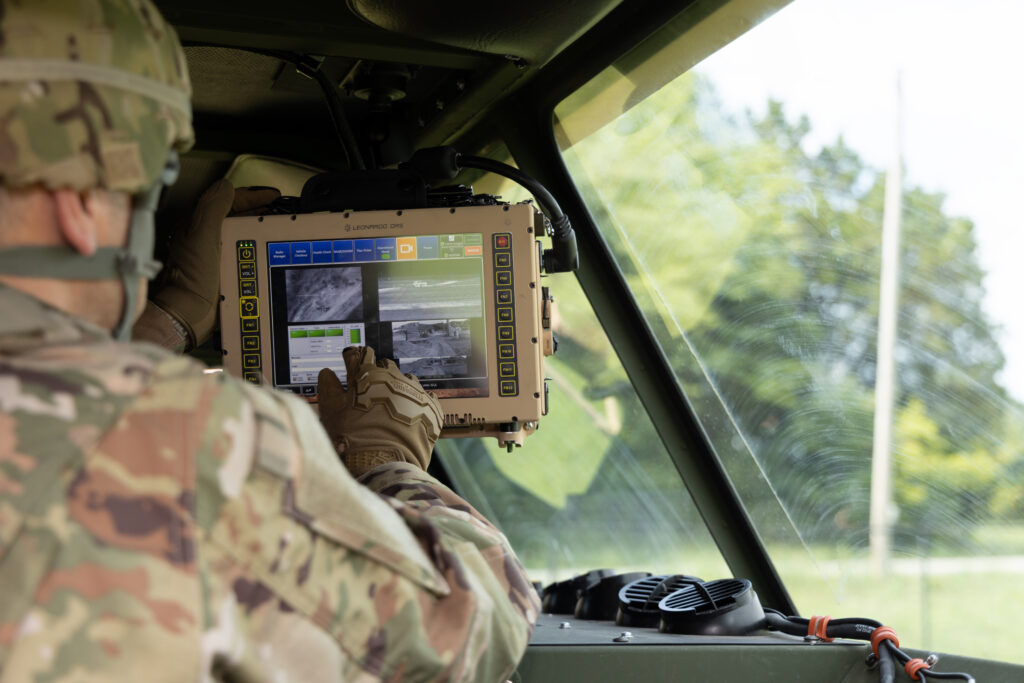
With European defense budgets surging and drone warfare reshaping the front lines, Breaking Defense talked with Bill Guyan, Senior Vice President, Business Development and President, International Business, Leonardo DRS, about why the next decisive edge in warfare won’t necessarily come from more missiles. It will come from better data, smarter sensors and radar, and artificial intelligence (AI) pushed forward.
Breaking Defense: European defense investment seems to be at an inflection point. Where is the money going, and why now?
Guyan: The European investment in defense has been just at or below the two percent NATO spending requirement for many years. This is a situation that’s been highlighted by the administration, and through a combination of the administration’s pressure and attention, and also because of the change in the threat environment, we’re seeing dramatic spending increases and modernization of forces across Europe.
While it appears that the US Army may end up being the bill-payer for some other areas of Department of War modernization like Golden Dome or shipbuilding and aircraft, there are some Land areas that we’re seeing growth – like, for example, air and missile defense, counter-UAS, and next-generation command and control. In Europe, the deferred modernization and the small size of the armed forces have left many feeling vulnerable and so they’re building up their capabilities.
In some cases, there’s a long flash-to-bang time to make that happen because the industrial capacity of many European nations isn’t sufficient to feed the enlarged budgets which are coming their way. In addition to having not enough weapons or not enough systems, they find themselves with systems that maybe haven’t been appropriately modernized.
Let’s get into specific capabilities. How has battle management evolved, and what do European customers need from it today?
With the advent of GPS, forces were able to not only know where they were, but share where they were with their own forces. As time has moved on and communication systems have improved, these force-tracking systems, if you will, became messaging systems also – becoming important methods for commanders to pass information starting with brief text messaging, moving to higher-end and more inclusive messages, graphics, graphic overlays, orders.
Battle Management System capabilities used to be a real differentiator. Now they’ve become table stakes for modern armies. As you think about the revolution in warfare we’re seeing in Europe with the introduction of robotic and unmanned systems, the ability to have the command and control that battle management systems provide is even more imperative.
One of the things about the rapid spread of unmanned aerial systems, Class 1 drones, is that there are more of them than can be handled by traditional integrated air-and-missile-defense systems. In fact, they’re a threat for every soldier in every vehicle.
A battle management system allows you to pass the information about the incoming threat from the sensors to the rest of the forces. Battle management systems allow for the buildup, maintenance, and sharing of a common operational picture, a COP. That COP is more necessary than ever before given the threats posed by unmanned systems.
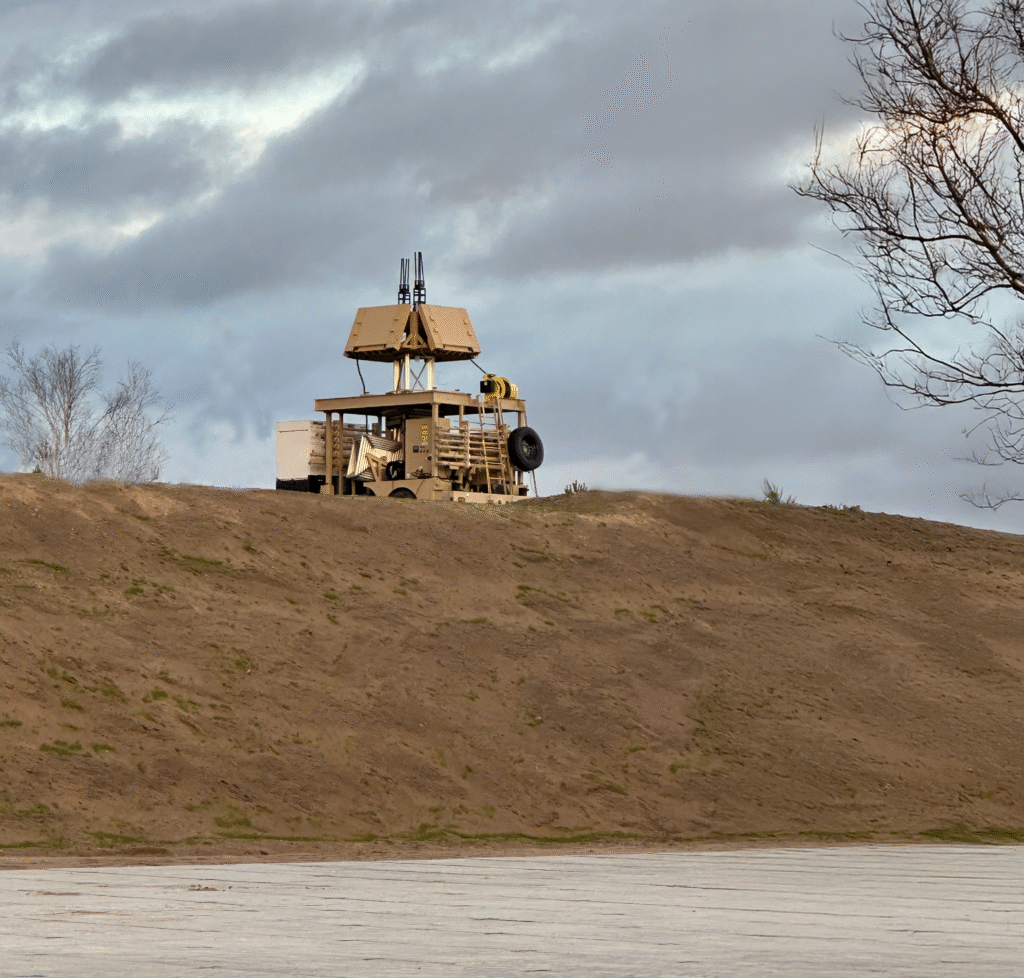
How should Europeans approach building out their counter-UAS architecture?
Everybody’s come to the conclusion that there’s no one-size-fits-all or single solution that will address the threat as they are so varied in their capabilities, whether it’s the speed or altitude they fly or the weapons that they possess. There’s no single detection or defeat mechanism that can cover all of the threats.
So there are multiple types of detection and defeat mechanisms that have to be employed and they have to be employed in an integrated way, in an overlapping way, so that they can reinforce one another, they can identify and hand off targets, and nothing can slip through. Because the enemy is going to identify and try to defeat high value, exquisite sensors and defeat mechanisms, there have to be layers to this defense so that there’s built-in resilience.
In addition to high-end systems which give a wide-view picture and can detect many of the threats that are out there, lower cost smaller systems that are mounted on vehicles, mobile systems and transportable systems that can add to the common operating picture are needed for increased resilience and protection. That becomes a mosaic of different slices of what’s happening in the battlefield all assembled together into a common operating picture that gives the best information to the commander.
The threat is very different than it used to be. The threat was fast movers, the threat was helicopters, the threat was missiles. Now the threat is a very complicated picture because all of those threats still remain, and all of the things we used to use to defend and defeat those threats, they’re still required. But there are now threats that cost hundreds of dollars and can travel hundreds of miles an hour and can be as deadly as the most advanced systems if they find their mark.
We’ve seen how our fixed billion-dollar air-and-missile-defense radars were destroyed by Iran using cheap drones. What’s the case for a mesh of lower-cost less-vulnerable radars rather than relying solely on exquisite systems?
For many years, integrated air-and-missile-defense was a capability that a few countries enjoyed because it was expensive. It was exquisite. It was hard and expensive to track missiles and defeat missiles. Because they were expensive, there weren’t a lot of them.
The problem that we’ve seen in wars in Ukraine, Israel, and Iran is that the enemy knows where these exquisite, fixed-site, expensive sensors are and they prioritize them and take them out successfully and early on. There needs to be resiliency in the ability to detect the incoming threats after that.
What we’ve found in the case of, again, Ukraine and in Israel, is that a networked assembly of lower-cost, small, mobile, transportable radars can work to act as gap filler where exquisite capabilities have been removed or they don’t provide coverage. In extremis, when those systems don’t exist at all, these mobile, lower-cost radars can be networked together to still provide a helpful, accurate, meaningful, common operating picture.
Leonardo DRS is proud to have played important roles in providing those mobile, transportable counter-UAS radar systems. They’re working in networked constellations in Israel and in Ukraine, and they’re saving lives. The quantity of those radars provides a quality unto itself because it provides built-in resiliency. When they’re networked together, they can, again, provide this mosaic picture.
Let’s conclude with AI. There’s a lot of work happening at the headquarters and cloud level, but you’ve argued for pushing AI down to the platform level. Explain.
The US Army is aggressively experimenting with how to take advantage of and enable AI with what they’re doing in their Next Generation C2, or NGC2, exercises at the 4th ID and the 25th ID. They’re demonstrating that they can enable the use of AI on the battlefield and that it can provide real advantage to commanders.
[Those experiments are] linking the problem of how to get AI on the battlefield, how to set up the data management layer, and how to transfer data across different systems in order to identify a target with one system and engage it with another system across different domains, across different forces. Those are big problems to solve and they’re actively working to solve those problems.
One of the challenges with the current ability to use AI is that the AI depends upon networks which are not interrupted. It depends on the ability to transfer large amounts of data to a cloud where the data is processed and information gets provided back out from the cloud – again, over a network which is not being disrupted. We all know that the enemy is going to do everything they can to disrupt the network, and they know that Western forces are network-dependent, network-reliant. We’re seeing the ability of, for example, the Russians to disrupt networks in Ukraine.
What we believe is that by moving tactical computing that is AI-enabled to the edge – in other words, putting it inside of the tanks, the infantry fighting vehicles, the unmanned platforms – you can start to enable AI-based operations at the very edge because the AI processor that’s embedded in the vehicle will be able to integrate all of the sensor data the vehicle is bringing in. In a modern vehicle, you have night-vision sensors that are being used by the driver, the gunner, and the commander to identify targets. You have radar on the vehicle for the detection of incoming threats in an active protection system. All of these sensors combined with GPS data can get pulled into an AI-enabled computer to help the commander make better sense of what is going on on the battlefield.
One of the things that AI can do is synthesize that data, analyze the data, and provide alerts and alarms. It can start to do some automated things like identify targets, prioritize targets, move the gun in the direction of an incoming threat to gain a little bit of time advantage. This will provide combat advantage at the edge. Leonardo DRS has developed an open architecture software that integrates platform sensor data and enables AI at the edge, called SAGEcore™.
When the network is up and running, that AI processor in the vehicle will sort the data that it has and decide what data is suitable for sending back to the cloud so that vehicle can become a sensor in this larger network. When that network is broken and can’t be trusted because it’s being disrupted, the commander can have sufficient data resident on the vehicle to allow them to make better decisions about targeting and about real difficult problems like fire control and distribution.
When you have four tanks looking at enemy forces coming toward them, how do you prevent two tanks from shooting the same enemy vehicle? With computing happening locally on the vehicle and with some level of communications between the vehicles that could share information, you could prevent that type of double engagement on the same vehicle, which will allow ammunition to go further.
AI-enabled edge computing will reduce cognitive burden for commanders and will support faster and better decision making, allowing military forces to truly own the edge of the battlefield.
To learn more about the Leonardo DRS capabilities on display at Eurosatory, visit Hall 5A, Stand B320.