NATO

WASHINGTON: Tomorrow morning, overshadowed by sequestration, the House Armed Services Committee will hold a rare full-committee hearing on a topic that would normally be high-profile, even explosive: whether to give the Defense Department, and especially its elite special operators, broader legal authority to work with foreign forces worldwide, from Colombia to Mali to the Philippines.

To implement the administration’s January 2012 strategy, with its emphasis on supporting foreign partners rather than committing large numbers of US troops, “we need to overhaul our authorities to provide assistance to other security forces,” HASC vice-chairman Mac Thornberry told Breaking Defense. And despite the bitter partisan divisions on most other issues, he said, “there is interest — equal interest — on both sides to examine existing authorities and see how they can be improved.” Keep reading →

As the civil war in Syria escalates and threatens to overspill its borders, the US has held its hand from intervening — but not from reinforcing its frontline ally Turkey. We bring you this op-ed in praise of the Patriot missile’s role in Mideast Peace from former Rep. Geoff Davis, a former Army officer. Mr. Davis has no business connection to Patriot manufacturer Raytheon or to other companies working on the system, which is currently a contender for Turkey’s own missile defense program.

The news that the United States will send two Patriot missile batteries and 400 troops to Turkey to bolster defenses against incoming artillery from the escalating civil war in neighboring Syria is a testament both to our commitment to our allies and to our military’s readiness to deploy. It is also a testament to the success of Patriot as a proven missile system to deter attacks. Keep reading →

WASHINGTON: You think US defense spending is a mess? At least we’re not Europe.

A study out Tuesday from the Center for Strategic and International Studies warned that a decade of shrinking forces and funding is likely to continue, threatening a European defense industrial base already burdened by inefficiencies, national rivalries, and governmental tendencies to treat defense spending as “a jobs program.” Keep reading →

Despite international perceptions that the Turkey’s Islamic-oriented government has turned its back on its American ally, Ankara’s ambassador to the United States insists that “the relationship has never been so close.”

“That doesn’t mean that we don’t have any disagreements,” Ambassador Namik Tan told reporters this morning. “Turkey is, of course, an independent state.” But Tan affirmed the closeness between the two countries. He particularly emphasized defense procurement, saying that Turkey is still committed to buying the F-35 Joint Strike Fighter despite cost and schedule problems that have caused other potential partners, such as Canada, to reconsider. Keep reading →

HEADQUARTERS, ALLIED COMMAND TRANSFORMATION, NORFOLK, VIRGINIA: A new era is dawning for NATO — though no one knows quite what it means. Now Allied Command Transformation, the only NATO organization headquartered on US soil, is driving an overhaul of how the alliance trains, strategizes, and shares the burden among its increasingly cash-strapped members in a post-Afghanistan, post-”Pacific pivot” world.

That’s a tough task when NATO must make do with what its 28 member nations choose to contribute, each on its own terms. In Afghanistan, some NATO contingents have fought hard — France has lost 86 troops, Canada 158, Britain 438 — but others have been largely kept out of combat by “caveats” imposed by their home countries. In Libya, a European-led operation helped oust Muammar Gaddafi but struggled with intelligence-sharing and shortages of smart bombs. And back in Europe, the alliance has struggled since 2003 to stand up a 13,000-strong crisis-response unit called the NATO Response Force, NRF. Keep reading →


Anyone who has spent much time around either submarines or the Bahamas is likely to have heard of something called AUTEC. Not many people know much about it since it involves submarines and testing to ensure the subs and their weapons work well. AUTEC’s main base is on Andros Island, a short flight from Nassau. A key part of AUTEC is its North Atlantic Treaty Organization (NATO) Naval Forces Sensor and Weapons Accuracy Check Sites (FORACS), known as NFA. AUTEC was picked for its access to the Tongue of the Ocean, a remarkable site protected from the open Atlantic so ambient noise is at a minimum. Here’s the surprisingly readable and detailed entry on it from Wikipedia:

“Chosen because of its ideal natural characteristics, and its climate which permits year-round operations, the TOTO is a U-shaped, relatively flat-bottomed trench approximately 20 miles (32 km) wide by 150 miles (240 km) long with a depth which varies gradually from 3,600 feet (1,100 m) in the south to 6,600 feet (2,000 m) in the north. Its only exposure to the open ocean is at the northern end, and except for this ocean opening, the TOTO is surrounded by numerous islands, reefs, and shoals which make a peripheral shelter isolating it from ocean disturbances, particularly high ambient noise which degrades undersea tests and evaluations.” Keep reading →


NATIONAL HARBOR: Last year’s Libya campaign revealed painful shortfalls in NATO, including intelligence sharing so molasses-slow that French pilots gave up on waiting for target data from US Predator drones. That’s something the allies are anxious to correct.

“In Libya we got away with it. We made do, we had work-arounds, [but] we were not fighting a sophisticated enemy,” Air Marshal Andy Pulford, the Royal Air Force’s deputy commander for capability, said at the (US) Air Force Association conference here. The next adversary might more effective than Muammar Qaddafi — not a very high bar. Especially, if that enemy is a single nation-state, “they will not have the baggage, the drag, of coalition and interoperability [concerns],” Pulford warned, “and they very quickly will overcome us if we are struggling to get information out.” Keep reading →

UPDATED: Friday Sept. 14, 6:52 p.m.. Keep reading →

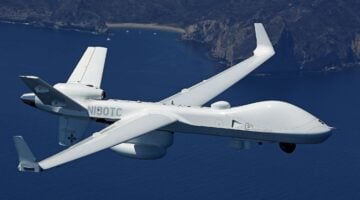
LAS VEGAS: As US defense spending ramps down, both the military and the aerospace industry want to sell more drones to friends and allies overseas. Right now, however, export controls and arms control treaties make that awfully hard.

“The foreign sales aspect of these RPAs [remotely piloted aircraft] is potentially huge,” Maj. Gen. James Poss, who heads policy making on intelligence, surveillance, and reconnaissance for the Air Force staff, said Wednesday at the Association for Unmanned Vehicle Systems International (AUVSI) conference (click here for full coverage). A less restrictive export policy for unmanned aircraft is “in the national interest of the United States,” Poss continued. “It’s something we’re aggressively working with both the OSD [Office of the Secretary of Defense] policy folks and the State Department.” Keep reading →


Anyone who has served in the military knows there is plenty of fat to be cut in the Pentagon budget. But rather than take a “meat ax” to the budget — as Defense Secretary Panetta famously described sequestration — there are more targeted ways to reduce and reform defense spending.

Whether it’s procedural inefficiencies, duplicative programs, cost overruns, or endemic waste, there are billions upon billions of Pentagon dollars that could be eliminated without undermining the Defense Department’s ability to execute its Constitutional mandate-to “provide for the common defense.” Keep reading →

Page 1 of 41234