
X-47B Takes Off from USS Bush in May.
[Updated Thursday with details on third, aborted landing attempt] Two out of three ain’t bad, if you’re trying something no one’s ever done before.
Landing on the narrow, pitching deck of a Navy aircraft carrier is one of the hardest things a human being can do. Today, for the first time in history, a robot did it — twice.
After all the VIPs and reporters had been hustled off the USS George H.W. Bush, however, a third attempt had to be aborted when the experimental X-47B‘s electronic brain “self-detected a navigation computer anomaly,” a Navy spokesman emailed reporters this evening at 7:30. The drone diverted to a landing field ashore without further incident.
[Updated Thursday: In fact, not only did the drone detect the problem itself, it made its own decision to break off the landing, Navy officials told reporters in an after-action review the next day.
“It was on final approach,” said Rear Adm. Mathias Winter, the one-star admiral who oversees all Navy drone programs. “[It was] about four miles aft of the ship, the [tail] hook was down, the [landing] gear was down, and as it’s supposed to do, it continues to check the health and status of all its subsystems.”
Specifically, the X-47B has three navigation computers that constantly cross-check each others’ results: “When you’re flying that close to personnel and other aircraft, you just have to be sure,” said the Navy’s X-47 program manager, Capt. Jaime Engdahl. But, he said, “about two minutes prior to landing,” one of the three computers came up with a result the other two disagreed with.

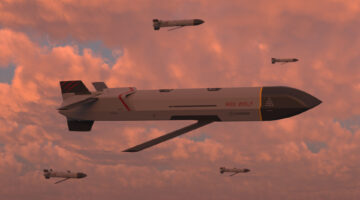
Defeating modern threats with capable, affordable munitions
L3Harris’ launched effects portfolio comes from a pedigree of proven capabilities and decades of experience.
That discrepancy was enough for the drone to decide — on its own and without human intervention — that it should “wave off,” to use the Navy term for breaking off a landing attempt. So the X-47B flew past the carrier instead of touching down and reported the problem to its human controllers, who told it to execute the better-safe-than-sorry back-up plan and return to shore.