WASHINGTON: Two months after the Pentagon announced a surprise plan to move 12,000 troops and an air wing out of Germany, significant questions remain about the strategy, timeline, cost and feasibility of the proposed redeployment.
“We are in the planning stages at this point,” Gen. Jeffrey Harrigian, commander, Air Forces Europe/Africa told reporters on a video call today. The general wouldn’t offer a timeline on the planning or execution of the presidential order, although he did offer an outline of the many challenges that remain.
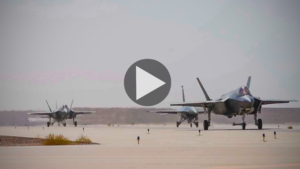
Early plans suggest the 480th Fighter Squadron could move to Aviano Air Base from Spangdahlem Air Base in Germany, taking its F-16CJ/DJ Vipers and hundreds of airmen along.
“We’ve got a fair amount of work in front of us to understand the necessary details required to move everything, from the jets [and] all the other equipment associated with that, ensuring that from an infrastructure perspective, we’ve got the requisite facilities located down at Aviano to be able to handle that. And so we’re going to be deliberate about this.”
The uncertainty this far out from the original announcement reflects how quickly things move under the Trump administration, and the importance of behind the scenes legwork and detailed planning compared to simple public pronouncements.
The announcement of the move came in July, when Defense Secretary Mark Esper described the move as a long-overdue strategic realignment on the continent.

Europe’s military advantage depends on sovereign command of the ground truth
As NATO and European governments accelerate investment in space-based intelligence, decision advantage will depend on how quickly sovereign and commercial capabilities can be fused into a trusted operational picture.
Within an hour of Esper’s press conference however, Trump vented his anger over German defense spending, insisting his frustrations with Berlin were the true reason for the move. “We don’t want to be the suckers anymore,” the president said at the White House. “So we’re reducing the force because they’re not paying their bills. It’s very simple, they’re delinquent.”
Moving the fighter wing to Italy would likely require infrastructure improvements at Aviano to house the new planes and airmen and their families, along with a new agreement with the Italian government.
Harrigian insisted that whenever those issues are ironed out, and if the air wing does move, he doesn’t see any change in operations in Europe. But the logistics and diplomacy are “all part of the analysis that we’re working through right now. “As we work through this we want to make sure that we’ve got the appropriate facts understood, we want to make sure that we remain closely aligned with our host nation partners, keep them informed, remain transparent about all this and acknowledge the fact that this is going to take some time.”
That’s a message the Pentagon has been sending since the day the plans were announced.
After Esper suggested the movement could cost “single digit billions,” Vice Chairman of the Joint Chiefs, Gen. John Hyten, quickly walked that back: “Those are rough estimates.” Hyten made clear that the department wasn’t far enough along to put a price tag on the proposed movies. “What we have right now is really a concept..We now have to turn it into plans. As you turn into plans, we have a very structured process involving the Joint Staff, the office of the secretary, and the combatant commands and the services, to make sure we understand what those are, then we’ll lay in the costs.”
It’s unclear what would happen to the plans should Joe Biden win the presidency in November and install his own team at the Pentagon, though allies are reportedly hopeful Biden will roll back much of the rhetoric and some of the actions emanating from the Trump Administration.
The Obama administration originally removed two of the four army brigades long stationed in Europe, though it began reversing that drawdown after Russian invaded Ukraine in 2014, pushing US troops into the Baltics and Eastern Europe though a series of rotational deployments.
In an interview with Stars & Stripes earlier this month, the former vice president said he would rush to reassure NATO allies shaken by Trump’s bluster. “They’re worried as hell about our failure to confront Russia diplomatically or other ways, and worried about ‘America First’ meaning ‘America Alone,’” Biden said.
“First thing I’m going to have to do, and I’m not joking: if elected I’m going to have to get on the phone with the heads of state and say, America’s back; you can count on us.”
Breaking Defense Video