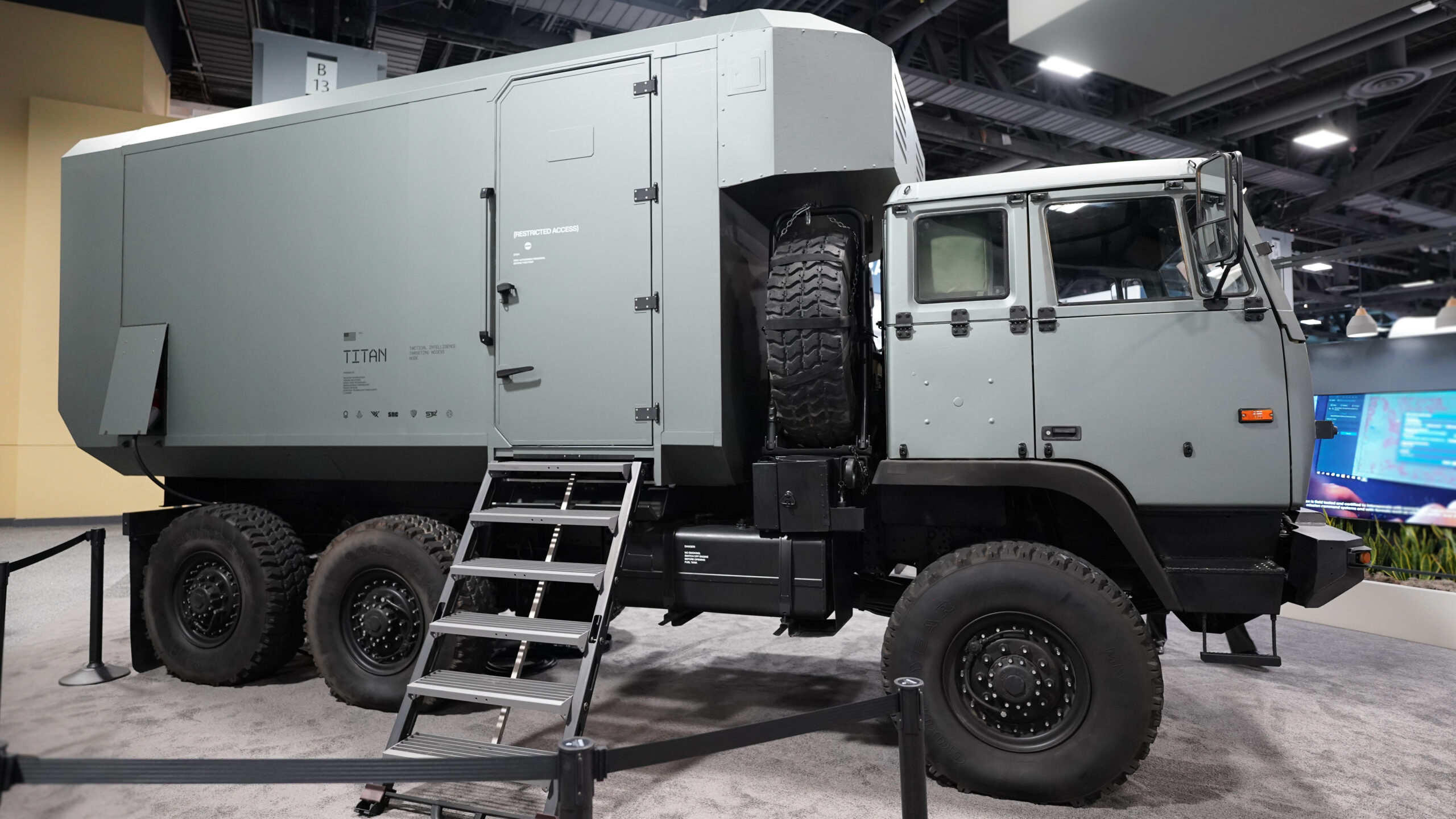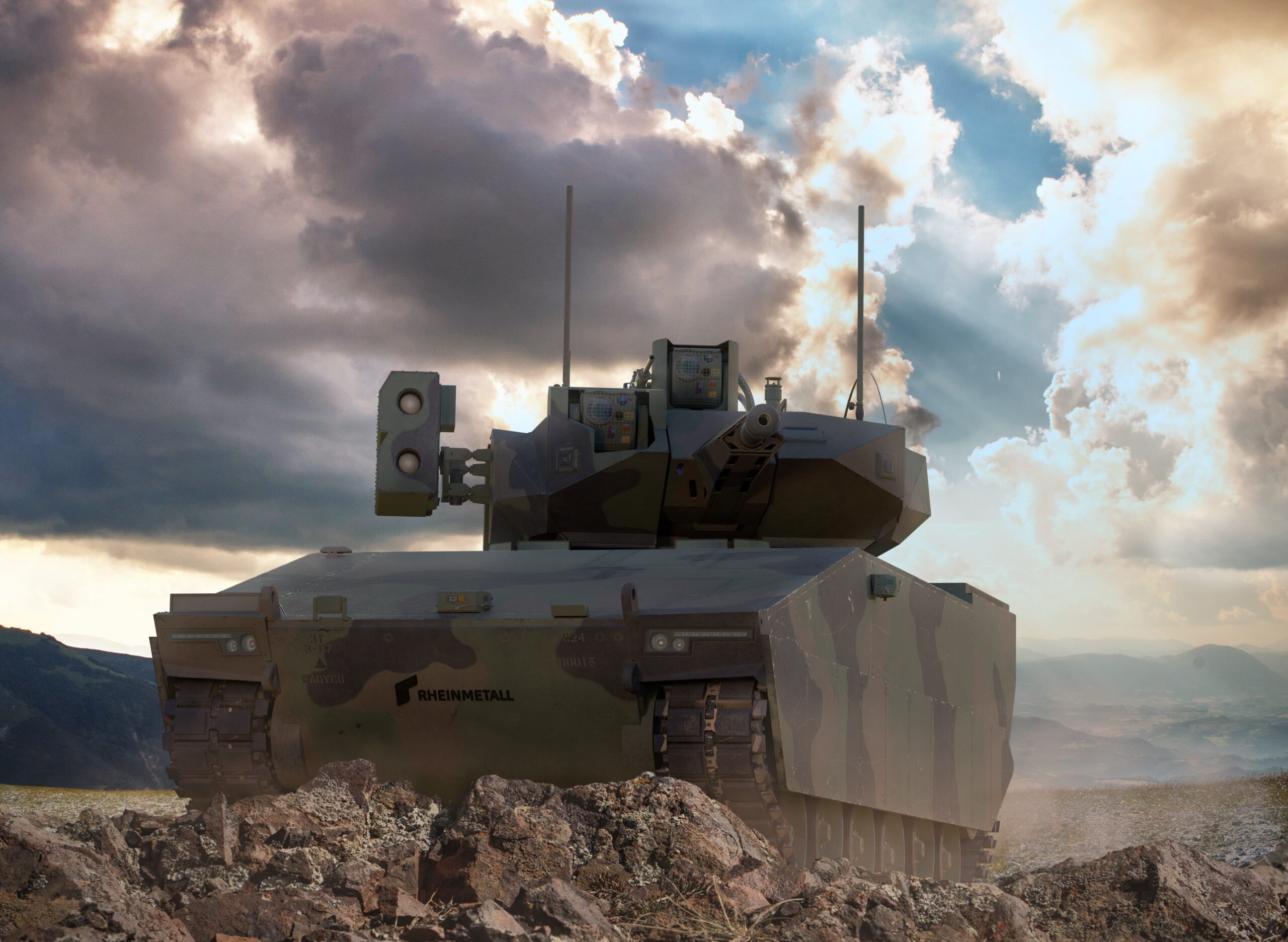
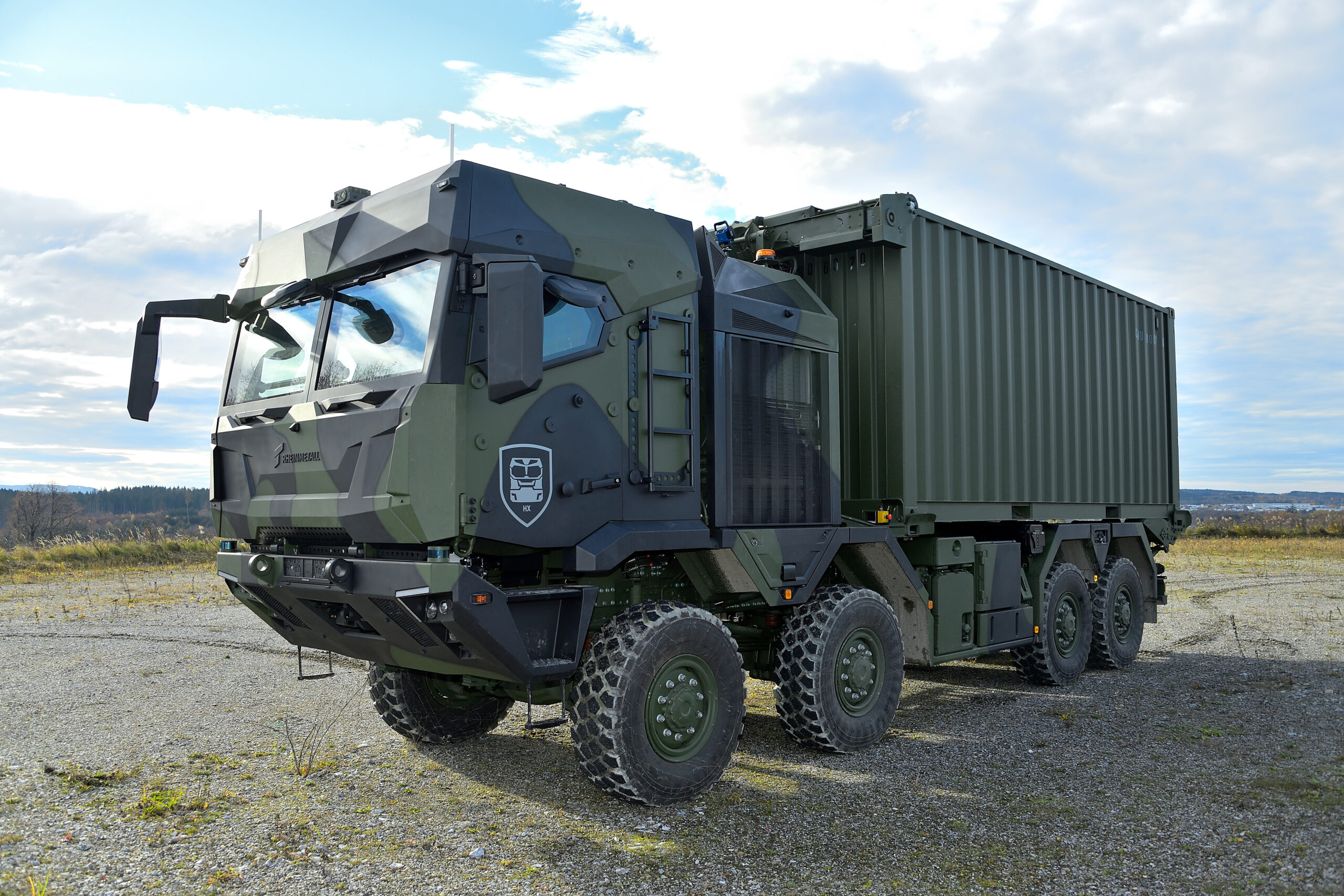
New tactical vehicles are on the horizon for the U.S. Army, specifically the Optionally Manned Fighting Vehicle (OMFV) to replace the Bradley Fighting Vehicle, and the Common Tactical Truck (CTT) to succeed the Heavy Expanded Mobility Tactical Truck.
American Rheinmetall Vehicles is competing for both programs, and in this Q&A with Steve Hedger, Head of US Business at American Rheinmetall Defense, and Paul Moote, Head of Engineering at ARV, we discuss: ARV’s transformational approach to OMFV and CTT; and the teammates they are working with for both programs.
Breaking Defense: How is American Rheinmetall bringing a soldier and customer-focused approach to programs like OMFV and CTT?
Hedger: First and most important for us at American Rheinmetall — and this proudly includes American Rheinmetall Munitions (ARM), American Rheinmetall Systems (ARS) and American Rheinmetall Vehicles (ARV), operating within the family of American Rheinmetall Defense companies — we serve as a solution provider for the U.S. Army, and are singularly focused on the customer’s requirements, needs, platform modernization, as well as the transformation they are seeking. At the end of the day, of course, that means it’s all about the Soldier.
That’s absolutely reflected in ARV’s approaches to the OMFV and CTT programs, including how they’ve built their solutions and the team to deliver the most transformational technology informed by Soldier feedback and meeting the Army’s most ambitious requirements.
Breaking Defense: Let’s discuss that approach as it relates to OMFV and CTT.

Hedger: For OMFV, the Army is pursuing a program for a transformational infantry fighting vehicle that enables it to meet the needs of the modern battlefield by ensuring dominance and overmatch today, while sustaining and enabling overmatch in the future. What ARV’s team is delivering will ensure that the Army gets a platform that’s transformational on the first delivery. That’s in lethality, in power and electric output that enables advanced systems to operate, and comprehensive integration of the Two-Soldier Crew approach that the Army wants.
What ARV has done is design into the Lynx OMFV platform the open systems architecture, power and electric output, weight capacity, and the ability for the platform to rapidly and effectively adopt new spiral technologies as they become available in the future. This will ensure that on an evolving battlefield — when connectivity is absolutely critical and with new technologies arriving at an incredible pace — that the Lynx OMFV is best suited to adapt and ensure overmatch in the future.
Breaking Defense: CTT, on the other hand, is not meant to be as transformational as OMFV as it it’s designed to take advantage of commercial innovations and manufacturing techniques.
Hedger: CTT doesn’t have the prominence of OMFV but it is actually quite transformational, as well. And one of those transformational elements is what you just mentioned, which is high commerciality and a high ability to adopt and benefit from commonality in platforms. This enables the Army to have the ability to streamline modernization and sustainment, and to benefit from advances that are occurring in parallel marketplaces, particularly the commercial marketplace.
That means Army trucks don’t fall behind the day after you deliver the first one. They can keep pace with commercial technology as it advances. ARV’s collaboration with GM Defense for CTT leverages the heritage of General Motors and contributes to our approach even further, especially with the technology advances you are seeing underway at GM and with the manufacturing excellence GM is well known for.
ARV’s solution to CTT maximizes commerciality, alongside ensuring critical military specific capabilities to enable missions. When you put those two together in the right balance, you get a much more effective and enduring solution for the Army.
Breaking Defense: What do you bring to the Army in terms of differentiators?
Hedger: One of the advantages we have at American Rheinmetall is a foundation of global excellence in defense. Today we operate in the U.S. more as a non-traditional entity and with the energy of a startup. That enabled us to clean-sheet some of our approaches, unencumbered by legacy work, and move quickly to keep pace with the Army’s focus areas.
You see that, in particular, in an area that’s another priority for the Army, which is the digital engineering environment. ARV established a highly innovative and integrated, digital engineering environment. That environment enables ARV to be well-positioned for what the future of acquisition of major platforms looks like, as opposed to the highly complex, siloed development process of the past.
Breaking Defense: Back to OMFV, what are some key features of the Lynx prototype you are offering for the program?

Moote: The Lynx OMFV brings a fully U.S. designed, unmanned turret that delivers exceptional lethality with the adoption of the Army’s new 50mm cannon, a Multi-Mission Launcher designed by Raytheon that will enable utilization of TOW™, JAVELIN, and loitering munitions and a truly next-generation array of sensors including 3rd Generation FLIR and 360-degree surround vision providing operators unmatched situational awareness of the battlefield. We have engineered a right-sized, smaller chassis optimized for weight and mobility and delivering exceptional power both in horsepower and electrical-power generation, utilizing a first of its kind hybrid-electric transmission designed by Allison Transmission. And to enable the Two-Soldier Crew approach, we have designed an integrated system that reduces workload on the crew even as they gain access to more information than ever before. This increases the functionality and importantly the lethality of the Lynx OMFV.
Part of what makes our approach transformational is we prioritized enabling future growth — what the Army calls persistent modernization — in every part of our design. The establishment of a first-class integrated digital engineering environment that Steve just mentioned, our commitment to GCIA compliance, and design allocations for important growth envelopes in weight and power bring this to life. When the inevitable need to adopt new technology arrives in the future — and new technology is arriving faster than ever — the Lynx OMFV will be ready.
Hedger: ARV will fully achieve the Army’s vision for an infantry fight vehicle that’s more lethal, mobile, and survivable on the battlefield, including what is really a revolutionary concept in combat vehicles, which is the Two-Soldier Crew Paul just spoke about. Part of what is special about the ARV solution is the innovation and technology the team brings to bear to make that transformation so effective — in automation, in data fusion, in information sharing, in driver assist functions and more.
The Lynx OMFV can also be optionally manned, to be employed in ways that no infantry fighting vehicle ever has before. In addition, it has the technical infrastructure and sensors that allow it to be a node on the battlefield, fully connected, passing information to its wingmen and across the Army formation in an automated manner. That’s the convergence of the future battlefield that is critical to the U.S. Army and that enables speed and complexity of action vital to delivering overmatch.
Breaking Defense: Team Lynx for OMFV includes ARV, Textron Systems, Raytheon Technologies, L3Harris Technologies, Anduril Industries, and Allison Transmission. Tell me about the technologies that each brings to the team.
Hedger: ARV is leveraging the excellence of partners like L3Harris, who has done extensive work on how to manage crew workload in combat aircraft in a very complex environment. Bringing their know-how into the Two-Soldier Crew in the Lynx OMFV is critical.
Bringing sensory integration, AI and machine learning, and software capabilities of Anduril — who are, like ARV, more of a non-traditional entrant in the U.S. defense marketplace — means a solution for the Two-Soldier Crew transforms from concept into reality.
Raytheon is bringing their best-in-class technology for missile launchers and effectors including innovating in a critical area of loitering munitions, while Textron will add their excellence in autonomous vehicle operations and their manufacturing excellence to ours to deliver at scale. Allison Transmission is known universally for their technology, both commercially and militarily. They are also making a major investment in hybrid-electric technology, which is a priority for the Army and a game-changer in power generation in an era when availability of power for advanced technologies on a platform is absolutely critical.
ARV is leading a team that is quite hungry to bring new energy, new capacity, and new technology to the Army, at a time when there’s a real demand for it. This will be disruptive in a very positive way with capacity, competition, and technology.
Moote: Each of our team members also has a strong commitment to digital transformation. Both Raytheon and L3Harris, to name just two, have made large investments to further their own digital engineering environments and integration with ours as Prime.
Breaking Defense: How is the Lynx-based OMFV prototype different from the Lynx infantry fighting vehicle that Rheinmetall introduced to the world in the mid-2010s?
Hedger: The foundational Lynx was the first next-generation infantry fighting vehicle designed and released globally. Rheinmetall is rightly proud of that.
The Lynx OMFV design is a platform that reflects the U.S. Army’s requirements, which are quite significant and different. In turn, the Lynx OMFV includes an all new, unmanned, highly lethal turret designed here with U.S. technologies by the team at ARV and their partners. This is something ARV can be quite proud of and the Army can be excited about in terms of new capacity, competition and design capability here in the U.S. I believe there may only be one other fully U.S.-designed turret in play in the OMFV competition.
The chassis of the vehicle is substantially redesigned, which it has to be because of the Two-Soldier Crew and unmanned turret that replaces the traditional Three-Soldier Crew with a manned turret. ARV’s chassis is right-sized for that configuration, and the Army’s desire for a powerful but more compact and mobile platform.
Moote: I’ll add a few more engineering related details to what Steve said. During the execution of the Phase 2 contract, we made rather significant changes to the baseline Lynx platform. We started from the crew and dismounted infantry, and worked our way outward. We first sized the vehicle for safety and survivability and to properly carry the crew and dismounts. We then repackaged the subsystems around that.
As Steve mentioned, we have a completely new U.S.-designed remote turret with a 50mm cannon. That’s a significant increase in lethality, which is attributed to our utilization of a variety of U.S.-preferred technologies that include the cannon, missiles, sights, and sensors.
Breaking Defense: Final thoughts?
Hedger: ARV and Team Lynx are fully committed to delivering a transformational solution to the U.S. Army that ensures overmatch today and tomorrow. The team is confident that we will deliver not just an iterative step forward in Army land systems but a transformational step forward.
That’s because ARV is listening to the Army’s priorities, focusing on soldiers’ needs, and designing transformational solutions as a U.S. team from an unencumbered basis. We are laser focused and not treating this — the Army’s number two modernization priority — as anything short of our highest priority.
We’re bringing a similar approach to CTT, with both programs complimented by ARV’s world-class teammates, and our capabilities and growth in the American Rheinmetall family of businesses.
AUSA 2022

 Gallery