Quality vs quantity is the major question being debated these days in missile defense circles. But does that discussion miss the best way forward? In this new op-ed, three retired general officers — Francis G. Mahon, Punch Moulton and John Shapland — argue increasing the layers to America’s missile defense is the best way forward.
The 2022 Missile Defense Review (MDR) got it right by characterizing the North Korean missile threat as “increasing in scale and complexity.” In fact, North Korea’s Strategic Force is having a banner year, with at least 67 ballistic missile launches in 2022, 29 in November alone.
In the midst of this strategic challenge, it’s appropriate to review how, as the MDR puts it, “the United States will continue to stay ahead of North Korean missile threats to the homeland through a comprehensive missile defeat approach.” Our nation needs both a generational modernization of its defensive interceptors and a relook at our capacity to deal with an ever increasing threat.
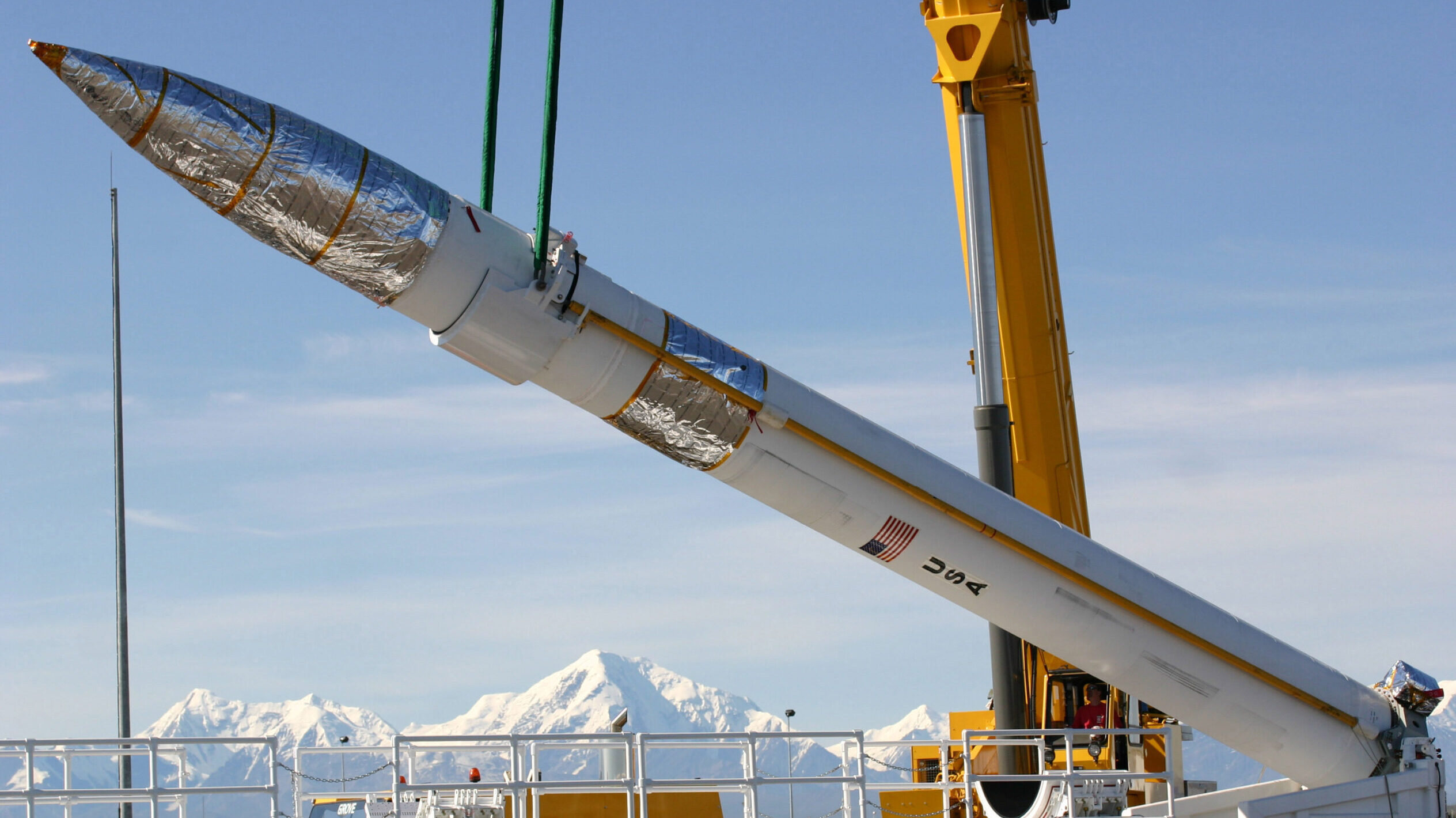
Today, our defenses total 44 Ground-Based Interceptors (GBIs) distributed between two operating sites – Fort Greeley, Alaska and Vandenberg Space Force Base, California. By 2030, those GBIs will be augmented with 20 Next Generation Interceptors (NGIs). Forty-four interceptors today, 64 interceptors in eight years — or so has been the plan. While there have been bumps — the Senate Armed Services Committee’s draft of the 2023 National Defense Authorization Act (NDAA) advocated for retiring the 44 GBIs and forming “a uniform” fleet of 64 NGIs — ultimately Congress has been largely supportive. The final compromise NDAA calls for a plan to “acquire no fewer than 64 operational next generation interceptors.”
We believe the NDAA is on the right track with both an improvement in quality and quantity. A fleet of 64 or more NGIs is smart and provides a significant advancement in performance; but we shouldn’t arbitrarily accept an interceptor inventory of 64 as the right quantity. In fact, retaining the GBI fleet (with continued modernization) in addition to the NGI procurement will provide the resilience and robustness we need for homeland defenses.
Why? One cannot determine the homeland defense interceptor requirement by applying a formula that matches inbound ICBMs with interceptors on a one-for-one ratio. Given the nuclear catastrophe a miss entails, today we should expect to fire multiple GBIs to defeat a single inbound ICBM. So, today’s 44 GBIs divided by a denominator determines how many ICBMs we can defeat. Two interceptors per threat means “we are out” after 22 ICBMs. Four interceptors per threat means “we are out” after 11. The math isn’t particularly encouraging, especially when we do not truly know the adversary’s ICBM inventory or attack plan.


Meeting Zero Trust goals while maintaining information dominance
Balancing security and access to data are critical to providing users with trustworthy, reliable data for real-time decisions.
Don’t be confused: NGI will provide a much needed and significant improvement for homeland defense. NGIs should certainly improve the probability of intercept thanks to greater discrimination capabilities and a multiple kill vehicle, thus reducing the number of interceptors required to confidently kill the inbound ICBM. However, US adversaries are aggressively seeking to deploy new countermeasures to fool our defenses. One interceptor per ICBM may not be enough, even for the more advanced NGI design.
We’ve heard the argument, “We’ll respond in kind and eliminate the threat after the first nuclear ICBM is fired at the United States.” But it is extremely optimistic to believe there might not be multiple incoming waves before we can respond, or that our response will dissuade or negate additional attacks. We cannot afford to be wrong about our ability to stop the next wave of ICBMs when the consequences are nuclear detonations in North America. Thus, our defense must be robust, based on high quality interceptors and in sufficient quantity to ensure we have more interceptor capacity than an adversary has threat missiles.
Numbers matter, as does interceptor quality, but a mix of GBIs and NGIs alone does not provide a comprehensive approach to missile defense. We need to deploy our quality and quantity in a layered defense construct.
RELATED: Accept Risk, And Reframe Air And Missile Defense As An Enabler
A fundamental element of success for missile defense is creating layers that allow for early and successive engagements of a threat. For defense of the homeland, this could be a first layer consisting of GBI or NGI interceptors, with AEGIS or THAAD systems in backup. Or, if arrayed properly, NGIs and GBIs alone could deliver multiple opportunities to shoot, assess, and shoot again, if required. A layered defense provides an opportunity to re-engage a threat that has leaked through the initial engagement – a second swing at the pitch.
A robust layered defense with GBIs and NGIs requires a forward shooter — that’s Fort Greeley — and a backup shooter at another geographical location. Vandenberg is a feasible backup shooter for the western portions of the US, but a new third site is required to provide the “second swing” in defense of the eastern half of the US. Such an eastern-based site would also provide a valuable defense from Iranian ICBMs.
Basing NGIs at the “backup” locations optimizes the chances for success. When you do the math for this comprehensive defense, you see the need for increased quantities in all three locations and more than 20 NGIs spread across the nation.
One last key element required to ensure a comprehensive missile defense approach is agile command and control (C2). An agile C2 system provides: 1) an integrated sensor architecture, which accurately depicts the situation; 2) battle aids to assess, analyze, and generate defensive options for the commander, in real time; and 3) a versatile fire control system that allows the commander to tailor and employ all of the available capabilities to effectively and efficiently defeat the threat.
The current Ground-based Missile Defense Fire Control system and battle management system require continued investment to ensure our missile defenders have agile, effective, and resilient C2 to succeed today and in the decades to come.
With rogue adversaries intent on threatening the US with nuclear missiles, our defenses must keep pace. NGI is exactly the right capability we need to qualitatively outpace the adversaries, but it is essential that our warfighters are not outgunned by sheer volume. To ensure a quantitative advantage, we must procure more than 20 NGIs; retain and sustain the GBI fleet; develop an integrated, layered NGI-GBI defense; and advance our command and control capabilities.
Yes, this will be expensive. Yes, it will likely require tradeoffs elsewhere. But what could be a more important mission for the US military than defending the American public from incoming nuclear weapons? Artificially limiting our interceptor inventory and fundamental missile defense capabilities, while delaying a layered approach to defense of the homeland, complicates the warfighter’s mission, and could prove perilous for our nation.
Maj. Gen. Francis G. Mahon (US Army, Ret.) is an independent aerospace defense contractor and an adviser for Stellar Solutions, Inc. He previously served as Director for Strategy, Policy and Plans at North American Aerospace Defense Command and US Northern Command; Director for Test at the Missile Defense Agency; and Director for Materiel on the Army Staff.
Maj. Gen. Punch Moulton (US Air Force, Ret.) is the Vice President for Defense Support and Cyber Strategies at Stellar Solutions, Inc. He previously served as the Director for Operations at US European Command, and as Director for the Standing Joint Force Headquarters at US Northern Command. He currently leads the Missile Defense Agency’s biannual missile defense war game.
Brig. Gen. John Shapland (US Air Force, Ret.) is the Senior Director for Innovation, Operations and Exercises for Stellar Solutions, Inc., and an independent contractor conducting developmental flight test instruction at British and French test pilot schools. He previously served as Director of Air and Space Operations for Air Force Material Command.