WASHINGTON — HII recently announced a new “strategic agreement” with a UK defense firm to focusing on “naval and civil nuclear decommissioning and construction opportunities,” according to a statement from the American company.
The collaboration with Babcock will include partnering up on “existing nuclear decomissioning” contracts for US ships as well as UK submarines.
“The memorandum of understanding also identifies opportunities for cooperation in civil nuclear, including power plant and component design, fabrication and construction in North America and the U.K. For Babcock, this will include leveraging the capability of its wholly-owned subsidiary, Cavendish Nuclear, a leader in the U.K. nuclear civil industry across the nuclear lifecycle,” according to a July 17 statement.
Babcock is an aerospace and defense firm based in the United Kingdom and operating in France, South Africa, Canada and what the company calls “Australasia,” a catch-all term for Australia, New Zealand and some smaller Pacific islands. The UK’s Ministry of Defence in 2019 selected the firm’s Arrowhead 140 design for the Royal Navy’s Type 31 frigate, a program envisioned to produce five ships valued at approximately £250 million British pounds per ship ($325 million).
Notably, the announcement also says the companies will “explore how their combined capability as global leaders in defense can be applied in support of the Australia – United Kingdom – United States (AUKUS) programs.” That seems to be a clear reference to the decision by the UK and Australia to buy new SSN-AUKUS nuclear submarines starting in the 2040 timeframe. How to dispose of aging nuclear material from both the AUKUS-class boats and Virginia-class boats Australia is expected to receive from the US is a burgeoning political issue down under; it could also prove a lucrative business for industry.
The companies’ announcement comes at a time when the US Navy is gearing up to begin inactivating the former nuclear-powered aircraft carrier Enterprise (CVN-65). The service recently published the final version of its “environmental impact statement” for disposing of the now decommissioned warship, a lengthy but legally mandatory step in a multiyear process before work can begin.


Support for Patriot air-and-missile defense is a case study for the industrial base
Manufacturing scale, global sustainment, and next-gen tech are becoming inseparable.
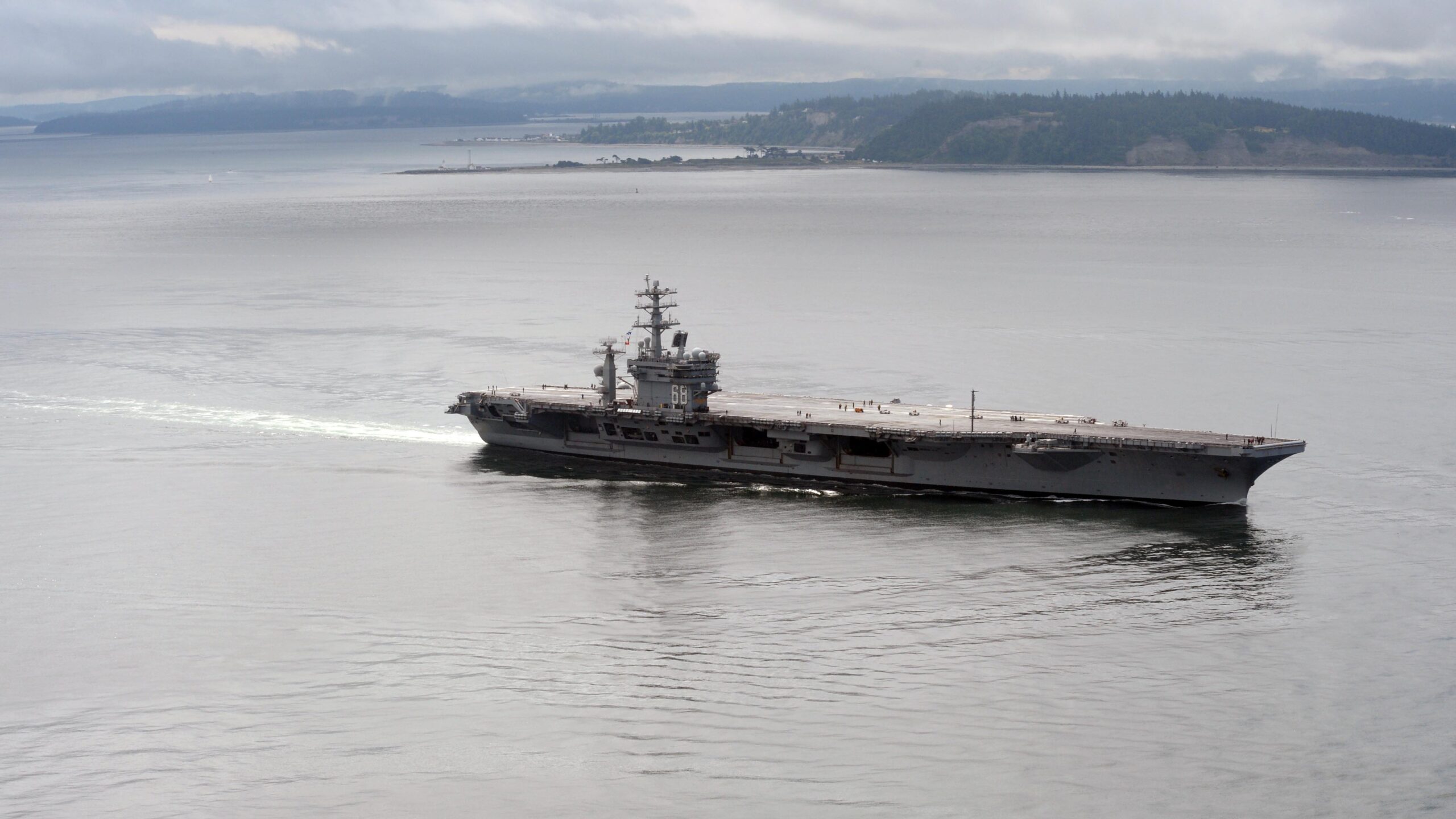
Breaking Defense also previously reported the service has commenced discussions with HII, the service’s prime contractor for aircraft carrier construction, about preparing the second nuclear-powered carrier slated for inactivation, the Nimitz (CVN-68).
The US Navy signaled in its environmental impact statements that it prefers to leave the work of disposing of the ships’ nuclear components to industry, rather than employing the public shipyards. For industry, particularly larger firms with long histories of naval work such as HII or Babcock, that means a burgeoning sector of growth work that will be in place for the foreseeable future as more nuclear-powered carrier inactivations are planned.
When asked how the Navy is preparing to cope with the influx of work, a service spokeswoman told Breaking Defense today that “inactivation of Nimitz-class aircraft carriers is currently scheduled to begin in 2026, subject to congressional budget approval.”
“Options for how to best structure the workforce to accommodate that additional line of effort are under consideration and are pre-decisional at this time,” she continued.