AUSA 2023 — The Army plans to complete an analysis of alternatives for its Future Attack Reconnaissance Aircraft (FARA) program by the end of this year, a top service official said today.
The analysis of alternatives, or AOA, examines the feasibility of future defense acquisitions and paves the way for the service’s formal milestone B decision for the program, scheduled for fiscal 2026, which begins the engineering and manufacturing development phase. The winning design should enter service in FY31.
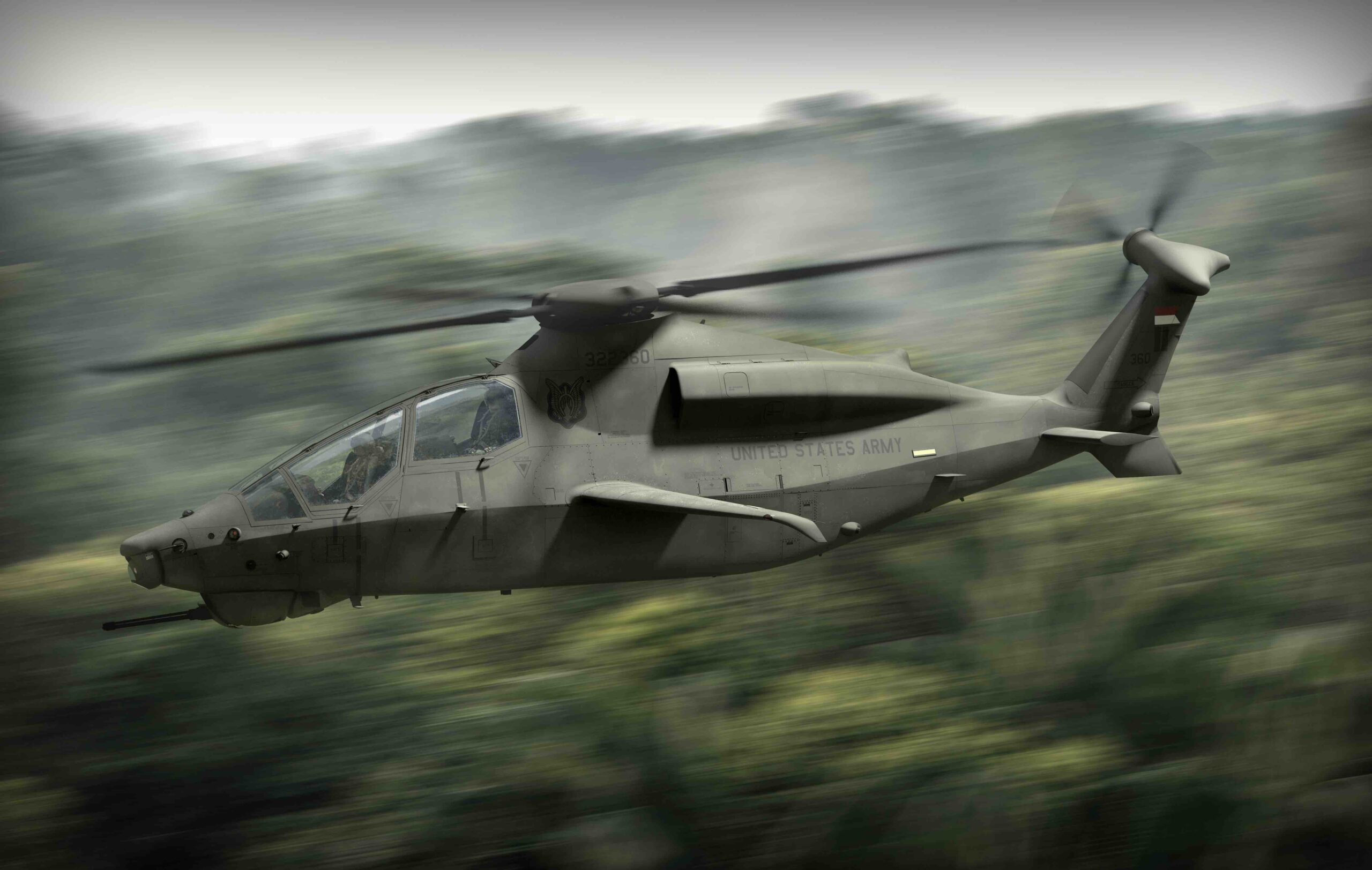
Both Lockheed Martin subsidiary Sikorsky and Bell have developed FARA prototypes, with the program running about a year behind due to a delay with the Improved Turbine Engine that will soon be available for the two teams. An Army official previously told Defense News that the program’s first flight is now expected in the fourth quarter of FY24.
“We’re still working through the analysis of alternatives, which should be done by the end of this calendar year,” Rodney Davis, the Army’s acting program executive officer for aviation, said during a panel hosted by Defense News at the Association of the United States Army’s annual convention in Washington.
The Army’s lack of an AOA previously drew fire from lawmakers, with House Armed Services Tactical Air and Land Forces subcommittee Chairman Rep. Rob Wittman, R-Va., questioning why the service has already spent billions on the program without a formal AOA, according to Defense News.
Through the markup process for the fiscal 2024 defense policy bill, Wittman’s committee sought to restrict Army Secretary Christine Wormuth’s travel budget until the service’s analysis is shared with lawmakers. Doug Bush, the Army’s acquisition czar, explained that the service was previously weighing different acquisition strategies, and ultimately decided against a rapid prototyping pathway in favor of the formal milestone B process, which requires an AOA.
Davis said today that the FARA T901 engine developed by GE Aerospace would be made available to the two teams simultaneously to ensure “a level playing field for both.”
The director of aviation modernization at Army Futures Command, Maj. Gen. Walter Rugen, took pains at a different AUSA panel to praise Davis and engine maker General Electric for managing “to deliver a transformational engine, fighting through COVID and fighting through some severe supply chain disruption.” The Improved Turbine Engine is meant to have 50 percent more horsepower and 25 percent better fuel efficiency than the current standard engines, dramatically improving aircraft performance — assuming it works as advertised.
“Really key to us is getting the engines installed in [the] aircraft and getting them flying as soon as possible, getting those lessons learned wrapped back up into the evaluations for the aircraft,” Davis said.
Appearing at another briefing at the end of the day, Davis said, “There’s a lot of testing we have to do [on the ground] make sure it’s safe to fly. … We put it in the [test] chamber and run it for a very long time… Then we’ll be able to flight test it.”
But the AOA that Congress wants so urgently isn’t waiting for the engine testing to complete, he emphasized: The two processes are independent, he said, so the AOA is on “a parallel path.”
Breaking Defense’s Sydney Freedberg also contributed to this story.
PHOTOS: AUSA 2023
 Gallery